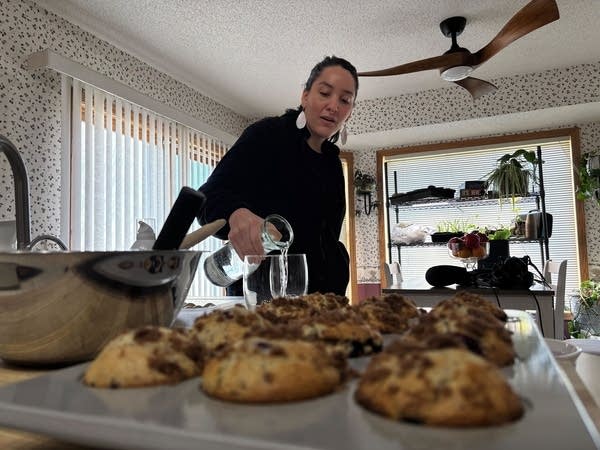
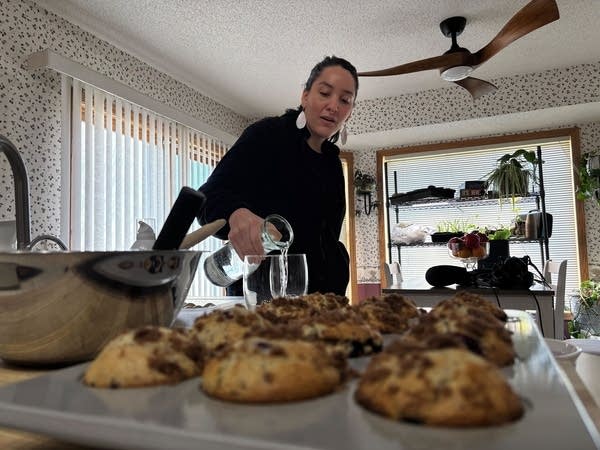
Candace Stock’s six-year-old son, Oliver, has loved banana bread ever since he was a baby.
“I would just say banana bread, and he would start giggling,” she said.
But it wasn’t easy for her to make it. Not because the recipe was difficult for a professional chef, especially one who’ll be heading the kitchen of the Theodore Roosevelt Presidential Library in July.
It was hard because she had no idea whether the bread was any good. To Stock, bananas smell and taste like gasoline.
Ever since a devastating car accident damaged her sense of smell, the chef has had to learn how to rely on her mind, not her taste, to do her job.
Stock grew up in northern Minnesota on the White Earth Reservation, and she’s been cooking since she was a child. She was inspired by watching her grandmother in the kitchen and eating Native American staples like simple corn soup and roasts at powwows and Native American Church meetings.
After graduating from the Culinary Institute of America, she worked in kitchens across the country, including a country club in Deer Lodge, Mont. Stock said the job paid well, but the workload was overwhelming.
One day, she got up at 4 a.m. to prepare for one of the club’s biggest events of the season. She had already worked 80 hours that week.
“I fell asleep at the wheel,” she said. “I rolled into the ditch, and then I got life flighted to Missoula.”
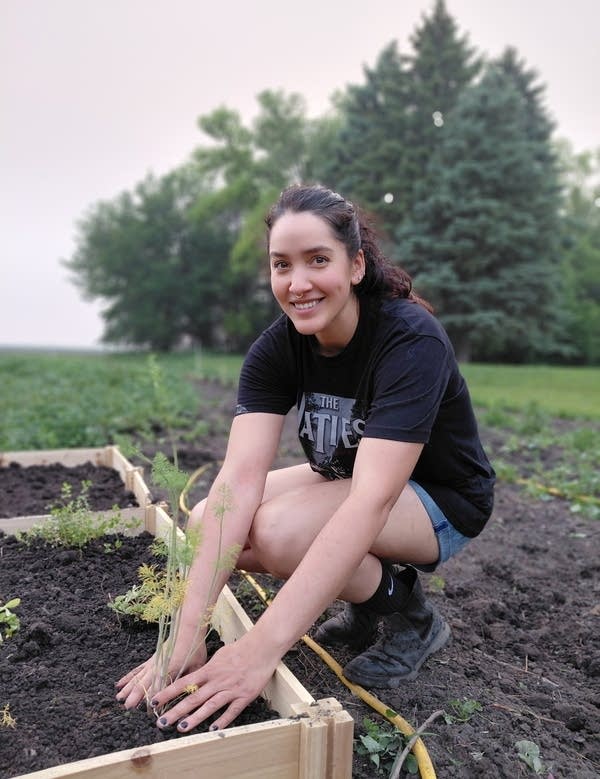
Despite cracked vertebrae, broken ribs and a concussion, Stock was back at work within 10 days. Slowly, she recovered and moved to Fargo, but one group of symptoms wouldn’t go away.
“Certain smells would really give me terrible headaches, migraines and that would actually distort smells and tastes more: there were some things that tasted completely off,” she said “I went in and got an MRI and a CT scan, and they had me, like sniffing little vials and tasting things.”
Specialists diagnosed Stock with dysosmia, or a distortion of her sense of smell. Smell plays a significant role in the way food tastes. For Stock, under-ripe fruit tastes like chemicals, fresh meat smells spoiled and, generally, she can’t really be sure what anything she cooks truly tastes like to anybody else, even her son.
“I couldn't even feel confident feeding my child because I was like, ‘How do I even know this is good?’” she said. “How could I ever cook for anybody knowing that this is how I perceive things?”
Retraining her brain
After decades as a professional cook, Stock began looking for other work. She tried to pivot to a job in sales at Microsoft, where she was already a cook in the kitchen.
But she hated it. She decided she’d rather retrain herself than give up her life-long passion of working with food.
“My confidence in cooking was pretty shot,” she said. “I could still write recipes. I could still help write menus, so I started doing that for a catering company.”
Creating that menu is how Stock realized she had everything she needed in her mind and that her years of professional training and memories of how food used to taste were still intact.
“That’s when I was like, ‘I can trigger this. I can taste oranges again. I can taste bananas again, just by, like, really meditating on it,’” she said. “That helped me to be inspired again and come up with new menu items.”
After developing that catering menu, Stock had the confidence to take a job working at BernBaum’s, a now-closed restaurant in downtown Fargo. Feedback from her co-workers helped her refine her palate further.
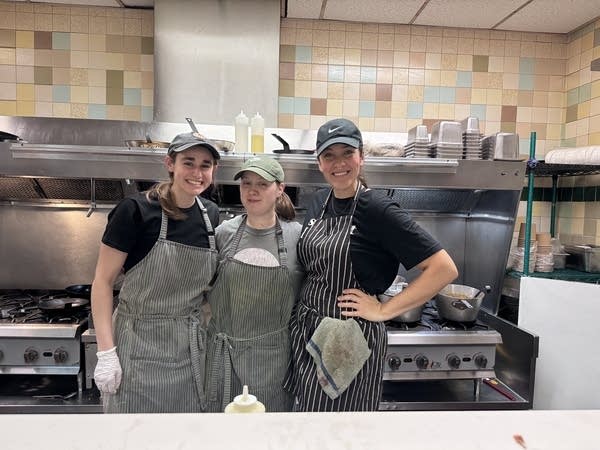
Brittney Harty worked there and said Stock was the backbone of the kitchen, even with her sensory impairment.
“She didn’t let it hold her back from anything,” Harty said. “She was always in a good mood. She was always laughing and making jokes with us.”
While working at Bernbaum’s, Stock also met Noreen Thomas, a local farmer who provided ingredients to the restaurant. Together, they’ve hosted foraging classes and cooking demonstrations, and Thomas said Stock stands out for her creativity and expertise.
“People just really hunger for that knowledge that she just carries with her,” Thomas said. “She’s someone who knows the past really well. Plus, she’s always looking ahead at combinations of things that can be served, just invented from her ideas in her head.”
As executive chef of the Theodore Roosevelt Presidential Library, Stock was charged with developing its menu. She used meetings with donors to get feedback on the food.
“I get a lot of credit for being a great chef, and I swear to you, it is because I have a supportive team,” she said. “It’s because everyone is trying everything, and they're asking questions and then like, like, they contribute so much to every recipe.”
In some ways, Stock’s job now involves channeling a kind of sixth sense:
“It’s just like a feeling, just what I want to taste, or what I want other people to taste,” she said.
Being with others as they experience new ingredients also helps Stock experience them herself.
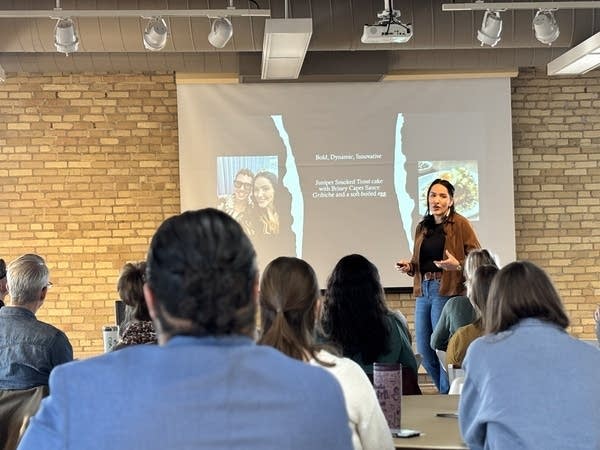
For example, she fondly remembers the simple traditional soups and roasts served at church growing up on the White Earth reservation, describing them as “healing,” but she can’t always taste them herself anymore.
“I see the way my son receives these foods and the flavors,” she added. “It’s such a good memory to me, I know that it was good for me. I see the way he receives things, and sometimes it just lights him up too.”
She also regularly cooks new foods for her son. One morning she was recreating a food that Oliver saw in their bedtime story the night before. But despite all of her retraining, not all of her recipes are winners.
“I made a stroganoff the other day with chanterelle mushrooms from last year and ramps from this year,” she said. “I was really excited about it because it was full of beautiful foraged ingredients. And he was just like, ‘I don't like it.’”
“Dang,” she said. “But, you know, wrong crowd, maybe.”