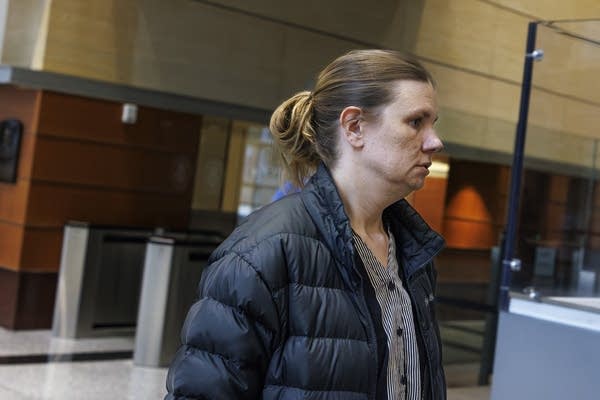
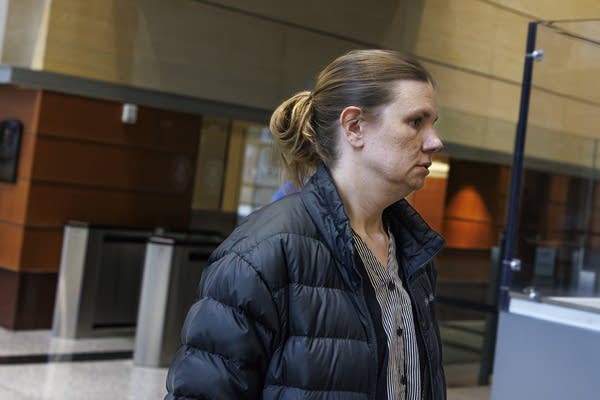
Federal prosecutors in Minneapolis are asking a judge to prohibit convicted fraudster Aimee Bock from speaking with her two adult sons from jail after she allegedly directed the men to send sensitive evidence from her case to elected officials and the news media ahead of her May 21 sentencing.
In March 2025, a jury found Bock and restaurateur Salim Said guilty of charges including wire fraud and bribery for their roles in a scheme to steal around $250 million from taxpayer-funded child nutrition programs during the COVID-19 pandemic by submitting false reimbursement claims for meals.
Because of the scale of the theft, Bock could face life in prison under federal sentencing guidelines. Bock is among 79 defendants charged in the wider case since September 2022, which prosecutors say was the nation’s largest pandemic-era fraud scheme.
The investigation has since led to fraud charges in connection with several Medicaid programs in Minnesota. Bock is white, but most of her co-defendants in the Feeding Our Future case are Somali-American. National attention to the case in late 2025 prompted racist comments from President Donald Trump along with increased immigration enforcement targeting the community, though the vast majority are naturalized U.S. citizens.

The government has secured 65 convictions, largely through guilty pleas. Of the 13 people sentenced, Abdiaziz Farah, another key player, received 28 years, the longest prison term handed down so far. Farah could face additional time when he’s sentenced separately for his role in an attempt to bribe a juror during his 2024 trial.
In a document filed on Tuesday, Assistant U.S. Attorneys Matthew Murphy and Rebecca Kline allege that Bock, 45, the founder of the defunct nonprofit Feeding Our Future, violated a 2022 protective order from U.S. District Judge Nancy Brasel that requires all parties to the case to hold most evidence in the case “in strict confidentiality.”
Murphy and Kline say that on April 2, an unnamed Minnesota state representative received two emails from a Proton Mail address. The sender, “Daisy Hill” claimed that “Tim Walz, Keith Ellison and the Minnesota Department of Education intentionally set Feeding Our Future and Aimee Bock up as a scapegoat.”
A March 17 email to MPR News from a sender with the same name includes identical language. In a subsequent message, the sender promised to send “examples of fraud in MN that were identified and stopped by Aimee Bock and Feeding Our Future.”
The emailer later sent files including screenshots of text messages, other communications, and audio recordings that Bock apparently made of conversations with operators of meal sites. MPR News did not verify the authenticity of the documents shared in the anonymous emails until the Minnesota U.S. Attorney’s Office leveled the fresh allegations against Bock in the Tuesday court filing.
MPR News replied to the “Daisy Hill” address on Tuesday to request comment about the government’s new allegations.
Kenneth Udoibok, Bock’s defense attorney, said in an email reply to MPR News that his client’s sons “in an inartful way” are “hoping that the media and the legislative branch see their mom’s plight. Aimee is not trying to harm or intimidate anyone; rather, she wants the whole truth out before the legislature and the president. She’s crying for help!!!”
In their motion, the prosecutors also recount that on April 21, they learned that a Minnesota Star Tribune reporter contacted an attorney for a cooperating witness in the case and said that “they had obtained copies of reports of two of the witnesses’ law enforcement interviews” and intended to quote from them in an article about “the conduct of certain uncharged individuals.”
Murphy and Kline write that they learned through another attorney that the reporter “had claimed to have over one hundred law enforcement interview reports” and that given their nature “they could only have come from the government’s discovery disclosures,” in violation of the protective order.

Bock has been held in the Sherburne County Jail for more than a year as she awaits sentencing. Citing recorded jail calls, prosecutors say Bock directed her son, Camden Bock, 20, to download documents from her case from a Dropbox account and send them to elected officials and news reporters.
“Her purpose for doing so can best be described as a public relations campaign — to seek to minimize her starring role in pilfering the Federal Child Nutrition Program while casting the ‘real’ blame for the rampant fraud on the Walz administration, state administrators and uncharged individuals,” Murphy and Kline write in their filing.
On March 16, the day before MPR News received the first email from “Daisy Hill,” Bock allegedly directed her son to download documents that she believed would show that she tried to combat fraud in the nonprofit she once led.
“She told Camden to remove the trial exhibit stickers, and other markings indicating the documents came from her federal criminal case, before emailing them from a newly created Proton Mail account to ‘all republicans [sic] and the media,’” the prosecutors write.
In late March, “Bock told Camden to send the files to ‘Republicans in DC,’ especially the ‘guy who told [Minnesota Attorney General Keith] Ellison he should be in jail’ and the ‘right wing people that [President] Trump follows.’”
On April 1, Bock allegedly told her son Cale Bock, 19, that a Star Tribune reporter had been planning a “whole story on [an uncharged individual] and why she never got indicted,” and explained that Camden used an email account with a “fake name.”
In a later conversation, when Camden voiced concerns that speaking to the media might result in a longer sentence, Bock allegedly replied “they want to sentence me to life anyway.”
In an April 19 call with an unidentified person, according to prosecutors, Bock said that “someone had given the Star Tribune reporter “every interview the FBI did with people.”
Murphy and Kline write that they can’t say “with absolute certainty whether Bock is the person directly responsible” for leaking cooperating witness statements to the newspaper, “it is clear that she was leaking other protected documents” to the media and is endangering “the safety of those witnesses who have chosen to come forward and speak to law enforcement.”
The prosecutors are asking Judge Brasel to prohibit Bock from accessing her Dropbox account and surrender all copies of any protected files in her control, including Camden Bock’s computer. The government is also seeking to prohibit Bock from “any form of contact” with her sons prior to her sentencing hearing.
Brasel ordered Bock’s attorney to respond to the government’s request by 5 p.m. Wednesday. A hearing on the motion is scheduled for Thursday afternoon.