Hurricanes get names, even The Weather Channel nicknames bad winter storms, but how about a huge solar flare? We’d never heard of it, either, until the Gannon Storm of 2024 caused Corn Belt farmers more than a billion dollars in productivity.
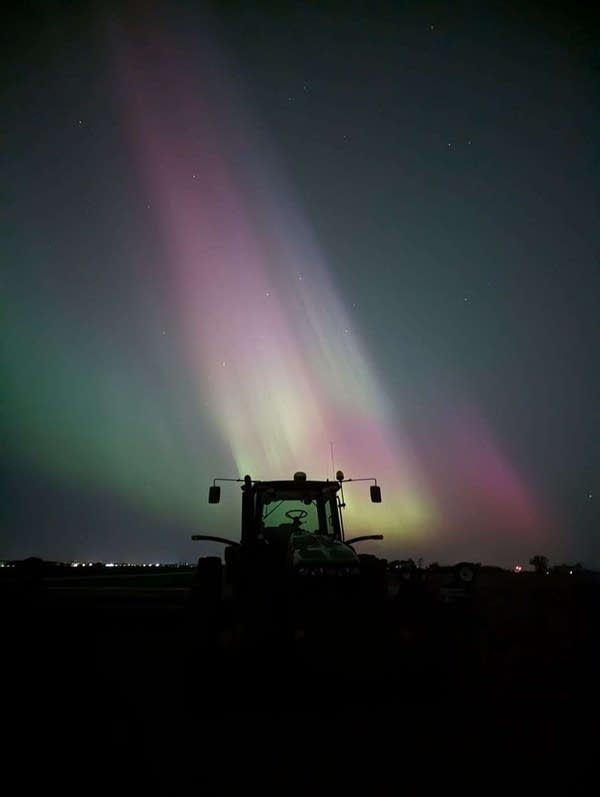
You might remember the bright Aurora Borealis from May 2024, visible all across Minnesota and the Upper Midwest. Down below on Earth, it was a panicked few days for farmers during the midst of the spring planting season. Solar (or geomagnetic) storms are nothing new. The biggest solar storm on record actually happened a couple years prior to the U.S. Civil War. But more modern technology like global positioning systems hadn’t faced a big test from a solar storm until 2024. It’s safe to say: things did not go well.
While scientists at Colorado’s Space Weather Prediction Center warned the airline and utility sectors about how bad the inbound solar energy would be for major infrastructure (including on mandated conference calls), they weren’t aware of the impact on farmers. The last major geomagnetic storm dated back to 2003, experts told MPR, when fewer than 10 percent of industrial farming equipment relied on GPS. But by 2024, giant planting tractors were auto-drive with precision agriculture and GPS. Blooming Prairie, Minn., corn farmer Michelle O’Connor told us her John Deere doesn’t even have a switch to go “manual” for planting.
With the solar storm largely knocking out GPS for a couple of days mid-plant in the Dakotas and northern Minnesota, farmers didn’t know what to do. Because this had not happened before, many thought something mechanical was happening, until they started talking to friends. That loss of production cost farmers bushel upon bushel of planting, rows that were delayed. Kansas State agricultural economist Dr. Terry Griffin told us that, of the farms impacted in the High Plains, the average loss was calculated at $17,000 per farm. Since 2024, there have been no widespread upgrades to keep something like this from happening again, the experts told us.