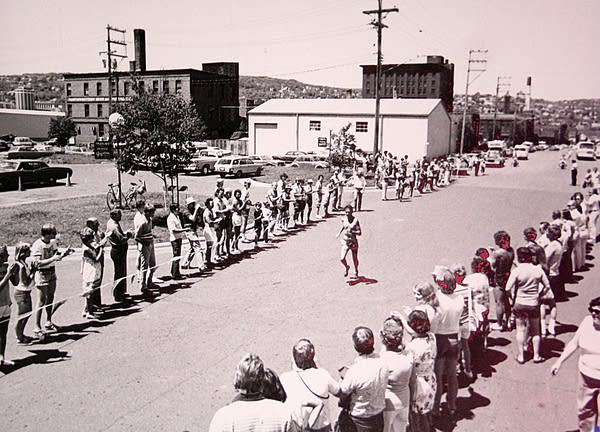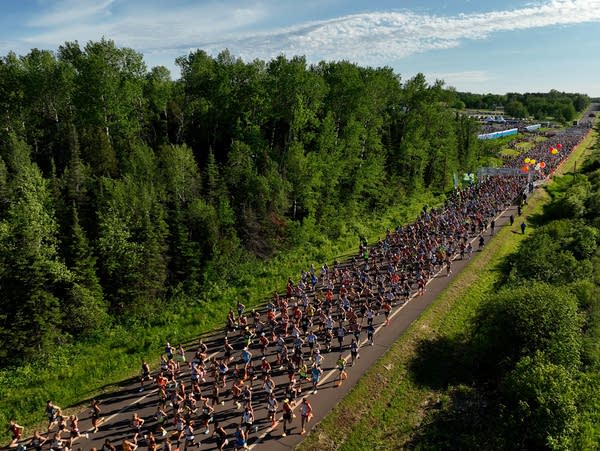
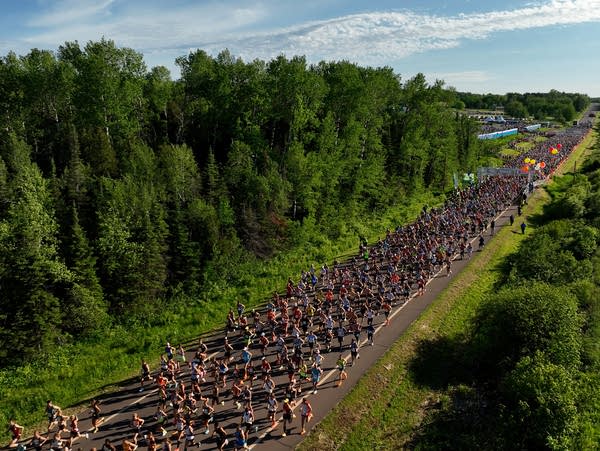
In 1977, the year of the first Grandma’s Marathon, the idea of over 100 people willingly running more than 26 miles in sweltering temperatures in the low 80s was, if not absurd, at least a strange curiosity.
"Those were the dark ages of road running,” recalled Garry Bjorklund, who grew up in nearby Twig, Minn., competed in the 10,000 meters at the 1976 Olympics and was the first men’s winner of Grandma’s.
Jogging, for exercise and fun, wasn't really a thing yet in much of America. “The streets were for cars, not for a bunch of runners,” said Scott Keenan, who hatched the idea for the marathon as the then-23-year-old president of the North Shore Striders running club in Duluth.
But Keenan and a ragtag group of volunteers pulled off the race, and, more than 50 years later, it’s grown into the 10th largest marathon in the country. This year, nearly 24,000 participants are running in three races on Grandma’s weekend. The runners and those who come to cheer them on will nearly double Duluth’s population for a few days, injecting tens of millions of dollars into the local economy.
The growth of the race has also dovetailed with the transformation of Duluth into a major tourist destination, the redevelopment of the city’s Canal Park neighborhood and the launch of a major Duluth-based restaurant company.
“I don't think even back then they knew quite the scope of what they were starting,” said Zach Schneider, Marketing and PR Director for Grandma’s Marathon. “It's amazing to see what it was then and what it is today.”
When Scott Keenan and other members of the North Shore Striders decided to try to host a marathon along one of their favorite training runs — the stretch of highway along Lake Superior between Two Harbors and Duluth — the group had only about $23 in its checking account.
Keenan put together a race budget of about $640. He asked local banks and other businesses to sponsor the race. There was zero interest, he said, until the group approached a brand new restaurant in Duluth called Grandma’s Saloon & Deli.
“I said, ‘Anybody that gives us $600, I'll name the race after them,’” recalled Keenan. “So that's how it got its name, Grandma's Marathon."
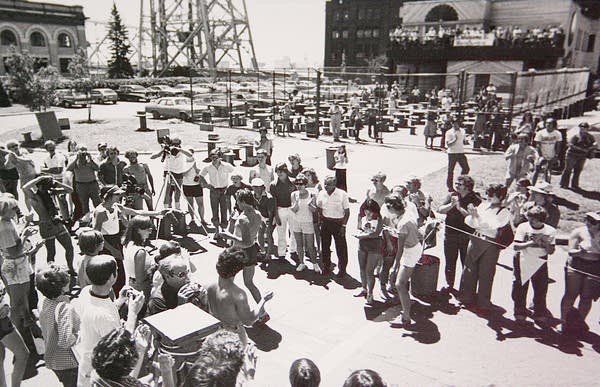
With funding secured, the next task was to scrounge up volunteers. Club members recruited friends and family to staff water stations.
“My dad was one of the people picking up people that couldn't finish the race, with his Toyota pickup truck with a mattress in the back,” said Keenan.
A hundred and sixty people signed up to run that first marathon. Roads were not closed to traffic, so participants ran alongside cars.
The entry fee for that first race was a meager $3, compared to around $150 today. “How about that?” said Wendy Cregg, who at the time was an 18-year-old from the Iron Range attending college in Eau Claire, Wis., and one of only 10 women to run that first race. “And you got a T-shirt."
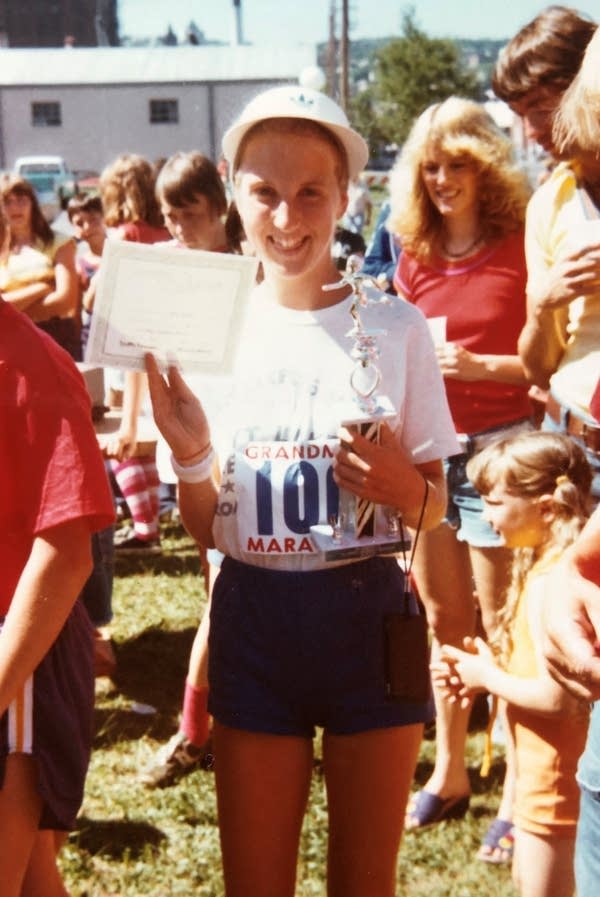
Cregg, now 67 and living in Eden Prairie, went on to win the race, her first and only marathon.
"I finished the race, and I literally went straight through the finish line to the bathroom. Nobody stopped me,” she recalled. She then collected her T-shirt and trophy and left, she said.
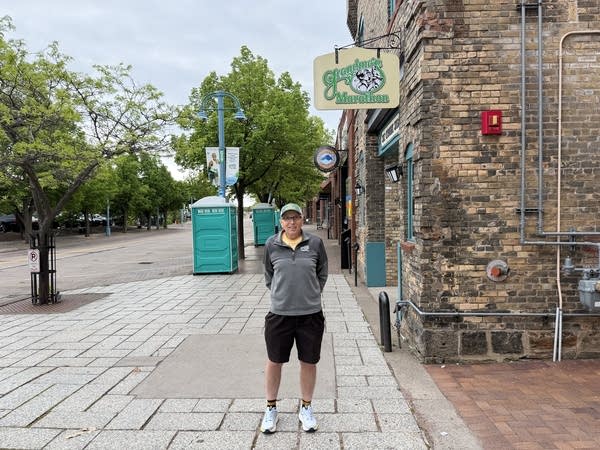
That first marathon ended, as it still does, in Canal Park, what's now the bustling tourist district in Duluth next to the Aerial Lift Bridge along Lake Superior, right in front of Grandma's Restaurant. That's what Grandma's asked for in exchange for sponsoring the race.
"They said okay, as long as it finishes at our front door and we get to throw the party." said Brian Daugherty, who worked in the kitchen at Grandma's during that first race 50 years ago and is now President of Grandma's Restaurants.
At the time, Canal Park was not the trendy hot spot it is today, full of restaurants, shops and hotels, with tourists strolling on the Lakewalk along Lake Superior's shoreline and lining up to watch giant cargo ships glide into and out of the harbor.
It was considered the seedy, sketchy part of town.
"There was nothing down here but dilapidated warehouses, junkyards, towing companies. This was the wrong side of the railroad tracks,” said Daugherty.
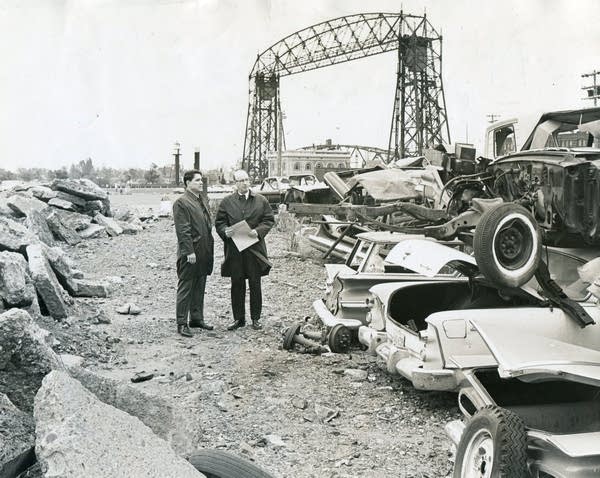
Grandma’s converted an old bar into its restaurant along the Duluth ship canal, next to the newly constructed Lake Superior Maritime Visitor Center. Sponsoring the marathon was one of several early promotional efforts to lure patrons to Canal Park.
“It’s the best $600 a company could have ever spent,” said Daugherty. Fifty years later, Grandma’s is thriving with five restaurants and related businesses in Canal Park, and it’s considered a Duluth institution.
Only 116 runners completed the inaugural 26.2 mile race, but word in the running world soon got out. The following year, nearly four times as many runners took part, and Grandma’s Marathon was off and running. By 1980, more than 3,000 participants ran in it.
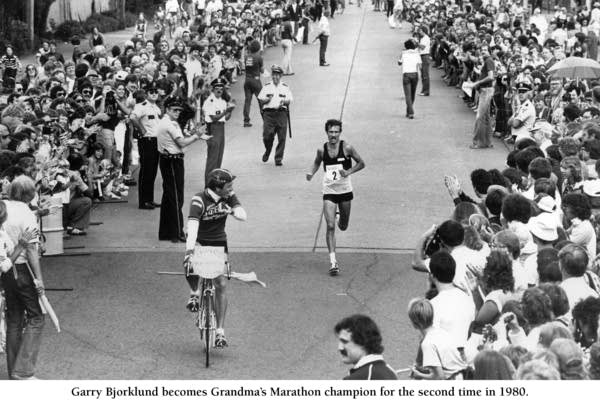
Grandma's growth coincided with a running boom that saw millions of Americans take up the sport in the 70s and 80s, including President Jimmy Carter, whose administration organized a 10K run two years after Grandma’s inaugural race.
A number of factors sparked the surge in interest, including American Frank Shorter's Olympic gold in the marathon in 1972 and running guru Jim Fixx’s best-selling book “The Complete Book of Running,” published in the same year as the inaugural Grandma’s Marathon.
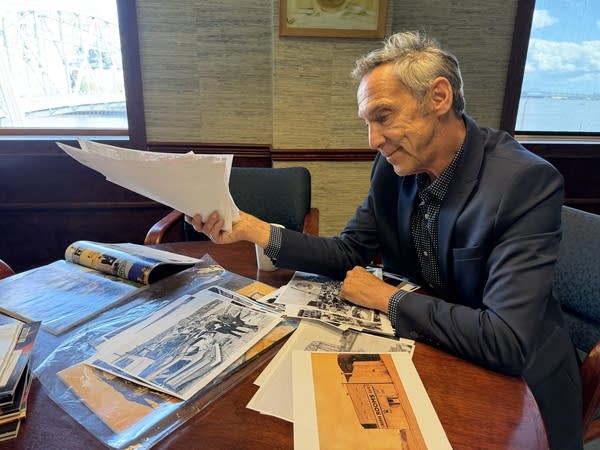
Grandma’s Restaurant spun off the race in the 1980s. The nonprofit that manages it now has an annual budget of about $4 million, quite a step up from the $640 the North Shore Striders used to put on the inaugural marathon.
This weekend, nearly 12,000 runners are competing in the full marathon, and another 12,000 will race in either the half-marathon or 5K over the weekend. The 24,000-competitor total is the highest number of participants in the race’s history.
Race organizers say Duluth's small-town feel helps set the race apart, as other major marathons across the country are held in big metro areas. The race course itself is also a major draw.

"Whoever put Two Harbors 26.2 miles away from Duluth with a road right along the shores of Lake Superior, we gotta send them a big thank-you card,” said Grandma’s PR Director Schneider. “Because you can't replicate the view and where we get to hold our race."
The tens of thousands of runners and those who come to watch them will just about double Duluth's population on Grandma's weekend. A recent study from the University of Minnesota Duluth estimates the race generates about $40 million in annual economic activity.
The race also helps promote Duluth to the world, said Mayor Roger Reinert, who’s running his first full Grandma’s marathon this year.
“It’s one of those events that's come to define Duluth,” Reinert said. When he travels the country, people who know Duluth often know of it because of signature events like Grandma’s Marathon, he said.
“They’re helpful for the tourism economy, but from my perspective, even more so, they give Duluth a brand as an outdoor active community.”
It’s difficult now to imagine Duluth without Grandma’s Marathon, said Garry Bjorklund, now of Fort Collins, Colo., who along with fellow inaugural winner Wendy Cregg will hold the tape at this year’s finish line.
“It’s a lot more than just a foot race,” said Bjorklund. “It's a festival. It’s a family gathering. It’s just a great time.”