The Minneapolis City Council’s decision to start a process that could result in the decriminalization and legalization of adult bathhouses is a pivotal chapter in LGBTQ+ history in the city. Council members who support the measures say the ordinance was fear-based and needs to be updated to reflect modern times.
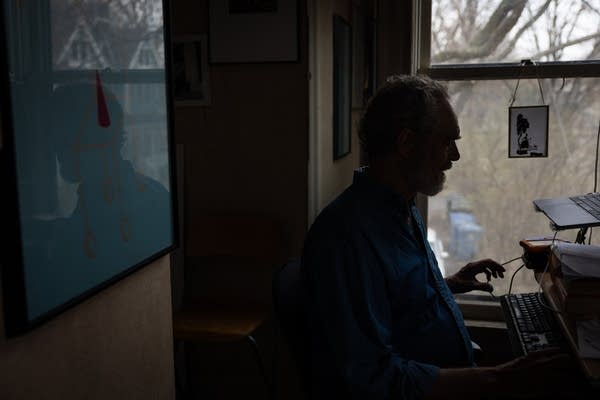
Artist and activist Patrick Scully, owner of Patrick’s Cabaret in Minneapolis, remembers what it was like before the bathhouses were extinct. In 1979, it was six years before he would be diagnosed with HIV, and by 1988, every bathhouse in the city would be closed — but not before several pivotal moments in city history led by the Minneapolis police vice squad.
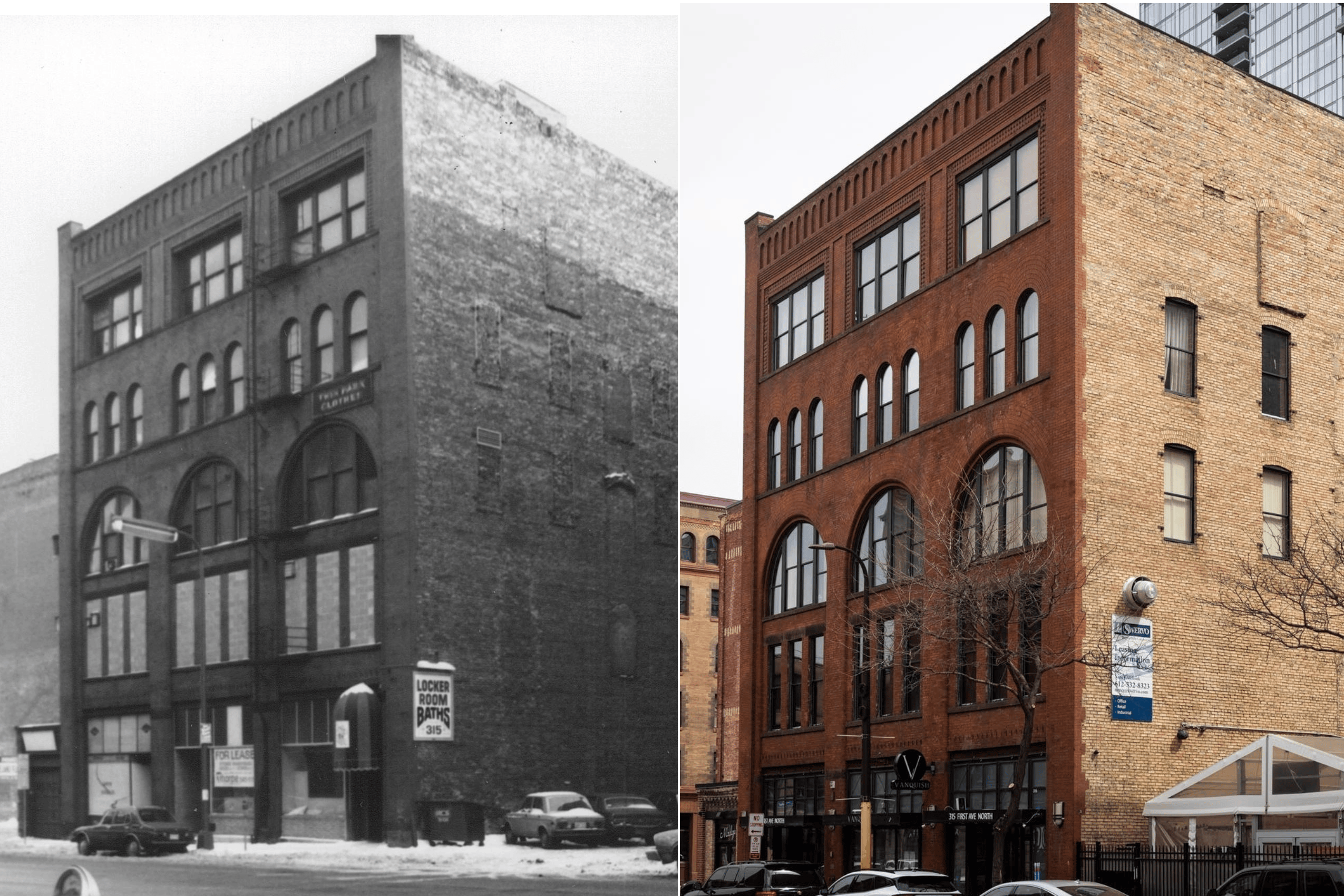
In the early hours of Dec. 1, 1979, Scully was watching television at a friend’s house when the news of the Locker Room Baths raid came on. Two undercover Minneapolis police officers in towels gave the all clear as dozens of police filed in with flashlights, batons and dogs, grabbing men and ticketing them for their alleged crimes for what later became known as the biggest adult bathhouse raid in U.S. history.

Of the 125 men who were ticketed, nine were arrested for the then-felony of sodomy. One of the men was Doug Victor, a bathhouse employee, who spoke out about the charges. He burned his citation at city hall and shouted to local media, “I am a sodomite!” Victor’s arrest sheet went into explicit detail about the sexual acts he was performing.
According to eyewitnesses, after things settled down, the police removed a 12-foot naugahyde penis that hung from the ceiling of the bathhouse, strapped it on top of their car and drove it back to the precinct in the middle of the night. Rumors say there are photos somewhere of officers posing with it, but they’ve been long lost to history.
LGBTQ+ historians, activists and those who frequented the bathhouses say the increased police surveillance of adult bathhouses, fear of the AIDS crisis and city redevelopment and gentrification all worked in tandem to close the bathhouses — and the ordinance that passed in 1988 banning them.
Nearly 40 years later, the Minneapolis City Council is deciding if this decision should be reversed. At a meeting on April 9, council members voted to send the proposed ordinances to staff so they could research and present their findings at a later date.

The history of the baths, and the raids that followed
In the 1970s and 1980s in Minneapolis, sexual culture was alive and well, local historian Myra Billund Phibbs says. There were plentiful adult bookstores, pornography theaters, adult bathhouses and a decades-long culture of downtown cruising — casual sexual activity in public places, like along the river.
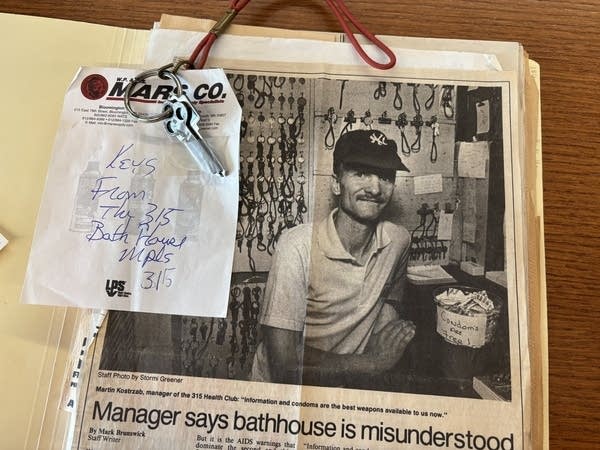
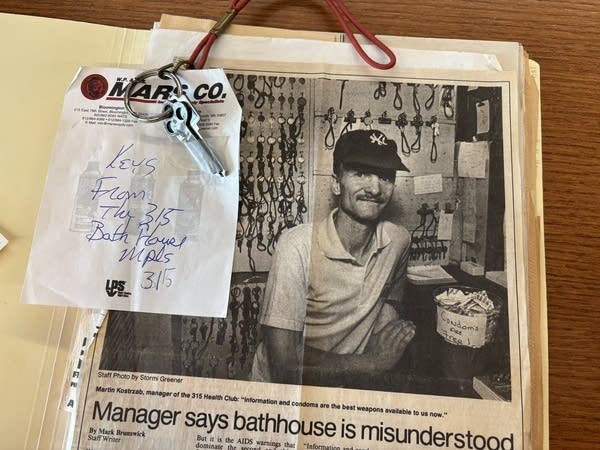
At the time, adult bathhouses in Minneapolis were community spaces, historically frequented by gay men, where people could also engage in sexual activity or relax after going out to bars. Bathhouses often had local gay activists working there; there were free condoms toward the end of their run. Some even offered cookies and chocolate milk in the lounge area or a place to dance in a disco.
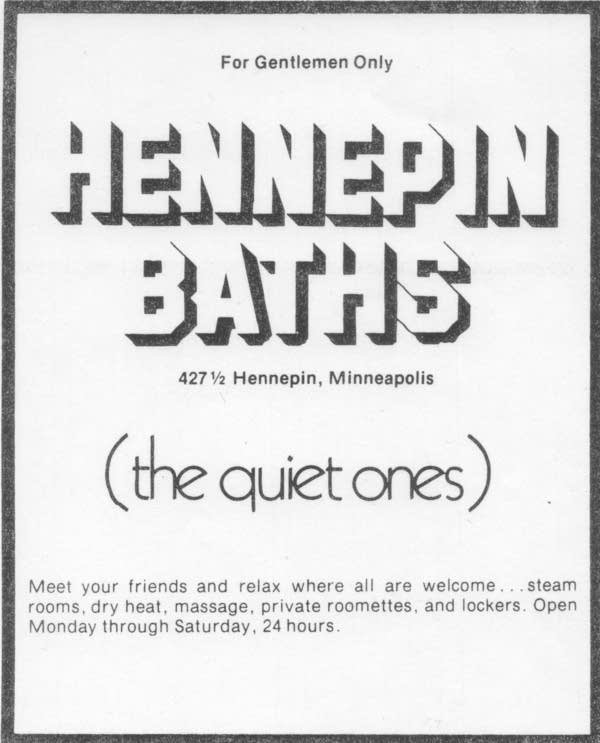
There were three bathhouses in the city: Locker Room Baths, Hennepin Baths and Big Daddy’s Bathhouse. Locker Room, later known as the 315 Health Club, was the most favored. It opened at its first location near present-day Target Center in 1969 and usually made about $2,000 a week — and up to $500,000 a year — with low overhead and minimal licensing, according to Billund Phibbs. The owners of the Locker Room allegedly had ties to organized crime.
Hundreds of guests came nightly, and the bathhouse was most popular after bar close, between 1 and 2 a.m. There were 60 private rooms, a dancefloor, a sauna and an orgy room that was later closed. The walls were painted all black, and heavy metal music often adorned the space.
Bathhouses were seen as a more racially integrated, inclusive space; this wasn’t always the case at bars. They also served patrons across social classes, and they were a cheap place to stay for the night if people were sobering up or fleeing a violent situation.
Until 2001, same-sex sexual activity between consenting men was illegal in Minnesota. When talking about the history of the bathhouses, Scully says that fact has to be centered in conversations.
“All of this is taking place in an environment in which same-sexual activity in Minnesota is illegal. Any sexual activity comes with a threat that you could get arrested for it, you could go to jail,” he said
In an interview with the Twin Cities Reader during his legal battle, Doug Victor talked about what he said was an unneeded amount of attention on the sexual acts of gay men.
“People think we’re sex fiends, perverts — but there are so many other aspects to my life other than what I do in bed. But that’s what it comes down to, to me. That’s what I am to them. That’s what they want to regulate. That’s where they want to f— with me.”
Hennepin Baths emerged in the 1950s and was usually for an older, more affluent crowd. It was located in the basement of the Lumber Exchange Building but closed in 1979 for violating city hotel ordinances. Big Daddy’s Bathhouse wasn’t as nice of a venue, according to patrons, and it closed in 1983.
Before the Locker Room raid of 1979, there was a “raid” at Big Daddy’s, but it wasn’t exactly by the book.
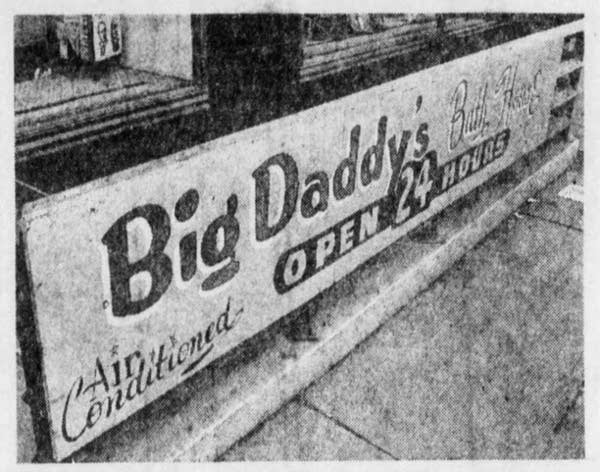
The head of the police department’s vice squad, the deputy mayor and a businessman spent the evening of June 28, 1979, out drinking, according to Billund Phibbs and local news reports. They decided to go to Big Daddy’s, which was located on the Block E strip of Hennepin Avenue.
Without a warrant or any approval, the three men went to the bathhouse and began yelling homophobic remarks at patrons and pulled 30 people out of their rooms and began searching through their personal belongings. Witnesses said the three men were so drunk, they had to hold onto the walls to support themselves.
In an interview with the newspaper now known as the Minnesota Star Tribune on June 29, 1979, the head of the vice squad said, “I don’t have to have any warrant. I can go in anywhere and inspect anything anytime I want.” A Hennepin County grand jury decided to take no action on the raid, citing there wasn’t enough evidence.
The night ignited the gay community as the news spread. The head of the vice squad called Big Daddy’s “a whorehouse for men” (he later said he was misquoted), and protesters demanded police and city administration be reformed.
The mayor, police chief and vice squad head were all set to be replaced by more liberal counterparts and, as a final goodbye, they conducted the massive raid on the Locker Room in December.
“This was seen as a parting gift by the outgoing police chief,” said Billund Phibbs. “They knew that Tony Bouza was coming in, they knew he was coming in as a reformer, and the vice squad in particular very, very deeply resented that and essentially wanted to do something that left him a message.”
In early February of 1980, there was a second raid on the Locker Room, and 102 men were ticketed, exactly one day before Tony Bouza would take over as the next chief. According to an article in the paper, Bouza — a former New York City policeman — said his philosophy on vice laws was “not to intrude into the privacy of the individuals.”


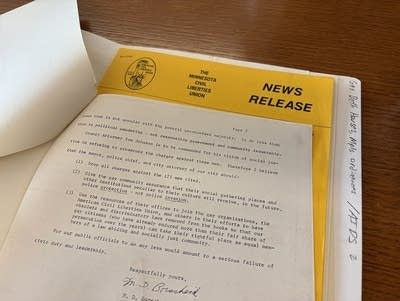
While the Big Daddy’s raid began more conversations within the LGBTQ+ community, the Locker Room raid pushed them mainstream.
According to Billund Phibbs, many people in Minneapolis didn’t even know about the bathhouses at the time. They blended into the background of Hennepin Avenue, but that soon changed. Documents from the Tretter Collection archives at the University of Minnesota show local media began writing about the raids almost weekly and covered council discussions on bathhouses extensively until the passage of the 1988 ordinance.
Brian Coyle takes a stance
The beginning of the 1980s brought the elections of the first openly lesbian Minnesota state legislator, Karen Clark, and the first openly gay Minneapolis City Council member, Brian Coyle. Coyle became a pivotal part of the bathhouse ban because, at first, he was firmly against it, but he later voted in favor of the ban.
The first positive HIV test in Minneapolis was in 1982. At the time, New York and San Francisco were seeing high numbers, but in Minnesota, it felt like something far away. By 1988, 447 cases of HIV were reported to the Minnesota Department of Health, and 252 Minnesotans had died from AIDS-related illness.
New York and San Francisco decided to close their bathhouses in 1985 and, soon after, Minneapolis did the same. Billund Phibbs said bathhouses were used as the scapegoat for HIV transmission and were deemed “hotspots.”
David Lurie was the city health commissioner at the time. He researched the effectiveness of closing the bathhouses in other cities and told city council that it resulted in no change to HIV transmission — people would continue engaging in sexual activity elsewhere. Yet, even with these findings, he recommended a contradictory policy in 1987 suggesting “high-risk sexual behavior” be prohibited.
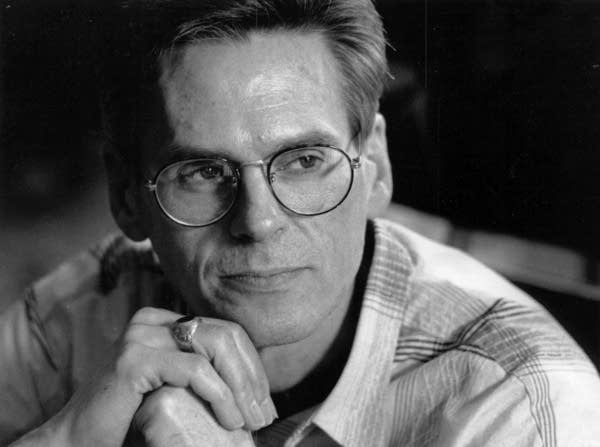
Coyle wasn’t convinced that bathhouses weren’t a high contributor to positive HIV cases. Noah Barth, who studies queer public history and is an exhibit developer, said while looking through Coyle’s personal papers at the Minnesota History Center, it was clear he was torn. Coyle also tested positive for HIV in 1986 and had not gone public with his diagnosis. He later died from AIDS-related illness in 1991.
“Brian Coyle was instrumental in the bathhouse ban passing, but what I discovered from his collection was a complicated story,” Barth said. “I wonder, at the time, if he wasn’t thinking so much about the ramifications of closing the bathhouses and was more thinking along the lines of, ‘Well, this couldn’t make the HIV epidemic worse, right?’”
“Ultimately, I think he chose the wrong thing to do, but there were many people who thought he chose the right thing to do,” Barth added.
Coyle’s history is complicated for many people, Barth said. While he helped open the door for future LGBTQ+ people in Minnesota politics, he closed the door on much of his community when he supported the ban, according to Barth and Scully.
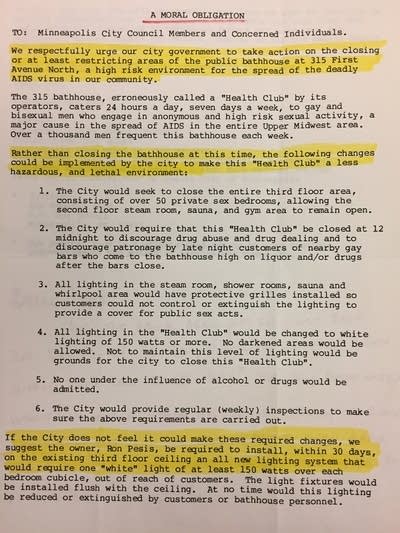
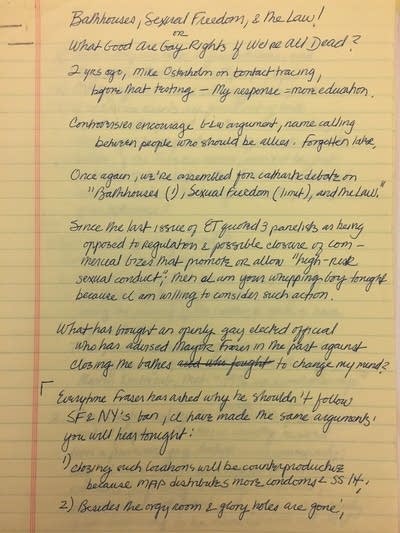
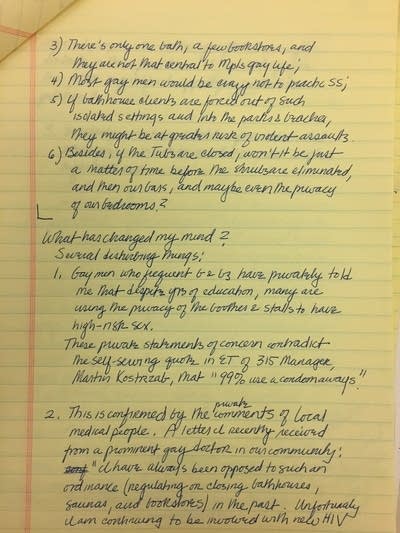
In a March 30, 1988, issue of the paper now known as the Minnesota Star Tribune, Coyle said, “For me, this is not easy. I have some people who won’t speak to me. This is one of those tougher issues because it’s so emotionally laden and passionate. It deals with the stuff of life and death. I’ve been taking the flak on it for months.”
On April 1 of that year, the Minneapolis City Council voted 11-0 to approve the ban. The Locker Room, the final bathhouse standing, closed just one day before the vote. Months later, Block E was demolished and the city prioritized the construction of luxury housing on Hennepin Avenue.
‘It’s weird we don’t have these spaces’
While working as a policy aide for the Minneapolis City Council, Claire Kingstad got an email from Phil Duran, the former legal director for OutFront Minnesota. Embrace North, a sauna in Linden Hills, was facing problems due to the bathhouse ordinance. The sauna is not an adult bathhouse, but a zoning law labeled them as a sexually oriented business.
Duran had asked Kingstad if she had heard of the work he and Karri Joe Plowman led in 2017 and of the history of the bathhouse ban. She hadn’t, but it soon took over the bulk of her work with Ben Carrier, another policy aide. They formed the Safer Sex Spaces coalition, a group dedicated to overturning the ban.
The two worked together to amend the code in 2023 and update it with standards from the CDC. Previous language, they said, was “harmful and stigmatizing.” All 13 council members voted in favor of the new language. Kingstad and Carrier also worked closely with sex workers in the city and groups like SWOP, the Sex Workers Outreach Project, and SWIM, Sex Workers in Minneapolis, who are also in favor of the ban being overturned.
Other cities in the U.S. revisited bathhouse bans, if they had them, in past years; but Minneapolis’ has remained in effect.
There is one adult bathhouse in the state, the Duluth Family Sauna. While it doesn’t explicitly cater to the LGBTQ+ community, there are private rooms and the basement is called “the bullpen,” a space reserved specifically for men.
“I would argue that we are one of the queerest cities of many in the country,” Kingstad said. “We have a very high density of LGBTQ residents, and it’s weird we don’t have these spaces here. And it’s frankly something that I would say is expected for a city that is an inclusive, welcoming queer and trans refuge place.”
Plowman, the founder of Twin Cities Leather, said the ban “just doesn’t make any sense” to them, and they see overturning it as a form of restorative justice.
They add that there are cities in red states that have bathhouses. “That’s what I’ve always thought is humorous, is that we’re such a great progressive state, but the two cities that don’t have facilities like this are two cities based in religion. That’s Boston and Minneapolis. That’s Catholic and that’s Lutheran,” Plowman said.
“That’s what it really comes down to, in my opinion: We’re following some old ideology and that we’re squeamish about this,” he added.
Plowman and others said that sex parties and sexual gathering spaces in Minneapolis didn’t go away after the ban, they just moved to other places. Sometimes they were safe sex parties, like ones that Patrick Scully hosted, and other times they were in places that weren’t practicing safe sex.
Dylan Boyer and Jay Orne with the Aliveness Project have helped host the monthly Safer Sex Spaces coalition meetings. Boyer, the director of development for the Aliveness Project, testified in the 2023 language update and shared his story of accessing an HIV test for the first time at a bathhouse in Chicago.
For Boyer and Orne, they think the best path forward is from a public health standpoint. They say HIV is no longer a “death sentence,” with medication advancements like PrEP. As the times change, they say city ordinances must keep up.
In 2018, the city of Minneapolis signed on to be a fast track city and take on initiatives to end HIV. It follows the 90-90-90 goal, meaning 90 percent of people living with HIV are aware of their status, 90 percent of people diagnosed are on antiretroviral therapy and 90 percent of people on medication achieve viral suppression. The year 2030 is the goal to hit that, but Boyer said he doesn’t think the city has done enough to be successful. But reversing the bathhouse ban could point them in the right direction.
“[Bathhouses are] one of those spaces that we can really connect with folks that are on the outskirts of that care, and not knowing their status and not knowing what prevention looks like for them. This is a population that we’re able to tap into, that we are not currently able to reach,” he said.
During the April 9 meeting, three more council members joined the ordinances as co-authors. But a few members questioned if now is the right time to pursue the ordinances, including council member Elizabeth Schaffer. She questioned the spending of staff time and dollars on researching the ordinances.
“These resolutions are simply disconnected from the reality of everyday residents and people trying to do business in our city,” she said.
Several council members pushed back against Schaffer, and council member Aisha Chughtai said that members of the council were spreading "homophobic rhetoric.”
Schaffer said the ordinances were “not a high priority” for most of the members in the diocese and “no one in the city of Minneapolis is criminalizing anyone for their sexuality.” She also read an email from a constituent who said they were a part of the Minnesota Alliance Against AIDS and supported Coyle’s run for council; decades later, they remain against bathhouses.
Research by staff on the ordinance is likely to wrap up in May, with a public hearing in June.
The next era of baths
Orne said his dream would be to have an Aliveness Thrive satellite clinic in a bathhouse to provide education and care. He wants to contribute to new and improved bathhouses that are run with the health of the LGBTQ+ community at the forefront, while being more inclusive to other identities outside of gay men.
“There were times where I had bad times in those spaces [bathhouses], and I think we can design them today in a way that’s really going to help people rather than just leave them to keep hurting,” he said. “That’s where folks are. We need to go there and create spaces for them rather than just lonely hotel rooms.”
Patrick Scully said it’s been hard to watch the city council teeter back and forth with their support or disagreement with the ban over the years. Scully’s message for the city council is simple: He wants them to picture him when they think about the ordinance.
“You need to pass this law as if you were me. You need to pass this law in my best interest,” he said. “Because if this is regulating behavior that you can’t imagine yourself ever engaging in, then you need to do a deep dive into understanding the lives of the people whose behavior you’re seeking to regulate and ask yourself: Am I really OK with playing God like that?”