Running a small business in 2026 means competing for attention against brands with budgets ten times your size. Video advertising has become the most effective way to level that playing field, but traditional production costs, hiring videographers, booking studios, paying voice actors, can drain a quarterly marketing budget in a single shoot.
The good news is that AI-powered tools have collapsed those barriers entirely. A solo founder, a boutique owner, or a regional service provider can now produce broadcast-quality video ads in under an hour, often with zero prior video experience. This guide walks you through the practical workflow that thousands of independent operators use to drive measurable results.
Key Takeaways
|
Why Traditional Ad Production No Longer Makes Sense for Small Brands
Math used to be brutal. A 30-second commercial spot could cost anywhere from $5,000 to $50,000 once you accounted for talent, location fees, editing, and sound design. Even a scrappy social ad shot on a phone required hours of planning, multiple takes, and post-production headaches that most owners simply didn’t have time for.
AI changes this equation in two important ways. First, it removes the dependency on physical resources by generating realistic voiceovers, virtual presenters, and motion graphics from simple text prompts. Second, it slashes turnaround time from weeks to minutes, letting you test multiple creative angles before committing budget to ad spend.
Picking the Right Platform for Your Workflow
Not every video tool is built for advertising. Some focus on entertainment clips, others on corporate explainers, and only a handful are optimized for the conversion-driven format that actually moves products.
Pollo AI’s AI Ad Generator stands out by transforming product photos and ideas into eye-catching, high-conversion video ads without requiring a film crew. With one click, the platform produces polished scripts, lifelike voiceovers, and AI avatars that work across every product category and industry vertical.
This approach matters because conversion-focused video follows different rules than vlog content. Pacing, hook structure, call-to-action placement, and visual hierarchy all need to align with how viewers actually behave on paid social feeds.

A Practical Workflow for Your First AI-Generated Ad
Step 1: Clarify Your Offer and Audience
Before generating anything, write down three things in plain language: what you sell, who buys it, and why they should care right now. This clarity prevents the most common beginner mistake, producing visually attractive ads that fail to convert because the message drifts.
Step 2: Gather Your Source Assets
Collect three to five sharp product photos shot against clean backgrounds. If you sell a service, pull together logo files, customer testimonials, and any existing brand imagery. Quality input dramatically improves quality output, regardless of how powerful the AI model is.
Step 3: Generate Your Script and Visuals
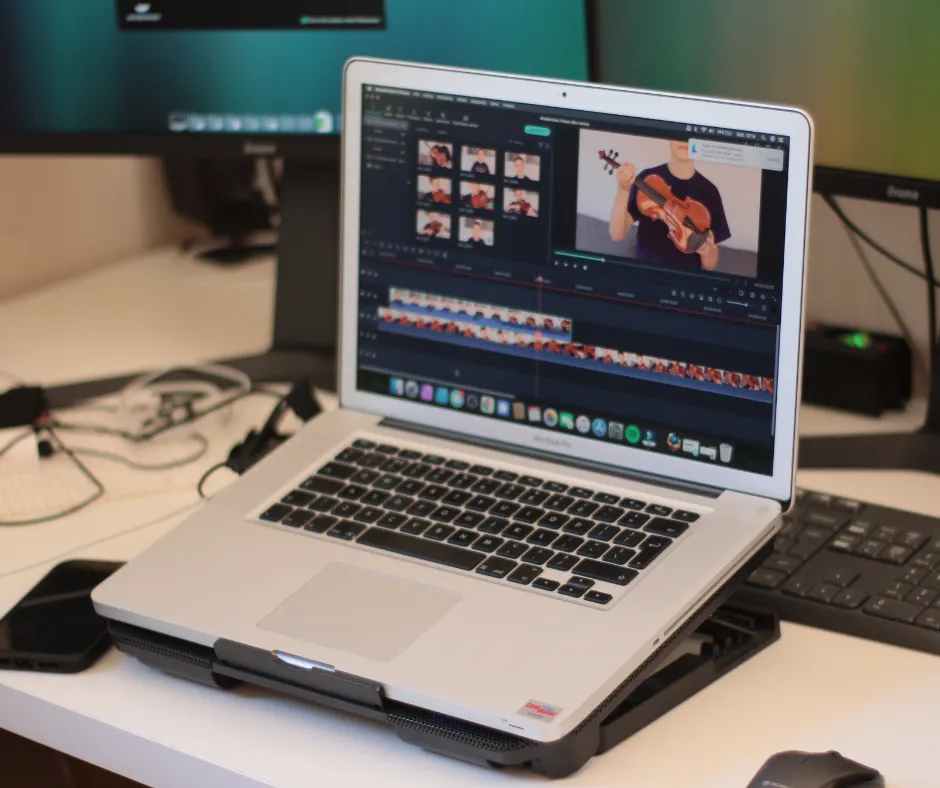
Feed your offer details into the platform and let it draft the script. Review the output for tone and accuracy, then adjust any phrasing that feels off-brand. Pollo AI’s AI Ad Generator handles voiceover synthesis and avatar selection in the same workflow, giving you a complete draft within minutes rather than days.
Step 4: Test Multiple Variations
Don’t settle for the first version. Generate three to five variants with different hooks, pacing, and visual styles. Running A/B tests with small ad budgets reveals which creative angle resonates with your specific audience before you scale spend.
Step 5: Optimize for Each Placement
A vertical 9:16 cut for Reels and TikTok needs different framing than a 1:1 square for feed placements or a 16:9 widescreen version for YouTube pre-roll. Export each format separately rather than cropping a single master file, since recomposing for each placement preserves the visual hierarchy that drives conversions.
Adapting Your Ads for Instagram Specifically
Instagram remains the highest-intent platform for many product categories, especially in fashion, beauty, home goods, and lifestyle services. The catch is that Instagram users have grown highly resistant to anything that looks like a traditional commercial, which means your ads need to feel native to the feed.
This is where Pollo AI’s Instagram Video Maker becomes particularly useful. It’s purpose-built to handle every Instagram format with best-practice templates that turn ideas into dynamic videos, Stories, and Reels. The tool integrates trending audio, smooth transitions, and scroll-stopping hooks aligned with how the platform’s algorithm actually distributes content, giving you a measurable lift in organic reach alongside your paid efforts.
-
Crafting Hooks That Stop the Scroll
The first 1.5 seconds of any video ad determine whether viewers stay or swipe away. Strong hooks usually fall into one of four categories: a surprising statement, a relatable problem, a visual pattern interrupt, or a direct question aimed at the target buyer.
Avoid generic openers like “Are you tired of…” or “Introducing the new…” These phrases trigger immediate skip behavior because viewers have seen them thousands of times. Instead, lead with a specific moment or outcome that signals immediate relevance.
-
Common Pitfalls That Tank Ad Performance
The biggest mistake new advertisers make is overloading a single ad with too many messages. One hook, one core benefit, one call to action. Anything more dilutes attention and reduces conversion rates measurably.
Another frequent error involves voiceover pacing. AI-generated narration often sounds best at slightly slower delivery than you’d expect from a human reader, particularly when paired with visual demonstrations. Test playback at different speeds before finalizing.
Finally, don’t ignore captions. Roughly 85 percent of social video plays happen on muted devices, so on-screen text isn’t optional anymore. Pollo AI’s AI Ad Generator can produce captioned versions automatically, but always proofread before publishing.
-
Building a Repeatable Ad Creation System
One ad rarely changes a business. Sustained growth comes from building a creative pipeline that produces fresh variations consistently, allowing you to refresh fatigued audiences and respond to seasonal shifts without scrambling.
Block one half-day per month for batch ad production. Generate 10 to 15 variations across your top three product lines, organize them by campaign theme, and load them into your ad manager as a queue. This rhythm removes the constant pressure of last-minute creative needs and lets you focus on analyzing what actually drives sales.
-
Measuring What Actually Matters
Vanity metrics like impressions and reach feel encouraging but rarely correlate with revenue. The numbers worth watching are click-through rate, cost per acquisition, and return on ad spend, broken down by creative variant rather than aggregated across the whole campaign.
For Instagram-specific campaigns, the Instagram Video Maker workflow produces unified aesthetics across Reels, Stories, and feed posts, which compounds brand recognition over time. Tracking saves and shares gives you early signals about which creatives will sustain performance long-term, even before conversion data fully matures.

Scaling From One Winning Ad to a Full Campaign
Once you identify a creative variant that consistently outperforms others, resist the urge to retire it quickly. Winners often perform for weeks or months before audience fatigue sets in. Use that runway to generate three or four close variations, swapping hooks, voiceovers, or product angles while preserving the structural elements that made the original convert.
The Instagram Video Maker workflow makes this iteration cycle especially efficient because it preserves your visual style guide across new outputs, keeping every variation on-brand even as you experiment.
Final Thoughts
Producing video ads no longer requires a budget that locks small businesses out of paid social. With AI handling scripting, voiceover, and visual generation, your real job is strategic: understanding your audience, sharpening your offer, and testing creative angles methodically. Start with one ad this week, run it for five days with a modest budget, and let the data guide your next move. Momentum in performance marketing always favors operators who ship quickly and learn faster than their competition.
Curious what the best business coaches in the world would recommend for your growth? Find out here.
Frequently Asked Questions
1. How can small businesses create video ads without a large marketing budget?
Small businesses can use AI-powered video advertising tools to generate scripts, voiceovers, visuals, and video ads without hiring videographers, studios, or voice actors. This significantly reduces production costs while allowing businesses to create professional-quality ads quickly.
2. Why is testing multiple video ad variations important?
Testing multiple variations helps businesses identify which hooks, visuals, messaging, and calls to action resonate most with their audience. Running A/B tests before increasing ad spend improves conversion rates and reduces wasted marketing budget.
3. What metrics should businesses track to measure video ad performance?
Businesses should focus on click-through rate (CTR), cost per acquisition (CPA), and return on ad spend (ROAS). These metrics provide a clearer picture of revenue impact than vanity metrics such as impressions or reach.