If Operation Metro Surge was a strike, the Minneapolis suburb of Columbia Heights and its 3,000-student school district felt like a target.
Seven students — including a 5-year-old now famous for his blue bunny hat — were taken from their driveways, cars and sidewalks on their way to school during the winter. Dozens of parents were detained, teachers faced off with armed masked federal agents and school cafeterias filled with emergency food and diaper supplies.
While the surge faded slowly over the spring, the trauma remains for many Columbia Heights children, families and school staff. Asylum denials have skyrocketed and district leaders worry that many more students will leave the community over the summer.
MPR News returned to the district recently to hear students, staff and parents speak about why they felt compelled to intervene to help immigrant families and their children and how it’s changed them and their ethnically and racially diverse suburb.
“The surge was so much worse than most people realize,” said Nell Bing, whose 12-year-old is a sixth grader in the district. “Our town was just inundated,” she said. “It was really just like night and day. One day things were normal, and the very next we were practically an underground militia.”
Federal officials said during the surge they were targeting the “worst of the worst,” for deportation, including “murderers, pedophiles, rapists, gang members and terrorists.”
Researchers, however, later examined records for more than 3,700 people arrested in the surge and found less than 25 percent had a criminal conviction on their record. About 13 percent of those arrested had pending criminal charges.
Columbia Heights school leaders say the surge fundamentally changed their community and that what felt like an attack by the federal government has not ended.
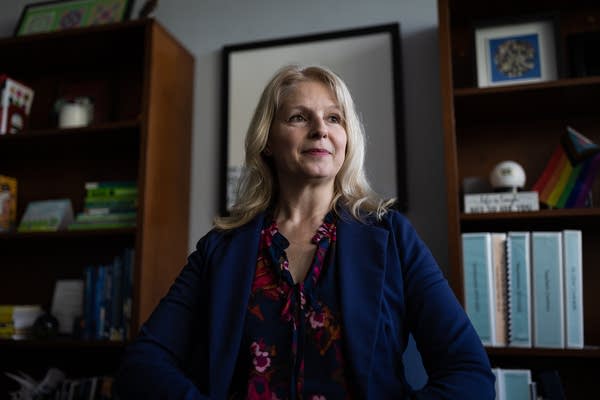
“We’re still feeling it,” said Zena Stenvik, the Columbia Heights schools superintendent who took on a public role to shield children and families as federal immigration agents flooded the region. “It is still happening (even if) we’re not seeing the physical presence in the streets every day.”
Stenvik said high school students are still being stopped by Immigration and Customs Enforcement agents, and families are seeing more and more of their asylum claims denied. With school is out for the summer, she said she worries more students will leave as their families move away or self-deport.
‘We knew that we would be in a lot of trouble’
For the Columbia Heights school district, the worries about what federal immigration enforcement might do in their community started in October, long before national headlines began describing what was happening in Minnesota.
“Every single school group that I met with said, ‘We're concerned about our immigrant neighbors,’” Stenvik recalled. “In October, (ICE) was already a presence here in Columbia Heights.”
The district helped families fill out delegation of parental authority forms and found partners to run legal clinics to prepare for children who might be left behind if parents were arrested by ICE. Stenvik got her staff trained on judicial search warrant protocols and started to hold weekly meetings with community leaders.
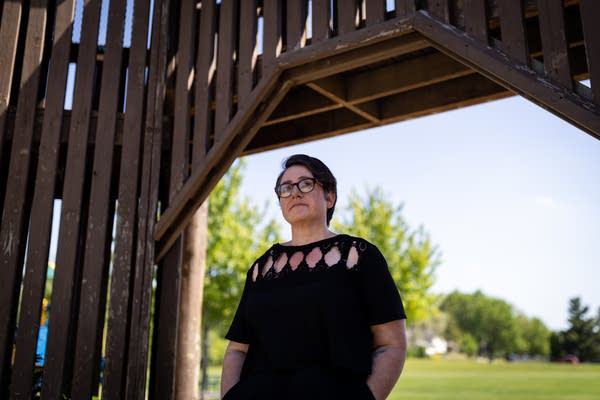
Brenna Zeimet, a parent whose 12-year-old attends school in the district, said she started worrying about her immigrant neighbors in October.
“I was watching Chicago, I was watching LA, I was watching Portland,” she recalled. “We knew that Minneapolis had been on a short list. We knew that Columbia Heights is more diverse than it is white … and so we knew that we would be in a lot of trouble.”
Within weeks, Zeimet’s fears began to play out.
Cars filled with unidentified masked agents carrying weapons filled the city. Neighbors started standing outside schools in the mornings and afternoons to help children cross the street safely to get to their classes.
By December and January, agents had begun parking in school lots, following buses, monitoring streets and dragging parents from their homes and local businesses, Zeimet and others said.
“The caravans would go up and down Central Avenue and just, like, pull people out of their cars and abandon the cars in the middle of the road, and they would take people from gas stations,” Zeimet said. “They were following our school buses, they were picking up parents as they were walking through the park. It wasn't anything that you could not notice.”
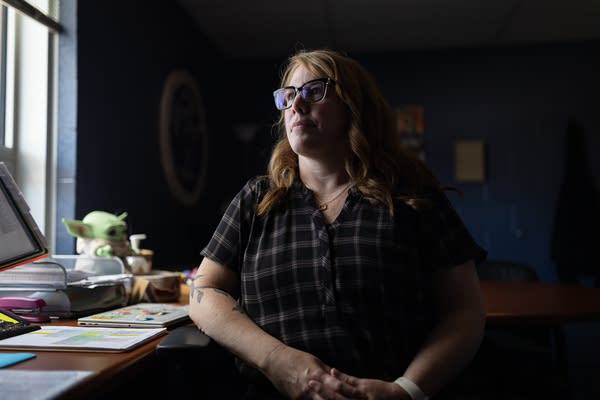
By the time students returned to classes after winter break, Stenvik said ICE arrests had expanded beyond the parents in her district. Children were being taken away.
First, it was an 11-year old girl named Elizabeth with her mother, detained on a sidewalk near the school. Then a group of high school students were pulled over without their parents on their way to class.
“They were stopping people based on the color of their skin. It was absolutely wrong,” said Leslee Sherk, principal of Columbia Heights Academy.
‘I had to be an adult’
Seventeen-year-old Alex, a U.S. citizen who didn’t want his last name used to protect his family, finished his sophomore year of high school last month.
During the surge, he said it felt like ICE was everywhere. He started taking on responsibilities for his family and neighbors while his parents tried to make it safely to and from their jobs.
“My role was to take care of my family, be a parent, run errands, pick people up from school,” Alex said. “I had to be an adult.”
Alex said ICE stopped and questioned him twice.
One day, on his way to school, an ICE vehicle swerved near Alex’s car, boxing him in. Alex said the agents demanded he get out of the car, laughed at and mocked him. Eventually, after showing them his U.S. passport, they let him go.
Alex said the encounter frightened him. He still gets nervous when he sees cars in his neighborhood with out-of-state license plates.
“It was terrifying, it was scary, it was a big risk of doing (every day) things,” Alex said. “I mean, they were killing people, you know? People are still traumatized about it.”
Alex said he struggled to sleep at night and focus on school because he was afraid his parents would be detained. At the beginning of the year, his grades slipped and he had to work to get them back up. But he’s proud of the way he supported his family and community.
“I wanted everyone to be safe,” Alex said, noting that he bought and delivered groceries to immigrant families and helped kids to school. “I had to help the community. It was a difficult time. It was a difficult winter.”
Alex said people are still dealing with the surge’s aftereffects. Families he knows have left the country because they can’t afford the legal fees to defend themselves. Some have turned into single-parent households after spouses were detained.
“Whoever voted for that kind of president, it was really messed up,” Alex said. “What I experienced at a young age, I will never forget.”
‘Violence to our children’
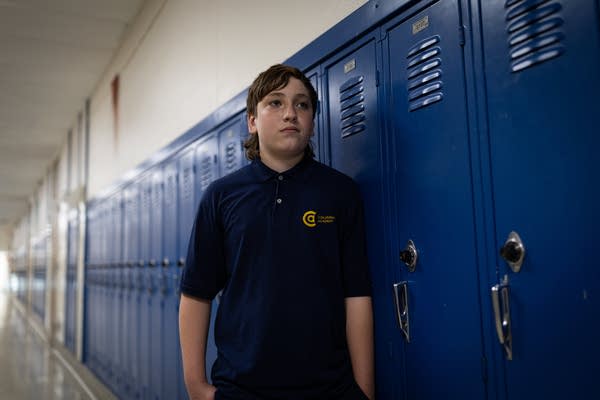
Eleven-year-old Abraham Zeimet remembers overhearing his parents talking about the surge. He saw them take turns leaving at night to deliver groceries and help their neighbors. His classmates began staying home from school.
The scariest moment for him happened when a masked man carrying a gun showed up at his house in the morning. He heard his mom screaming.
“It was just, like, terrible to see that,” he said. “I felt like my heart just sank. It felt like I was falling. Like shaking legs. I was so scared. They’ll take anyone.”
Abraham’s mom is Brenna Zeimet. In January, she said she regularly worked 16-hour days, trying to help her neighbors.
“(When they came to my house) that was really scary, and so I had a neighbor come and take my kids to school that day,” Zeimet said. “They knew us. Yeah, that was really scary.
In January, she said there were days when she and her neighbors could count up to 60 agents doing five raids at a time in their community.
She recalled waiting with other parents in a school parking lot as a caravan of ICE agents led by then-Border Patrol commander at large Greg Bovino rolled up Central Avenue near Abraham’s school.
“It felt like ‘Lord of the Rings’ where, like, Helm’s Deep is happening, and they’re waiting,” Zeimet said.
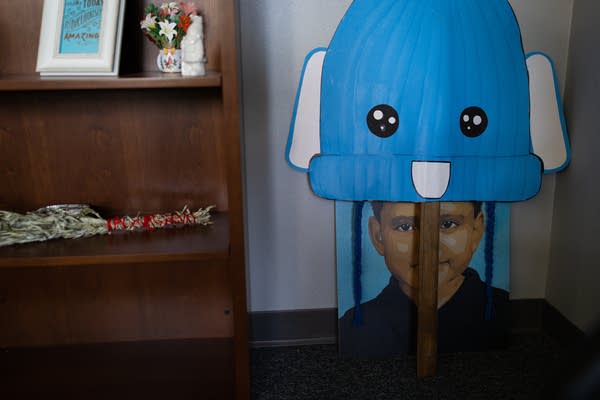
“It was just this feeling of the whole community just holding our breath as he went by, just praying that he wasn't going to, like, come. Because at that point they had already taken multiple of our kids, and they would follow our buses,” she said. “The numbers of people that just turned out to go, like, ‘You are not taking people here.’”
Zeimet said encounters with ICE like this one left her shaking and in tears during the surge. And even now she still has occasional panic attacks.
“That’s not how anything should work,” she said. “We should live in our own neighborhoods and be in our own space and (not) be terrified that the government is going to come and, like, do violence to our children. It was just so ridiculous and so unnecessary and so cruel.”
‘They were taking everyone’
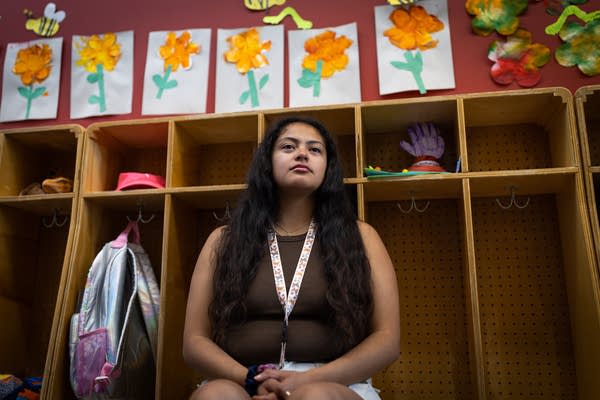
Maria Gorde still hasn’t processed what happened during the surge. She works with the community’s youngest members in the Columbia Heights early education center. She and her coworkers remain concerned about the lingering effects on the children in their classrooms.
When students came back to in-person classes after most ICE agents left Minnesota, Gorde said many of the children were unusually quiet and hesitant to laugh or smile. One of her students had stopped speaking altogether.
“We tried to protect them,” Gorde said. “It’s not exaggerated. It was completely inhumane.”
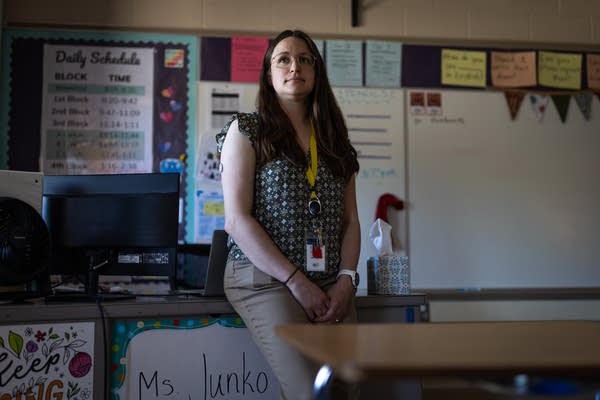
Ellen Junko Sandoval, a teacher who works with English language learners at Columbia Heights Academy, delivered groceries to student families who were afraid to leave their homes during the surge. When she showed up with food, many parents were afraid to open their doors.
“It's something that now families still have to deal with,” Junko Sandoval said. “Families have been broken apart, and families have been disappointed by their lack of rights in a country where … everybody's supposed to have rights here.”
After 5-year-old Liam Conejo Ramos and his father were detained, Junko Sandoval worried her toddler son along with her husband, who’s from Honduras, might also be taken.
“That was the moment where, because I was seeing it unfold in my community, and with students who attend my district, just realizing that, like, nobody is safe, and my family's not safe,” Junko Sandoval said. “They didn’t care about documentation. They were taking everyone.”
She tried to make her classroom a safe and calm place for the children who were still attending in-person classes but the anxiety and tension were hard to ignore.
She said it felt ironic to continue teaching students about the Constitution and Bill of Rights when they were seeing agents seize and search people in the streets just outside their homes and classrooms.
“Students were like, ‘Wait, wait,’ (and I) was like, ‘No, this is part of the way that our country is built, and the way that our country runs, like everybody has these rights as written into our Constitution,’” she said. “It was in direct contrast with what they were seeing on the news and on social media, and what was happening to their families.”
‘Making us feel like we’re separate’
For 14-year-old Aisha, a student at Columbia Heights High School, the surge made her question things she’d been taught about her country. In January and February, her phone buzzed with messages from friends taking photos of ICE agents in their neighborhoods. On her way to school, she’d sometimes see their vans.
“I can’t believe this is happening,” she recalled. “It was draining knowing anything could happen to you.”
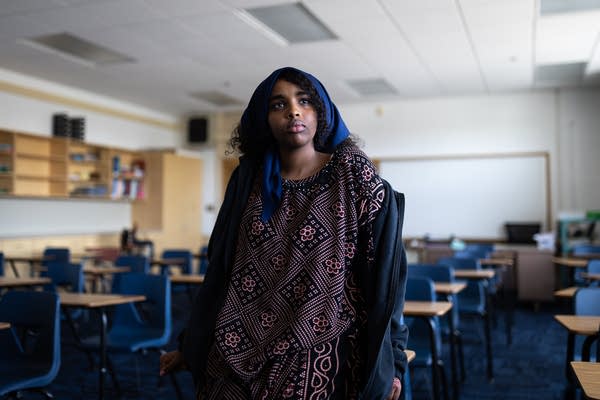
Some of Aisha’s classmates stopped coming to school. Her cousin was taken by agents while outside a motor vehicle services office.
Looking back months later, she said the surge felt like an intentional tactic meant to dehumanize immigrants like her, her family and friends.
“(It) was less about, like, standard law enforcement and more about like political communication, like a strategy,” said Aisha, who asked that her last name not be used to protect her family.
“I felt like the underlying motive was political polarization — you know, dividing us, making us feel like we’re separate.”