
If Spirit Airlines shuts down, will your card refund your ticket?


While a potenial bailout from the U.S. government is still being discussed, the end of the runway may be in sight for ultra-low-cost carrier Spirit Airlines.

If the airline did cease operations, Spirit would be the largest U.S. carrier to do so in quite some time, and there are, understandably, already many questions swirling among travelers who have tickets to fly on an airline with an uncertain future.

While there won’t be cut-and-dried answers to every situation at this point, here are some things to know if you have tickets to fly Spirit Airlines and are hoping for some kind of protection or reimbursement for that purchase.

Will Spirit Airlines reimburse you for your tickets if they cease operations?

When an airline ceases operations, the likelihood of individual travelers getting a refund from that now-defunct airline is very low. And the airline obviously cannot even issue you a credit in that case, as they are no longer operating.

So if you are holding a Spirit Airlines ticket and the airline ceases operations, it is very unlikely the airline will be able to provide you with anything in exchange for the ticket you purchased.

Spirit Airlines Airbus A320 LAX
ZACH GRIFF/THE POINTS GUY

Will your credit card refund you if Spirit Airlines stops flying?

Your credit card might seem like the fallback here, but the protections you’re probably counting on don’t work the way you might expect in this scenario.

Why typical credit card travel protections won’t apply

At TPG, we talk a lot about built-in travel protections when you use certain credit cards to purchase your airfare and how your credit card’s built-in benefits will sometimes reimburse you for expenses the airlines won’t in the event of long delays and even cancellations.

Unfortunately, that type of trip protection is unlikely to help if Spirit ceases operations, as these benefits typically exclude situations where an airline stops flying altogether.

But fortunately, it doesn’t mean your credit card can’t help at all.

Reward your inbox with the TPG Daily newsletter

Join over 700,000 readers for breaking news, in-depth guides and exclusive deals from TPG’s experts

When a chargeback could help you get your money back

If Spirit were to shut down and cancel your flight without issuing a refund, your credit card may still offer a path to getting your money back.

That’s because most credit cards offer consumer purchase protections under the Fair Credit Billing Act that allow you to dispute charges for goods or services that were never delivered, which would potentially apply if an airline ceases operations and cannot provide your scheduled flight.

To take advantage of these protections, you typically need to act quickly — often within 60 days of the statement on which the charge appears.

While your credit card can assist with charges made outside that timeframe, that’s not guaranteed. Once you file a dispute with your credit card company, the credit card issuer must acknowledge your claim and investigate it.

During that time, you generally won’t be required to pay the disputed amount, and it cannot negatively impact your credit score while the investigation is ongoing.

“This is likely your best recourse … but there’s no guarantee the refund will be made,” Henry Harteveldt, president and travel industry analyst at Atmosphere Research Group, warned TPG in a prior interview.

How to file a dispute (and what you’ll need)

The Department of Transportation shares that in the event of a chargeback claim in scenarios like this, you should be prepared to provide your credit card company with:

  • Your account number
  • Copy of the airline ticket, itinerary, or receipt
  • If the transportation was partially used, identify the used and unused segments
  • State that your airline is in bankruptcy and ceased all operations, you did not receive the service that you charged to your card, and you are requesting a credit pursuant to the Fair Credit Billing Act.

This means you’ll want to screenshot your ticket information and any flight cancellation information as it’s posted. And since there is no guarantee of how long a shuttered airline will keep individual flight information available on its website, we would recommend doing that all in short order.

Often, you can start this process in your credit card account next to the individual charges by clicking “dispute this charge” or “problem with this purchase”.
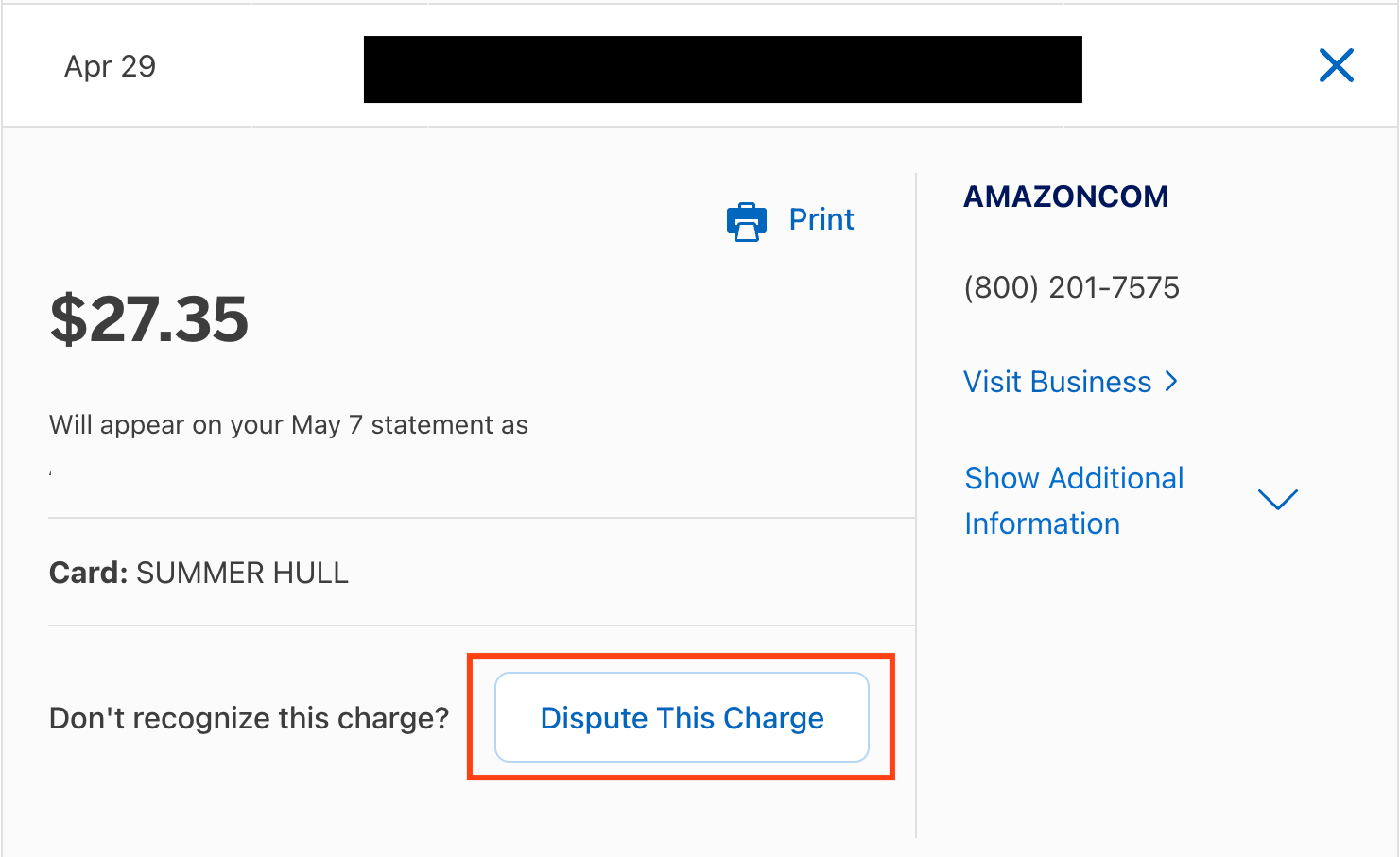
AMEX

You’ll then be prompted through a series of choices and questions to start the process.
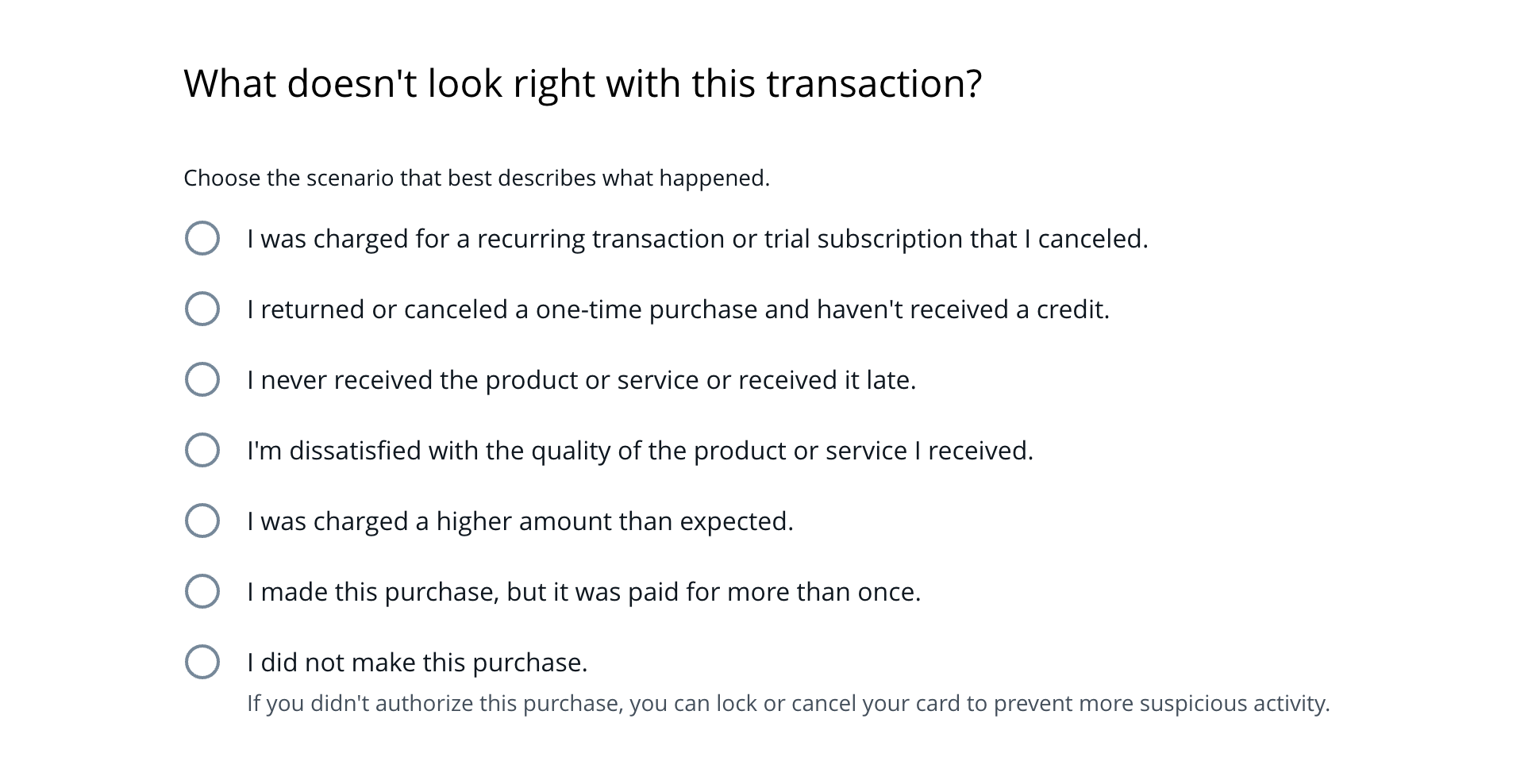
CHASE

Ultimately, the credit card issuer decides whether your claim qualifies, and outcomes can vary.

It’s also worth noting that these protections are stronger when you pay with a credit card. Debit card protections can differ by issuer and may not offer the same dispute rights if the airline fails to deliver your flight.

Filing a claim through bankruptcy proceedings is another option, but it’s generally a long shot. Passengers are typically considered unsecured creditors and may recover only a small fraction of what they’re owed, if anything.

Will your credit card cover new flights if Spirit cancels yours?

In most cases, no — your credit card is unlikely to cover the cost of booking a new flight if an airline ceases operations.

While some premium credit cards offer trip interruption or cancellation coverage, those benefits typically exclude situations in which an airline ceases operations altogether.

That means if Spirit were to shut down and you still need to travel, you would likely need to book a new ticket out of pocket — and last-minute fares could be more expensive than the ones you originally purchased. That said, some airlines, such as American Airlines, have already announced that they have placed a cap on Main Cabin fares on routes shared by American Airlines and Spirit.

Other airlines, such as United and Frontier, have shared that they are preparing to support Spirit Airlines customers and crew if the airline ceased operations. This help may take the form of “rescue fares” or discounted tickets for stranded passengers and those with upcoming travel booked on Spirit.

Of course, having your own plan B in the form an emergency stash of points and miles is also wise.

Bottom line

If Spirit Airlines were to cease operations, the credit card you used could help you recover the cost of your ticket — but only if you act quickly and follow the dispute (also known as chargeback) process.

Even then, reimbursement is not 100% guaranteed, and you should be prepared to provide documentation and make alternate travel plans at your own expense. Using a credit card for your ticket purchases, having proactive backup plans and acting quickly can make a significant difference in how much you ultimately recover in situations such as this.


Source link

Leave a Reply

Subscribe to Our Newsletter

Get our latest articles delivered straight to your inbox. No spam, we promise.

Recent Reviews


Database Administrator Duties – Table of Content

The database administrator is responsible for performing a number of duties. Based on the work the Database administrator does, their role varies. Different roles of database administrators are Database architect, Data modeler,  Database analyst, System DBA, Application DBA, Performance analyst, Task-oriented DBA and Data warehouse administrator. Now, let us go through the duties of database administrators.

         Interested in learning SQL Server DBA Join HKR and Learn more on SQL Server DBA Certification Course!

The following are some of the main responsibilities that comprise a database administrator everyday work:

Installing and maintenance of the software: A DBA will often work together with other employees of the organization to install and configure a new Oracle database, SQL Server, etc. The system administrator will configure the hardware and will deploy the OS for the database server; then, the DBA will install the database software and configure it to use it. Since the updates and the patches are necessary, the DBA is responsible for this continuous maintenance. Whenever a new server is required, the DBA is responsible for transferring data to the new platform from the existing system.

Extracting, Transforming, and Loading Data: Extracting, transforming, and loading data is related to importing huge volumes of data efficiently which have been retrieved from multiple systems within a data warehouse environment. The external data is cleaned and processed to adapt to the desired format to be able to import it to a central repository.

Specialized data handling: Databases can be large and include unstructured data types like documents, images, video, or sound files. The management of a large database needs higher-level skills as well as additional tuning and monitoring to maintain efficiency

                                                                       Lets’s get started with SQL Server DBA Tutorial online!

SQL Server DBA Training

  • Master Your Craft
  • Lifetime LMS & Faculty Access
  • 24/7 online expert support
  • Real-world & Project Based Learning

Database Recovery and backup: Database Administrators create recovery and backup plans and procedures according to the industry best practices and then ensure that the required steps are taken. Backups are costly and time-consuming, so database administrators may need to convince management to take the required precautions to keep the data safe. System administrators or other staff can usually create the backups.  It is the responsibility of the DBA to ensure that it is done in a  timely manner. If the server fails or some data loss occurs, the DBA will use the present backups to restore the lost information on the system. Different recovery strategies are needed for different types of failures, and DBAs should be ready for every eventuality. As technology evolves, it becomes increasingly common for the DBA to back up databases in the cloud, MS Azure for SQL Server and Oracle Cloud for Oracle databases.

Security: A Database administrator should be aware of potential weaknesses in the company’s database software and overall system and try to minimize risks. While no system is fully immune to attacks, the implementation of best practices may reduce risks. If there is an irregularity or a security breach, the DBA may refer to the audit logs to find out who did what with the data. The Audit trials also matter when using regulated data.

Authentication: A significant aspect of database security is the configuration of employee access. Database administrators are responsible for managing the access and the type permissions the users are given. For example, a user can be allowed to view only some pieces of information or not be permitted to make changes to the system.

Capacity planning: The DBA should know the current size of the database and the speed at which it is growing so that they can predict future requirements. Storage is the amount of space the database occupies in the server and the backup space. Capacity is the level of usage. If the organization is growing rapidly and has a large number of new users, then the DBA will need to develop the capacity to manage the additional workload.

Monitoring the performance: Monitoring the databases for performance problems is part of continuous system maintenance performed by a DBA. If any part of the system slows down processing, the DBA needs to modify the software configuration or should add extra hardware capability. There are many kinds of monitoring tools, and DBA’s are responsible for understanding what they need to improve the system. Third-party organizations may be ideal to outsource this aspect, but ensure they provide modern DBA support.

    Top 30+ frequently asked SQL Server DBA interview questions & answers for freshers & experienced professionals

HKR Trainings Logo

Subscribe to our YouTube channel to get new updates..!

Tuning the database: Performance monitoring indicates where the database must be modified to work most effectively. The physical configuration, how the database is indexed, and the way queries are managed may all have a dramatic impact on the database performance. We can proactively adjust a system according to the application and use it with effective monitoring instead of waiting for an issue to develop.

Troubleshooting: DBA’s are available for troubleshooting if an issue arises. Whether they want to restore the lost data quickly or fix a problem to minimize damage, the database administrators should understand and answer problems quickly when they arise.

If a user requires help or assistance at any time, DBA has a responsibility to help them. The DBA also provides complete support for new users of the database. And Users’ queries must be executed quickly. The users expect fast retrieval of responses to their queries. So, the database administrator enhances the query processing by increasing their performance.

Database administrator’s responsibilities

The Database administrator has the following responsibilities:

  • Make the decision with respect to the database content.
  • Plans access strategy and storage structure.
  • Gives assistance to users.
  • Defines integrity and security checks.
  • Interprets the strategies related to recovery and backup.
  • Monitor performance and respond to changing requirements.

Skills needed for database administrator

Following are the skills needed for a database administrator to become successful:

  • Designing the database.
  • Familiarity with Structured Query Language (SQL).
  • Understanding the distributed architecture.
  • Familiarity with the various operating servers.
  • Familiarity with the Relational Database Management System. 
  • Willing to deal with challenges and resolve issues quickly.

Enroll in our IBM BPM Admin Training program today and elevate your skills!

SQL Server DBA Training

Weekday / Weekend Batches

Conclusion:

In this blog, we have gone through the duties of a  database administrator. We hope you found this information useful. If you need any information related to database administrators, keep in touch with us.

Other Blogs:


Source link