Inside Ebola country: NPR reports from eastern DR Congo's outbreak zone


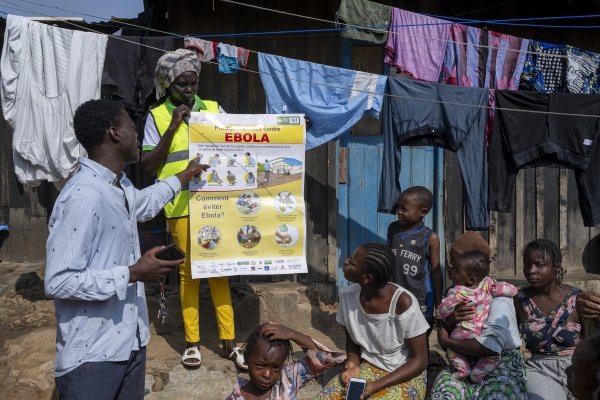
Eliezer Kasongo, president of REMEDE Bunia, raises awareness among residents about Ebola prevention measures during a community outreach event on Ebola Awareness Day in Bunia, Ituri Province, Democratic Republic of the Congo.

Eliezer Kasongo, president of REMEDE Bunia, raises awareness among residents about Ebola prevention measures during a community outreach event on Ebola Awareness Day in Bunia, Ituri Province, Democratic Republic of the Congo.
Arsène Mpiana Monkwe for NPR

BUNIA, Democratic Republic of Congo Eliezer Kasongo thought the Ebola epidemic would blow over in a few weeks.

Then the crisis began to unfold before his eyes.

"We started to see people die in the neighbourhood and we began to understand," said Kasongo, a community volunteer in Bunia, the capital of Ituri province, in eastern Democratic Republic of Congo.

Despite once being a doubter, the 25-year-old now spends his days going door to door to try to raise awareness about the disease.

Ituri is the epicenter of Congo's Ebola outbreak, which the government declared officially on May 15. The virus had likely been circulating for weeks before then, with cases clustered in a remote mining town called Mongbwalu.

Official figures show there are now 782 confirmed Ebola cases in eastern Congo as of June 13, and 181 confirmed deaths. Those numbers are an underestimate, according to health and aid officials, who point to testing delays as well as unnoticed deaths in villages and far-flung suburbs.

One month on from the outbreak's announcement, signs of the Ebola response are everywhere in Bunia. Handwashing stations are ubiquitous and the central square blares announcements telling the people of Ituri not to panic.

A city of over 1 million people, Bunia now has the single largest number of cases — 212 — according to the official figures. Many residents are receptive to advice, according to Kasongo, but he and other volunteers sometimes meet resistance.

"There's fear," says Kasongo, "people are dying every day."

On the day we arrived in the city, a sick man on a motorbike taxi vomited blood on his driver in the center of the city, and then died on the spot. Specialist teams came to retrieve the body and decontaminate the roadside, while his family members stood around and wept.

The driver fled the scene, according to witnesses. The incident underscores the difficulties health workers face in tracking down suspected cases — one of the most critical steps in stopping the spread of the disease.

Only 56 percent of contacts have been traced so far across the three Congolese provinces with active Ebola transmission, according to the Congolese health ministry. The task is particularly difficult in an environment where armed groups operate, roads are mostly unpaved, and towns and cities are densely populated.

The Democratic Republic of the Congo, despite its vast reserves of copper and cobalt, remains one of the world's poorest countries. According to the World Bank, more than 85 percent of the population survives on about $3 a day.

Ituri, like much of eastern Congo, has also been devastated by decades of armed conflict. Its health system is severely underfunded. It is now coming under even more severe strain.

In a Bunia hospital called Clinique Universelle, a decontamination team spent the weekend scrubbing walls with chlorine solution. Several days prior, a patient at the hospital had tested positive for Ebola. The hospital then shut down.

The hospital director, Patient Mazirane, said that he and his colleagues had been working without personal protective equipment (PPE). Aid organizations have airlifted hundreds of metric tons of medicines and PPE to Ituri, but it's still not enough. Many items, such as protective gloves, have to be changed regularly.

Dr. Mazirane, 38, said he wanted to leave the medical profession: if he dies, no one will look after his children. He says that several medical workers had already died.

"We're not afraid, we're very afraid," he said.

Copyright 2026, NPR


Source link

Leave a Reply

Subscribe to Our Newsletter

Get our latest articles delivered straight to your inbox. No spam, we promise.

Recent Reviews


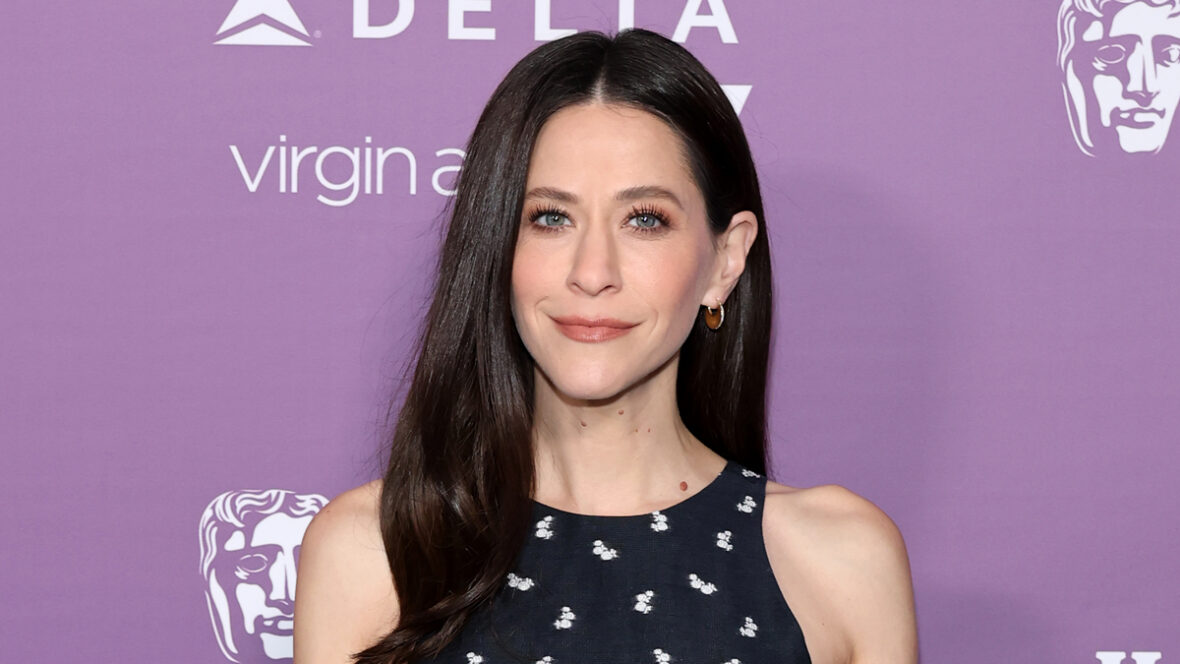
Jackie Tohn double mastectomy
Getty

Jackie Tohn is opening up about her health.

While appearing on Today on Friday (May 15), the 45-year-old Nobody Wants This actress revealed that she recently underwent a preventative double mastectomy after a cancer scare in her family.

“In January of 2025, my dad found lumps under his arm and went to the doctor and they turned out to be metastatic carcinomas,” Jackie shared. “They couldn’t find where the primary cancer in his body was, so they gave him a panel of hereditary genetic testing to try and figure it out.”

Her father subsequently tested positive for the BRCA1 gene mutation, which is a common indicator of breast cancer.

“I got tested shortly thereafter, and when I was in the doctor’s office she was like, ‘You have a 50 percent chance of having it and let’s see what happens,’” she recalled. “I went for a routine mammogram and mentioned it when I was there … and their energy changes a little bit and they’re like, ‘You know what, don’t leave today without being tested.’”

After wrapping season two of Nobody Wants This in 2025, Jackie took the BRCA test.

@jennasheinelle

EXCLUSIVE: Jackie Tohn opens up to #JennaandSheinelle about her recent health scare where she learned she has an 85% chance of developing breast cancer and her decision to undergo a double mastectomy.

? original sound – TODAY with Jenna & Sheinelle

“I found out that I am BRCA1 positive, and I met with a genetic counselor. It turned out that I have an 85 percent chance of getting breast cancer,” Jackie explained. “What’s crazy is when you get a diagnosis like this, you don’t know your options.”

She subsequently “put on [her] big girl pants” and sought ways to deal with her medical situation.

“Then, I had to find a whole medical team, and I love who I landed on,” she said. “[On] December 1, 2025, I got [a] straight to reconstruction double mastectomy.”

A double mastectomy is a surgical procedure to remove both breasts, per the Cleveland Clinic. A surgeon can later reconstruct the tissue or add implants to the patient’s chest.

Following the procedure, Jackie is now advocating for early detection and genetic testing.

“So many things had to happen to line up for me to have this information, but they say that the three things you should look out for are rare, young and multiple,” Jackie shared. “If there’s a rare cancer in your family like with my dad it was male breast cancer [or] ovarian, pancreatic [or] somebody had it young … those are the people that make the most sense to get it.”

The post ‘Nobody Wants This’ Actress Jackie Tohn Reveals She Got Double Mastectomy After Cancer Scare appeared first on Just Jared – Celebrity News and Gossip | Entertainment.


Source link