The Minnesota Legislature passed dozens of laws this spring. Many go into effect July 1 — the start of the state’s fiscal year — including social media restrictions, money for infrastructure projects across the state and safety requirements for schools.
Here’s how some of those laws could affect you or your community:
Education
Anonymous threat reporting systems
A law that requires boards of school districts or charter schools to adopt anonymous threat reporting systems goes into effect this July. However, schools have until June 30, 2027 to adopt a policy to implement a system and until July 1, 2028 to actually implement the system.
Schools can either use the Department of Public Safety’s statewide system or implement their own systems. Systems must allow for 24-hour reporting of anonymous tips regarding “dangerous, violent, harmful, or potentially harmful activity that occurs, or is threatened on, school property or relates to an enrolled student or school personnel” using a mobile application, website and toll-free hotline.
Mandatory reporting of teachers
Police must notify the appropriate licensing board when a teacher is criminally charged with an offense that triggers automatic license denial. The crime of grooming is added to that list of offenses as well. This requirement is part of a larger law effective Aug. 1 that makes grooming a felony.
Grooming is defined as when a person 18 years or older “expresses to a child the desire or intent to engage in sexual conduct with that child” and “engages in a deliberate pattern of conduct to methodically develop a false trusting relationship with the child that is intended to strategically manipulate the child to engage in sexual conduct with the person at a future time, regardless of whether any sexual conduct occurs.”

Combatting ‘ghost students’ in higher ed
College administrators say “ghost students” are fraudsters, often overseas, who enroll in schools using fake or stolen identities to steal student benefits or financial aid. Effective July 1, the Legislature appropriated $3 million to help the Minnesota State Colleges and Universities system implement identity verification systems.
Health and human services
Social media health warnings
A health and human services law passed in 2025 includes a provision that starting July 1, 2026, social media platforms have to display mental health warnings whenever a user accesses the platform.
The Minnesota Department of Health drafted a long list of warnings that social media companies could display to users, like: “Warning: The app may repeatedly show similar or upsetting content, which may negatively affect your mental health. Use tools (mute, unfollow, ‘not interested’) to change what you see. Support is available: Call/text 988 or visit 988Lifeline.org.”
A tech industry group filed a lawsuit to stop the law from going into effect. That lawsuit is still working its way through the courts.
Mental health grant program for young children
Lawmakers established an early childhood mental health grant program designed to identify and support the mental health needs of children under five years old. Advocates of the program say early intervention can help prevent children from experiencing long, expensive hospital stays or stints in juvenile detention later in life.
Financing for infrastructure upgrades
Bonding projects
The Legislature passed a $1.2 billion borrowing bill to fund infrastructure projects around the state, but most of that legislation went into effect already. Lawmakers also passed a $46.5 million projects bill paid for in cash. The cash bill is funded by money the government already has on hand. Several provisions go into effect July 1 that free up money for local projects across the state, including:
-
$10 million for predesign and design of updates and improvements to Grand Casino Arena in St. Paul
-
$6.1 million to design the renovation of the existing water treatment plant in Apple Valley to address PFAS in the city’s drinking water supply
-
$1.3 million for Neighborhood HealthSource to construct a new clinic in north Minneapolis
-
$500,000 for a renovation project at Haven for Heroes in Anoka
-
$400,000 for the Organization of Liberians in Minnesota to renovate their Brooklyn Park facility
-
$250,000 to build a regional shelter facility in Cambridge to provide comprehensive support services for families with children experiencing homelessness
County IT upgrades
Minnesota administers human services programs like Medicaid and SNAP at the county or tribal level, but the technology staff use to get those dollars in people's pockets dates back decades.
Effective July 1, the state is establishing a $90 million fund to modernize local information technology systems across the state. Included in the package is $15 million to improve fraud detection technology.
Public Safety
A large safety and security law includes appropriations for public and lawmaker safety for fiscal year 2027, which begins July 1. Some key provisions:
-
$12 million for a new Minnesota Victims of Crime account for grants to crime victim service providers who provide services like emergency shelters and legal advocacy
-
$6.97 million for courthouse security improvements, threat response monitoring, home security systems for judges and judicial staff and additional security staff.
-
$905,000 for new non-fatal shooting clearance grants to expand a successful St. Paul program
-
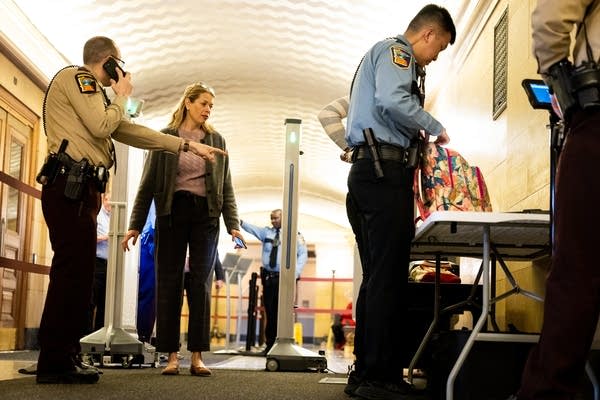
Additional funding for enhanced Capitol complex security measures, security for state officials and the Bureau of Criminal Apprehension’s threat assessment and investigation team
-
$2.12 million (split between fiscal years 2026 and 2026) for the Philando Castile Memorial Training Fund to conduct mandatory de-escalation and bias training for law enforcement