Looking to help power its casino and resort, Minnesota’s Upper Sioux Community built a massive solar array two years ago, engineering it so the power would stay on tribal land and off the local power grid.
Even as they made their own electricity, tribal leaders expected to stay plugged into the larger grid and remain part of their local rural electric cooperative, Minnesota Valley Cooperative Light & Power Association.
The utility, though, responded by threatening to shut off power to the tribe if it switched on the solar farm, arguing the giant array violated state law and the tribe’s obligations as a member of the nonprofit co-op.
The fight’s now in the hands of the Minnesota Public Utilities Commission, which agreed last summer to sort through the complex legal, contractual and tribal sovereignty issues. An administrative law judge is reviewing the case and will make recommendations to the commission in the coming months.
The commission’s decision could determine whether tribal nations have the right to generate their own electricity and cut down on what they buy from the local utility. Observers say it could also have a much wider reach as Minnesota pushes toward its goal of carbon-free energy.
“If we get a ruling in this case by the Public Utilities Commission that says yes, this tribal nation can and should be able to do whatever they feel is best for them, that means a homeowner with a 20-kilowatt system that’s a lot smaller should get those same rights,” said Logan O’Grady, executive director of the Minnesota Solar Energy Industries Association.
No limits?
The Upper Sioux Community is a federally recognized tribal nation outside Granite Falls in southwestern Minnesota. Its Prairie’s Edge Casino Resort is the tribe’s financial foundation, providing money for housing, health care, schools and tribal police. Because the tribe’s land is held in federal trust and cannot be taxed, casino revenue serves in lieu of a tax base.

The solar array was designed to offset about 30 percent of the casino’s electricity, cutting the tribe’s energy costs significantly.
Minnesota Valley Cooperative Light & Power, though, has exclusive rights to sell electricity in its service territory. Like other state electric cooperatives, its board limits its members only to small energy projects up to 40 kilowatts, generally enough to power a small convenience store or a restaurant. The Upper Sioux project is more than 60 times that limit
Minnesota Valley says its rules require members who generate more than 40 kilowatts to sell their power to an outside buyer at a near-wholesale rate, pay the cooperative what’s known as a wheeling fee to transport it — and then continue buying all their electricity from the cooperative at the standard retail price.
Minnesota Valley’s initial response to regulators was to argue that the Public Utilities Commission has no jurisdiction over cooperatives and that the tribe had signed service agreements in the early 1990s agreeing to abide by cooperatives bylaws.
It says its policy applies equally to all its roughly 5,200 members — big and small, residential and commercial, tribal and non-tribal — and is consistent with state law.
In its Public Utilities Commission complaint, the tribe called the co-op’s threat to shut off its power arbitrary and discriminatory. The co-op now says it would cut power only to the casino and resort operation and not to private homes if the tribe’s solar farm comes online.
“MN Valley has attempted to come to a mutually agreeable resolution to this matter but has been unsuccessful,” Matt Haugen, an attorney for the cooperative, wrote in a brief filed with the administrative court.
O’Grady, the solar industry executive, believes the tribe’s project doesn’t violate the cooperative’s policy, let alone state law.
“They’re not what we call ‘exporting,’” he said. “They’re not giving back any excess energy to the utility. So, there should be no size limitations there.”
State sides with the tribe
The Minnesota Department of Commerce in recent briefs has also sided with the tribe.
The agency argued that federal law adopted after the energy crises of the 1970s requires utilities to support customers who self-generate.
“Minnesota Valley’s assertion that it is permitted to block members from operating a distributed generation facility above 40 kW, or alternatively from consuming more than 40 kW of such self-generated electricity, is unlawful,” Minnesota Assistant Attorney General Katherine Arnold wrote on behalf of the Commerce Department.
The cooperative argued that it has built and maintained the power lines and equipment that serve its members, and that large solar projects “would let customers like the tribe avoid paying their fair share of those costs."
It’s pointed out that no member of the cooperative has ever been permitted to operate a solar array of 40 kilowatts or greater and consume that power on-site, and that the tribe was aware of those limits before it began construction.
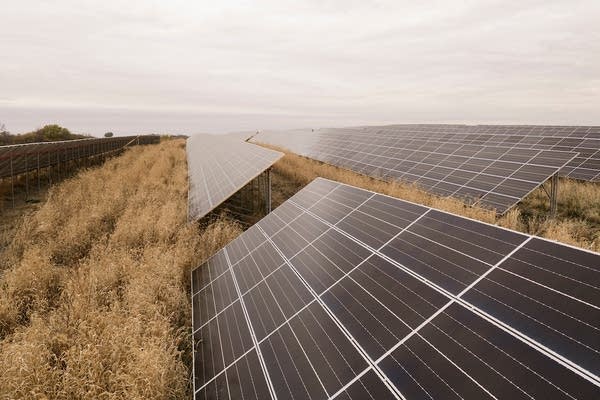
It also expressed safety concerns tied to connecting a system of this size to its distribution network, noting that required safety equipment identified in an engineering study must be installed and paid for before the array can operate.
Haugen argues that safety and financial soundness are “reasonable, legitimate justifications” for the terms of its policy — and that the cooperative’s financial interests in maintaining stable revenue are appropriate concerns for a member-owned nonprofit.
The Commerce Department disagreed.
“State law explicitly allows cooperatives to charge customers operating a qualifying facility for the fixed costs not already paid through the customer’s billing arrangement. The Department noted that Minnesota Valley may not have exercised this option because the evidence showed that it is already overcharging Prairie’s Edge.”
Minnesota Valley’s own 2024 study — commissioned by the cooperative to evaluate its rates and costs — showed that it was overcharging the Upper Sioux Community by as much as 11 percent for power.
Tribal nations are watching
The Upper Sioux Community is also pursuing a separate but parallel case before the Public Utilities Commission, asking it to declare that the tribe has the right to choose their own electric utility provider for tribally owned buildings on tribal trust lands regardless of service territory boundaries.
The dispute has also surfaced in the Minnesota Legislature. Earlier this month, Rep. Patty Acomb, DFL-Minnetonka, introduced a bill that would have allowed the Upper Sioux Community to obtain electrical service from utilities outside Minnesota Valley Light and Power Association’s service territory. The bill failed on a 7-8 party-line vote in the House Energy Finance and Policy Committee.
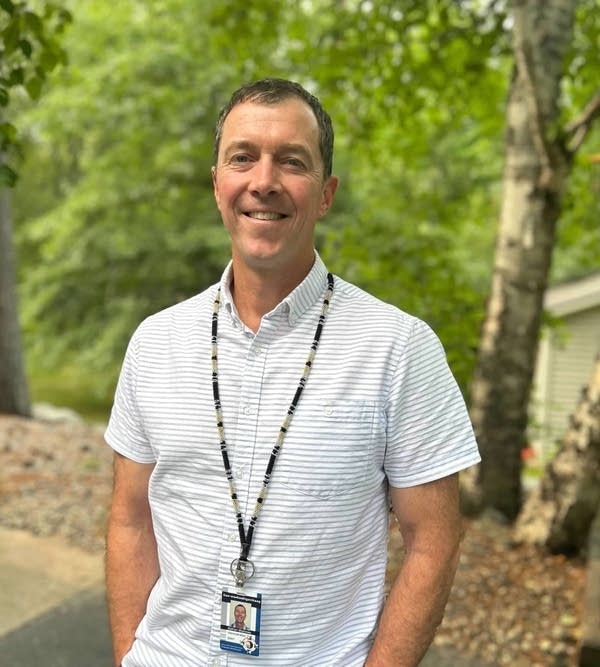
Nate Mathews, who runs the tribal utility commission for the White Earth Nation in northwestern Minnesota, is closely following the Upper Sioux Community’s dispute with Minnesota Valley Light and Power. White Earth is in the middle of building its own large solar array to power one of its casinos, backed by a roughly $3 million federal grant.
“Those costs for purchasing power are rising and have risen over the last few years,” Mathews said. “How that then translates into specific rates — that’s what we want to kind of take a look at, how that gets levied, so that some customers aren’t subsidizing others.”
Mathews said other tribal nations have already run into the same wall.
He said he’s aware of at least one other tribal nation that was forced to break a megawatt-scale solar project into smaller pieces in order to comply with the limits set by its member-owned cooperative.
He said what’s at stake goes well beyond the cost of electricity.
“If there is a conflict here, does tribal sovereignty take precedence over a local co-op board’s policy? Those of us in Indian Country working with renewable energy believe it does,” Mathews said. “We do have those inherent tribal sovereign rights.”
He pointed to a 1995 federal court decision from North Dakota involving the Devils Lake Sioux tribe, in which a judge found that state utility service territory boundaries cannot be used to take away a tribe’s right to choose its own electricity provider for businesses on tribal trust land. The Upper Sioux have cited the same decision in their filings.
Mathews said the case has already changed the conversation in Indian Country.
“We’re all living in the same area,” he said. “How can we recognize our goals together as a co-op and also as tribes?”