Paramount+ Used AI To Make The Ugliest Star Trek Thumbnail Ever


They Khan’t get away with that.

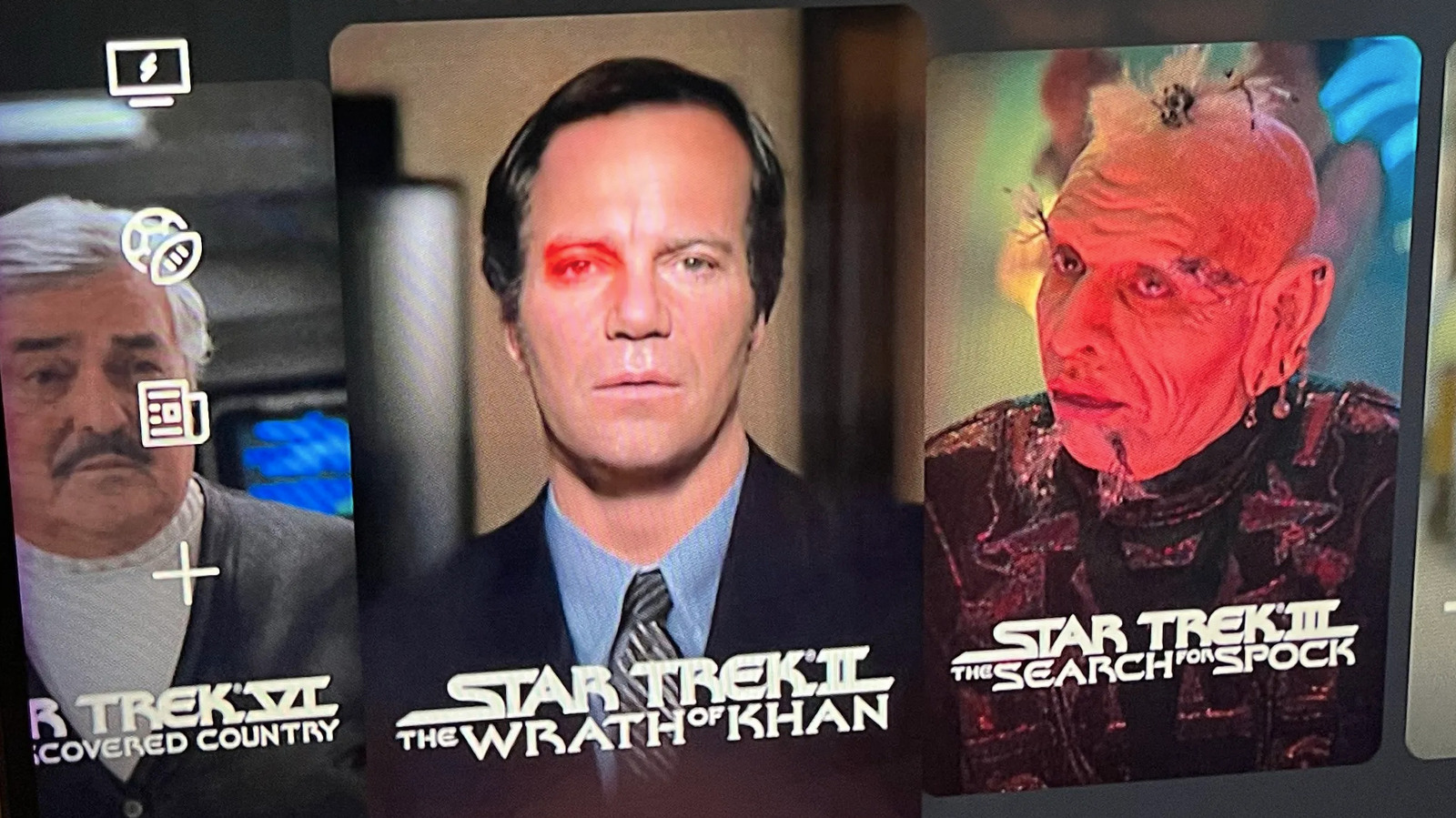
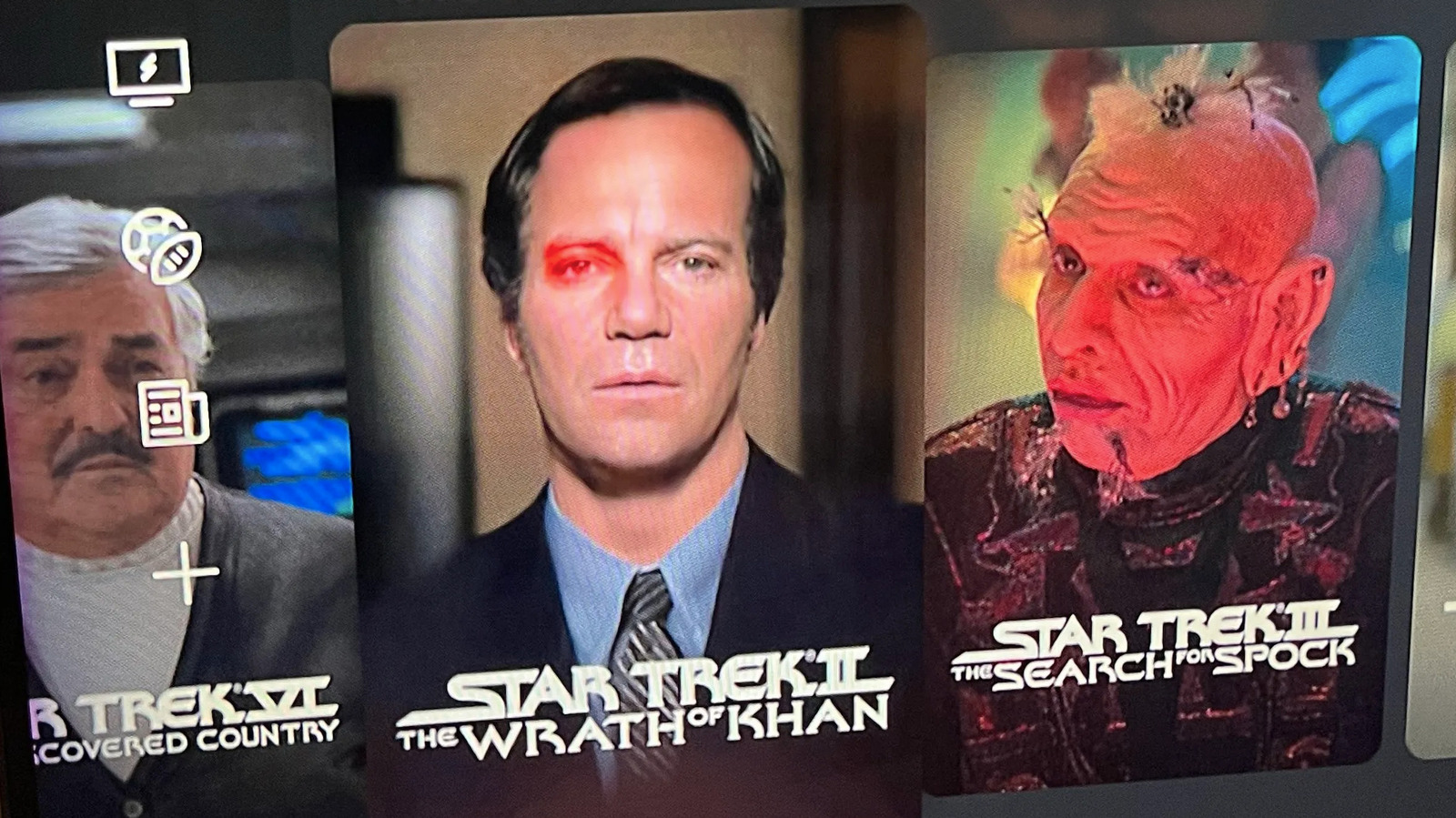
Paramount+ looks to have used generative AI to whip up a thumbnail for Star Trek II: The Wrath of Khan, according to a report by Kotaku. The image shows Captain Kirk, as played by William Shatner, dressed in a business suit. Kirk never dons a business suit in Wrath of Khan, or any other time throughout Shatner’s decades of portraying the character. He did rock a flannel shirt and jeans once during a visit to 1930s Earth.

Paramount+ wanted to use the image on the left as a poster for the wrath of Khan, so they used everyone’s least favorite technology to generate the rest of the image.

Ryan Estrada (@ryanestrada.com) 2026-05-28T23:57:45.992Z

I’ve watched every episode of Star Trek across a dozen shows and I’m not even sure business suits exist in that far-flung future, aside from an occasional appearance on the Holodeck. There’s no money, so not much need for business.

That leaves us asking why Paramount+ and its little AI buddy decided to plop Starfleet’s most iconic captain in a button-up shirt and tie. We don’t know exactly what happened, but artist Ryan Estrada has an idea. He noted that the actual image of Kirk is from Wrath of Khan, pulled from a scene in which the captain is getting a retinal scan to access a computer file. It’s not a particularly exciting scene, and he’s wearing a Starfleet uniform.

Estrada speculates that Paramount+ got attached to that image of Kirk getting a retinal scan and wanted to highlight it further by making it a thumbnail. However, the image from the film is a close-up of Shatner’s face, so generative AI was used to place Kirk’s head inside of a fake body and put that body in a business suit. His hair also looks very fake and weird as the original frame cuts off at his forehead. Long live AI slop Kirk.

Kotaku has confirmed that the thumbnail is still on the streaming platform, as have folks throughout the internet. Paramount owner David Ellison recently told CNBC that the company is “using technology to transform every single aspect of this business.” If that thumbnail is a harbinger of things to come, Trek fans should likely start stocking up on Blu-Rays.

As a lifelong Star Trek fan, it hurts to see the property controlled by modern Paramount. The company has pretty much ended the franchise for the time being, after cancelling the surprisingly stellar Starfleet Academy and stopping production on Strange New Worlds.


Source link

Leave a Reply

Subscribe to Our Newsletter

Get our latest articles delivered straight to your inbox. No spam, we promise.

Recent Reviews


A class-action lawsuit alleging “Google caused Android mobile devices to transfer a variety of information to Google without users’ permission, consuming users’ cellular data,” is nearing its end. The two sides in Taylor v. Google LLC have agreed to a settlement and have begun resolving it. 

For years, Google has been accused of harvesting data from Android phones without users’ consent. A California lawsuit was settled for $314 million last year, and this new settlement could mean payouts for another 100 million people.

Without admitting fault, Google agreed to a preliminary settlement in the class action lawsuit Taylor v. Google LLC in January, committing to pay $135 million in damages. The official settlement website for the lawsuit is now live. 

The final approval hearing won’t occur until June 23, when the court will hear objections and consider whether Google’s settlement is fair. After that, the court will decide whether to approve the $135 million settlement. 

In the meantime, if you qualify and want to be paid as part of the settlement, you can select your preferred payment method on the official website. There, you can find information on speaking at the June 23 court hearing and on how to exclude yourself or write to the court to object by May 29.

As part of the settlement, Google will update its Google Play terms of service to clarify that certain data transfers do occur passively even when you’re not using your Android device, and that cellular data may be relied upon when not connected to Wi-Fi. This can’t always be disabled, but users will be asked to consent to it when setting up their device. 

Google will also fully stop collecting data when its “allow background data usage” option is toggled off. 

Who can be part of the Google data settlement?

In order to join the Taylor v. Google LLC settlement, you must meet four qualifications:

  1. Be a living, individual human being in the US.
  2. Have used an Android mobile device with a cellular data plan.
  3. Have used the aforementioned device at any time from Nov. 12, 2017, to the date when the settlement receives final approval.
  4. You’re not a class member in the Csupo v. Google LLC lawsuit, which is similar but specifically for California residents.

The final approval hearing is on June 23, so you can add your payment method until then. The hearing’s date and time may change, and any updates will be posted on the settlement website. 

If you choose to do nothing, you will still be issued a settlement payment, but you may not receive it if you don’t select a payment method.

Watch this: Your Phone is Disgusting: Let’s Fix That

How much could I get paid by Google?

It’s not currently known exactly how much each settlement class member will receive, but the maximum is $100. Payments will be distributed after final court approval and after the resolution of any appeals.

After all administrative, tax and attorney costs are paid, the settlement administrator will attempt to pay each member an equal amount. If any funds remain after payments are sent, and it’s economically feasible, they will be redistributed to members who were previously and successfully paid. If it’s not economically feasible, the funds will go to an organization approved by the court.


Source link