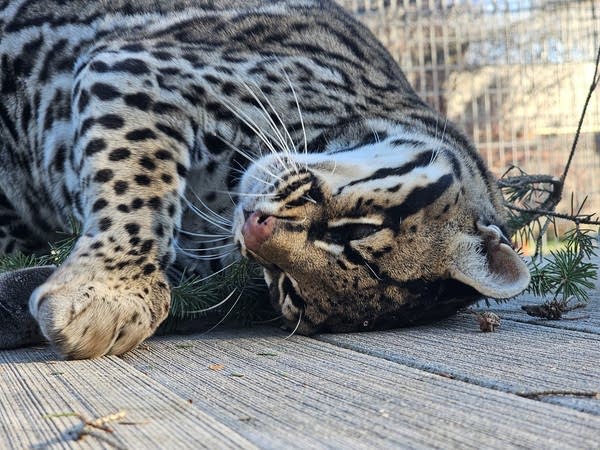
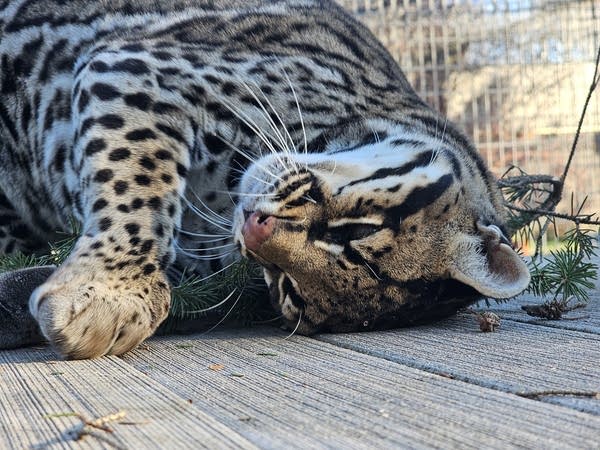
The summer sun warms the grassy fields and woodlands at The Wildcat Sanctuary in rural Sandstone.
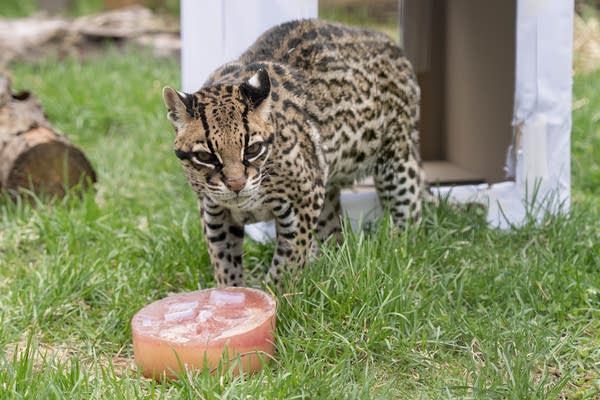
Rio the Ocelot has just woken up from a post-lunch nap and is slowly sauntering around her enclosure, probably deciding where to snooze next. She recently turned 27 years old and is the oldest of her kind in human care.
“She is definitely still a spunky old lady,” said Elyse Donnelly, animal care manager. In the wild, she would have likely lived to be about 10 years old.
Because she was raised in captivity, Rio would not be able to survive if released into the wild. She has lived in close proximity to humans her entire life, first as part of a species survival plan where she was used for breeding, then in a Texas zoo that closed down a couple of years ago. About two years ago, she was rescued and moved to The Wildcat Sanctuary.
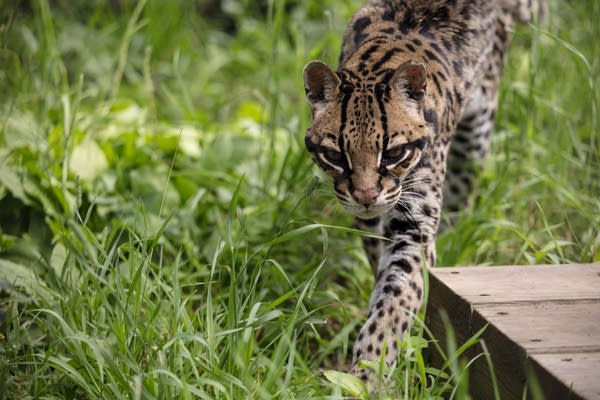
Donnelly says the 25-pound cat may be getting old, but she still likes to climb around inside her enclosure and she’s very vocal, often “talking” to her caretakers in a low, guttural meow when she wants attention.
“She is an ocelot, they do like to be up high, but we needed to make things flatter, not quite as round for gripping, because her strength just isn't what it used to be,” said Donnelly.
The cats are kept in outdoor enclosures based on their size to make sure both big and small cats have room to run and climb around in the grass, and the sanctuary tailors their enclosure based on their personality and health and exercise needs as well. Rio’s caretakers have lowered objects in her enclosure to make it easier and safer for her to climb.
Additionally, every cat has access to an indoor, air-conditioned room connected to their outdoor enclosure they can use to escape the summer heat.
“It's much nicer than sitting outside, especially with her age. As they get older, it can be harder,” said Donnelly.
Rio is just one of more than 150 wildcats that call this sanctuary home. The cats all come from varying backgrounds. Some of them have been abused, kept in tiny cages, declawed, or defanged, while others, like Rio, have been treated with more kindness.
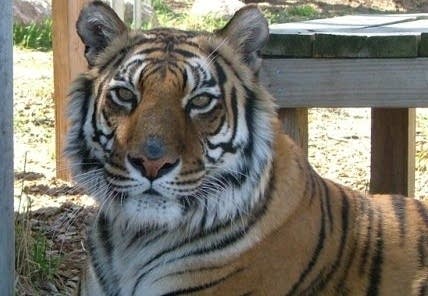
One of the tigers, Indy, was taken in after her owner attempted to sell her on Facebook Marketplace.
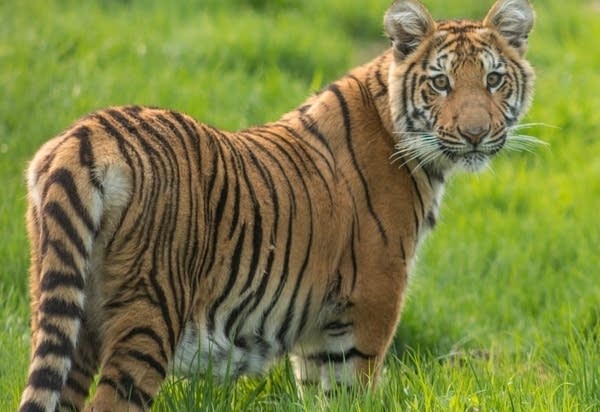
“At first, of course, we were like, that, that can't be real. Who would list a tiger cub on Facebook Marketplace?” said Donnelly, a bit incredulously. “We have so many stories like that. You wouldn't believe it.”
The one common trait that they all share is that they cannot survive in the wild.
“They've always been in contact with people, they've never learned from a mom how to take care of themselves, how to hunt, where to go for appropriate shelter, even what is their environment and taking them out there would be a death sentence for them,” said Donnelly.
A sanctuary for animals
The Wildcat Sanctuary is the only facility in the Midwest that cares exclusively for wildcats, and it accredited by the Global Federation of Animal Sanctuaries.
“What that really means is we don't buy, breed, trade, or sell. We are simply a home for life,” said Tammy Thies, founder and executive director of the sanctuary.
Another thing that separates the Sanctuary from zoos and many other refuges is that it is closed to visitors. There are no visitors buying tickets, tours or shopping at gift shops to supplement their income.
“We really try to keep it quiet for the cats, but we know our donors want to see how the cats are living and how they're helping the cats, so we do live posts on Instagram, Facebook all the time,” said Thies.
Unlike zoos, which can receive funding from the government through grants and taxes, the sanctuary, which costs about $3.7 million a year to operate, receives no funding from the state or federal government, even though they often help take in animals related to animal trafficking investigations.
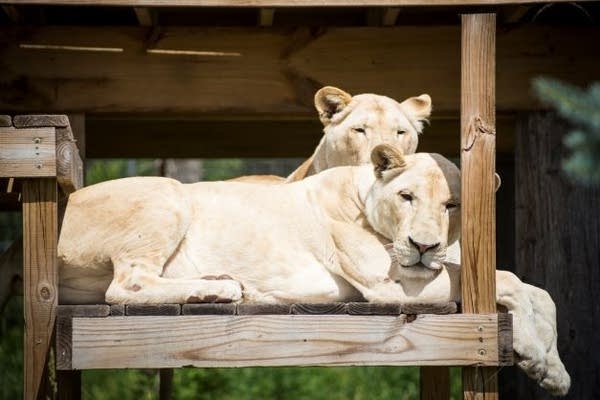
In some cases, the sanctuary will hold animals embroiled in active criminal and civil legal cases until they are resolved.
For example, when white lioness Alana and her sister Aurora both came to the sanctuary in 2021, the sanctuary was prohibited from sharing photos or videos of them.
The cats were connected to the “Tiger King” controversy, a Netflix documentary centered around Joseph Maldonado-Passage, an exotic zoo owner using the pseudonym “Joe Exotic.”
Maldonado-Passage is currently in prison for wildlife trafficking as well as attempting to pay two men to murder Carole Baskin, an animal rights activist and owner of the Big Cat Rescue in Florida.
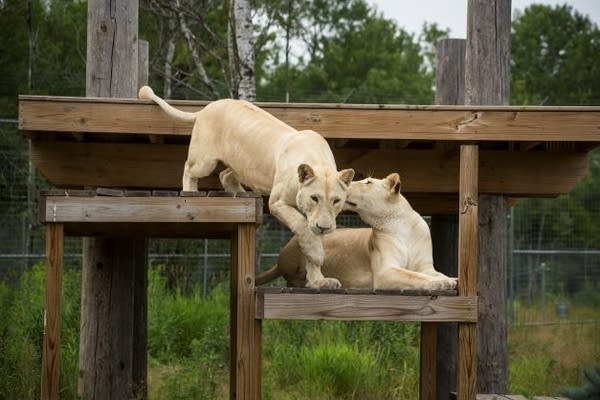
When the lions were seized by federal authorities, Alana and Aurora were in the possession of Jeff and Lauren Lowe, who were allegedly keeping them in inhumane conditions, according to the Department of Justice.
While the legal proceedings in cases like this can drag on for months or even years, the sanctuary continues to care for the animals, but cannot disclose that they are there. The animals can’t be photographed or used for fundraising.
Most of the time the sanctuary does not receive any compensation for holding the cats in “witness protection” cats until the case is resolved.
So, The Wildcat Sanctuary is almost entirely funded by donations from the public.
A Boost from Hollywood Legend Tippi Hedren
Thies didn’t start out planning to dedicate her life to rescuing these fascinating animals, in fact, she came about his career in a roundabout. After graduating from the University of St. Thomas in St. Paul, Thies began a career in advertising. She was rising the corporate ladder with Coca-Cola in Atlanta, when she fell in love with two Bengal tiger cubs named Titan and Tango, and soon after she began volunteering at a organizations that worked with wildlife.
However, she found that many of the places she gave her time to were also breeding and selling the animals for profit. One place was holding baby cougars in metal corn cribs cut in half, creating small 8 x 12 foot enclosures. She reached a breaking point when one of the facilities she previously worked at planned to put down a Bengal tiger who refused to be put on a leash.
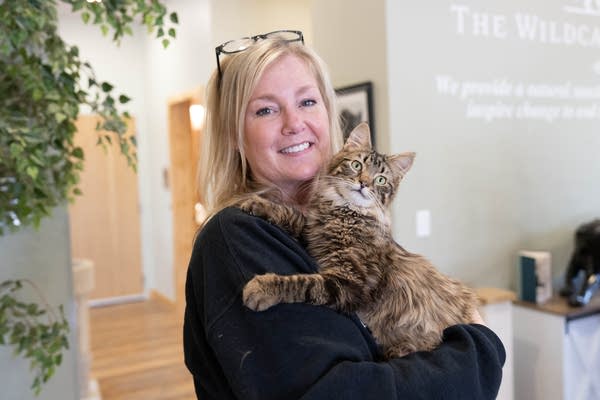
Thies quickly made a call to the Shambala Preserve in Acton, Calif., which was started by legendary Hollywood actress and Minnesota native Tippi Hedren, who was best known for films like Alfred Hitchcock’s “The Birds” and “Marnie.”
Although Hedren was willing to help, it turned out to be too late and the big cat had already been euthanized.
Both Thies and Hedren were furious.
Thies couldn’t stand the thought of seeing what had happened to that Bengal tiger happen to more big cats, so she began investing more of her time and money helping to get more animals in similar situations turned over to no-kill sanctuaries.
However, as she know Hedren better, the famous actress urged to get do even more.
“She convinced me that more sanctuaries like ours needed to exist if we were going to start closing down people that were exploiting the animals.”
Hedren didn’t sugarcoat anything and said it would not be easy to start a sanctuary, but it would be the only surefire way of helping the cats she held dear.
“She was a wealth of information, and she was very humble,” said Thies. “She kind of really made me think about sustainability and making sure that the sanctuary surpasses me.”
In 1999, Theis opened The Wildcat Sanctuary on a couple of acres outside of Atlanta. It soon became clear to her that she wouldn’t have enough space for the necessary wildcat habitat. So Thies returned home to Minnesota, bought some land outside of the town of Sandstone, about 90 miles north of the Twin Cities, and established the now 40-acre wildcat sanctuary.
She founded and grew the small nonprofit organization that runs the sanctuary, which has provided a safe, final home to over 350 cats so far, and Thies has no plans to stop taking in need of a new, safe home anytime soon.