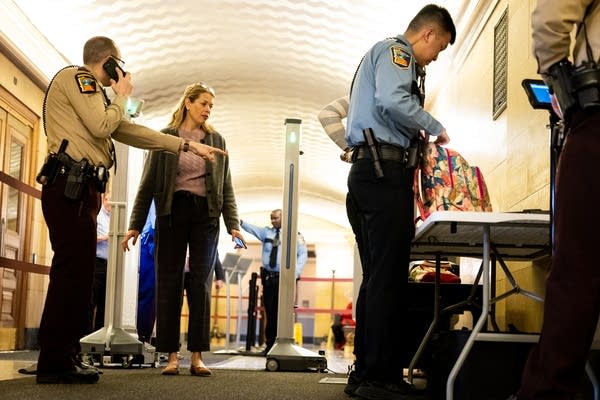
Capitol leaders struggled for a deal on the session's hot-topic items Wednesday as smaller chunks of the year's work inched along, including negotiations over a plan to shore up security for lawmakers.
Lawmakers have until Sunday night to finish negotiations and pass state budget touchups, a borrowing plan for construction projects, school safety measures and possible tax cuts that align with recent federal changes or ease rising property tax bills. Those will take a broad agreement before anything happens.
Until that happens, the Legislature is picking off items with a narrower focus.
On Wednesday, a set of House and Senate lawmakers discussed a public official security package and the chambers prepared for votes on housing finance proposals.
Lawmaker security
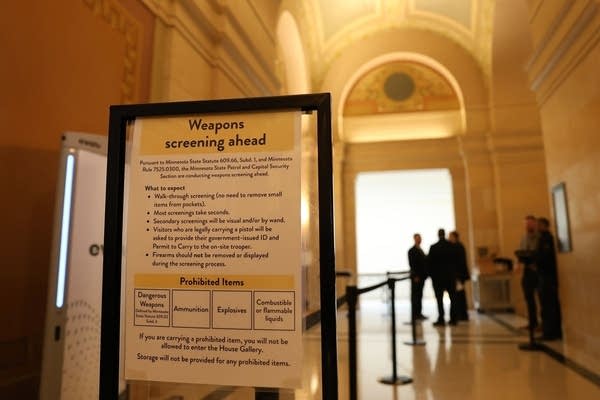
Both chambers of the Legislature have approved bills extending weapons screening at the state Capitol and adding new police protections for lawmakers and other state leaders when they’re away from the Capitol complex.
A conference committee has convened to talk through what should be included in the final bill.
The issue is a top priority for lawmakers who returned this legislative session after the assassination of former House DFL Leader Melissa Hortman and her husband, Mark, and the nonfatal shooting of state Sen. John Hoffman, DFL-Champlin, and his wife, Yvette. Lawmakers have to pass legislation before the legislative session comes to a close Monday.
Gov. Tim Walz’s administration implemented new weapons screening technology at the Capitol ahead of the legislative session but that’s set to run out next week. The Legislature is considering an extension and additional funding as part of a Capitol security and lawmaker safety measure.
Proposals that emerged from the House and Senate vary in terms of how to provide police security to lawmakers, constitutional officers and judges who face credible threats either at public buildings or when they’re in their home communities.
Conversations about a final proposal are expected to continue this week.
Ramsey County District Court Judge Richard Kyle, Jr., the president of the Minnesota District Judges Association, told the committee that judges and justices could use additional security safeguards as well.
“Colleagues from across the state have experienced a significant uptick in threatening behavior toward judges in recent years,” Kyle said.
Negotiators agreed there is a need to improve safety of lawmakers, judges and other state officials amid a heightened threat environment. But they noted they couldn’t advance a plan until they got a budget target from legislative leaders.
Leaders and Gov. Tim Walz have been meeting privately to reach a broader agreement on end-of-session priorities.
“I think throughout society we are experiencing, obviously, a really elevated level of threat. The sort of norms around people's behavior have really shifted, and it is very concerning,” Rep. Tina Liebling, DFL-Rochester, said. “We do have limited resources, and we want to deploy them in the most effective way and where the need really is. And so this issue of teasing out who needs what is really important.”
Housing funds
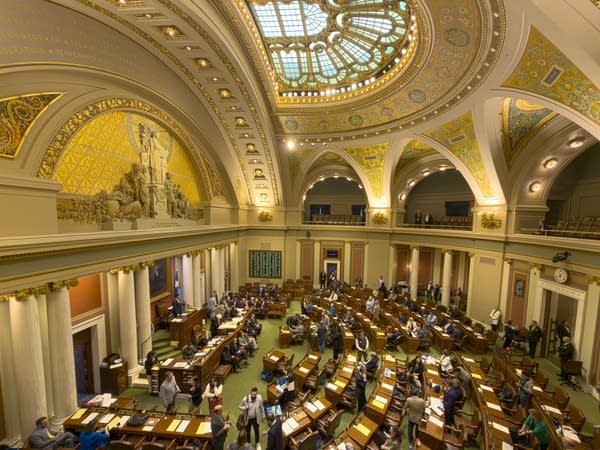
Late Tuesday night DFL and Republican members of the House and Senate hammered out a housing finance deal with more than $150 million in spending.
Among other measures, the bill appropriates $9 million for grants to organizations working to address homelessness in the state. It also contains money for other housing programs, including $4 million for the manufactured home park infrastructure grant and loan program to update aging manufactured home communities and a statewide tenant legal hotline.
“If you would have told us that a $165 million housing bill was going to be coming to agreement here at the waning days of session when we started this year, no one would have believed it,” said Rep. Spencer Igo, R-Wabana Township, co-chair of the House Housing and Finance Policy Committee.
Igo said he’s proud that the bill “doesn’t pick one group of people.”
“There's money in here to build single family homes, multi-family homes, manufactured housing. We've covered it all.”
“This means more homes for teachers and educators, firefighters, nurses, working class families,” said Rep. Liish Kozlowski, DFL-Duluth.
“Also it means kids and families can stay in their districts, and it means manufacturers can hopefully find employees who have places to live and call home,” Kozlowski added.
The housing conference committee members will bring the deal back to their respective chambers for final approval.
This is a developing story. Please check back for updates.