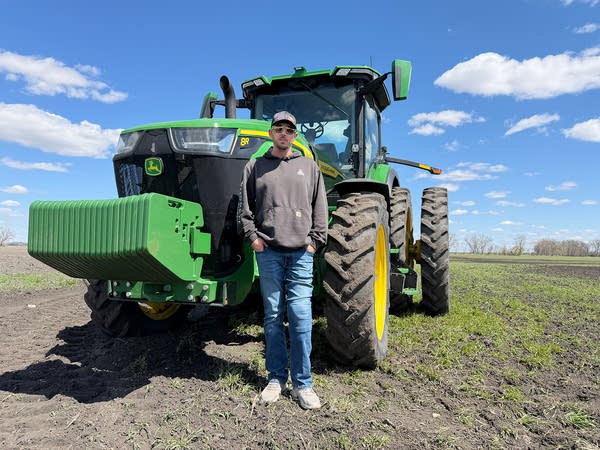
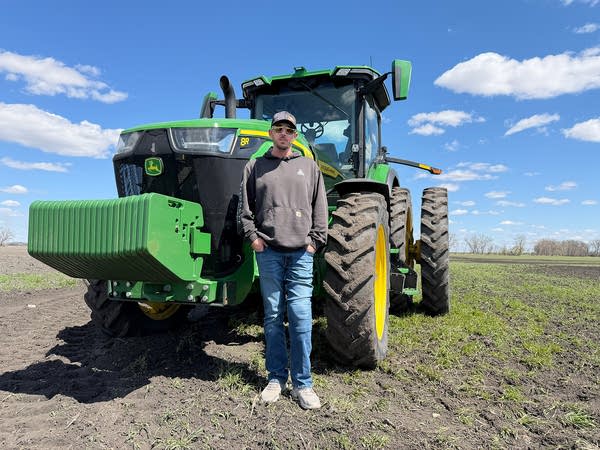
Lourens Nel, a contract farm laborer from South Africa, was working in the grain bins of a Grant County farm about 80 miles southeast of Fargo last August when he was injured in a terrible accident.
“Foot slipped and, yeah, got caught in the auger, I suppose,” Nel said. “It cut it clean off.”
Nel, 34, recalled that his teammates worked to extricate him from the machine and tried their best to stanch the bleeding while they yelled for someone to call 911. In the past, it might have taken an ambulance 20 to 30 minutes or longer to get to the scene. But within six minutes, paramedics arrived and began treating Nel. They coordinated with a helicopter, and despite an approaching storm, they were able to quickly get him transported to Fargo for surgery.
Nel is extremely grateful for that rapid response.
“It meant a great deal,” Nel told MPR News. “If they had to drive all the way from Fergus [Falls] to where I was at, it would have been, might have been a different story.”
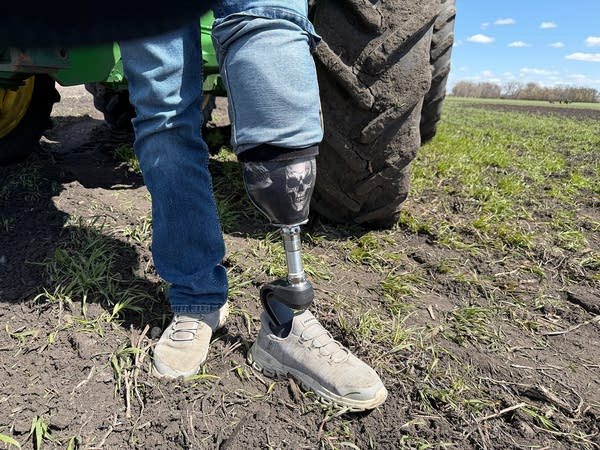
Nearly a year later, Nel, who has returned for a sixth year to work this Minnesota farm, walks easily on his prosthetic foot, which attaches about two inches below the knee.
He recently met with and thanked the paramedics who, at the very least, prevented a more serious outcome and may have saved his life. But he might want to thank Minnesota lawmakers, too, because they authorized a pilot program in Grant County that speeds up paramedics’ response times and gets them to the site of emergencies in rural areas more quickly.
It’s called the Sprint Medic program – a two-year state funded pilot to test the efficiency of roving paramedics in rural Minnesota. It’s part of a bill that Minnesota Gov. Tim Walz signed in 2024 to aid rural emergency medical services in the midst of long-running workforce shortages.
Ambulances are expensive to buy, staff and operate, and in rural areas, they are few and far between. Many rural communities rely on basic life support ambulances staffed by volunteer EMTs, who do not have advanced life support equipment nor the training to use it.
The sprint medic program puts full time paramedics in pick up trucks with all the advanced life support equipment they’d have in an ALS ambulance, and centrally locates them in a county or coverage area, so they can respond immediately to calls for medical help. They can often be on the scene well before the ambulance, providing immediate emergency care.
What is the sprint medic program?
Three counties are giving the sprint medic program a test run, Grant and neighboring Otter Tail County in west central Minnesota, and St. Louis County in northeast Minnesota.
Becca Huebsch, emergency medical services director for the town of Perham and surrounding communities in Otter Tail County, said that, in the past, when volunteer ambulance teams would arrive at the scene, the EMTs would need to call neighboring cities for assistance if they determined the patient needed more advanced care. That could add another 30 minutes before the paramedic arrives at the scene.
That’s why Huebsch is a champion of the sprint medic program.
“Now, the paramedic would be sitting just right about here, kind of in the middle of these service areas, and they can be there in five minutes or less,” Huebsch said.
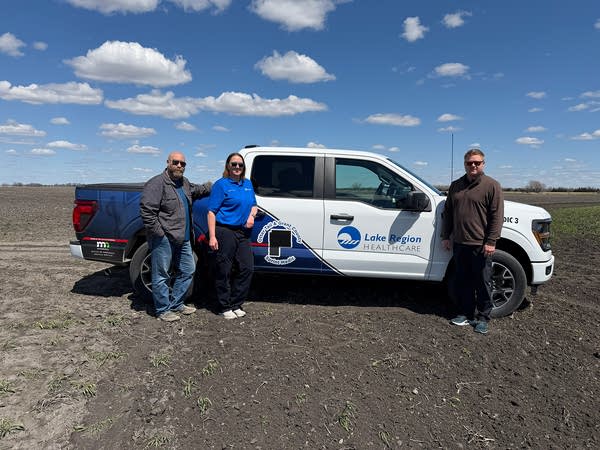
Grant County had been doing a version of this program for years before the pilot, using a quick response vehicle. Carrie Clauson, one of the sprint medics that treated Lourens Nel on the Grant County farm, said the county had discovered it was easier to get to the scene faster in a pick up truck than the ambulance rig.
“There's no having to get into the garage and wait for people and get your crew all in one spot,” Clauson said. “We can go straight there. There’s been multiple times where [the pick up truck] was able to get on scene five to 10 minutes faster, and sometimes 15 [minutes faster]. That’s a huge amount of time.”
Jesse Degrote, one of the Otter Tail sprint medics, told MPR News that his coverage area is about 1,000 square miles, so he listens closely to local law enforcement dispatches and emergency alerts on his radio as he drives around the center of the county, ready to respond to calls alongside the volunteer ambulance crews.
“I can start working my way up there before they even get the ambulances stationed,” Degrote said. “It's a lot of listening and scanning of what's going on to know where you potentially could be going next.”
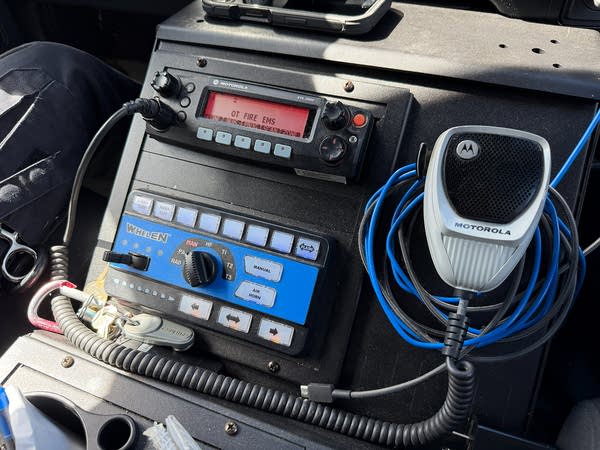
Degrote said he can usually be on the scene within five minutes, sometimes beating the local volunteer ambulance teams. His job is not to transport patients to a hospital, but to deliver care on site and help the local volunteer ambulance teams determine if a transport is necessary. And sometimes the local EMTs will cancel his services if they know they can resolve the issue on their own.
Driving pick up trucks instead of large ambulance rigs allows the sprint medics to move more quickly across large regions, especially in the winter, when the vehicle must drive through snow sometimes a foot or two deep.
Mike Helle, chief of police and fire in the small town of Henning, works with Degrote often. He says the partnership with Degrote and other sprint medics has helped shorten response times in rural areas, and the program’s pick up trucks can get to places an ambulance can’t.
“Not long ago, we had a tree fall on a guy, and it's just great to be able to bring that care to the woods,” Helle said.
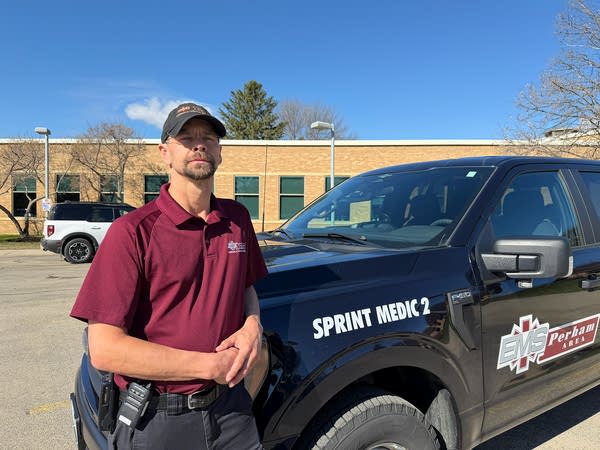
Helle said he hopes the program continues in Otter Tail County after the pilot ends in July 2027, and that the legislature expands it to more rural counties.
“[The sprint medic program] is a huge asset for rural America,” Helle said. “The quality of care is much better for the patient. That's what we’re here for.”
And Degrote added that it’s been a great way to train the volunteer EMTs on more advanced care, in the moment. At the end of a call, he’ll work with the volunteers – walking them through emergency scenarios, how to move patients efficiently, and how to use some of the gear paramedics use.
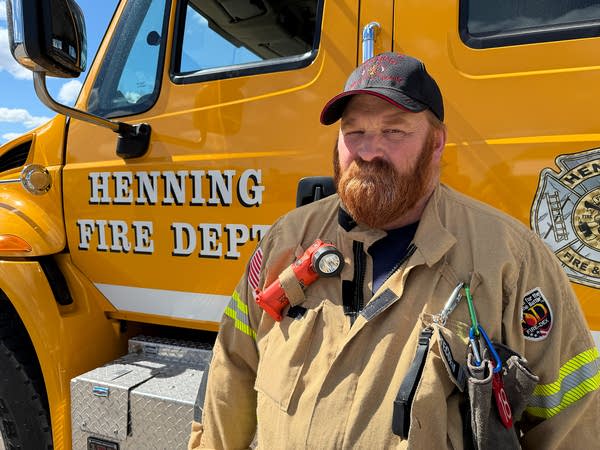
It’s unclear if lawmakers will continue the program, and Helle stressed that he and his peers need to advocate for the program if they want it to continue and hopefully expand to other parts of the state.
“It’s instrumental in my eyes that we keep it, but I’m only one line of defense,” Helle said. “We write letters a lot to help push, you know, which way we want it to go. It’s hard. It takes a lot of us, a lot of voices.”