The best cards for Priority Pass airport lounge access


Accessing an airport lounge can make traveling much more enjoyable by providing a quiet space to work, free Wi-Fi and complimentary food and drinks. Some lounges even provide top-tier amenities like showers, kids’ areas and quiet rooms.

While access to airport lounges typically requires payment, several of the best rewards cards include airport lounge access among their benefits.

Some airline cards only grant access to their own carriers’ lounges. Others allow cardholders to register for Priority Pass Select memberships and enjoy access to over 1,800 airport lounges worldwide.

With all that in mind, here are the best cards for Priority Pass lounge access at airports worldwide.

Comparing the best cards with Priority Pass access

The information for the U.S. Bank Altitude Connect and Bank of America Premium Rewards Elite credit card has been collected independently by The Points Guy. The card details on this page have not been reviewed or provided by the card issuer.

Cards with Priority Pass memberships

Capital One Venture X

The Venture X offers $300 in annual credits toward bookings made through Capital One Travel. You also get 10,000 bonus miles every account anniversary. Both of these perks help offset the card’s $395 annual fee.

Capital One Venture X card
THE POINTS GUY

Add in airport lounge access (including Capital One’s own lounges), and we’re talking about one of the best premium cards out there.

To learn more, read our full review of the Capital One Venture X.


Learn more: Capital One Venture X

Reward your inbox with the TPG Daily newsletter

Join over 700,000 readers for breaking news, in-depth guides and exclusive deals from TPG’s experts


Capital One Venture X Business

The Venture X Business offers many of the same benefits as the Venture X, including $300 in annual credits for bookings made with Capital One Business Travel, 10,000 anniversary bonus miles and access to Capital One lounges.

a hand holds a credit card
THE POINTS GUY

You’ll also receive unlimited visits to participating Priority Pass lounges.

To learn more, read our full review of the Venture X Business.


Learn more: Capital One Venture X Business


Sapphire Reserve

The Chase Sapphire Reserve is one of the most popular premium travel rewards credit cards.
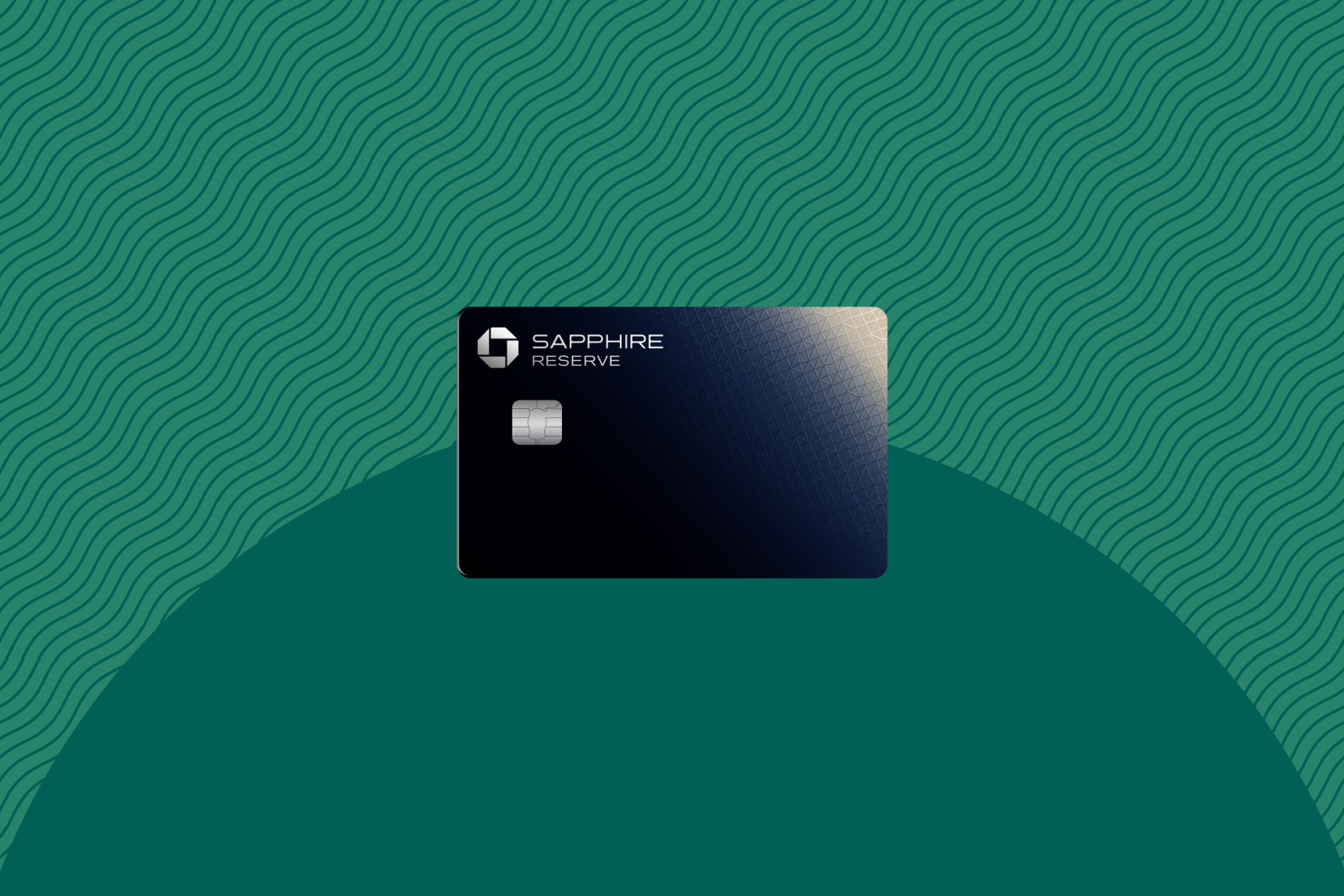
Chase Sapphire Reserve card art
THE POINTS GUY

Notably, cardholders receive up to $300 in annual statement credits for a wide range of travel purchases. You’ll also gain access to Chase’s growing network of Sapphire lounges.

Plus, right now, the Sapphire Reserve is offering an incredible welcome bonus: Earn 150,000 bonus points after spending $6,000 on purchases in the first three months of account opening. According to TPG’s May 2026 valuations, that’s worth $3,075 — but it could potentially be worth even more if you maximize the right transfer partners.

To learn more, read our full review of the Sapphire Reserve.


Apply here: Sapphire Reserve


Sapphire Reserve for Business

The Sapphire Reserve for Business is the newest card to join Chase’s lineup of business credit cards.

Chase Sapphire Reserve Business card art
THE POINTS GUY

Cardholders (excluding employee cards) get access to Priority Pass lounges and Chase’s network of Sapphire lounges. This card also comes with a slew of statement credits.

To learn more, read our full review of the Sapphire Reserve for Business.


Apply here: Sapphire Reserve for Business


Amex Platinum

In addition to Priority Pass lounges, eligible Amex Platinum cardmembers can access Amex’s Centurion Lounges, Delta Sky Clubs*, Escape Lounges and certain Lufthansa lounges (through Sep. 30), among others (enrollment required).

Amex Platinum card art
THE POINTS GUY

The card also comes with an extensive list of perks and stellar earning rates.

To learn more, read our full review of the Amex Platinum.

*Eligible Platinum Card Members will receive 10 Visits per Eligible Platinum Card per year to the Delta Sky Club or to Grab and Go when traveling on a same-day Delta-operated flight unless they spend $75,000 or more on their card to unlock unlimited visits.


Apply here: Amex Platinum


Amex Business Platinum

The Amex Business Platinum provides a host of annual statement credits for business owners.

American Express Business Platinum card art
THE POINTS GUY

The Amex Business Platinum offers the same lounge benefits for eligible cardmembers as the consumer Amex Platinum above. Enrollment required.

To learn more, read our full review of the Amex Business Platinum.


Apply here: Amex Business Platinum


Strata Elite

The Strata Elite provides premium benefits and earns Citi ThankYou points.

Citi Strata Elite Credit Card art
THE POINTS GUY

In addition to Priority Pass access, the Strata Elite provides four American Airlines Admirals Club passes each calendar year.

To learn more, read our full review of the Strata Elite.


Apply here: Strata Elite


Marriott Bonvoy Brilliant

The Bonvoy Brilliant is a great way for Marriott Bonvoy loyalists to earn bonus points on Marriott bookings.
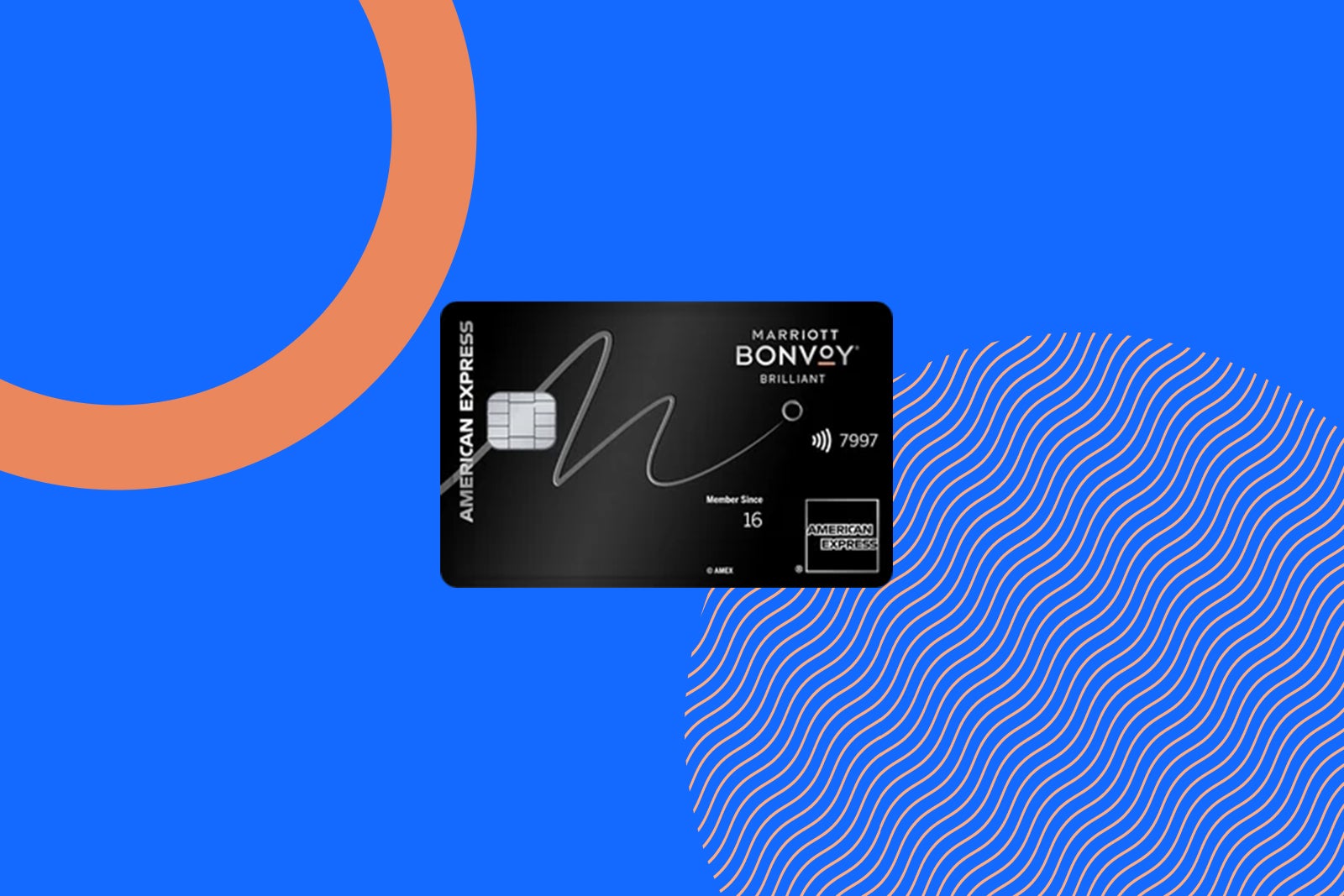
American Express Marriott Bonvoy Brilliant_2025_CCFL
THE POINTS GUY

Cardmembers earn up to $300 in statement credits each calendar year for purchases at restaurants worldwide (up to $25 each month). This card offers several other benefits, with its perks tailored to those who stay with Marriott at least a few times each year.

It isn’t too common to see lounge access with a hotel card, so the Bonvoy Brilliant can be a good pick for frequent travelers who don’t get Priority Pass access with another card.

To learn more, read our full review of the Bonvoy Brilliant.


Apply here: Marriott Bonvoy Brilliant


U.S. Bank Altitude Connect

The U.S. Bank Altitude Connect earns bonus points on a wide range of categories, including electric vehicle charging stations, dining, gas, groceries and streaming services.

US Bank Altitude Connect card image
THE POINTS GUY

Although you’ll only get four Priority Pass visits per year with this card, lounge access on a no-annual-fee card is hard to come by. If you’re an infrequent traveler, this might be the best fit for you.

Cardholders also enjoy reimbursement for up to $100 of their Global Entry or TSA PreCheck application fee every four years. Although this won’t cover the full cost of Global Entry, it will pay for most of it. That’s a huge perk for a card with no annual fee.

To learn more, read our full review of the Altitude Connect.

Bank of America Premium Rewards Elite

With Bank of America’s Premium Rewards Elite card, you’ll earn 2 points per dollar spent on travel and dining and 1.5 points per dollar spent on other purchases.

Bank of America Premium Rewards Elite
THE POINTS GUY

Given that this card offers up to four Priority Pass memberships and unlimited guest access at participating Priority Pass lounges, it may be the best card for Priority Pass access. That said, the value you give this card will depend largely on how necessary you view transfer partner access.

However, you can earn up to 75% more on each purchase as a member of Bank of America’s Preferred Rewards® program.

To learn more, read our full review of the Premium Rewards Elite.

Bottom line

Accessing an airport lounge before your flight can be a great perk. Rather than paying for each visit, you can use popular travel credit cards to unlock access ahead of your trips regularly — and in many cases, this includes guest privileges, too.

Priority Pass is a great option for frequent travelers, thanks to its vast worldwide network of airport lounges. Carrying a credit card that enables you to enroll in a Priority Pass Select membership can be a great way to save money and make your travel experience that much better.

If that sounds like you, consider adding one of the cards above to your wallet.

Related: The best airport lounges from the 2026 TPG Awards

For rates and fees of the Amex Platinum card, click here.
For rates and fees of the Amex Business Platinum card, click here.
For rates and fees of the Marriott Bonvoy Brilliant card, click here.


Source link

Leave a Reply

Subscribe to Our Newsletter

Get our latest articles delivered straight to your inbox. No spam, we promise.

Recent Reviews


Explain CAP

CAP theorem is also called Brewer’s theorem, which stands for Consistency, Availability, and Partition Tolerance.

Consistency: 

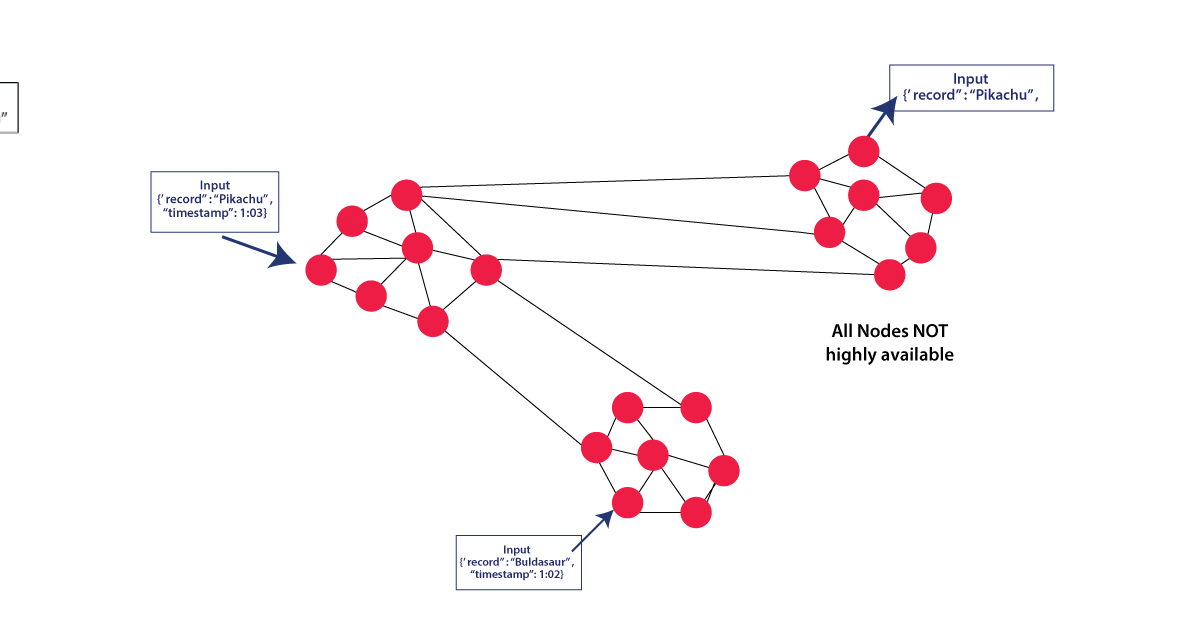
This situation expresses, all nodes have similar information simultaneously. Implementing a read function will return the estimation of the latest write function making all nodes provide similar information. A framework has consistency if an exchange begins with the framework in a reliable state, and finishes with the framework in a predictable state. A framework can (and does) move into a conflicting state during an exchange, however the whole transaction gets moved back if there is a mistake during any process all the while. We have 2 unique records (“Bulbasaur” and “Pikachu”) at various timestamps given in the picture below. The result on the third part is “Pikachu”, the most recent input. The nodes will require time to refresh and won’t be available on the organization as frequently.

Consistency

Availability:

This situation provides that each solicitation gets a reaction on success/failure. Accomplishing availability in an appropriated framework necessitates that the framework stays operational 100% of the time. Each customer gets a reaction, paying little heed to the condition of any individual node in the framework. This measurement is trifling to quantify: possibly you can submit the read/write commands, or you can’t. Thus, the databases are time autonomous as they should be accessible online consistently. In contrast to the past model, we couldn’t say whether “Pikachu” or “Bulbasaur” was included at first. The result could be any one among both. Consequently, high accessibility isn’t feasible when dissecting streaming information at high frequency.

Availability

Partition Tolerance: 

This situation expresses that the framework keeps on operating, in spite of the quantity of messages being deferred by the organization among nodes. A framework which is partition tolerant can support any measure of organization failure which does not bring about a failure of the whole network. Information records are adequately duplicated across blends of nodes and organizations to maintain the framework up through discontinuous blackouts. While managing current distributed frameworks, Partition Tolerance is a requirement and not a choice. Thus, we need to exchange among Consistency and Availability.

Partition Tolerance

Enroll in our Apache Storm Training program today and elevate your skills!

Big Data Hadoop Training

  • Master Your Craft
  • Lifetime LMS & Faculty Access
  • 24/7 online expert support
  • Real-world & Project Based Learning

Distributed Database Systems 

In a NoSQL type dispersed data set framework, Different PCs, or nodes, cooperate to give an impression of a unique operating database unit to the client in a NoSQL type distributed database system. They store the information among these numerous nodes. Every one of these nodes operates an event of the database server and they converse with one another. At the point when a client needs to write to the database, the information is suitably kept in touch with a node in the disseminated data set. The client may not know about where the information is composed.

Essentially, when a client needs to recover the information, it interfaces with the closest node in the framework that recovers the information for it, without the client thinking about this. Along these lines, a client essentially communicates with the framework as though it is connecting with a solitary information base. These nodes recover information that the client is searching for, from the important node, or putting away the information given by the client. 

The advantages of a distributed system are very self-evident. The expansion in rush hour gridlock from the clients, we can undoubtedly scale our information base by including more nodes to the framework. As these nodes are commodity equipment, they are moderately less expensive than adding more assets to every one of the nodes independently. Horizontal scaling is less expensive than vertical scaling. The horizontal scaling assures that the replication of information is less expensive and simpler. It implies that now the framework can undoubtedly deal with more client traffic by fittingly appropriating the traffic among the recreated nodes.

HKR Trainings Logo

Subscribe to our YouTube channel to get new updates..!

What is the CAP Theorem?

The CAP theorem states that a distributed database system has to make a tradeoff between Consistency and Availability when a Partition occurs.

A distributed database framework will undoubtedly have partitions in a certifiable framework because of network failure or some other explanation. Along these lines, partition tolerance is a property we can’t dodge while setting up the framework. A distributed framework will either decide to abandon Consistency or Availability however not on Partition tolerance. For instance, if a partition happens among two nodes, it is difficult to give steady information on both the nodes and accessibility of complete information. Consequently, in such a situation we either decide to settle on Consistency or on Availability. A NoSQL circulated database is either portrayed as  AP or CP. CA type information bases are for the most part the solid databases which operate on a solitary node and give no conveyance. Subsequently, they need no partition tolerance.

Where can the CAP theorem be used as an example?

The CAP theorem can indeed serve as an illustrative example within the realm of distributed database systems. When setting up a distributed database framework, it is inevitable to encounter partitions due to network failures or other unforeseen circumstances. Hence, partition tolerance becomes a necessary property that cannot be avoided in such a system. In this context, the CAP theorem comes into play. It states that a distributed framework must make a trade-off between either consistency or availability, as it is not possible to achieve both simultaneously when a partition occurs between two nodes. For instance, during a partition, it becomes challenging to maintain consistent data on both nodes while ensuring complete data availability. As a consequence, in such scenarios, we are left with the choice of prioritizing either consistency or availability.

To better understand this, it is essential to consider the different types of distributed databases. NoSQL distributed databases can be characterized as either AP or CP. AP databases prioritize availability and partition tolerance over strict consistency. On the other hand, CP databases prioritize consistency and partition tolerance at the expense of availability. These distinctions become crucial when deciding the appropriate database type for specific use cases.

CAP Theorem NoSQL Database Types

NoSQL (non-relational) databases are suitable for distributed network applications. NoSQL databases are horizontally adaptable and disseminated by layout, it can quickly scale across a developing network comprising different interconnected nodes.They are characterized dependent on the two CAP attributes they uphold: 

CP database: A CP database conveys partition tolerance and consistency at the cost of accessibility. At the point when a partition happens between any two of the nodes, the framework needs to shut down the non consistent node (make it inaccessible) until the partition is settled. 

AP database: An AP database conveys partition tolerance and accessibility at the cost of consistency. At the point when a partition happens, all nodes stay accessible however those at some unacceptable end of a partition may return a more established rendition of information than others.  

CA database: A CA database conveys accessibility and consistency among all nodes. It will not be able to do this if there is a partition in between any two nodes  in the framework, in any case, and can’t convey adaptation to internal failure.

Spaces defined by CAP

CD Space: The engines of this space concentrate on accessibility and consistency, information dispersion doesn’t prevail. It is the spot where Relational Databases are placed, in spite of the fact that we can likewise discover some NoSQL engines which are diagrammatically arranged. 

ND Space: This doesn’t receive any Databases engine and is an empty set. It repudiates the CAP Theorem on the grounds that with the most recent innovation it can’t achieve with three of the Theorem features. 

DT Space: Here, the resistance of divisions and consistency are favored, leaving to the side certain degree of accessibility. Confronting a network division, these Databases couldn’t react to particular sorts of inquiries.

CT Space: Here the engines will support the accessibility and resistance of divisions, however that doesn’t mean they do not provide any consistency as it is relative and can’t ensure between nodes. 

Big Data Hadoop Training

Weekday / Weekend Batches

Conclusion

Distributed frameworks permit us to accomplish a degree of computing ability and accessibility that were essentially not accessible previously. The frameworks have better performance, lower inertness, and close to 100% up-time in servers which last till the whole globe. The frameworks are operated on product hardware which is effectively accessible and configurable at moderate expenses. Distributed frameworks are more intrinsic than their single-network partners. Learning the intricacy brought about in distributed frameworks, making the fitting compromises for the CAP, and choosing the correct apparatus for the task is essential with horizontal scaling.


Source link