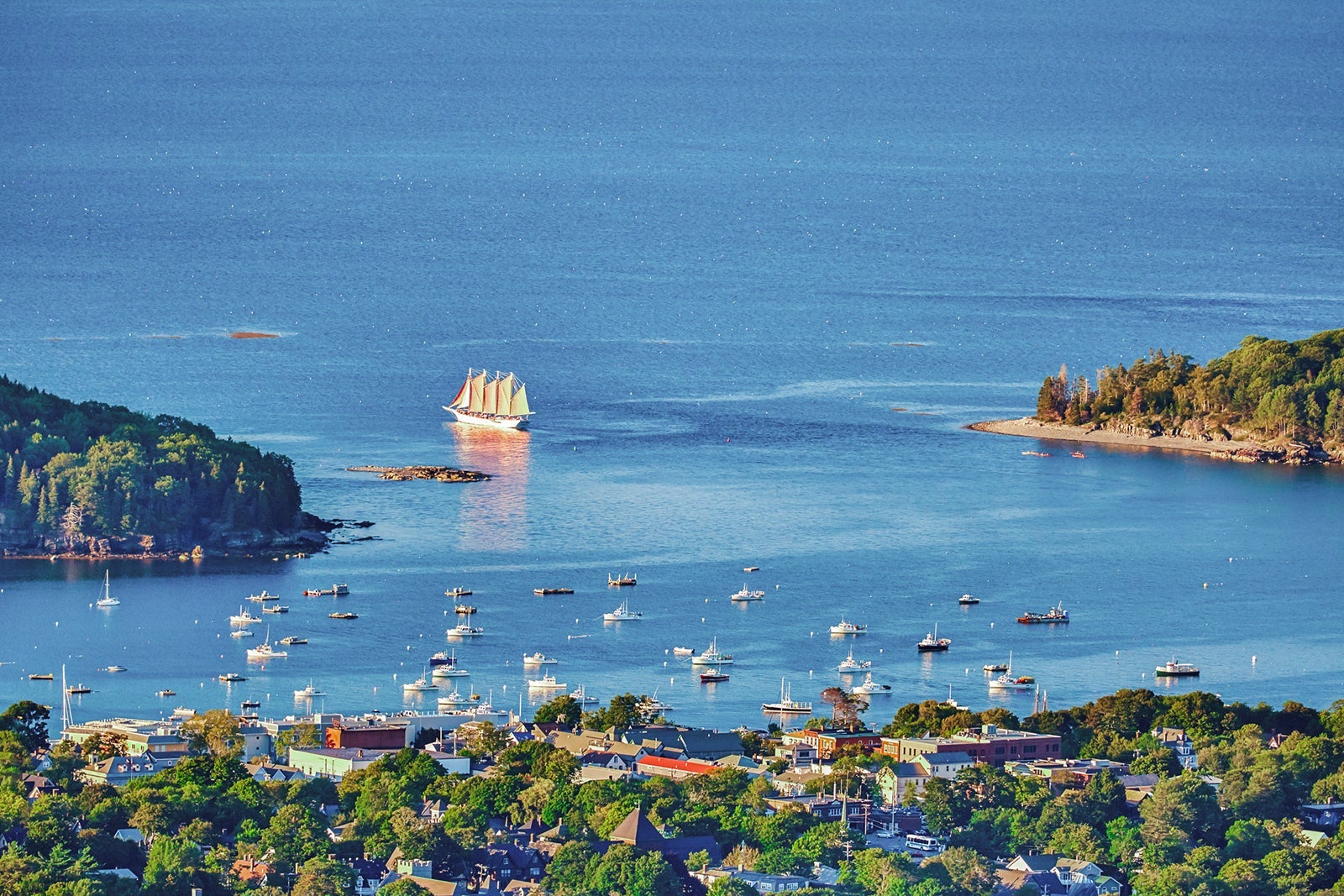

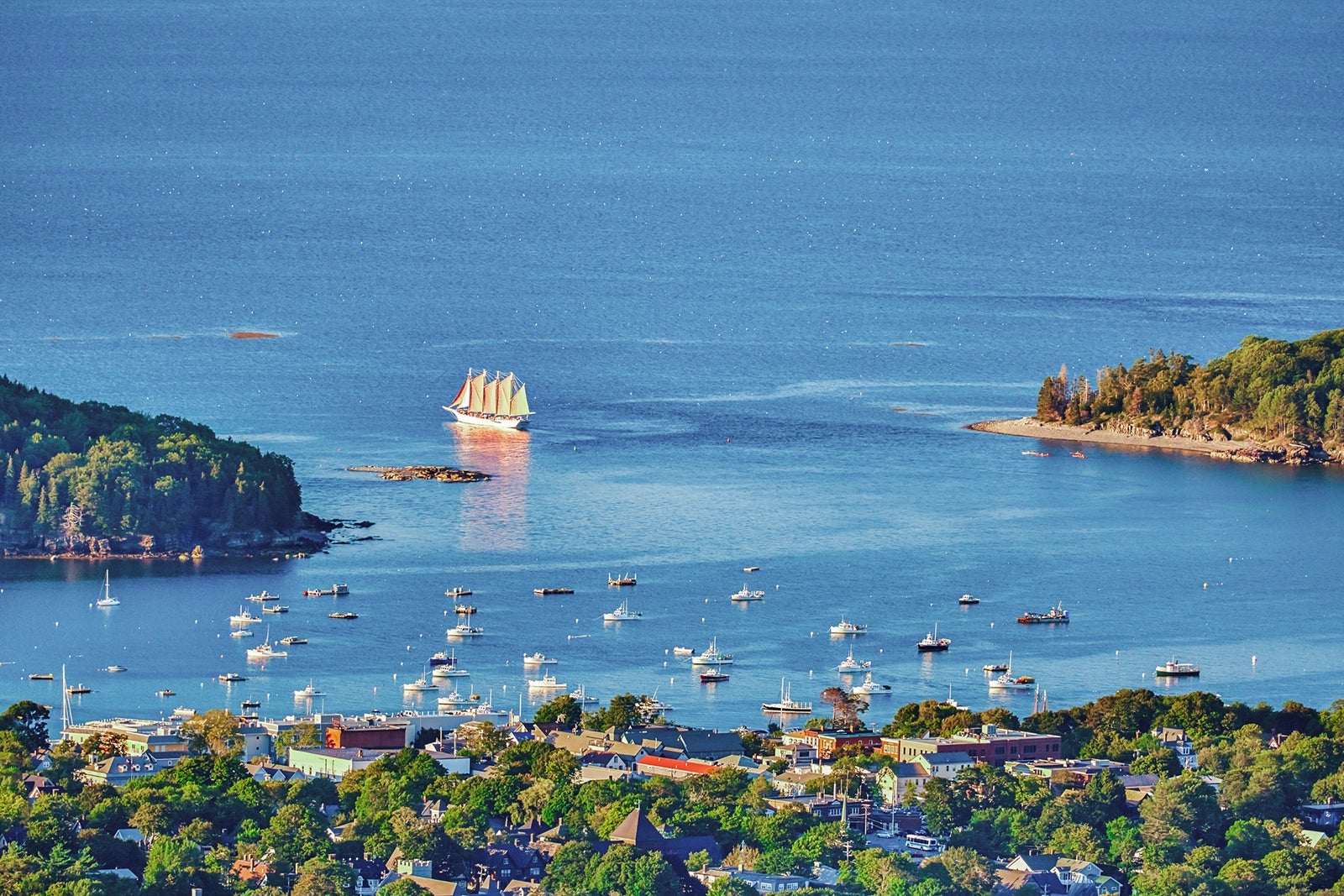
The striking, craggy coastline of Maine’s Acadia National Park has been an enticing destination for travelers since it was first declared a national park in the summer of 1916. On Mount Desert Island, three hours up the coast from Portland, deep cobalt waters crash in foamy waves against granite cliffs and mist-shrouded beaches. The great northern woods roll down hillsides to meet the Atlantic Ocean at the easternmost reach of the United States.
All of the beauty of Maine’s wilderness comes together in Acadia National Park: Ancient coniferous forests, rugged mountains, wildlife and the untamed Atlantic marry in a way that makes the area feel untouched and unexplored, despite its unsurprising popularity.
Related: How to save money on a national park trip this year with points and miles
Getting to Acadia National Park
The best airports near Acadia National Park
To reach Acadia National Park, you can fly into Boston Logan International Airport (BOS) via American, Delta, Frontier, JetBlue, Spirit, Southwest and United, and then catch a direct flight to Hancock County-Bar Harbor Airport (BHB), served by Cape Air and JetBlue. BHB is just a short 10-minute drive from the park.
Of course, if you fly right into Bar Harbor Airport, you’ll miss the meandering drive up Maine’s coastal Route 1, which can be about a six-hour road trip from Boston through many of Maine’s most picturesque coastal towns, depending on how many stops you make.
Related: Lobster rolls and lighthouses: The perfect Maine road trip
Additionally, Bangor International Airport (BGR) is about an hour inland from Mount Desert Island and Acadia National Park. There are a limited number of airlines serving BGR, but the current list includes American Airlines, United, Allegiant Air, Delta and Breeze.
Portland International Jetport (PWM) is yet another possibility, especially if you want to also explore Maine’s largest city. This airport is roughly three hours by car south of Acadia National Park. Airlines serving this airport include American Airlines, Delta, JetBlue, Southwest, Sun Country, Breeze and United.
Renting a car near Acadia National Park
Whether you fly into Boston, Bar Harbor, Bangor or Portland, you’ll definitely want to rent a car for your trip to Acadia National Park.

Reward your inbox with the TPG Daily newsletter
Join over 700,000 readers for breaking news, in-depth guides and exclusive deals from TPG’s experts
For car rentals from any of these airports, expect to pay anywhere between $120-$250 per day. The roads in Acadia are well-paved and easily accessible, with a modest total elevation gain of 1,530 feet. While Acadia is not as demanding on your vehicle as other national parks, having 4-wheel drive as an option can provide added peace of mind, especially if you’re traveling in rainy or snowy weather conditions. A midsize SUV is ideal.
Acadia National Park entrance fees
The current standard entrance pass into Acadia National Park is $35 per private vehicle and $30 for motorcycles. For individuals without a vehicle, the standard pass is $20. These passes are valid for seven days from the purchase date. There’s an annual Acadia National Park pass ($70) valid for one year from purchase date, and if you’re traveling to at least one other national park this year, you might want to consider the annual America the Beautiful pass, which costs $80 and grants you and everyone in your vehicle free access to all the national parks, as well as national wildlife refuges, national forests and grasslands and lands managed by the Bureau of Land Management, Bureau of Reclamation and U.S. Army Corps of Engineers.
Note that you will be required to show ID at the park entrance and that non-resident visitors will be charged an additional $100 per person fee for anyone over 16 in addition to the standard entrance fee. An annual non-resident pass America the Beautiful Pass costs $250.
The best time to visit Acadia National Park
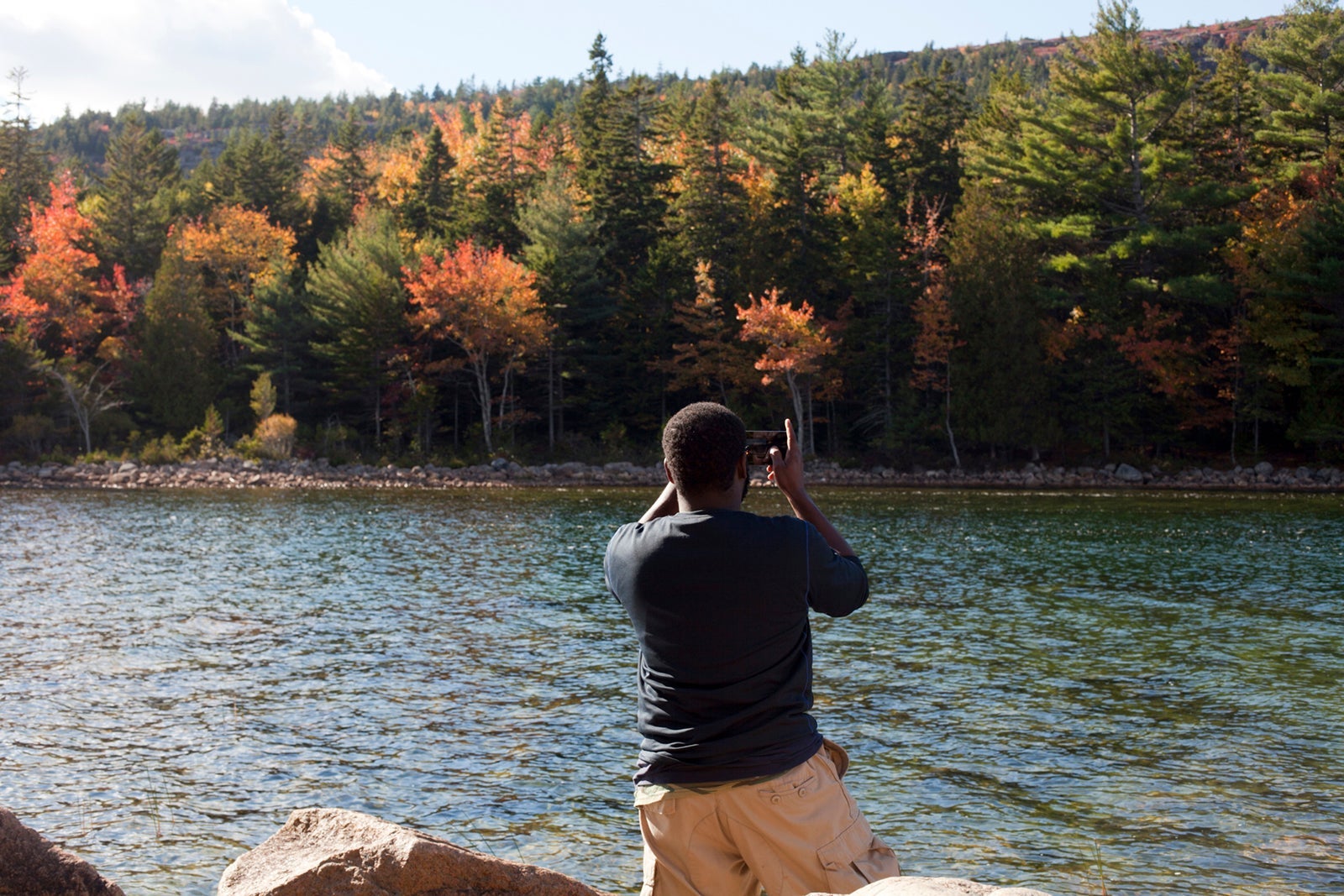
One of the best times of year to visit Acadia is late September into early October: The swarms of summer tourists have dramatically decreased, the mosquitoes are gone and daytime temperatures are typically still pleasant enough for hiking and beachcombing.
But this area is worth visiting in all seasons — there is something to be said for each. Winter offers raw, icy landscapes and a desolate, abandoned atmosphere. In spring, a joyful mood takes over in the form of tree buds and wildflowers. Summer brings warmth, vacationing families and favorite pastimes in Bar Harbor’s historic downtown. Fall has its smattering of vibrant foliage, sunny days and cozier temperatures in the evenings.
Where to stay
If you’ve noticed that Acadia National Park, Mount Desert Island and Bar Harbor are used somewhat interchangeably here, it’s because Mount Desert Island is home to Acadia National Park and Bar Harbor. A visit to any one of those places means you’ll likely explore all three. The island is just big enough to accommodate a (small) array of hotels, bed and breakfasts, Airbnbs, campgrounds and other lodgings. But it’s small enough that, no matter where you stay, you’ll be able to explore the whole area.
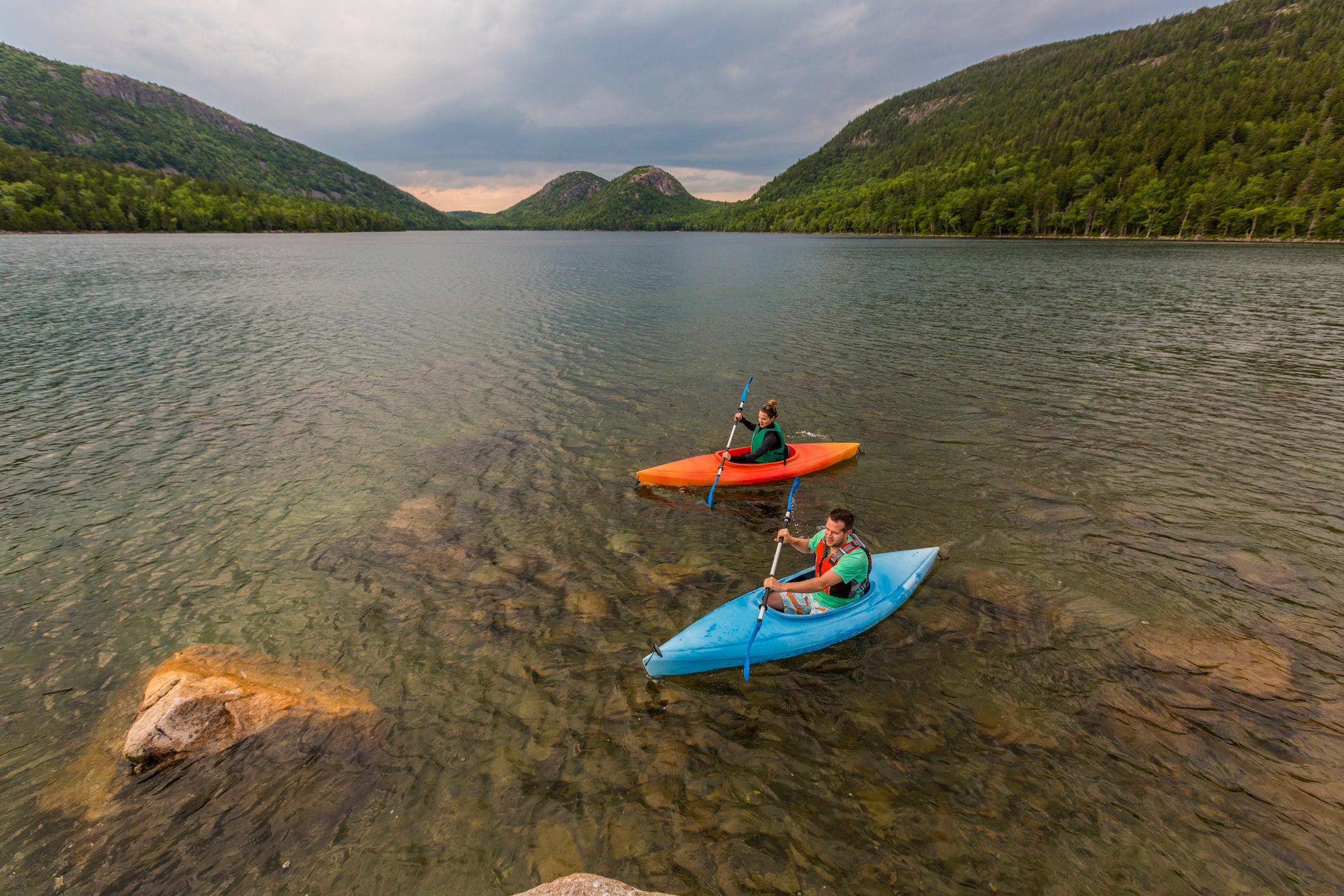
Best points hotels near Acadia National Park
If you’re using points for your hotel stay, there aren’t a lot of options, but the incredible setting is compensation, regardless of where you’re staying. Hampton Inn Bar Harbor is within walking distance of downtown Bar Harbor and a three-minute drive from the hotel to the entrance of the national park. It has both indoor and outdoor swimming pools, free hot breakfast and free Wi-Fi. Rates start at 67,000 Hilton Honors points.
About a mile from downtown Bar Harbor and a couple more beyond that to the entrance of Acadia, Holiday Inn Resort Bar Harbor overlooks Frenchman’s Bay, complete with a pool, bay views and 1,000 feet of ocean frontage. Rates start at 23,000 IHG points per night.
Camping in Acadia National Park
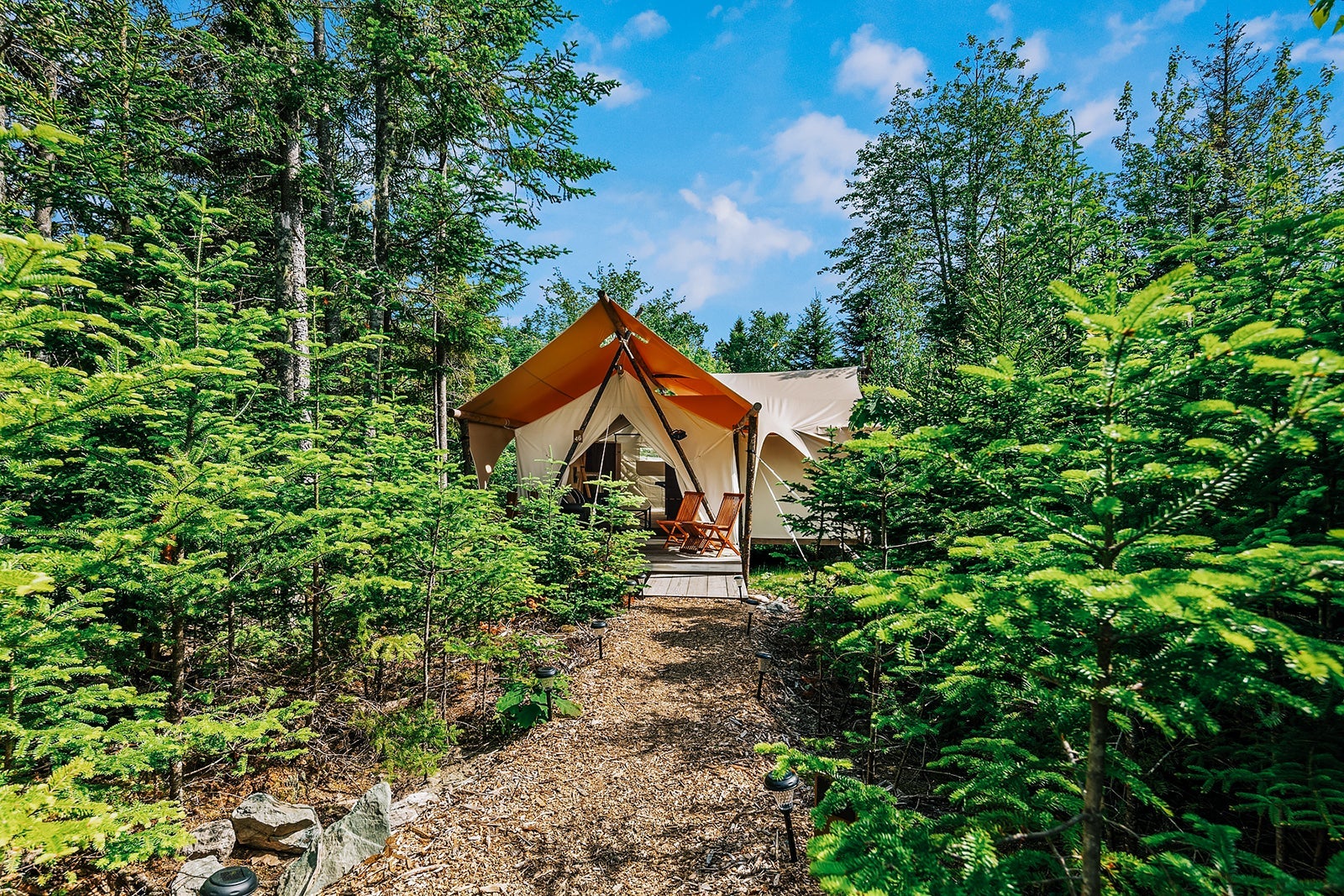
If you want to rough it and embrace the outdoors, there are multiple options for camping within Acadia National Park as well. The forested Blackwoods Campground, situated in the heart of Mount Desert Island, is one of the most popular campsites in the park for good reason. It provides almost every essential amenity for a comfortable stay in the woods, including flush toilets, running water and a dump station, along with picnic tables and fire rings. It’s a perfect location for travelers who want to hike and climb in the park, and you can easily walk out of your tent and pick up the popular South Ridge trail up Cadillac Mountain.
Seawall Campground also offers quality facilities, but like Blackwoods, it tends to book up quickly. Keep in mind that this site is a 45 minute drive into the park.
There are also quite a few independently owned campgrounds near Acadia, like Mount Desert Campground. Bar Harbor Campground is also an excellent under-the-radar choice, especially for last-minute trips. Located just a 25-minute drive from the park, it provides convenience and accessibility despite its limited bathroom facilities compared to the other sites.
Those who still want to be one with nature but might want a more luxurious experience should consider glamping options. In fact, glamping brand Under Canvas is now part of World of Hyatt, following Hyatt’s partnership with Mr and Mrs Smith, and has a stunning outpost near Acadia located on 100 acres of waterfront property. Features include spacious tents (including some that can sleep up to seven) with elegant furnishings and organic toiletries; amenities like s’mores and fire pits; complimentary activities like live music and yoga classes; and on-site experience coordinators. The property is open seasonally early-May to mid-October; rates start at 42,000 World of Hyatt points.
Related: The best US glamping resorts for an outdoorsy summer getaway
While black bears are present in the area, campers can feel safe as long as they maintain distance and follow proper food storage guidelines.
Things to do in Acadia National Park
Aside from exploring Bar Harbor and the rest of Mount Desert Island, Acadia itself is full of outdoor adventures.
Best hiking in Acadia National Park
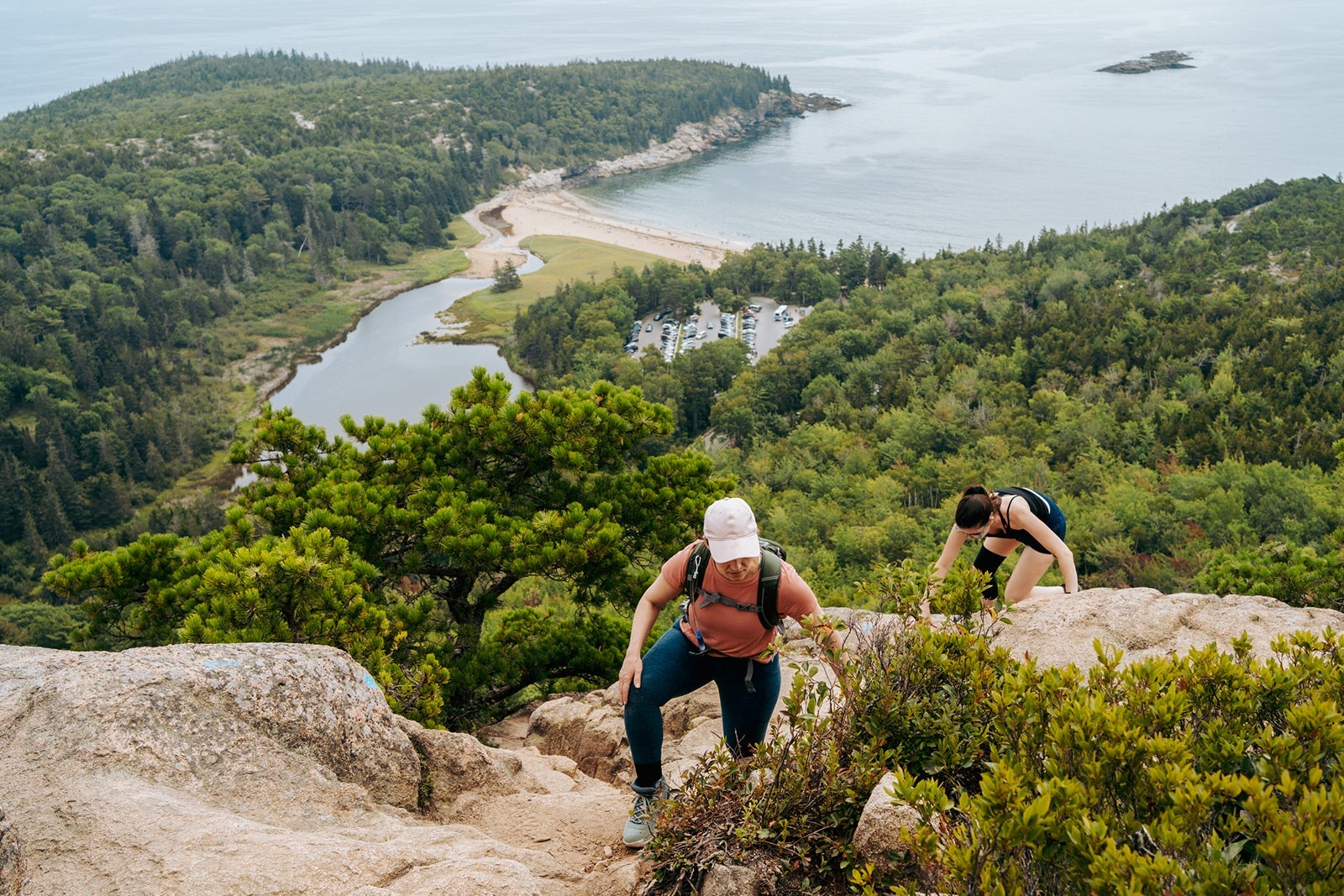
For a truly unforgettable experience, make a reservation in advance to drive up to the top of 1,529-foot Cadillac Mountain — the highest point on the North Atlantic seaboard — and witness the first sunrise in the U.S. Avid hikers may opt to summit the mountain on foot, although an early wake-up call at 3 a.m. is required. Another fantastic spot to catch the sunrise is Otter Point, where you can stroll along the coastline and enjoy an unobstructed view of the ocean.
Beehive Loop Trail is one of Acadia’s most popular rung and ladder climbs. While not for the faint of heart, this 1.9-mile trail promises a gratifying view at the top. Many hikers choose to combine this trail with the Precipice Loop, as the only way to go on the Beehive Loop is up. Easy parking is available along the street near Sand Beach for quick access to both trails.
For something closer to the coastline, try Ocean Path Trail. With its stunning landscapes and views of the water, this trail offers some of the finest natural scenery in the region.
Ideal for families, the Jordan Pond Path provides a delightful 3-mile loop that is suitable for all ages. Be sure to make a reservation well in advance at the Jordan Pond House, a charming spot for brunch in the midst of the wilderness. For those seeking more adventure, consider exploring the North Bubble Loop off this trail to ascend Acadia’s iconic mountain range.
Other activities in Acadia National Park
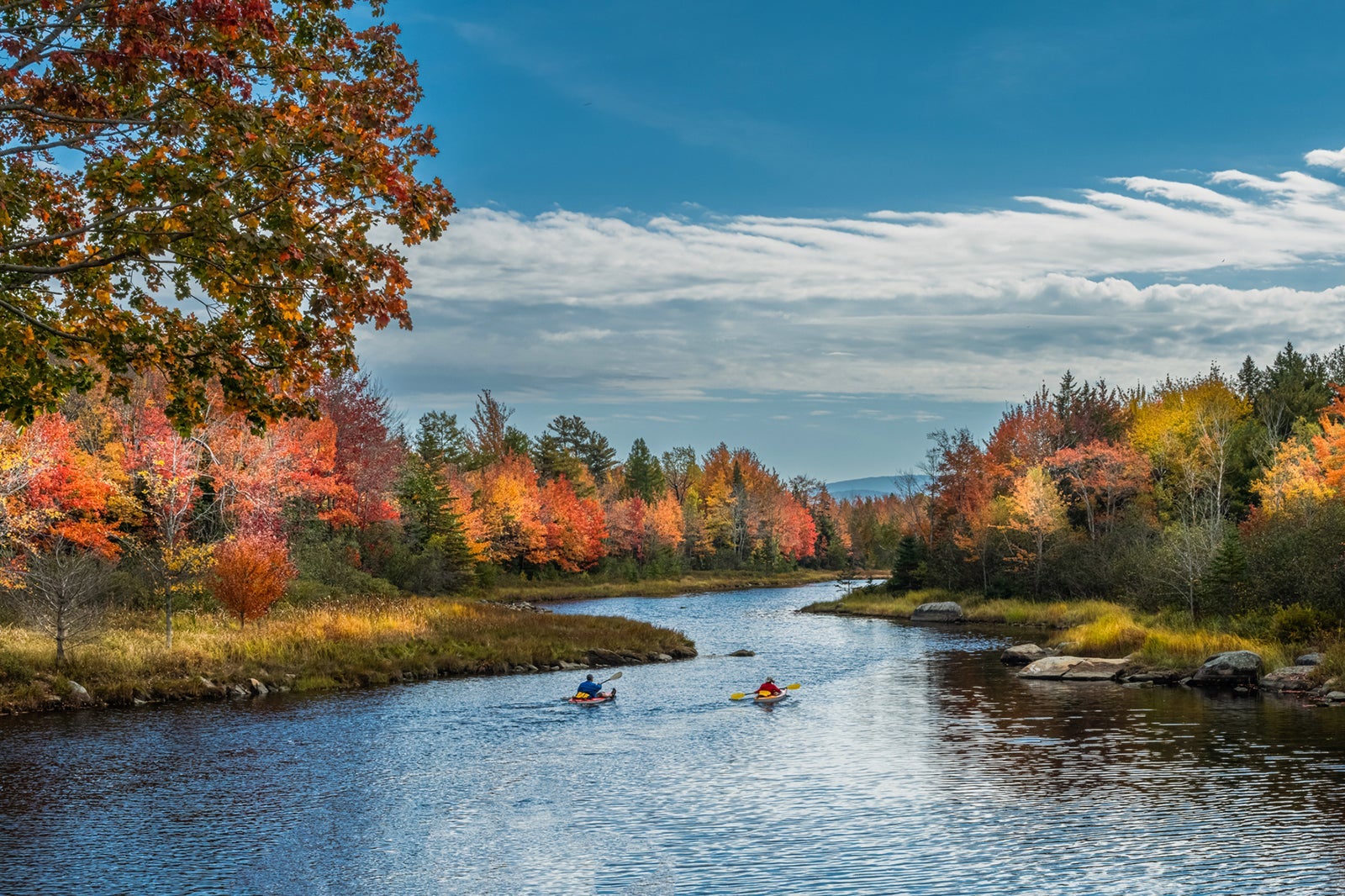
Sea kayaking, rock climbing, wandering around Sand Beach and stopping at Bass Harbor Head Lighthouse are all popular Acadia activities.
You can’t travel to Bar Harbor without stopping to hear the thunderous clap of waves crashing into the rocky inlet known as Thunder Hole. Don’t forget to grab a cheeky souvenir magnet or hilarious postcard from the nearby gift shop.
And it wouldn’t be a visit to a national park without seeing wildlife. Watch for harbor seals, dolphins, whales and other marine mammals plus herons and a variety of seabirds and peregrine falcons and other raptors. And keep an eye out for smaller, easy-to-miss wildlife, such as salamanders and other amphibians.
During low tide, you can even walk out across a sand bar from downtown Bar Harbor to Bar Island. Be sure to watch for barnacles, scurrying hermit crabs and starfish in the tide pools.
You’ll also have the chance to see otters, foxes and, if you’re lucky, even a moose during your trip to Acadia National Park.
Bottom line
Visiting Acadia National Park offers a distinct blend of a rugged outdoor adventure with the comforts and amenities of a bustling seaside town.
A trip to Acadia National Park is also a great way to use those hard-earned points you’ve been saving for a vacation while visiting a stunning stretch of the East Coast.
Here are some more outdoorsy vacations you may enjoy:

Stacie Harris is a local resident and reporter of the Maple Grove area. Stacie reports on medicine and science for the Maple Grove Report.