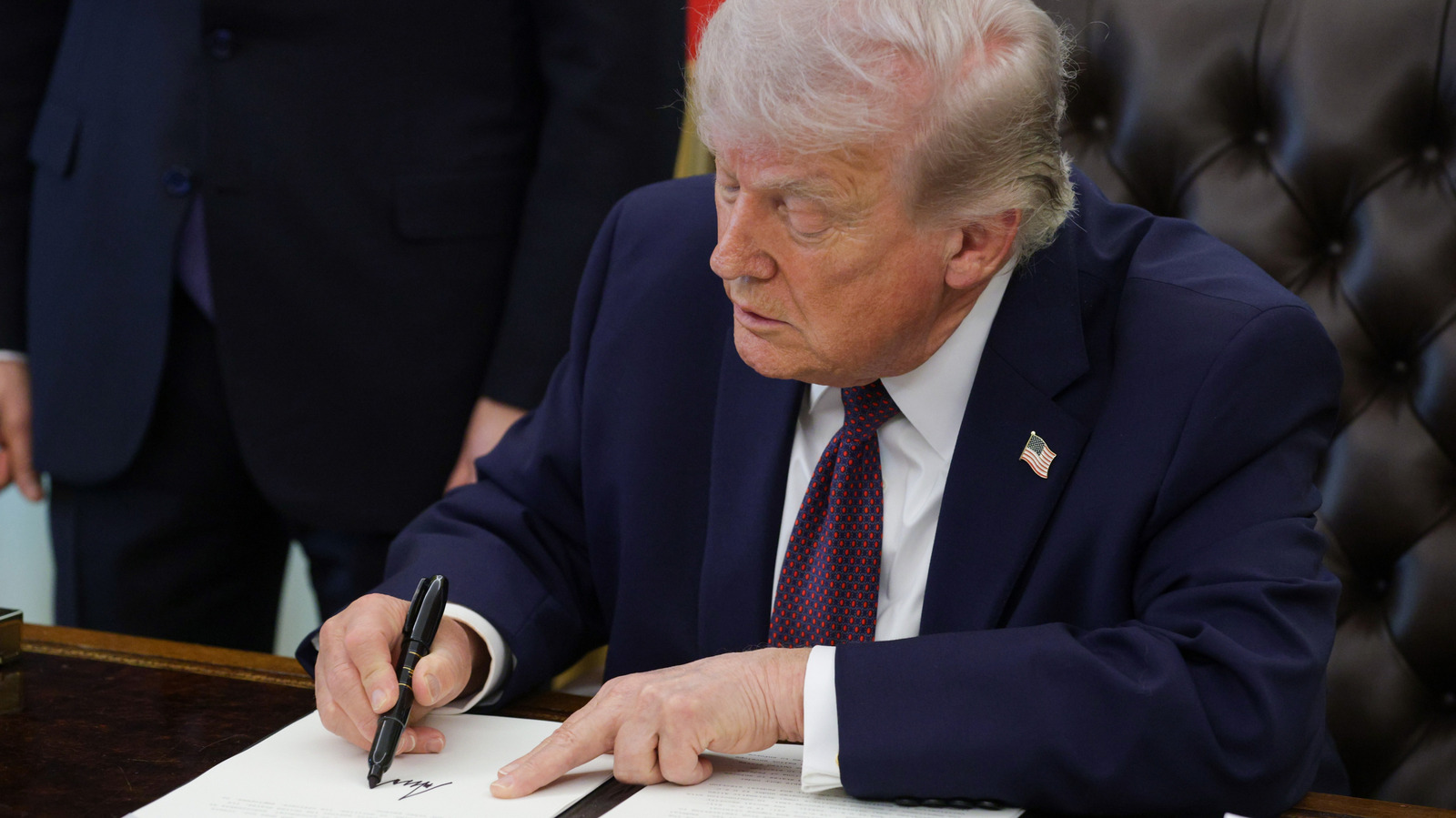

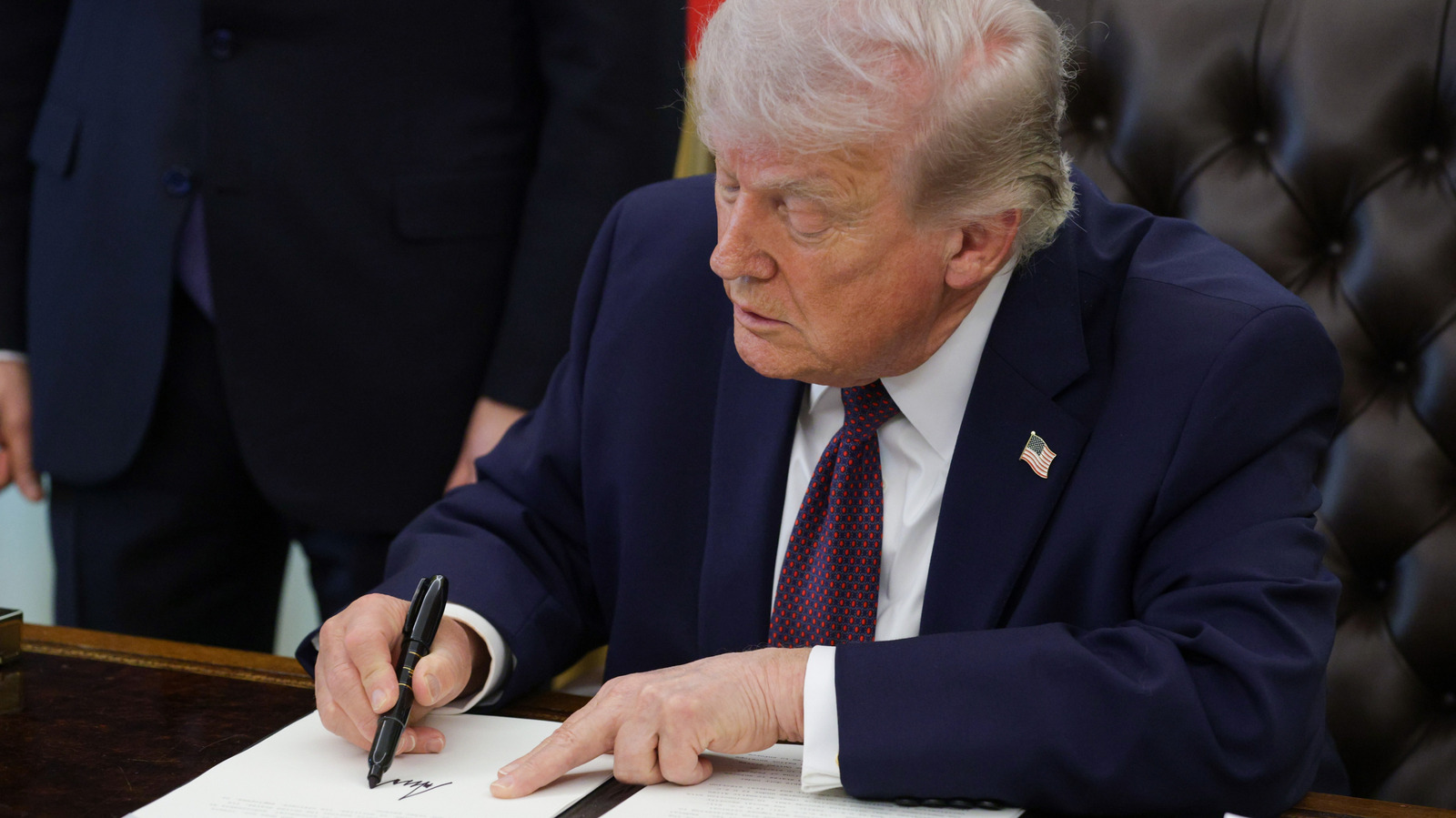
On Tuesday, President Trump signed an executive order calling for the creation of a framework designed to give the federal government the capability to evaluate AI models. The order tasks the Office of the National Cyber Director, which is responsible for advising the president on cybersecurity matters, with developing a process that would allow the US to share information about software vulnerabilities identified by AI systems like Claude Mythos with operators of critical infrastructure, including banks, local utilities and hospitals, before those models are made publicly available.
Trump was originally expected to announce the order on May 21, but according to Axios the White House postponed the signing ceremony following pressure from tech industry insiders. The president later told reporters he “didn’t like certain aspects” of the original order. According to Politico, Trump took part in small, high-level White House meeting where he and his advisors agreed on a new scaled-back order. The new directive, signed in a private ceremony, asks some AI companies with sharing their most powerful models for voluntary government review 30 days before making them available to the public. An earlier draft had called for giving the government as much as 90 days to review a model, with some industry officials reportedly pushing for that period be shortened to as little as 14 days before today’s announcement.
Prior to the announcement, Engadget spoke to the Center for Democracy and Technology. “I think the idea of testing, particularly for critical infrastructure providers, to be able to identify vulnerabilities and patch them before the capabilities become widely available, there’s a lot of sense to that,” Samir Jain, the organization’s vice-president of policy, told Engadget. Although he had not seen the final executive order, Jain called the order “opaque” at the time, noting it doesn’t give the public much visibility into the benchmarking process.
“We don’t want a situation in which any administration can exercise arbitrary power over whether, when and how models are released, particularly when they could use security as a pretense to block or handicap a model for political or ideological reasons that aren’t related,” he said. “An opaque procedure allows for that possibility.”
That Trump has decided, after his earlier to misgivings, to regulate the AI industry in some form is a departure. In his AI Action Plan from last summer, the White House outlined a policy vision that put few guardrails on OpenAI and others. In so far as the president sought to regulate the industry, he did so only on ideological grounds, issuing an order that limited the federal government from procuring “woke” AI systems that “manipulate responses in favor of ideological dogmas such as DEI.” Trump has also sought to prevent states like Colorado and New York from passing their own AI restrictions, going so far as to order the creation of AI litigation task force inside of the Department of Justice to challenge state laws deemed “onerous” by the president.
“To the extent there’s been regulation, it’s been more toward ideological goals. It’s fair to say the Trump administration has been quite laissez-faire in terms of the risks and potential harms associated with AI,” said Jain. “In that sense, the executive order is a change from the perspective the administration has realized that AI poses real security risks and the government needs to act to mitigate or address those risks.”

Stephan is the sports journalist for the Maple Grove Report.