U of M's Plitzuweit signs new contract


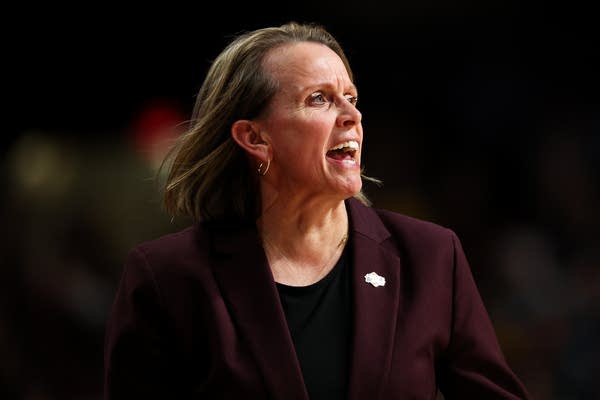
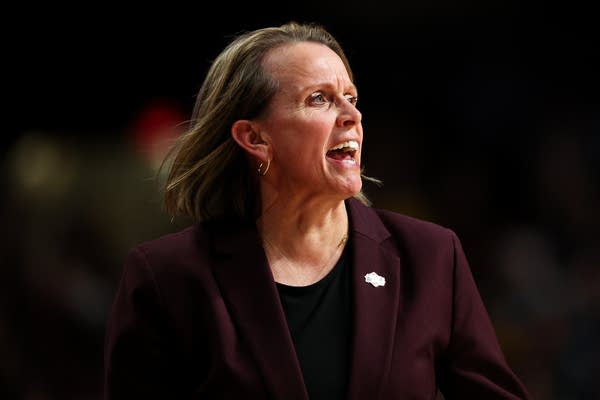
A woman in a burgundy blazer yells to the side.

Minnesota coach Dawn Plitzuweit has welcomed an infusion of new talent and agreed to a new contract.

After guiding the Gophers last season to the Sweet 16, their first such appearance in 21 years, Plitzuweit and the program are clearly on the rise in the rugged Big Ten.

“She deserves it. She does so much for the program and just the community in general, putting her best foot forward every day,” star guard Mara Braun said. “It doesn’t matter what time of day you see her, she’s always got the same energy.”

The Gophers convened this week for summer practice. Plitzuweit agreed last week to a contract amendment that gives her a $200,000 raise for a $1.1 million salary this season that ranks ninth in the conference. The new deal also comes with annual $30,000 increases and an additional year — through the 2031-32 season — that was automatically tacked on when the team made the NCAA Tournament due to a previous provision.

The Gophers went 24-9 in 2025-26 and made the NCAA Tournament for the first time in eight years.

“It’s a blessing to be at the University of Minnesota, and so to have that opportunity to continue coaching is something I’m really excited about,” Plitzuweit said after practice Wednesday.

The fifth-year Braun will lead the Gophers in the backcourt along with returning starters Grace Grocholski and Tori McKinney. There are five other players back from last season, with seven newcomers to integrate.

The four-player freshman class is highlighted by guards Natalie Kussow and Tori Oehrlein. Kussow was the top-ranked recruit in Wisconsin, and Oehrlein finished her high school career as the all-time leading scorer in Minnesota history. The three transfer portal arrivals are headlined by junior forward Tayla Thomas, who led Northwestern in rebounds and blocks last season.

“I think we’re bonding at a really high level. I think our ability to learn is very high. I think their desire to be really good is something that is special," said Plitzuweit, who is 69-36 in three seasons at Minnesota. "Now we’ve just got to keep building and putting it together.”

The Sweet 16 banner has already been hung in the practice gym, serving as a constant source of motivation.

“We know what we’re striving for and obviously to exceed that for next season, but it’s nice to think about what we’ve done and all the people behind us,” Braun said. “We’re just hoping moving forward that's momentum — and getting everyone else on the same track with that same goal in mind.”

Athletic director Mark Coyle has a new contract, too

The Minnesota board of regents meeting last week had plenty of sports subjects on the docket, with a new contract for athletic director Mark Coyle approved along with Plitzuweit's new deal.

Coyle, who recently began his 11th season on the job, agreed to a two-year extension through 2031-32 with $100,000 annual raises from his $2 million salary this year. He can also earn annual longevity bonuses worth a total of more than $2.5 million.

The university also finalized a 10-year naming rights agreement for Williams Arena, which will now be called The Barn by Blue Cross and Blue Shield of Minnesota. The Gophers men's program will begin its 100th season at the arena that has long been affectionately called “The Barn.”




Source link

Leave a Reply

Subscribe to Our Newsletter

Get our latest articles delivered straight to your inbox. No spam, we promise.

Recent Reviews


Being a founder is awesome. And it also really sucks.

It’s a huge amount of stress, disappointment and uncertainty, with little appreciation or guidance.

It’s perfectly normal to find yourself questioning what it all means.

I’ve been there myself… questioning whether the sleepless nights and stress was worth it. And now, I’m often the person founders turn to when they do the same.

In this essay, I wanted to talk about happiness, purpose, and how to get more of it when you’re constantly living in survival mode.

Three Types of Happiness

Martin Seligman, the father of positive psychology, describes three distinct paths to happiness: the pleasant life, the engaged life, and the meaningful life.

  • The pleasant life is about pleasure—closing a deal, hitting a milestone, getting some great customer feedback. As a founder, there’ll be phases where pleasure is hard to come by. Clearly, you can’t build a founder life on pleasure alone.
  • The engaged life is about flow—the state when you’re fully absorbed in solving a hard problem. Most founders have this in spades early on, but as their companies grow, their role can evolve away from flow. Being out of flow is often a signal you need to redesign your role.
  • The meaningful life is about purpose—the sense that what you’re doing matters. Unlike pleasure and engagement, meaning doesn’t require things to be going well. It sustains you through the hard times, not just in spite of them.

So when times are hard, meaning is what we can return to. Unlike pleasure and engagement, meaning is up to you.

And it’s work you can start right now.

How to Make Meaning

So how do you actually build meaning, even when you can barely see past next week? A meaningful life has three components:

  • A meaningful future
  • A meaningful past
  • A meaningful present

Creating meaning in each is an act of creativity. It’s an active process in which you assign meaning to things.

If you aren’t intentional about this, your brain will assign meaning for you. And if you’re not feeling great, your brain will come up with interpretations that match and then reinforce the negative feelings.

What I’m about to share with you is the process I run through when my clients start questioning themselves, and what they’re building.

1. A Meaningful Future

In Man’s Search for Meaning, Viktor Frankl documented the atrocities of the concentration camps. He writes:

“Any attempt to restore a man’s inner strength in the camp had first to succeed in showing him some future goal.”

A lot of modern therapy fixates on the past. But Frankl realised that getting clear on our future goal is even more powerful.

When it comes to founders, they often have goals… but unless you’re fully pumped, your goals need refinement. 

I commonly see three issues with a founder’s goals:

  • They have too many goals. We accumulate goals over time, but we rarely sit down and remove goals. For example, you had goals when you were 18 years old. Most of these have been parked, but some might still be guiding you now.
  • The goal isn’t big enough. For most founders, the more ambitious the goal, the more energy it unlocks. Just increasing the size of the goal can act as a powerful clarifying force for what matters.
  • The goal isn’t framed by its meaning. It’s the difference between ‘I want to make $100M’ versus ‘I want to help 10,000 customers avoid what happened to me’. One is financial, the other is personal.

Refining and reconnecting to your primary goal is critical for building a life of meaning.

Questions to work through:

  • What’s the biggest and most exciting goal you can dream up?
  • If that was your primary goal, what other goals stop being relevant?
  • What people or person could the bigger goal attract that would make it achieving it easier?

2. A Meaningful Past

Being a founder can sometimes feel like a full-contact sport. You can get hurt, through disappointment, bad luck, and even betrayal. That’s why painful events in the past need to be treated like a wound.

When we don’t process the past, unhelpful stories we tell ourselves to protect our ego can cause havoc in the present.

Treating the past means framing every single thing that happened in two ways:

  • A win: an accomplishment that we can celebrate.
  • A lesson: a failure that we learn from, that we can celebrate.

We leave everything else behind. If, for some reason, we can’t let something go, it means we haven’t learned something important from it. As my mentor used to tell me: failures will be repeated until learned.

This work can be done separately, but it’s even more powerful to do it in the context of a big goal. This way, the wins and lessons can be aligned to the vision that truly excites us.

Questions to work through:

  • What is the meaning of what you’ve been through?
  • How did those experiences serve you?
  • Where are they failing to serve you today?

3. A Meaningful Present

Here’s the thing: the future and the past don’t physically exist. They’re tools to help us act in the present.

Often, clarifying the meaning of a bigger future and a happier past makes changing the present obvious and necessary.

As founders, it’s easy to be driven entirely by the past: old goals, old activities, old habits. This stops us from growing. And a lack of growth is one of the fastest paths to feeling meaningless.

Most founders I work with don’t need to do more. They need the courage to do less.

Growth often requires us to:

  • Start doing something we haven’t done before
  • Stop doing something we’ve already mastered
  • Double down on getting even better at some things

The meaningful present is about making these changes — aligning how you spend your time with the future you’ve defined and the lessons you’ve drawn from the past.

Questions to work through:

  • What is the biggest bottleneck to making the big goal viable?
  • What do you need to stop doing—even if there’s a cost involved?
  • What do you need to delegate?

Happiness Isn’t Always Happy

A meaningful life isn’t always smiles and rainbows. It comes with difficulty, sacrifice, and discomfort. But it’s the thing that keeps you going when pleasure and engagement can’t.

If you’re a founder questioning what it all means, the answer isn’t to push harder or to quit. It’s to invest time in making meaning.

Start with the future. Let it reshape the past. And then rebuild the present around what actually matters.

Related Reading: 


Originally published on March 11th, 2026


How do top founders actually scale?

I’ve coached CEOs for 10,000+ hours—here’s what works.
Join 17,000+ founders learning how to scale with clarity.

Unsubscribe any time.


Source link