
Using a private passport service to get a visa more easily


Late last year, I scored an incredible mileage redemption on Japan Airlines for a trip to Tokyo. However, the flight dates left me with a little too much time in Japan, so I wanted to see another country in Asia while I was in the area.

Asia is huge, and most of countries that I haven’t been to — like Cambodia, Vietnam and Laos — are still a long flight from Japan. So, I decided to check China off my bucket list. The problem is, you need a visa to visit, and I had heard it wasn’t always easy to get one. It also requires a trip to the embassy or consulate in most cases.

That’s when I happened to meet Roman Yagudaev from The Passport Experts at Fox5 News in New York City. We’d both been booked on the show “Good Night New York” to talk all things travel.

We got to talking, and he explained that his company helps travelers obtain hard-to-get visas. It arranges last-minute travel documents for companies and individuals worldwide.

I figured it would be a fun service for me to test out and share with the TPG audience. I was pretty impressed. Hopefully, my experience can help someone else get an expedited passport or visa without all the stress.

Getting a visa

A Chinese single-entry visa affixed to a passport page
A single-entry China visa. ASHLEY KOSCIOLEK/THE POINTS GUY

While The Passport Experts help with passports, visas, apostilles (internationally recognized certificates of many types) and even citizenship documents, I only needed a visa for this journey. After a brief phone consultation, the company sent me some fairly simple requests via email.

They asked me to first take a picture against a blank white wall with my smartphone and email it to them. I didn’t even have to edit it; they took care of that part on their end. I was told that different consulates can be very demanding about photo guidelines, so it’s easier if they handle it.

New photo for visa. CLINT HENDERSON/THE POINTS GUY

I also needed to send several documents to The Passport Experts, including:

  • My U.S. passport book
  • A black and white photocopy of my Global Entry Card (front and back)
  • A black and white copy of my driver’s license or state ID (front and back)
  • A black and white copy of a rent statement, utility bill or apartment lease to prove I live in the New York area
  • The itinerary for my travel to China (for which I provided a copy of the confirmation of my mileage redemption to and from China from Tokyo)

Reward your inbox with the TPG Daily newsletter

Join over 700,000 readers for breaking news, in-depth guides and exclusive deals from TPG’s experts

The Passport Experts will either have you mail the documents or arrange a messenger service to pick up your passport and other documents for an additional fee.

Once I sent all that off, the company emailed me a link to the actual visa application. China requires extensive information from potential visitors, including a detailed travel history. You are basically filling out an application for the visa but not submitting it — the team at The Passport Experts goes through it with a fine-toothed comb to ensure it’s perfect before submitting it electronically on your behalf.
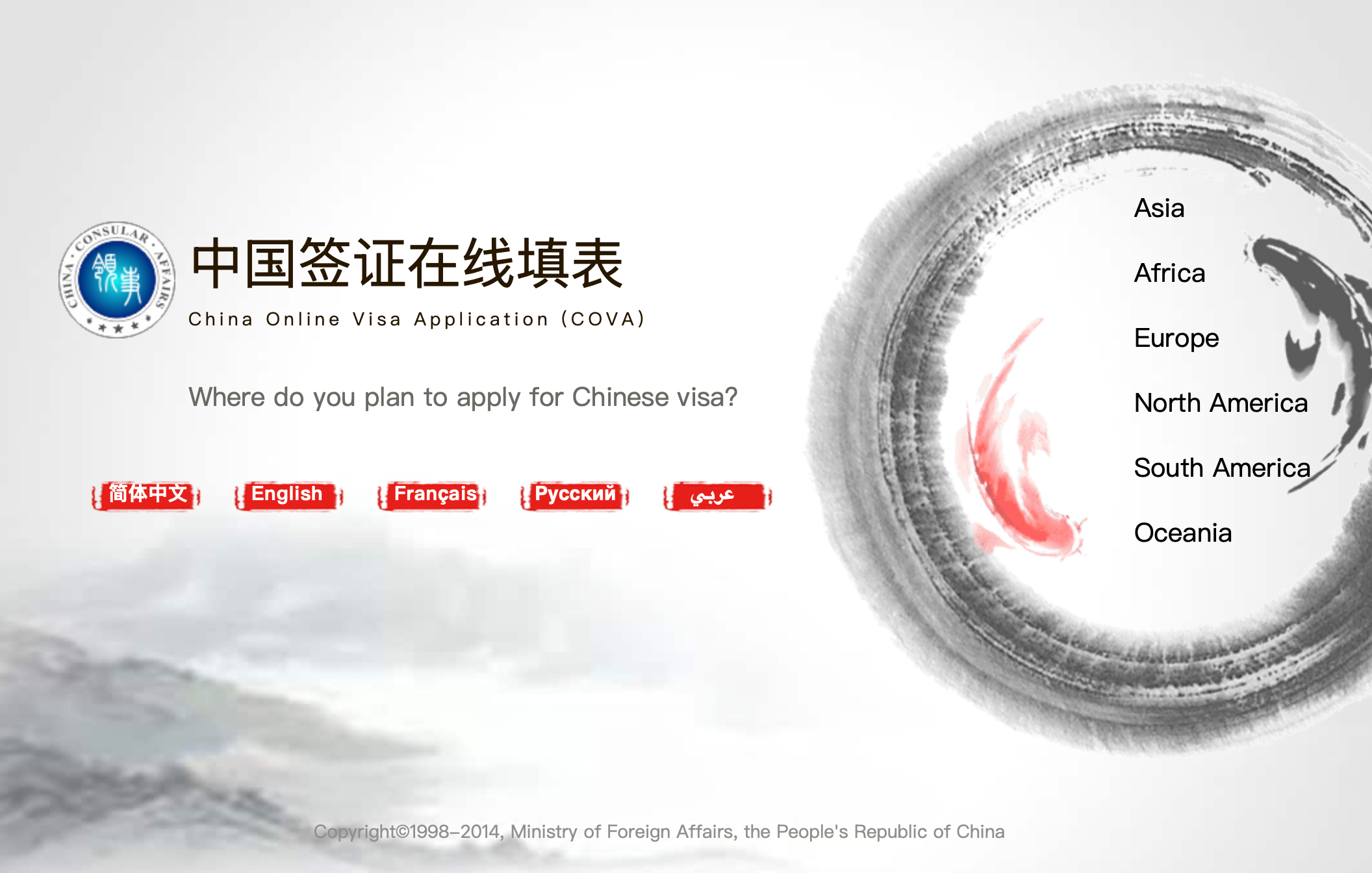
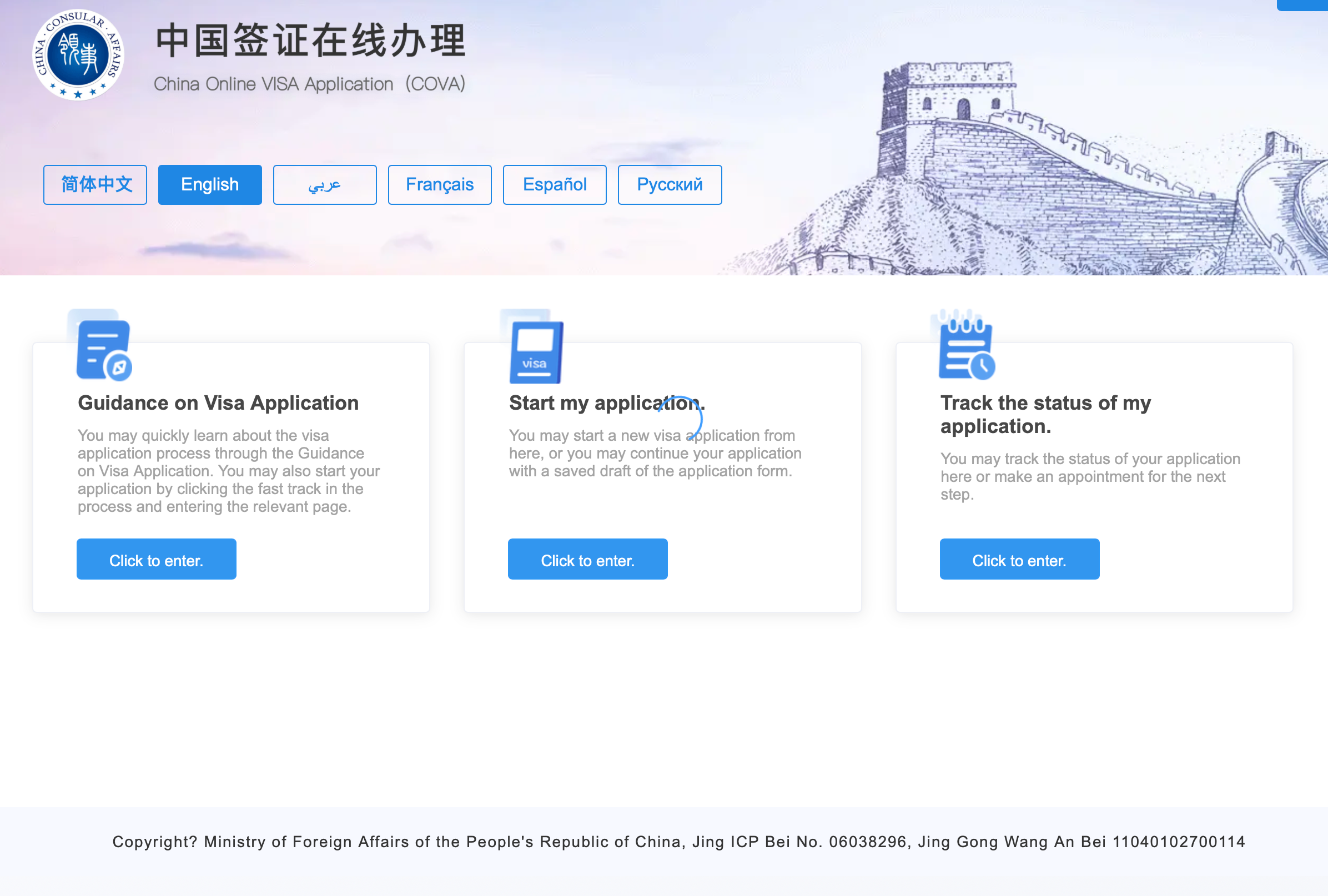
The application is pretty exhaustive and can be confusing, so it was nice not having to guess at some of the questions.

The other incredible help was skipping the wait at the consulate. The folks at the company took care of that for me. It was also deeply reassuring to have experts dealing with all the vagaries of a foreign government on my behalf. In fact, they have an employee who specializes in Chinese visas specifically.

I would have been heartbroken to wait in line for the visa, only to be told my application was out of date. So, it was a big relief to me.

It also took a few extra days because the Chinese consulate in New York was making some changes to the requirements around the time I was requesting a visa.

That’s the great thing about using specialists in situations like these: I would have had no idea the application was changing if I had been trying to do it myself online.

The Passport Experts

Close-up of American passport
TETRA IMAGES/GETTY IMAGES

The Passport Experts specializes in last-minute travel docs for travelers of all kinds. The company is based in New York City and brands itself as “a luxury concierge travel document advisory and expediting firm.” They’ve worked with some big names, like Carmelo Anthony and Suze Orman.

There are no set prices, but an expedited visa, including concierge services, would likely cost more than $1,200. The good news is that the company is offering a 15% discount to TPG readers who mention code “TPGVIP01” during the consultation.

It sounds like a lot of money, but for last-minute service and peace of mind, it’s probably worth it in some situations.

The Passport Experts promises expedited passports nationwide in as few as 48 hours. That’s pretty remarkable. Fortunately, most people applying for a visa have a bit more time to plan trips, though the team said they’ve seen plenty of last-minute requests for difficult visas and other travel documents. All in all, the whole process took me roughly two weeks.

“For over two decades, we have become a trusted resource for our clients, seamlessly delivering hundreds of thousands of rushed passports and visas for last-minute trips,” Yagudaev said.

CLINT HENDERSON/THE POINTS GUY

He said their service is possible because of their ability to leverage “access to … 25 years of data from the 270,000-plus files we successfully expedited for last-minute travelers since 2001.”

Bottom line

A view of Shanghai at night
A view of Shanghai, China, from Viking Yi Dun. ASHLEY KOSCIOLEK/THE POINTS GUY

I had an amazing few days in Shanghai, and I cannot wait to go back. Now that I have a 10-year visa, I can go anytime I want.

Using a concierge passport and visa service can be expensive, but it can also save you a ton of time and stress. I found The Passport Experts to be super professional and knowledgeable when it came to getting my visa for China. They made what could have been a real challenge fairly painless. For what it’s worth, I’ve also used another New York-based service called ItsEasy.com to expedite a passport. There are multiple companies out there that can help you if you get into a pinch, but I can definitely recommend these two.

Related reading:


Source link

Leave a Reply

Subscribe to Our Newsletter

Get our latest articles delivered straight to your inbox. No spam, we promise.

Recent Reviews


SAP R/3 has been one of SAP’s main products, where R stands for RealTime and 3 refers to three-tier application architecture (Database,Application Server and Client).

In the modern environment, the SAP R/3 system powers the majority of businesses.

This software was used by approximately 80% of the businesses.

SAP Ariba Training

  • Master Your Craft
  • Lifetime LMS & Faculty Access
  • 24/7 online expert support
  • Real-world & Project Based Learning

Why SAP R3 architecture?

The primary goal of R/3 Architecture is to provide a set of tightly coupled, major business applications. The typical range of hypotheses for any R/3 process is as follows:

  • Production Planning
  • Materials Management
  • Sales and Distribution
  • Financial Accounting
  • Controlling, Etc

SAP R3 Architecture:

SAP R/3 Architecture simplifies and connects all of an organization’s business transactions through real-time integration. Real-time integration ensures that any change or upgrade in one application causes the data in the other applications to be automatically modified or updated.

We are aware of the SAP R/3 Architecture, specifically the client-server software. This ensures that the R/3 system’s groups and layers are designed to run concurrently on a number of different computing devices. When a business wants to install SAP software, each component is stored, regulated, and filtered using the equipment of completely separate and specialized computer systems.

Each layer has the ability to call on all of the other layers built to complete the task. Clients are components/layers that request services, while servers are components/layers that deliver services. This is referred to as “client/server.”

, others, sap-r3-architecture-description-0, others, sap-r3-architecture-description-0, others, sap-r3-architecture-description-0, , others, sap-r3-architecture-description-0, others, sap-r3-architecture-description-0, , others, sap-r3-architecture-description-0, , others, sap-r3-architecture-description-1, others, sap-r3-architecture-description-1, others, sap-r3-architecture-description-1

Subscribe to our YouTube channel to get new updates..!

This R/3 Architecture’s three Conceptual Layers are… The R/3 Framework’s classic configuration includes the following software layers:

  • Presentation layer
  • Application layer and 
  • Database layer

Presentation layer:

Receives user input and produces a method request. The Presentation Layer is a user interface that can use a variety of different graphical user interfaces ( GUIs). SAPGUI is SAP’s proprietary user interface program over 20 languages.

The presentation or GUI layer includes collaborating keyboard and mouse information from the device and submits it to the application layer inside the form of workflow requests for the further computation. When the layer receives application layer outcome, it recopy it and exhibits text and graphical data on the user’s PC screen.

Application layer:

Receives and processes a process request using the Software Logic Application.

The application layer is made up of R/3’s core components. The application server layer is where the majority of R/3 business logic processing takes place. The dispatcher is in charge of the job procedures here.

The comprehensive logic of R/3 implementations for business operations is provided by the database server. A system may well be connected to a range of different application servers that are geographically distributed.

Database Layer:

All data is saved and recovered. The Database Layer is in charge of both the R/3 Framework’s application elements and the enterprise’s working data. As needed, applications are downloaded from the database, loaded into the application layer, and executed from there.

The database component contains an engine whose sole purpose is to retrieve the data on the application layer’s behalf. SAP R/3 interfaces with its supporting databases using the industry-standard database access language SQL.


SAP Ariba Training

Weekday / Weekend Batches

Components of SAP R3 architecture:

In the application layer there are several elements or components that carry out different operations. Now we will check one after the other.

  • Message Server: In an ABAP system, it handles communication between distributed dispatchers.
  • Dispatcher Queue: This queue stores various types of work processes.
  • Dispatcher: This component distributes requests to work processes.
  • Gateway: It allows collaboration between some of the SAP systems and external systems.
  • ABAP-Work processes: It implements dialog steps in R/3 applications separately.
  • Memory-pipes: It allows ICM and ABAP work processes to communicate with one another.
  • Message Server: It is in charge of java dispatchers and server processes.
  • It allows for communication within the Java runtime environment.
  • Enqueue Server: It manages logical locks set by a Java application program in a server process.
  • Central Services: A specific example of the central services is required by Java cluster for managing locks and transmitting messages and data. A Java cluster is a
  • collection of processes that collaborate to create a dependable system. An instance is a collection of resources such as memory and work processes.
  • Java Dispatcher: This process receives client requests and routes them to the server process.
  • J2EE components are installed using SDM: Software Deployment Manager.
  • Java Server Processes: It can handle a large number of requests at the same time.
  • Threading: When different tasks execute independently in the background, this is referred to as threading.
  • ICM: It facilitates communication between the SAP system and the HTTP, HTTPS, and SMTP protocols. This means that by entering the system URL into the browser, you can also access SAP from the browser.

How does SAP R3 architecture work?

SAP R/3 Processes are being used to successfully manage os resource requirements for the software program. The technique is inextricably linked to the software application. Memory, as well as system support for renewable energy, are accessible for any operation. The on request is determined by the type of work performed in the application server.

The SAP DISPATCHER, SAP’s proprietary control agent, is located in the R/3 Basis kernel. The deploying device, in collaboration with the respective operating system, manages the facilities used by R/3 systems to control their operational activities. The exact number of activities varies depending on the configuration. The dispatcher’s main function is to filter the working process that has been submitted.

There are specific work process models for:

  • Online work process dialogue -Interactive SAPGUI screen processing request
  • Updating the database as part of the work process
  • Background Work Process -used for background processing, such as batch jobs.
  • Spool work procedure-Spooling/Printing procedure
  • Work process-lock management should be enqueued.

Conclusion:

In this blog post we had clearly disused all the points related to the SAP R3 architecture in a clear cut manner. If you have any queries please drop your comments to get them resolved. Happy learning at HKR trainings.


Source link