What to do when your hotel can no longer host you


Have you ever arrived at a hotel to find it doesn’t have room for you or has closed for repairs — or worse, had to evacuate during an emergency situation?

These scenarios are rare, but they can throw a wrench in your dream trip, not to mention put a dent in your wallet. Thankfully, there are things you can do to prepare for the unthinkable.

I talked to Michelle Couch-Friedman, an ombudsman columnist at The Points Guy and self-described “fiasco fixer,” for the best ways travelers can protect themselves from unexpected hotel hiccups. What to do depends on the reason your hotel can no longer host you; let’s walk through some of the most common scenarios you might face.

Related: I booked an airport hotel — at the wrong airport

When emergency strikes
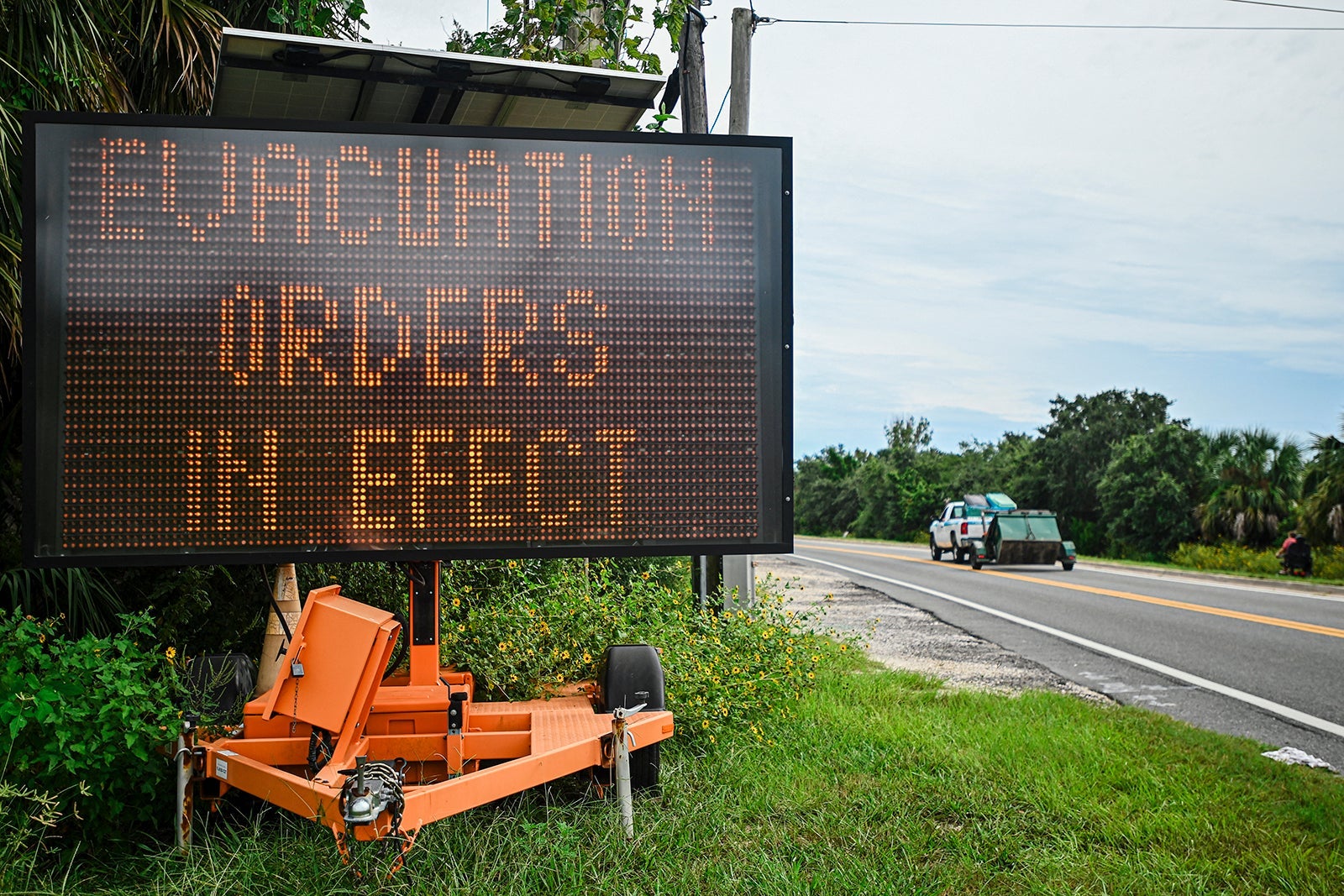
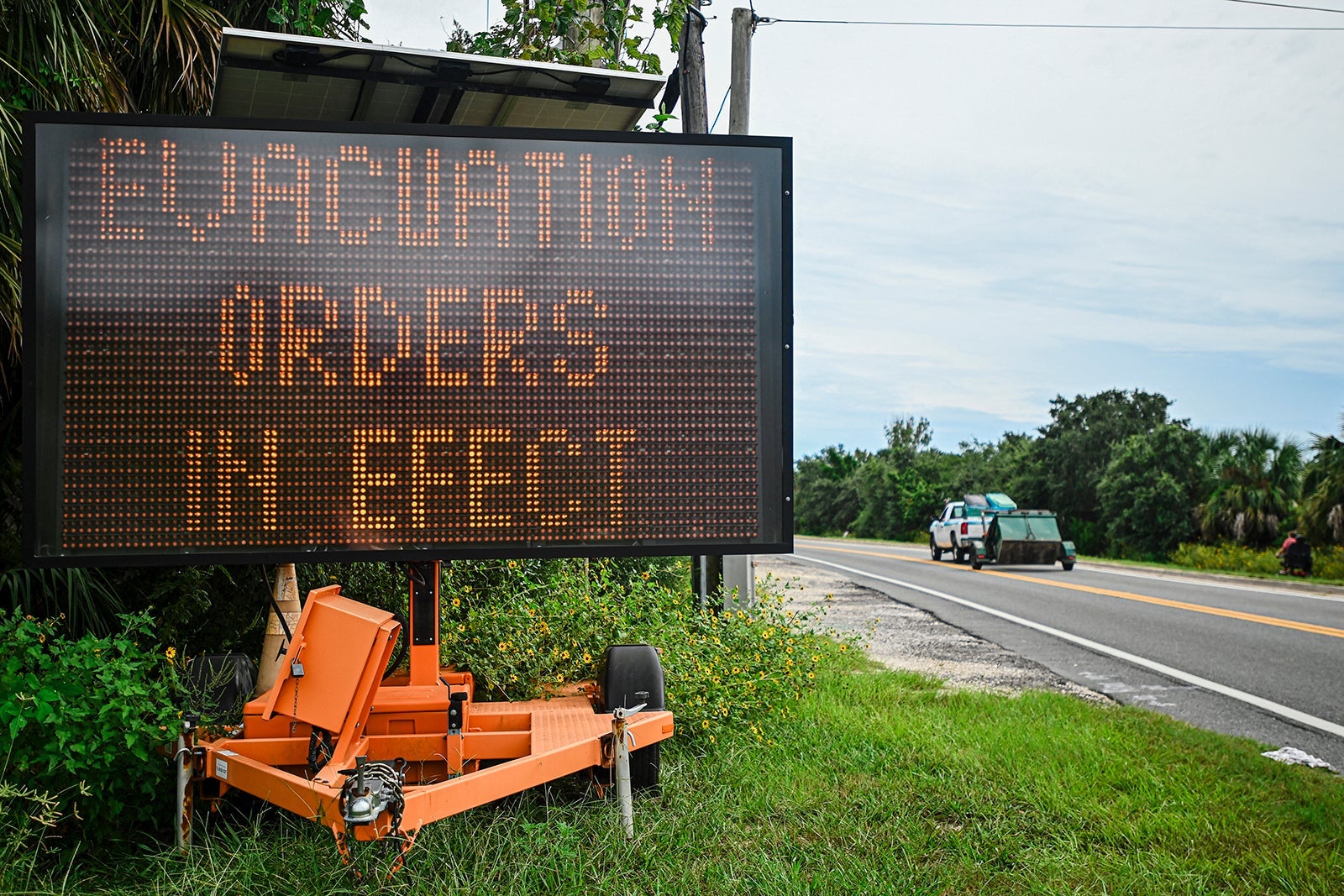
A sign displays evacuation orders as preparations are made for the arrival of Hurricane Helene, in Cedar Key, Florida on September 25, 2024. Thousands of residents on Wednesday began evacuating parts of coastal Florida as the US state braces for Hurricane Helene, forecast to barrel ashore as a powerful, potentially deadly storm. Helene strengthened into a hurricane mid-morning in the Gulf of Mexico and is "expected to bring life-threatening storm surge, damaging winds, and flooding rains to a large portion of Florida and the Southeastern United States," the National Hurricane Center in Miami said in its latest bulletin. MIGUEL J. RODRIGUEZ CARRILLO/AFP/GETTY IMAGES
MIGUEL J. RODRIGUEZ CARRILLO/AFP/GETTY IMAGES

It’s easy to forget about real-life risks while you’re on vacation, but disaster can strike anywhere.

If your hotel is evacuated due to a natural disaster like a hurricane or wildfire, your first priority will be getting out safely and finding another place to stay. This process can be costly, but you can often get much of your money back.

Couch-Friedman says, “While the hotel is always responsible for refunding a prepaid, canceled reservation, a good, comprehensive travel insurance policy can cover all the additional expenses a traveler might incur as a result.” These expenses may include things like lodging, transport, meals and cancelation fees for other parts of the trip.

Many travel credit cards have built-in trip protections, but what they cover and how much they’ll pay vary. Be sure to understand your card’s policy and decide if you need to purchase additional coverage.

However, Couch-Friedman says, “travelers need to remember that they can’t buy travel insurance after a storm has already been named or the natural disaster has already become a problem.”

Reward your inbox with the TPG Daily newsletter

Join over 700,000 readers for breaking news, in-depth guides and exclusive deals from TPG’s experts

Related: Should you get travel insurance if you have credit card protection?

If your hotel turns you away

People in a line at a hotel check in desk
DARIO GAONA/GETTY IMAGES

You may also find yourself scrambling for non-emergency reasons, such as the hotel being overbooked or closing suddenly for renovations. In one case, a family arrived at a Marriott property to learn it had shuttered permanently before they even booked it.

In these cases, if the hotel is at fault, you will typically be refunded and “walked” to the nearest replacement property (at least, in the U.S.). However, the replacement may not necessarily be comparable to your original booking in terms of quality, amenities or location.

If this happens to you, Couch-Friedman’s suggestion is to “politely ask to be relocated to a nearby hotel (even one not associated with the original hotel) and ask that the original hotel pay for at least the first night.” Travel insurance typically doesn’t cover this situation, so whatever the original hotel provides is all the reimbursement you’ll get. “Negotiate what you will receive before you leave the original hotel,” Couch-Friedman advises.

If you decline the hotel’s suggested replacement and opt to find your own accommodation, the hotel is technically only responsible for refunding what you pre-paid. But, Couch-Friedman says, “polite negotiations can often lead to the traveler receiving a pile of loyalty points or vouchers for future stays.”

Related: How to avoid vacation rental scams

If your hotel goes out of business
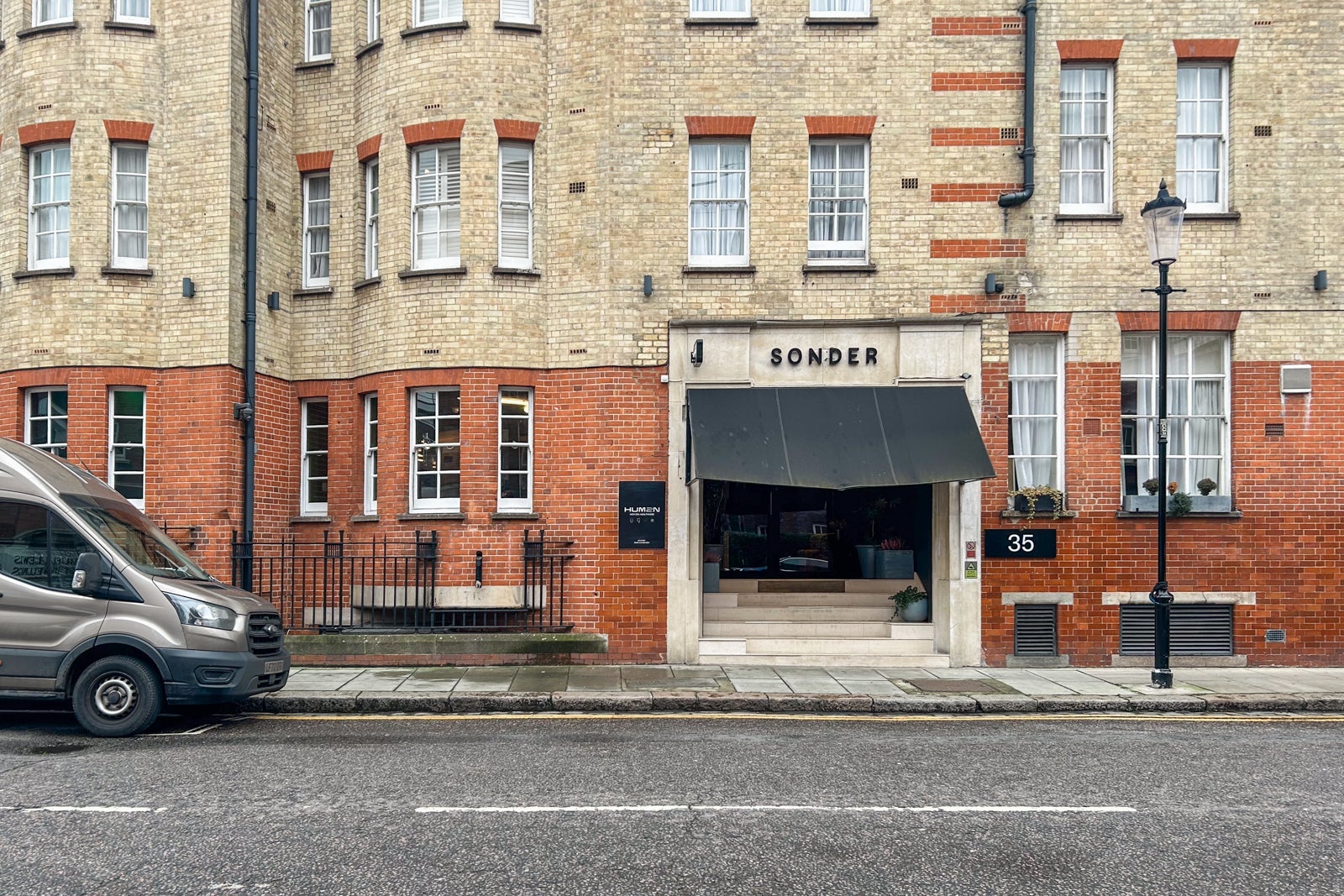
Sonder hotels went under in 2025. LYNDSEY MATTHEWS/THE POINTS GUY

What happens if your hotel goes out of business right before, or even during, your trip? Many TPG readers experienced this bewildering scenario when short-term rental company Sonder abruptly shuttered last year.

In this case, you’ll be responsible for finding alternative lodging, though Couch-Friedman says, “a good travel agent may be able to help locate replacement accommodations.”

She also stresses that “travelers can (and should) immediately file a credit card dispute for any prepaid fees made to the bankrupt hotel chain.” You should be able to get your money back.

Lastly, check your travel insurance policy for an insolvency clause, as you may be able to file a trip cancellation or interruption claim for any additional expenses incurred.

Related: These companies will use your points and miles to book your travel

Bottom line

When a hotel can no longer host you, remember that you have tools at your disposal. You can often get reimbursed for some or all of the expenses that arise by following the tips above.

This can also be a great time to cash in your points and miles, which recently came in clutch for a stranded TPG writer.


Source link

Leave a Reply

Subscribe to Our Newsletter

Get our latest articles delivered straight to your inbox. No spam, we promise.

Recent Reviews


After 10 years of homeownership, I’ve had my fair share of pricey expenses.

Washing machine won’t complete a wash cycle? That’ll be $330 for the labor and part swap. Fireplace won’t stay lit? Goodbye $460 for the cleaning and inspection — plus another $900 for a new pilot light.

Then there are the never-ending water heater issues that seem to cost me $1,000-plus every other year.

Unexpected financial hits are par for the course when it comes to owning a home. But with the right strategy, they can also create opportunities.

In fact, a major home renovation is the exact reason I recently added both the Chase Sapphire Reserve® (see rates and fees) and the United Club℠ Card (see rates and fees) to my wallet.

With thousands of dollars in spending on the horizon, I realized I could use those unavoidable expenses to earn enough points and miles for a bucket-list business-class trip.

Here’s how I’ve handled home expenses so far — and why I’ve changed my strategy now.

My original card strategy for home expenses

Because I prefer travel rewards cards that earn points and miles over cash-back, I added the Capital One Venture X Rewards Credit Card to my wallet shortly after becoming a homeowner.

The card offered perks I knew I’d use — including a $300 annual Capital One travel credit applied to bookings made through the Capital One Travel portal and lounge access at my two home airports — plus a simple earning structure that works well for everyday spending.

Reward your inbox with the TPG Daily newsletter

Join over 700,000 readers for breaking news, in-depth guides and exclusive deals from TPG’s experts

GABRIELLE BERNARDINI/THE POINTS GUY

You’ll earn:

  • 10 miles per dollar spent on hotels and rental cars booked through Capital One Travel
  • 5 miles per dollar spent on flights and vacation rentals booked through Capital One Travel
  • 2 miles per dollar spent on all other purchases

The last earning rate for all other purchases is what particularly caught my eye, as this catch-all category for everyday expenses offers more miles per dollar than what you’ll get with many other general travel cards.

While I knew I’d take advantage of it for pet-related purchases and other items rarely included as an elevated earning rate category, I also liked having a reliable card for large home-related expenses, from annual maintenance to unexpected repairs.

Related: 9 things you didn’t know you could pay for with a credit card

Why I’ve recently reevaluated my approach

Relying on my Venture X for home-related purchases for the past few years has served me well so far.

In fact, I’ve racked up enough miles to cover several nights of a weeklong stay at the Fairmont Royal Pavilion in Barbados and partially cover an upcoming five-night stay at Amansara in Cambodia, both through Capital One’s “cover travel purchases” fixed-value redemption option.

ALL ACCOR

Knowing I was about to begin a major home renovation project in the form of a top-to-bottom, start-from-scratch refresh of my kitchen alongside significant updates to my living room, it seemed like the perfect time to add another card to my wallet.

I knew a few appliance purchases would easily satisfy a welcome-bonus spending requirement, so it felt like the perfect time to open a new premium credit card.

Naturally, the Chase Sapphire Reserve® became a front-runner, thanks to its current best-ever welcome offer of 150,000 bonus points after spending $6,000 on purchases in the first three months from account opening.

Young Asian woman shopping for home decor and household necessities in a homeware store, looking at bedding sets on a shelf
D3SIGN/GETTY IMAGES

While I already have the Chase Sapphire Preferred® Card (see rates and fees) — and the Sapphire Reserve’s high $795 annual fee requires careful planning with spending to justify — thanks to Chase’s updated Sapphire bonus rules, I was eligible for the Reserve’s welcome offer, making the decision much easier.

Two bonuses are better than one

Since I’d owned most of my furniture for a decade, replacing it alongside the renovation suddenly made sense. I wanted my home decor to match the new cabinetry, stone, paint and appliances I’ve selected.

That’s when I realized I could potentially earn a second limited-time welcome bonus, too.

Ultimately, I stumbled upon the United Club℠ Card.

At the time I applied, the card was offering the opportunity to earn 100,000 bonus miles and 3,000 Premier qualifying points after spending $5,000 on purchases in the first three months from account opening (no longer available).

A United Airlines plane on final descent into Washington Dulles International Airport (IAD). SEAN CUDAHY/THE POINTS GUY

Since United has a major presence at Dulles International Airport (IAD), a hub I use frequently, the card caught my attention quickly despite the United Club Card’s high $695 annual fee.

Then, things really clicked.

If I successfully earn both bonuses, I’d earn at least 100,000 miles with the United Club Card and 150,000 points with the Sapphire Reserve, the latter of which I could transfer to United MileagePlus, a Chase transfer partner, for a whopping total of 250,000 miles.

Say no more. Within days of coming to that realization, I applied for both cards.

Related: Can you pay your rent or mortgage with a credit card? Everything you need to know

How I plan on spending the bulk of points

It didn’t take long to meet the spending requirement for my United Club Card‘s welcome offer. Just 24 hours after receiving the card in the mail, I purchased five new appliances. Within days, the offer’s 3,000 PQPs appeared in my MileagePlus account, and after my first billing cycle, the 100,000 miles were deposited.

BOB KRIST/GETTY IMAGES

Once I earn the 150,000 points with my Chase Sapphire Reserve and transfer them to my MileagePlus account, I have big plans for how I’ll use the bulk of the miles.

After visiting Asia for the first time this year, I already have my sights set on another new continent for 2027: South America.

As an architecture buff and lover of far-flung destinations that haven’t been spoiled by overtourism, I’ve long wanted to visit Easter Island.

Rapa Nui, as it’s known locally, is one of the world’s most remote inhabited islands and can only be reached by air from Santiago, Chile, or via select world cruise itineraries.

A world cruise is out of reach for me, so instead, I’ll fly from D.C. to Easter Island, with connections in Houston and Santiago, to finally see the island’s iconic moai in person.

United miles won’t cover the Santiago-to-Easter Island segment on LATAM, but they can cover the rest of the itinerary, including a nine-plus-hour business-class flight from Houston to Santiago. With the trip priced at nearly $11,500 in cash, it’s exactly the kind of redemption that makes my home renovation spending feel worthwhile.

Related: Turn miles into adventure: How to travel to South America with Alaska Airlines miles

Bottom line

Homeownership comes with plenty to celebrate — and plenty of expenses.

While there’s no way around the cost of maintaining and upgrading a home, there are ways to get more value from that spending.

In my case, a major renovation project is helping turn thousands of dollars in home expenses into a dream trip to Easter Island that would have otherwise been out of reach.

Related: How my travel credit cards keep me on the go within a modest budget


Source link