Medically reviewed by Amy Kwan, PT
:max_bytes(150000):strip_icc():format(jpeg)/Health-GettyImages-2150426225-25c6fa90cba940e284ee54471b388180.jpg "A person performing a plank exercise indoors on a mat with blurred background")
Credit: Galina Zhigalova / Getty Images
- Several bodyweight exercises can strengthen your core in addition to the plank.
- These exercises can be done anywhere.
- They do not require any equipment.
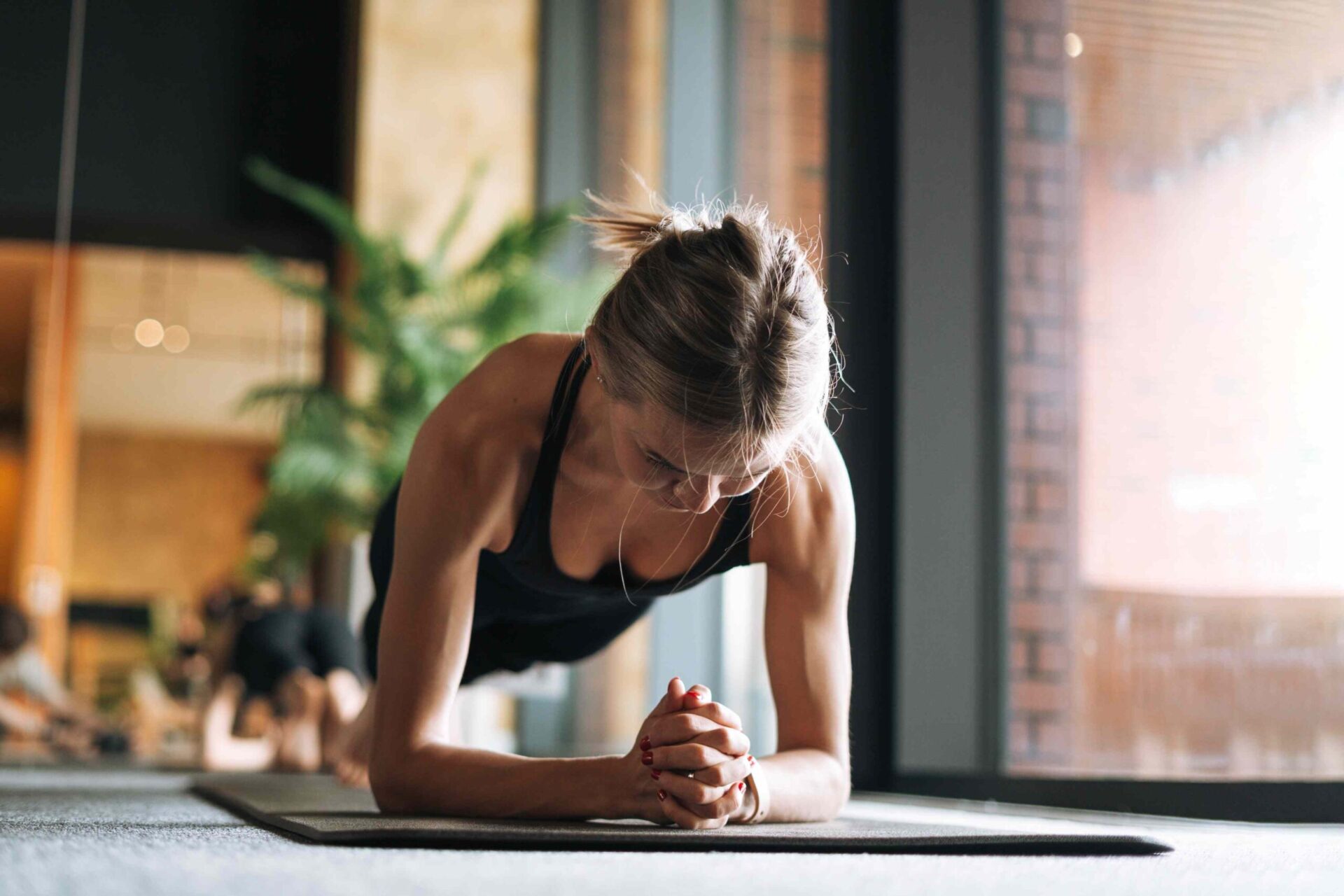
While the plank is an excellent core exercise, several other options can strengthen your core. You can do these bodyweight exercises anywhere, and they don’t require equipment.
1. Dead Bug
The dead bug exercise teaches your core to stay stable while your arms and legs move independently. It targets your deep core muscles and trains you to prevent the lower back from arching during movement.
This is a vital function when performing loaded exercises with weights, as it ultimately teaches your spine to stay in a neutral position, which helps prevent injury.
How to do it (step-by-step):
- Lie on your back with your arms extended straight up toward the ceiling and knees bent at about 90° with your shins parallel to the floor.
- Now, press your lower back gently into the floor and brace your core as if preparing for a punch to the stomach.
- Slowly lower your right arm overhead toward the floor while simultaneously straightening and lowering your left leg a few inches (perform the movement slowly and controlled).
- Pause when your arm and leg are just above the floor (or where you can keep your lower back on the mat).
- Then return the arm and leg to the start position while maintaining your braced core, then repeat on the opposite side.
- Perform 8–12 slow reps per side, focusing on keeping the lower back flat and breathing steadily.
2. Bicycle Crunch
The bicycle crunch combines trunk rotation with alternating knee movements to train several core muscle groups. It’s effective for rotational strength and coordination, and gets you feeling your core muscles quickly. Like with most core exercises, slow, intentional movements are important with this one.
How to do it (step-by-step):
- Lie on your back with your hands lightly supporting your head, elbows wide, and knees bent.
- Lift your head, neck, and shoulders slightly off the ground and bring your knees up to tabletop position.
- Then, extend your right leg out while bringing your left knee toward your chest. Simultaneously rotate your torso so your right elbow moves toward the left knee.
- Switch sides in a smooth, controlled motion—left elbow toward right knee while the left leg extends.
- Keep the movement coming from your ribs, rotating, not by yanking your neck.
- Perform 20–30 alternating reps (count each side as one) at a controlled tempo. Several sets through.
3. Shoulder Taps
Similar to a plank in the sense that your spine stays neutral, shoulder taps are a dynamic variation that challenges your stability each time you lift your hand. Small hip movements are fine, but try to minimize rotation by using your core to stabilize your hips.
How to do it (step-by-step):
- Start in a high plank with your hands under your shoulders and feet wide apart for stability.
- Brace your core, squeeze your glutes, and keep your body in a straight line from your head to your heels.
- Now, lift your right hand and tap your left shoulder while maintaining a stable hip position.
- Return your right hand to the floor and repeat on the other side (this time, left hand taps right shoulder).
- Aim for somewhere around 20 taps total (10 per side) or however many you feel comfortable challenged with.
4. Bird Dog
Bird dogs are a slow, controlled stability exercise done on all fours that improves coordination and spinal control. It’s low-impact and great for people with back pain because it promotes spinal stability while training limb movement.
How to do it (step-by-step)
- Start on your hands and knees with your hands under your shoulders and knees under your hips.
- Brace your core and extend your right arm forward while simultaneously extending your left leg straight back until both are in line with your torso.
- Hold the reach for 1–3 seconds, keeping your hips level and abs engaged.
- Slowly return to the starting position and repeat on the opposite side.
- Do 8–12 reps per side, focusing on slow, steady control and minimal torso wobble.