Medically reviewed by Brendan Camp, MD
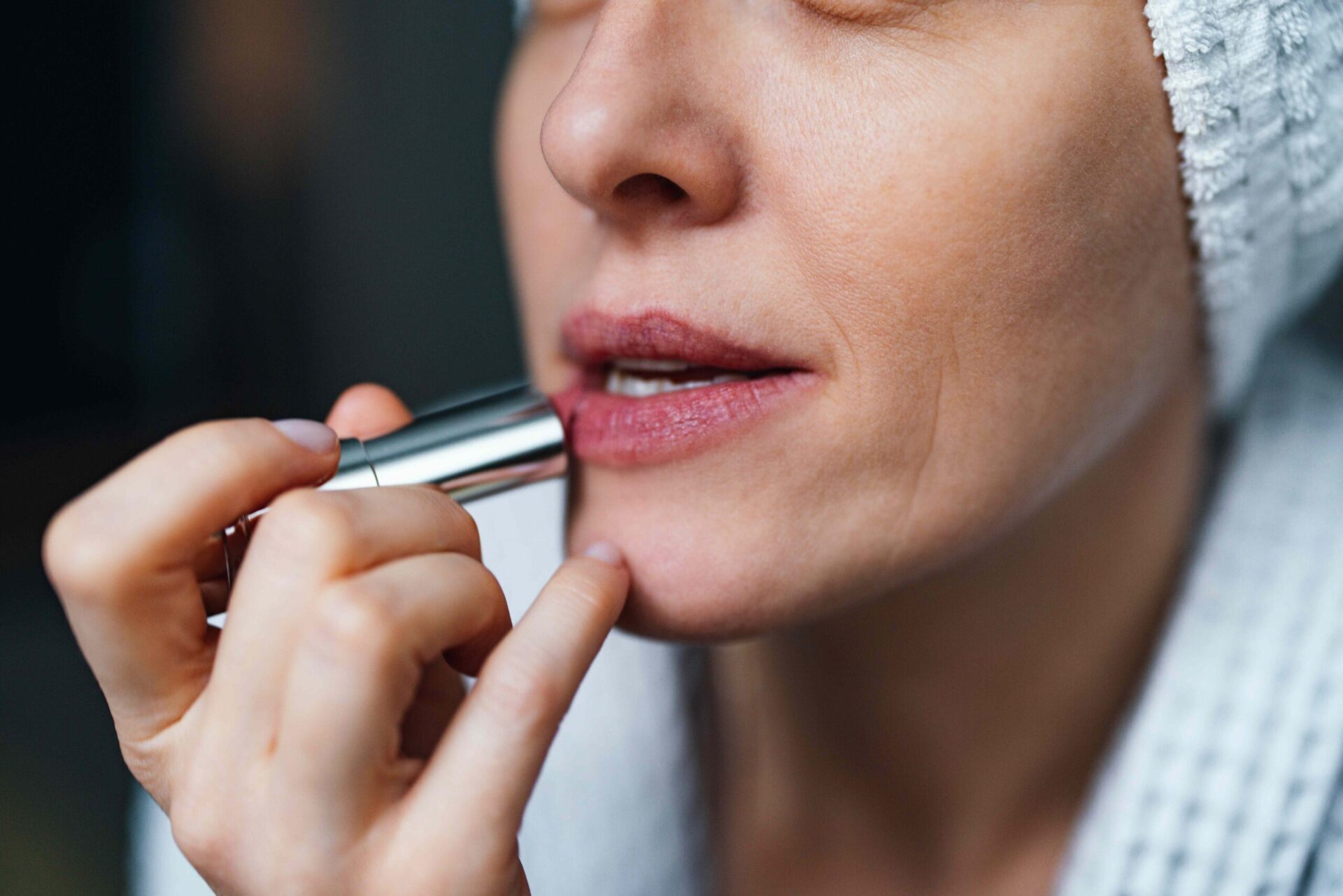
:max_bytes(150000):strip_icc():format(jpeg)/Health-GettyImages-1474168288-dd2ee977be834735bc8aad0b1af9c74e.jpg "A person applying lipstick while wearing a towel on their head focusing on personal care activity.")
Credit: miniseries / Getty Images
- Collagen and elastin decline starting in your 20s, reducing lip fullness and increasing fine lines around the mouth over time.
- Age-related bone loss, reduced facial fat, and muscle changes can also make lips appear thinner and less defined.
- The degree to which your lips lose volume depends on a number of factors, including sun exposure and genetics.
As you get older, your lips naturally lose some of their natural fullness and develop more noticeable lines. Here are four reasons why your lips may look different over time—and the factors that can either accelerate or slow lip aging.
1. Collagen and Elastin Production Slows Down
Over time, your body loses two proteins that can affect the appearance of your lips:
- Collagen: This protein is responsible for giving the skin its structure and firmness. Collagen production peaks in your 20s, then declines by about 1% per year. For women, collagen loss accelerates significantly during the first five years of menopause, then declines more gradually after.
- Elastin: This protein is essential for helping tissues stretch and bounce back to their original shape, but it also declines with age.
Together, collagen and elastin fibers support the lips and help them maintain their shape. But as these proteins break down over time, your lips can appear less full or droopier, and you may notice fine lines on your lips or around your mouth.
2. Bone Structure Changes
Many people associate aging with skin changes, but the bones in your face also change over time.
Bone resorption—the opposite of bone formation—is a natural process where bones lose some of their mineral content. As you get older, this bone resorption causes your mouth and jaw bones to recede slightly, so they're less able to support the tissues around the mouth. As a result, your lips may appear thinner, more droopy, or less defined.
3. Fat Pads Become Smaller
Your face contains pockets of fat beneath the skin, called fat pads, that help keep your skin smooth and plump.
Due to gravity and bone changes, facial fat tends to shrink and shift as you age. The loss of this underlying support may make the skin and lips appear flatter and less full. Fat loss can also cause age-related changes around the mouth, such as deeper smile lines, more wrinkles, and a less defined lip border.
4. Muscle Changes
Age-related changes to the muscles in your face can also alter how your lips look. There are two major drivers of these changes:
- Natural weakening of muscle fibers: The main muscle that surrounds the lips, called the orbicularis oris muscle, gradually becomes smaller and weaker over time. As this muscle weakens and loses support, the lips may appear thinner, and wrinkles around the mouth may become more noticeable.
- Repeated movements: You use muscles in your face to complete everyday movements, such as talking, smiling, drinking through a straw, whistling, or smoking. These actions form grooves or dents on the surface of the skin and lips, which can contribute to the formation of fine lines over time. Plus, overuse of certain muscles may cause the lips to appear more downturned.
Factors That Speed Up Lip Thinning
Aging affects everyone's lips, but certain lifestyle and environmental factors can accelerate some of these changes, including:
- Smoking: The repeated movement of smoking can contribute to lines around the mouth. Plus, research suggests that people who smoke have thinner skin and less collagen fibers. This could be because smoking reduces blood flow in the skin and limits the body's ability to repair skin tissue.
- Long-term exposure to ultraviolet (UV) rays: This can damage collagen and elastin in the skin.
- Dehydration: Lips are prone to dehydration, and not drinking enough water can affect their short-term appearance.
- Significant weight loss: People who have lost substantial amounts of weight may have a reduced facial volume, which makes lip thinning more noticeable.
- Poor nutrition: Among many other things, your diet plays a role in your skin health. Not getting enough essential vitamins and minerals, or eating a diet very high in fats and sugar, may lead to inflammation and skin aging.
- Genetics: Though there's little research on lips specifically, it's well-documented that family traits can play a role in skin aging in general. It's possible that the way your lips change over time may be similar to what you've seen in older relatives.
How To Keep Lips Looking Healthy as You Age
Age-related lip thinning is a normal part of getting older, and everyone will likely experience it to some degree—collagen loss, shrinking fat pads, and changes in facial bone and muscular structure cannot be completely prevented.
However, healthy habits may help you maintain or improve the appearance of your lips, including:
- Using sun protection, including a lip balm that contains SPF
- Staying hydrated by drinking enough water each day
- Applying moisturizing lip products, such as lip balm containing hyaluronic acid
- Quitting smoking to prevent skin damage and premature aging around the mouth
- Limiting repetitive motions, including drinking from straws
For people who want more noticeable changes, cosmetic treatments—such as dermal fillers—may provide additional improvement in lip volume and definition. If you want to explore treatment options, visiting a board-certified dermatologist or plastic surgeon is the right place to start.