:max_bytes(150000):strip_icc():format(jpeg)/Health-GettyImages-2223831527-e5c8aa8ba3b7401e93870a6f4ef90f9b.jpg "A woman standing on a bridge drinking from a bottle wearing headphones around her neck")
Credit: LittleBee80 / Getty Images
- Some drinks, like coconut water, milk, and juice, provide more of certain electrolytes than sports drinks, especially potassium.
- Sodium is the main electrolyte lost in sweat, so heavy sweaters may need a pinch of salt or a higher-sodium option.
- People with kidney disease, heart failure, high blood pressure, or fluid restrictions should check with a healthcare provider before drinking these beverages.
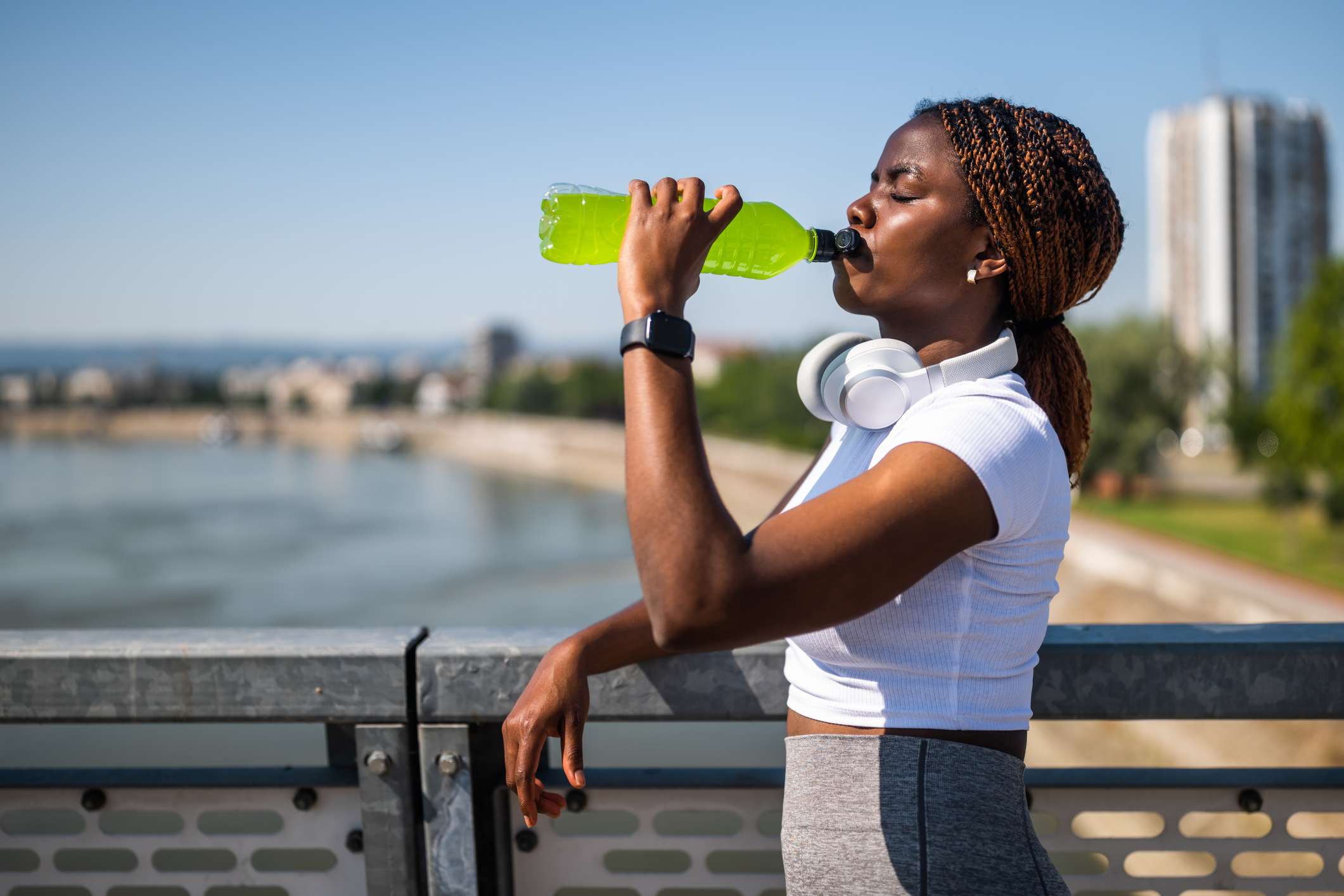
Sports drinks can help replenish electrolytes after a sweaty workout, stomach bug, or long day in the heat. But they’re not the only option. Drinks like coconut water, milk, and juice can provide comparable amounts or even more.
1. Coconut Water

Coconut water is one of the best alternatives to sports drinks. It contains key electrolytes, including potassium and sodium, plus small amounts of magnesium and calcium.
One cup (eight ounces) of coconut water provides about 404 milligrams of potassium and 64 milligrams of sodium. Compared with a typical sports drink, it has much more potassium but a little less sodium. The same serving of a typical sports drink provides about 97 milligrams of sodium and 37 milligrams of potassium.
Electrolytes, including sodium and potassium, are important for hydration because they help regulate fluid balance in your body.
A 2026 study found coconut water rehydrated as well as a carbohydrate-electrolyte sports drink after moderate-to-high intensity exercise, even though it has less sodium. Still, more research is needed to determine whether coconut water is beneficial during prolonged exercise.
2. Electrolyte-Infused Water

Electrolyte-infused water can be a good lower-sugar swap for sports drinks. These drinks usually have added minerals like sodium, potassium, magnesium, or calcium, but the amounts can vary.
Some electrolyte waters do not contain much more than regular tap water. If you’re using one to replace minerals lost through sweating, check the label and choose one with enough sodium, the main electrolyte lost in sweat.
Drinks designed for prolonged exercise should provide about 50–160 milligrams of sodium per 8 ounces. Some athletes may need more sodium during long or intense workouts, but most people do not need extra sodium for short or light activity.
You can also make your own version by adding citrus, berries, cucumber, mint, or a small pinch of salt to water.
3. Fruit Juice

Fruit juice naturally contains electrolytes, especially potassium. For example, one cup of orange juice provides about 449 milligrams of potassium, while the same amount of watermelon juice contains 408 milligrams of potassium.
Juice can also help replace fluids and carbohydrates after exercise. A small 2020 study found 100% orange juice supported hydration similarly to a sports drink after exercise without increasing gastrointestinal distress. Still, because juice is low in sodium, it may not be the best choice on its own after heavy sweating or prolonged exercise.
4. Milk

Milk naturally contains several electrolytes, including potassium, calcium, sodium, and magnesium. One cup provides around 390 milligrams of potassium and 95 milligrams of sodium.
While milk may not replace sodium lost during heavy sweating as well as some sports drinks, some evidence suggests it may rehydrate better than water. This may be due to its mix of protein, carbohydrates, and electrolytes, which can help the body hold onto fluids longer. However, more research on milk and hydration is needed.
5. Smoothies

Smoothies made with hydrating fruits like berries, oranges, watermelon, or bananas can provide fluid plus electrolytes like potassium and magnesium. Blend in Greek yogurt, milk, or coconut water for even more electrolytes, along with protein.
For intense exercise or heavy sweaters, add a small pinch of salt for extra sodium to help replace what’s lost in sweat.
How To Make Your Own Electrolyte Drink
You can make a simple electrolyte drink at home with a few basic ingredients. Try combining:
- 1 1/2 cups water or coconut water
- 1/2 cup orange juice
- 2 tablespoons lime juice
- Pinch of salt, about 1/4 teaspoon
Stir everything together in a large glass until the salt dissolves. Add ice, fresh mint, or sliced citrus for extra flavor.
Who Should Be Careful With Electrolyte Drinks
Electrolyte drinks are not necessary for everyone. Some can be high in sodium, with certain powders or bottled drinks providing 1,000 milligrams or more per serving. These drinks may not be the best choice for people with high blood pressure, heart failure, kidney disease, or anyone following a low-sodium diet.
Drinks high in potassium, like coconut water or some fruit juices, may also need to be limited by people with kidney disease or those taking certain medications that affect potassium levels.
If you have a medical condition or have been told to limit sodium, potassium, or fluids, check with a healthcare provider before using electrolyte drinks regularly.