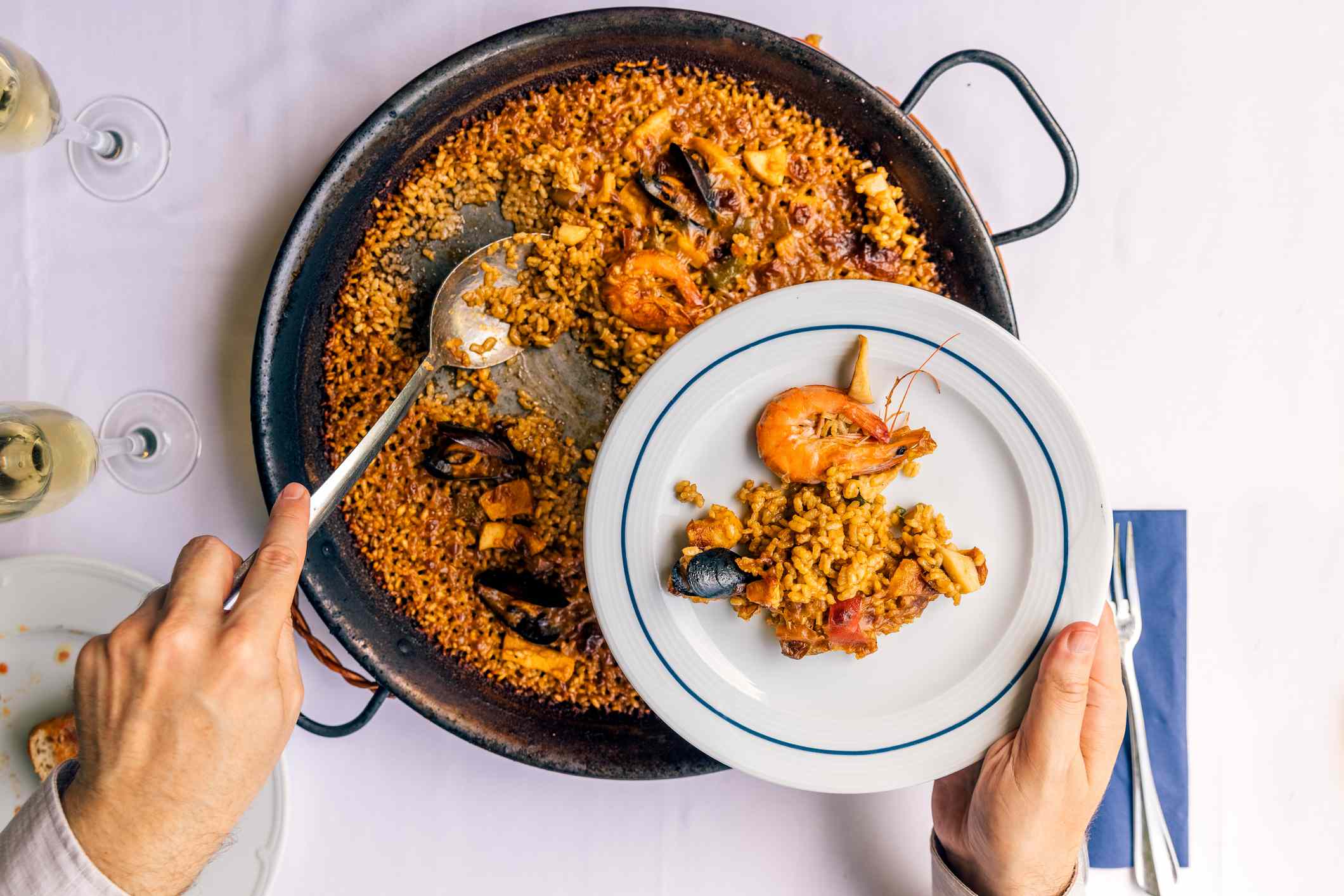
:max_bytes(150000):strip_icc():format(jpeg)/Health-GettyImages-PairWithRicePotatoesPasta-b521552e496042bab545fd32d53c10ad.jpg "A man serving himself a paella dish")
- Pairing rice, potatoes, and pasta with protein, fiber, or healthy fats can help reduce blood sugar spikes after meals.
- Beans, low-carb vegetables, seafood, poultry, and avocados are nutrient-rich additions that support better glucose control.
- Combining starchy carbs with both a protein source and a fiber-rich food may improve both short- and long-term blood sugar management.
Rice, potatoes, and pasta are starchy foods that are staples in many diets. Though these carbs are affordable and tasty, they’re low in nutrients that reduce blood sugar spikes. Fortunately, these carbs pair well with many foods that can slow sugar absorption in the gut, supporting blood sugar management.
1. Beans

The next time you’re making a rice, potato, or pasta dish, consider adding beans. Though beans are high in carbs, they’re also very high in fiber and protein, and can help reduce your blood sugar response to a high-carb meal.
A 2017 study found that combining rice with black bean meal and chickpea meal resulted in a significantly lower post-meal blood sugar response compared to rice alone.
2. Low-Carb Vegetables

Low-carb, high-fiber vegetables, like artichokes, broccoli, and asparagus, are the perfect pairing for rice, potatoes, and pasta.
They add minimal carbs to dishes and provide a good source of fiber, which slows the absorption of blood sugar, helping reduce your glycemic response to a meal.
Studies have shown that when people with diabetes eat low-carb vegetables before carbs, their glucose response is significantly lower compared to the reverse eating order.
3. Seafood

Seafood, such as salmon, shrimp, and canned tuna, is rich in protein. Protein is effective for supporting optimal blood sugar levels after eating.
Protein slows digestion and stimulates the release of satiety hormones such as cholecystokinin (CCK) and peptide YY (PYY), which signal to your brain that you’ve had enough to eat.
Adding protein-rich foods to carb-based dishes, like pasta and rice, can help curb your blood sugar response after eating and help you keep your calorie intake under control, which is critical when trying to manage your blood sugar.
4. Poultry

Like seafood, poultry is a concentrated source of protein. Adding poultry, such as chicken or turkey, to starchy meals, such as those made with pasta, rice, and potatoes, can be an effective way to support better blood sugar management.
A 2020 study found that a measure of post-meal blood sugar levels, called the incremental area under the curve for glucose, was 38.8% lower in people with prediabetes who ate protein and vegetables first, followed 10 minutes later by a carbohydrate, compared to eating carbohydrate first, followed 10 minutes later by protein and vegetables.
5. Avocados

Not only are avocados loaded with healthy fats, but they’re also one of the best sources of fiber. This unique combination makes avocados a smart choice to pair with carbs like potatoes, rice, and pasta.
Studies show that eating avocados may support better glucose control, making them a solid choice for incorporating into high-carb dishes.
Meal Pairing Ideas
If you’re making rice, potato, or pasta dishes, try these blood sugar-friendly combinations:
- Rice + Chicken + Avocado
- Pasta + Shrimp + Asparagus
- Potatoes + Salmon + Broccoli
- Pasta + Chickpeas + Spinach
When possible, try pairing potatoes, pasta, and rice with both a protein and a fiber source to support optimal post-meal blood sugar levels.
Why Food Combining is Important for Blood Sugar
Your blood sugar response to a food can be influenced by what you pair it with. Foods that are high in carbs and low in protein, fiber, and fat have the greatest impact on blood sugar. Pasta, rice, and potatoes typically fall into this category.
Fortunately, you can pair these foods with others that slow down sugar absorption. For example, protein and fiber slow digestion, increasing the time it takes food to travel from your stomach to the small intestine. This slows the absorption of glucose into the bloodstream, leading to a more controlled blood sugar response.
Healthy fats can also help blunt the blood sugar impact of high-carb food impact on blood sugar by slowing stomach emptying.
This is why combining high-carb foods, such as rice, pasta, and potatoes, is a useful strategy for those looking to improve their short- and long-term blood sugar control.