Fact checked by Nick Blackmer
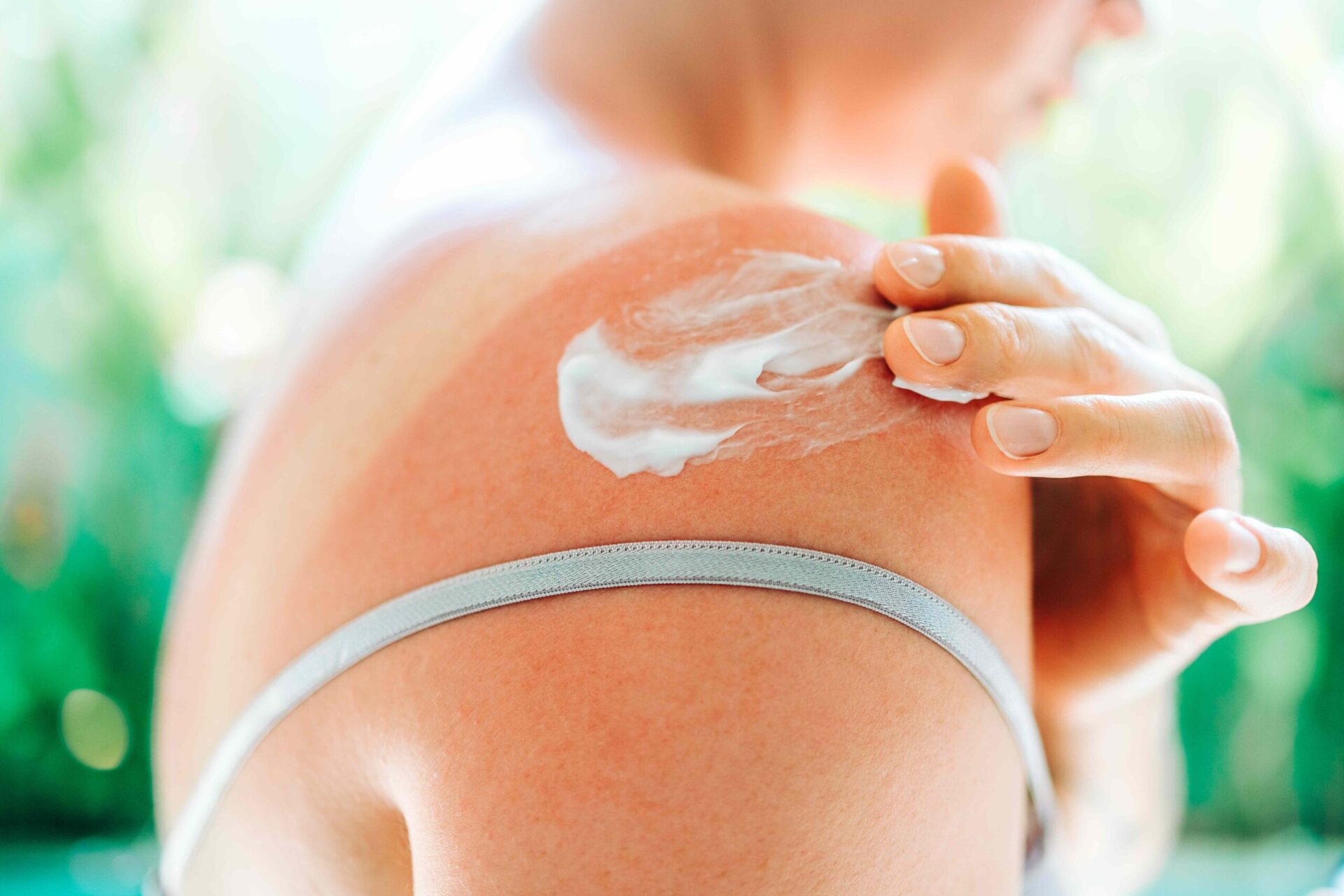
:max_bytes(150000):strip_icc():format(jpeg)/Health-GettyImages-2267636063-ce0c67e2a9084ef4af871efb14d4f6d1.jpg "Woman applying lotion to a sunburned shoulder")
Credit: Olga Pankova / Getty Images
- Sunscreen is key for preventing skin cancer, but many people don’t use it correctly.
- Common mistakes include not applying enough, skipping reapplication, and missing key areas of the body.
- Experts say sunscreen works best when paired with other protection, like shade and protective clothing.
Skin cancer is the most common type of cancer in the U.S., as about one in five Americans will develop it in their lifetime. Wearing sunscreen is crucial for preventing skin cancer—when you use it correctly. Health asked dermatologists the most common mistakes people make with sunscreen, and how to avoid them to better protect your skin.
1. Not Using Enough
People often underestimate how much sunscreen they actually need to protect their skin.
“Most people don’t apply enough sunscreen to get the rated sun protection factor (SPF) on the bottle,” Richard Krathen, MD, FAAD, FACMS, a double board-certified dermatologist and dermatologic surgeon at Florida Dermatology Specialists, told Health. “When you don’t apply enough sunscreen, you get only a fraction of the protection you think you have.”
The SPF is determined by applying 2 milligrams of sunscreen per square centimeter of skin. “That’s about 1/4 teaspoon for the face alone,” Krathen said. For the rest of your body, you’ll need at least 1 ounce of sunscreen, about the size of a shot glass.
Choose a product with an SPF of at least 30, and opt for a lotion over a spray. “People don’t apply nearly enough product when they use sunscreen sprays as opposed to lotion or cream-based products,” Krathen added.
2. Not Reapplying Regularly
A 2023 study found that most regular sunscreen users (80%) reapply on sunny days, but only 31% reapply when it's partly cloudy, and just 14% reapply on cloudy days—even though ultraviolet (UV) rays can penetrate through clouds.
“Applying sunscreen once daily when sun exposure, water activities, or excessive sweating is predicted on a given day is not enough,” Michael Christopher, MD, a board-certified dermatologist at Ironwood Dermatology in Arizona, told Health.
The American Academy of Dermatology recommends reapplying sunscreen every two hours. If you’re sweating or swimming, Christopher said, it should be reapplied sooner: every 40 to 80 minutes.
Kate Viola, MD, MHS, FAAD, a board-certified dermatologist specializing in skin cancer at Dermatology Partners in Maryland, also said to apply sunscreen 30 minutes before going back outside or getting into water to allow time for it to work properly.
3. Missing Key Body Parts
According to experts, people consistently neglect several high-exposure body parts when putting on sunscreen:
- Ears
- Eyelids and skin around the eyes
- Lips
- Hair part
- Neck
- Top of the feet
- Back of the hands
“The skin around the eyes is especially important,” Christopher added, noting that about 5–10% of skin cancer cases occur in that area.
Be thorough when applying sunscreen, making sure to cover these body parts, and use SPF lip balm to protect your lips.
4. Using SPF Moisturizer Instead of Sunscreen
It’s fine to use a moisturizer with SPF, but it should not be the only sunscreen you put on your face, Christopher said. It doesn’t offer adequate protection on its own, and people often don’t apply it thoroughly.
“In one study, people missed more of the face when applying SPF moisturizer than when applying sunscreen, especially around the eyelids,” Christopher said. “I generally prefer a dedicated facial sunscreen rather than relying on moisturizer with SPF alone.”
5. Relying on Sunscreen Alone
Just wearing sunscreen is typically not enough to protect your skin from sun damage. “Sunscreen works best as part of a broader sun-protection strategy, not as the only tactic to prevent skin cancer,” Christopher said.
In addition to sunscreen, experts recommend wearing UPF clothing, designed to block harmful rays, as well as wide-brimmed hats and sunglasses with UV protection. It also helps to get under the shade, especially during peak sun hours from 10 a.m. to 4 p.m.
6. Skipping Sunscreen Altogether
The most common reasons for not using sunscreen are inconvenience and thinking it’s unnecessary. But in recent years, concerns have gained traction that certain sunscreen ingredients may be absorbed through the skin and disrupt the hormonal system. A 2024 survey found that about one in seven adults under age 35 think daily sunscreen use is more harmful to the skin than direct sun exposure.
“The American Academy of Dermatology states that current science does not show that sunscreen ingredients currently available in the U.S. are harmful to human health, and that absorption into the bloodstream does not equal harm or toxicity,” Christopher said.
If you still have concerns, or if chemical sunscreens irritate your skin, Viola recommended mineral sunscreens, such as zinc oxide or titanium dioxide. These products create a physical barrier on the skin to block UV rays without any absorption.