:max_bytes(150000):strip_icc():format(jpeg)/Health-GettyImages-2228249876-9d7b70a5c79147a48982f30db3556c38.png "A middle-aged woman dressed in workout clothes doing a tricep dip outside on a stone wall.")
Credit: RealPeopleGroup / Getty Images
- A regular exercise routine can help maintain arm strength in people 55 and older.
- Even if you don’t have access to weights, bodyweight exercises like push-ups, reverse planks, and triceps dips help build strength in the arms, shoulders, chest, and back.
- Habit stacking, tracking your progress, and rewards can help you stay consistent.
Everyone loses some muscle as they get older. However, research shows that physical activity can help slow that decline and potentially restore strength in older people. If you want arms that feel and look stronger, try incorporating a mix of these simple bodyweight exercises into your daily routine.
1. Standing Y-T-W

This drill, sometimes called alphabet arms, helps activate the shoulder muscles while preparing your upper body for a workout. It also reinforces proper posture, which tends to decline with age.
Here's how to do the Y-T-W movement:
- Stand with your feet shoulder-width apart and your arms at your sides.
- Keeping your shoulders back and core engaged, lift both arms overhead to form a “Y.” Make sure your thumbs are pointing behind you.
- Lower your arms to your sides.
- Lift both arms to shoulder height, forming a "T" with your palms facing up.
- Lower your arms to your sides.
- Lift your arms to shoulder height with bent elbows and your palms facing forward to form a “W.” Keep your elbows close to your chest.
- Flow through the sequence at a moderate pace, changing your arm positioning with each breath.
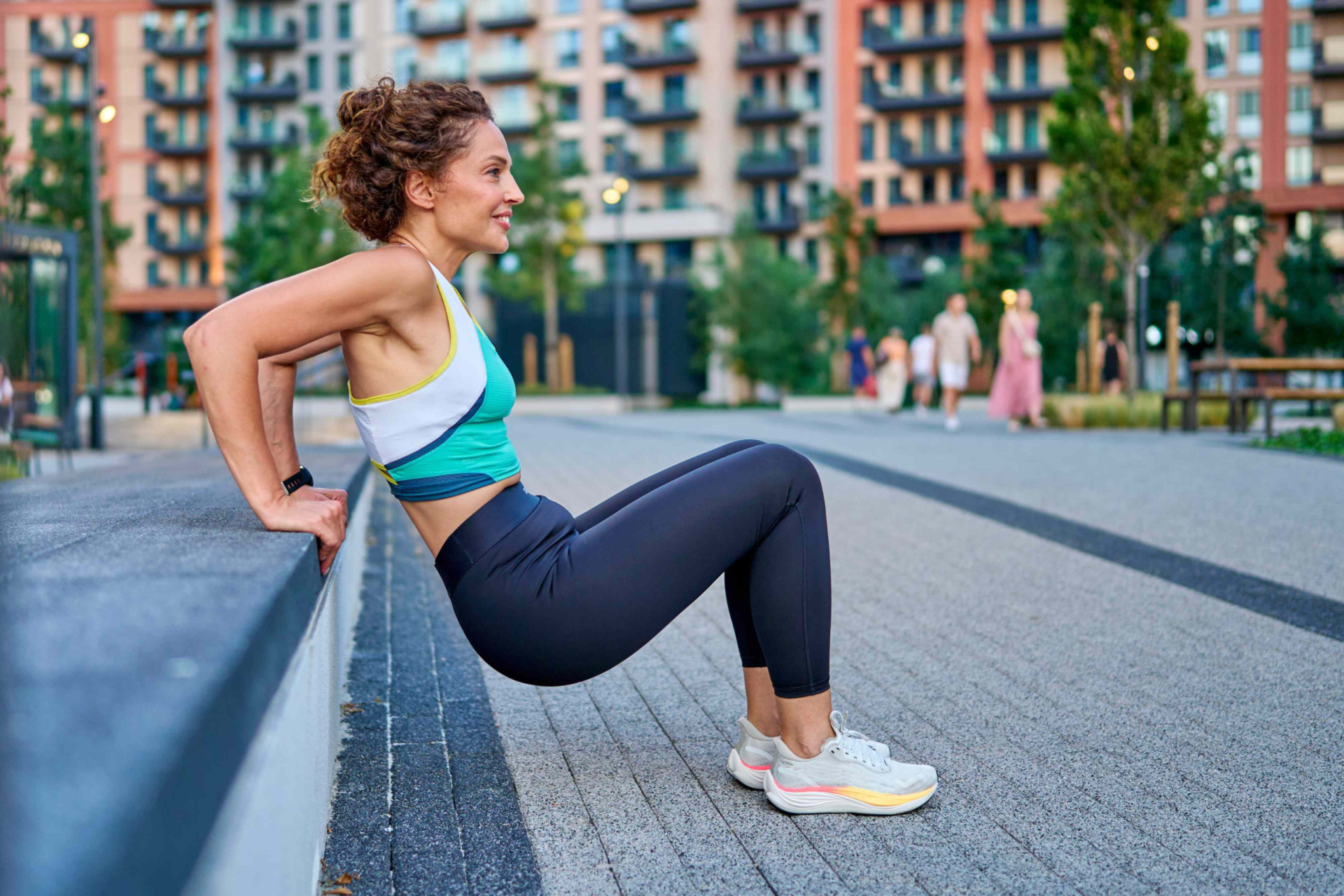
2. Triceps Dips
Triceps, the muscles on the backs of your arms, are essential for movements that involve pushing or arm stabilization. That can include everyday activities like sliding your suitcase into an overhead compartment or holding a heavy door open.
Since triceps are the largest muscle in the arm, targeting them in your workouts can also provide more shape and definition.
Here's how to do triceps dips:
- Sit on the edge of a bench or sturdy chair. Place the heels of your palms on the edge, next to your hips.
- Straighten your arms and slide your butt forward and off the bench.
- Keeping your chest lifted and shoulders back, bend your elbows to lower your hips. Make sure your elbows are pointing back, and only lower your body as far as you can while still maintaining good form.
- Push through your palms to straighten your arms and lift your hips. Repeat.
3. Shoulder Taps
This dynamic variation of the standard plank demands balance and stability, and fires up your shoulder, core, and back muscles as you shift your weight from arm to arm.
Here's how to do shoulder taps:
- Start in a straight-line plank position. Keep your back flat and neck neutral, engage your core, and stack your shoulders and elbows over your wrists. (You can modify this move by lowering your knees to the ground.)
- Lift your right palm off the ground and cross your torso to tap your left shoulder, then return your right hand to the ground.
- Repeat with the left hand tapping the right shoulder.
- Continue to tap alternating shoulders. Make sure to keep the rest of your body as stationary as possible; don't swivel your hips as you switch arms.
4. Reverse Plank Hold
Like traditional planks, reverse planks help strengthen your arms and core. But this exercise also activates the posterior chain, or the interconnected muscles that run up the backside of your body. Research also shows that doing reverse planks may help correct poor upper-back posture.
Here's how to do it:
- Sit on the ground with your legs slightly bent and your heels on the ground. Lean back and place your palms on the ground, fingers facing forward.
- Straighten your arms and legs, lifting your hips so that your body forms a straight line from your head to your heels. (To modify, bend your knees and place the soles of your feet on the ground.)
- Hold for 60 seconds or for as long as you're able.
5. Push-Up
It pays to do push-ups—the simple movement works your chest, back, biceps, and triceps to build both strength and muscular endurance. Plus, research shows that, for men, the ability to do more push-ups is associated with lower rates of cardiovascular disease events, such as heart failure or heart attack.
Here's how to do push-ups:
- Start in a straight-line plank position. Keep your back flat and neck neutral, engage your core, and stack your shoulders and elbows over your wrists. (To modify, lower your knees to the ground, or place your hands against a wall or an elevated surface, like a bench.)
- Keeping your back flat and core engaged, bend your elbows and lower your chest until it’s an inch or two from the ground.
- Push up through your palms to return to a plank.
6. Jab and Cross
There are lots of different types of boxing moves you can incorporate into your workout routine. A basic jab and cross combo helps develop upper-body strength while also elevating your heart rate.
Here's how to do it:
- Stand with a soft bend in your knees and your feet hip-width apart. Make fists and bring them under your chin.
- Step your right foot back a little so that your left shoulder is slightly forward and your body is angled to the right. (If you’re left-handed, you may feel more comfortable with your right foot forward.)
- The jab: Take a small step forward with your left foot as you quickly extend your left arm in a punching motion. Immediately bring your fist back to underneath your chin.
- The cross: Rotate on the ball of your right foot, turning your hips forward, as you quickly extend your right arm in a punching motion.
- Draw your fist back to underneath your chin as you pivot and take a small step back, returning to your starting position.
Sticking With Your Arm-Strengthening Routine
An exercise routine is only as effective as it is consistent; the Centers for Disease Control and Prevention (CDC) recommend strength training at least twice per week, including for older adults. To stay on track, consider these tips for establishing healthy habits:
- Track your progress: Take note of how many reps you can do, how long you can hold positions, and how you feel during each workout. That allows you to monitor your progress and strength over time, which can bolster motivation.
- Stack your habits: Try linking arm exercises with an existing part of your routine. For example, if you watch the news on TV every morning, do push-ups or reverse plank holds during commercial breaks.
- Reward yourself: For every week (or day, or month) that you meet your exercise goals, treat yourself to a special gift or experience to keep you motivated. This can be something as simple as getting your favorite coffee drink or takeout lunch, or you can indulge in a new workout set or massage.