:max_bytes(150000):strip_icc():format(jpeg)/Health-GettyImages-1473167804-8a095a291bbd4b2ca07bbece48f54d9c.jpg "A bowl of food containing diced tuna avocado edamame radish and lime wedge served on rice with wooden chopsticks nearby")
Credit: MEDITERRANEAN / Getty Images
- Omega-3 fats support heart, brain, and immune health.
- Bluefin tuna provides up to 1.5 grams of omega-3 fats per 3.5-ounce serving.
- Several fish, such as salmon and caviar, as well as seeds and nuts, offer similar or higher amounts of omega-3s.
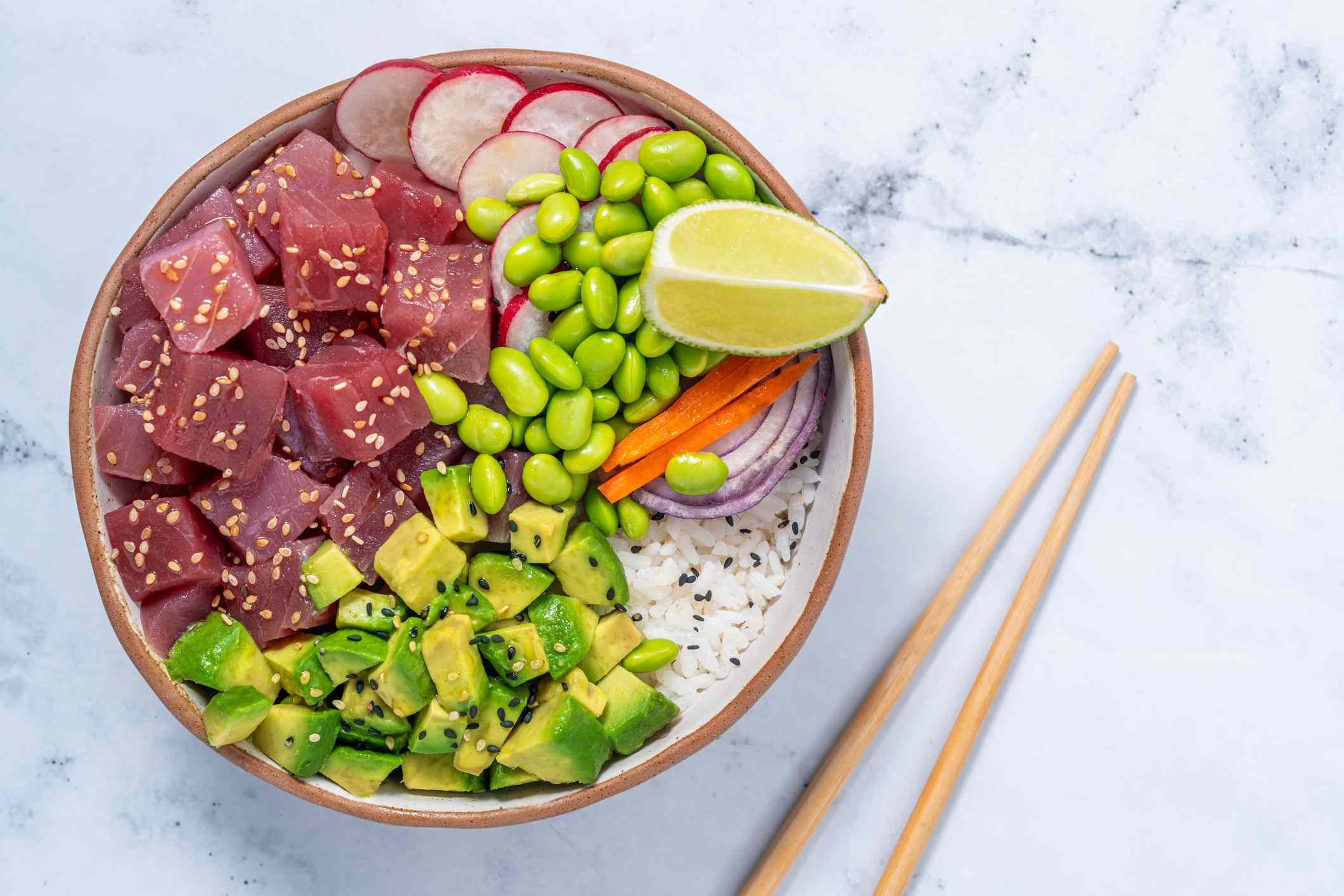
Omega-3 fatty acids are healthy fats that support heart and brain health. Getting enough may help reduce inflammation, support immune function, and lower triglyceride levels. While omega-3 content varies by species and preparation method, bluefin tuna provides about 1.5 grams per 3.5-ounce serving, including 0.36 grams of EPA and 1.14 grams of DHA. However, several other foods offer similar amounts or even more per serving.
1. Salmon

Omega-3 content: 1.24 grams of DHA and 0.59 grams of EPA per 3-ounce serving
Salmon is one of the best sources of omega-3 fats. It provides docosahexaenoic acid (DHA) and eicosapentaenoic acid (EPA), forms the body can easily absorb and use. It also provides high-quality protein, vitamin D, and selenium.
The American Heart Association recommends eating two servings of fatty fish per week to reduce the risk of stroke and heart disease.
How to enjoy it: Bake with lemon and herbs, add to salads, or serve with roasted vegetables.
2. Sardines

Omega-3 content: 0.47 grams of DHA and 0.44 grams of EPA per can (3.75 ounces)
Sardines are small, oily fish packed with key nutrients. They’re rich in omega-3 fats and provide calcium from their edible bones, along with vitamin B12, magnesium, zinc, and vitamin D. These nutrients can help reduce inflammation and help maintain strong bones.
How to enjoy it: Add to toast with avocado, toss into salads, or mix into pasta dishes.
3. Atlantic Mackerel

Omega-3 content: 0.59 grams of DHA and 0.43 grams of EPA per 3-ounce serving
Mackerel is another omega-3–rich fish that may help reduce inflammation and support overall health. It’s also rich in vitamin B12 and selenium, which support nerve and immune function.
Note that some varieties of mackerel are higher in mercury. Atlantic mackerel is a lower-mercury choice, while king mackerel is highest in mercury and should be avoided.
How to enjoy it: Grill, smoke, or serve with citrus and fresh herbs.
4. Caviar

Omega-3 content: 1.2 grams of DHA and 0.88 grams of EPA per 2-tablespoon serving
Caviar, or fish roe, is a concentrated source of omega-3 fatty acids. Even small servings provide meaningful amounts of EPA and DHA. Caviar also contains vitamin B12, selenium, and choline, nutrients that support brain and nervous system health.
How to enjoy it: Spoon over soft-boiled eggs or avocado toast.
5. Chia Seeds

Omega-3 content: 5.06 grams of ALA per 1-ounce serving
Chia seeds are one of the richest plant sources of omega-3 fats in the form of alpha-linolenic acid (ALA). They are high in fiber, which can promote bowel regularity and support healthy gut bacteria.
Chia seeds also provide plant-based protein and antioxidants like quercetin and chlorogenic acid, which may help lower blood pressure and reduce inflammation.
ALA is a type of omega-3 fat found in plant foods like chia and flaxseeds. Your body can turn ALA into EPA and DHA, but only a small amount gets converted. For this reason, it’s best to eat a variety of omega-3–rich foods, including plant sources and fatty fish.
How to enjoy it: Stir into oatmeal, yogurt, or smoothies, or make chia pudding.
6. Flaxseeds

Omega-3 content: 2.35 grams of ALA per tablespoon
Flaxseeds are another excellent plant source of ALA omega-3 fats. Beyond omega-3s, they’re rich in plant compounds called lignans and soluble fiber, which can help lower cholesterol and support healthy blood pressure. Soluble fiber also promotes fullness and may support weight management.
How to enjoy it: Sprinkle ground flax over cereal, blend into smoothies, or add to baked goods.
7. Walnuts

Omega-3 content: 2.57 grams per ounce
Walnuts are the only tree nut that provides a significant amount of omega-3 fats. They also contain antioxidants and plant compounds that help protect your cells from damage. Research suggests eating walnuts regularly may help improve cholesterol levels.
How to enjoy it: Add to oatmeal, salads, or enjoy as a snack.
Tips for Getting Enough Omega-3s in Your Diet
Eating a variety of omega-3-rich foods can help support heart and brain health. Here are a few tips for getting enough in your diet:
- Eat fatty fish at least twice per week.
- Add chia seeds or ground flax to breakfast foods.
- Snack on walnuts instead of chips or sweets.
- If you don’t eat fish, include plant sources regularly to help meet your needs.