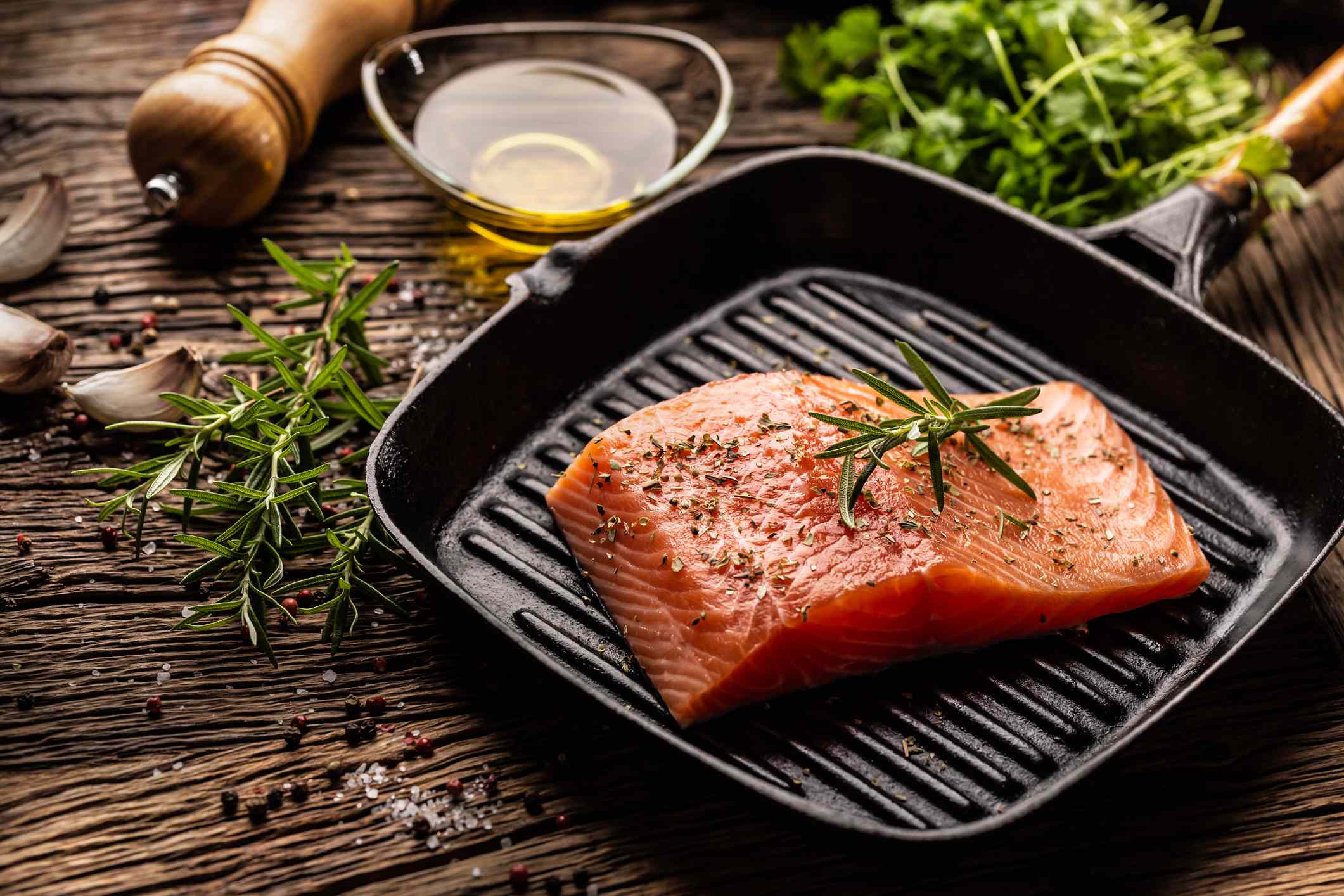
:max_bytes(150000):strip_icc():format(jpeg)/Health-GettyImages-Salmon-33aa256badde4a6a908439f27e8b4c58.jpg "Raw salmon steak in grill pan, salt, pepper, rosemary, olive oil and garlic on rustic oak table.")
- Fresh salmon should have a bright color, mild scent, and firm texture.
- Avoid salmon that looks dull, smells strong, feels mushy, or shows gaps in the flesh.
- Proper storage and checking the packaging or dates help maintain quality and safety.
Salmon is one of the most popular seafood choices in the U.S. It’s packed with high-quality protein, omega-3 fatty acids, and other essential nutrients, such as selenium, making it an excellent choice for overall health. That said, buying salmon isn’t always straightforward. Here’s how to pick the best salmon every time.
1. Look for Vibrant Color
Color is one of the best indicators of freshness in salmon.
Fresh salmon should have a bright pink-orange to red-orange color and a glossy appearance. This vibrant color comes from natural pigments in salmon, such as astaxanthin, a carotenoid that acts as a powerful antioxidant, protecting cells against oxidative damage.
When salmon is past its prime, the flesh may turn brown or grayish and have a dull appearance, signaling that the fish may not be safe to eat.
2. Check for a Fresh, Mild Scent
Fresh, high-quality fish shouldn’t smell overly fishy. As fish begins to rot, compounds like ammonia and trimethylamine (TMA) develop, producing that strong, unpleasant smell associated with rotten fish.
Fresh, high-quality salmon should have a mild, sea-like aroma. Salmon with a strong fishy, rancid, or ammonia-like smell is a sign that it has gone bad and shouldn’t be purchased.
Smell can help when choosing fresh, unpackaged fish, but it shouldn't be relied on when purchasing packaged fish. If you're purchasing packaged fish, such as vacuum-sealed salmon, it's best to look at the color and check the "best by" date.
3. Examine the Texture
Fresh salmon has a firm texture, and the flesh should spring back when you gently press into it.
A fillet that’s soft, mushy, or easily indents when touched may be starting to decompose. That’s why it’s always recommended to choose a firm cut of fish, which increases your chances of getting a fresh product.
4. Look for Gaping
Gaping is a term used to describe the separation of muscle from the connective tissue of the fish. Though not always a sign that salmon is past its prime, it can result from poor handling or improper storage.
For this reason, it’s best to pass on salmon fillets that have visible gaps in the flesh.
5. Ask Questions at the Counter
If you’re not sure what to look for when you’re shopping for salmon, it’s best to ask an expert, like a fishmonger. When purchasing fresh salmon fillets, you can ask questions about its delivery date, where it was caught, and whether it has been previously frozen.
They can also tell you whether the salmon is wild-caught or farmed. Wild-caught salmon offers a better ratio of omega-3 to omega-6 fats and may be higher in certain antioxidants and minerals than farmed salmon.
However, farmed salmon also provides important nutrients and is generally more affordable than wild-caught salmon.
6. Don’t Overlook Frozen Salmon
Frozen salmon is often viewed as less nutritious than fresh salmon. However, just because a salmon product is frozen doesn’t mean it’s low-quality.
Salmon is often flash frozen on fishing boats to retain its quality. Immediate freezing locks in nutrients and protects against degradation. This often makes flash-frozen fish superior to fresh fish that’s transported fresh.
Signs of high-quality frozen fish include tightly sealed packages and fillets free from ice crystals or freezer burn, which could indicate the fish has been stored for too long.
7. Pay Attention to Packaging and Storage
No matter if you’re purchasing fresh or frozen, farmed or wild-caught, it’s important to choose salmon that’s properly stored.
Fresh salmon should be kept on ice behind glass or in a refrigerated case. Frozen salmon and packaged fresh salmon should be tightly sealed and kept refrigerated or frozen.
Always check the "best by" date and avoid products that have passed it.
How to Store Salmon Once You Get Home
After purchasing your fish, there are a few ways to keep it as fresh as possible. As soon as you can, store your salmon in the fridge or freezer.
It’s recommended to put seafood on ice, in the refrigerator, or in the freezer within two hours of buying it, and within an hour if it’s exposed to temperatures of 90 degrees Fahrenheit (32 degrees Celsius) or higher.
You can keep your salmon in the fridge at 40 degrees Fahrenheit (4 degrees Celsius) or below if you plan to use it within two days of purchase.
If you’re holding it for longer than two days, wrap it in Saran Wrap, foil, or moisture-proof paper and store it in the freezer to keep it as fresh as possible.