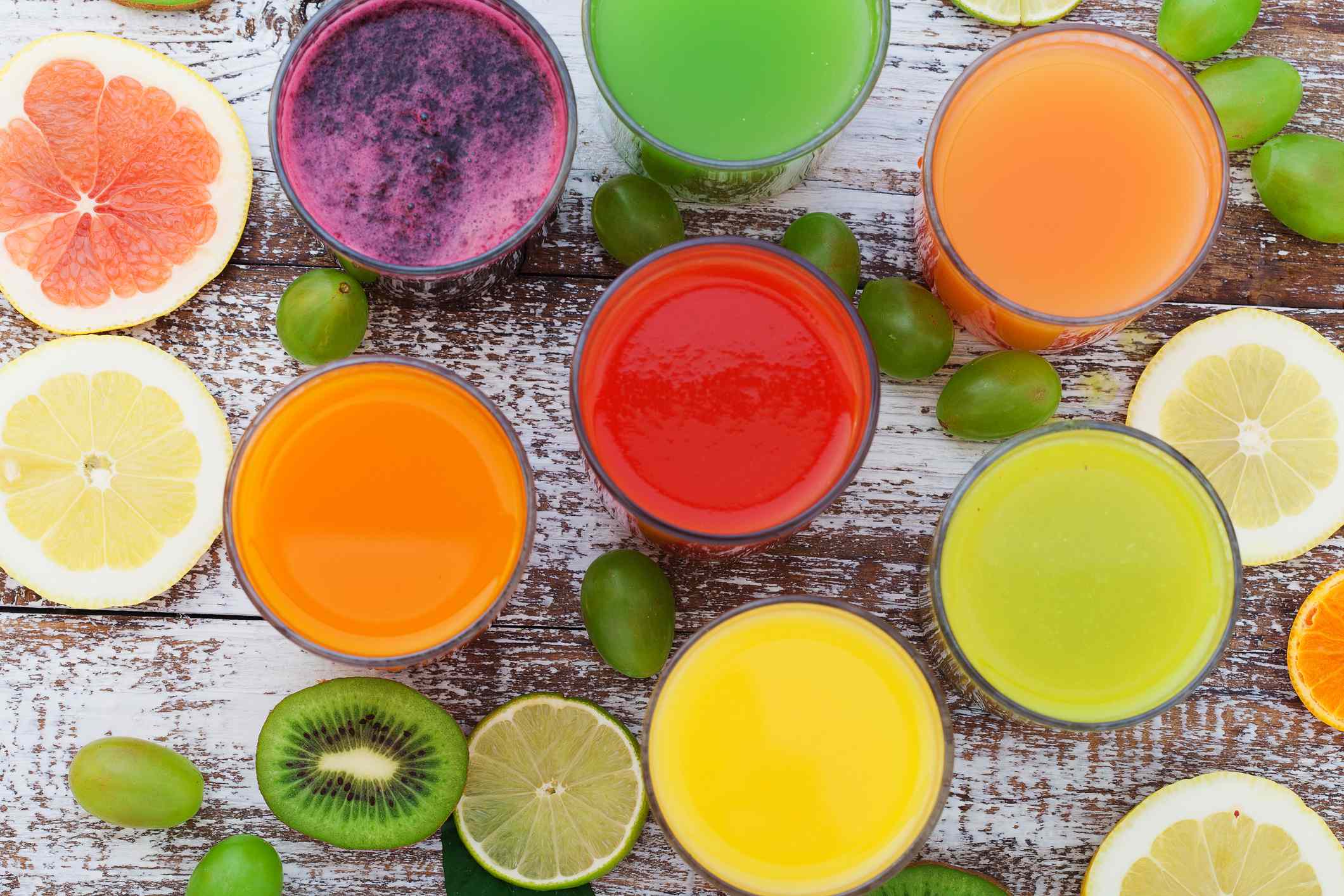
:max_bytes(150000):strip_icc():format(jpeg)/Health-GettyImages-470021334-c73f10e5b71844d0b732268d9da2fbc1.jpg "Assorted fruit juices in glasses surrounded by fresh fruit slices and whole fruits on a rustic wooden surface")
Credit: Victor_69 / Getty Images
- Some fruit and vegetable juices are naturally lower in sugar than others.
- Options like tomato, lemon, and cranberry juice can fit into lower-sugar eating patterns.
- Portion size and added sugars still matter when choosing any juice.
Juice can be a convenient way to get vitamins and hydration—but many options are high in natural or added sugar. The good news is that some juices are surprisingly lower in sugar and can fit into a balanced routine.
1. Fresh-Squeezed Lemon Juice

- Sugar content: 1.2 grams (g)
- Serving size: 1 lemon (juice only)
Fresh-squeezed lemon juice adds flavor without adding much sugar. Juice from one lemon has about 1–2 grams of sugar, making it an easy way to flavor water or other drinks.
It also provides vitamin C, which supports immune health. Because it tastes sour, it’s usually mixed with water. Try adding a squeeze to sparkling water. If you want it sweeter, you can add a small amount of monk fruit or another zero-calorie sweetener.
2. Cucumber Juice

- Sugar content: 2-3 g
- Serving size: 1 cup
Cucumber juice is one of the lowest-sugar juice options and a refreshing way to stay hydrated.
It’s naturally low in calories and provides small amounts of vitamin K and potassium. Try making your own by blending cucumber with water and a squeeze of lemon.
3. Celery Juice

- Sugar content: 3.1 g
- Serving size: 1 cup
Celery juice is another hydrating option that’s low in sugar, with only about 3 grams per cup. It provides nutrients like potassium, folate, and vitamin K, which support heart, cell, and bone health. While juicing removes most of the fiber, blending celery instead may help retain it.
In a 2018 study, celery extract was shown to help reduce blood sugar levels, though more research is needed on the effects of celery juice directly.
4. Tomato Juice

- Sugar content: 6.37 g
- Serving size: 1 cup
Tomato juice is a low-sugar option that provides vitamin C and antioxidants, including lycopene, which may help reduce inflammation and support immune health. It’s also relatively low in calories, with around 57 calories per 1-cup serving.
In a small 2020 study, drinking tomato juice about 30 minutes before eating carbohydrates was linked to lower post-meal blood sugar levels compared to water.
5. Grapefruit Juice

- Sugar content: 8.8 g
- Serving size: 1/2 cup
Grapefruit juice has a tart flavor and slightly less natural sugar than orange juice. For example, a 1/2-cup serving provides about 8–9 grams of sugar, compared to about 10–11 grams in orange juice. While the difference is small, it may be helpful if you’re trying to limit sugar intake.
6. Carrot Juice

- Sugar content: 9.38 g
- Serving size: 1 cup
Carrot juice is another lower-sugar alternative to traditional fruit juice. It is a good source of vitamin C and carotenoid antioxidants like beta-carotene. Beta-carotene can help strengthen the immune system and boost eye health.
A 2025 study found that beta-carotene from carrot juice (without added sugars) may be more easily absorbed than from raw carrots.
7. Beet Juice

- Sugar content: 12 g
- Serving size: 1 cup
Beet juice is a nutrient-packed drink that provides folate, copper, iron, and plant compounds, including polyphenols and pigments called betalains. These compounds may help support healthy blood sugar levels and gut health, but more research is needed.
Beets also contain nitrates, which may help relax blood vessels and support healthy blood flow and blood pressure.
Beet juice has more natural sugar than some vegetable juices, but it can still fit into a balanced diet when enjoyed in moderation.
8. Pomegranate Juice

- Sugar content: 15.7 g
- Serving size: 1/2 cup
Pomegranate juice is higher in sugar than some other juices, but it’s also a concentrated source of polyphenol antioxidants that support heart health.
Some research suggests compounds in pomegranate may help improve how the body uses insulin and support healthy blood sugar levels, though more research is needed. Still, it’s best to keep portions moderate.
How to Choose a Lower-Sugar Juice
Juice can still have a place in a balanced diet. It comes down to choosing low-sugar, nutrient-rich juices and keeping portions in balance.
To keep sugar intake in check, you can:
- Read labels: Look for “100% juice” with no added sugars
- Watch portion size: Fruit juice is usually limited to about 1/2 cup due to its higher sugar content, while vegetable juices can often be enjoyed in 1-cup servings
- Dilute as needed: Mixing juice with water can cut sugar in half
- Prioritize vegetables: Vegetable-based juices, such as tomato and celery juice, are usually lower in sugar







:max_bytes(150000):strip_icc():format(jpeg)/Health-Anchovies-vs-Sardines-abf78393ed254f7fb6103ad3b603bfd0.png "Comparison between canned anchovies and sardines, side by side.")