8 Things to Know About Cyclosporiasis, the GI Infection Surging This Summer


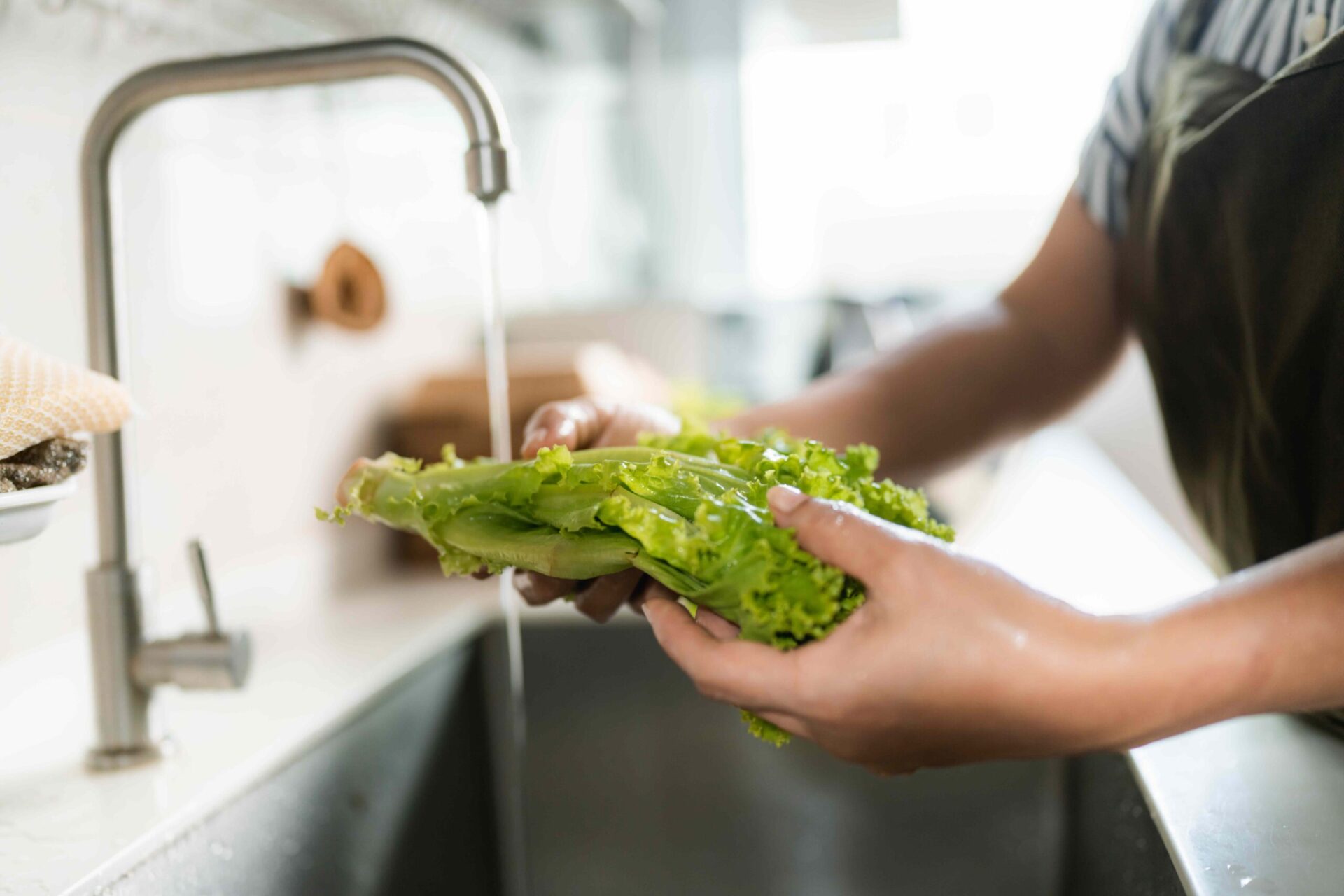
Previous outbreaks of cyclosporiasis have been linked to fresh produce, including leafy greens.Credit: whitebalance.space / Getty Images
Previous outbreaks of cyclosporiasis have been linked to fresh produce, including leafy greens.
Credit: whitebalance.space / Getty Images
  • Cyclosporiasis infections are surging this summer.
  • Extreme diarrhea is a hallmark sign of the parasitic infection.
  • Health officials don’t yet know the source of the outbreak, but previous outbreaks have been linked to fresh produce.

Cases of cyclosporiasis—a parasitic infection that can cause severe diarrhea—have surged this summer. 

The Centers for Disease Control and Prevention confirmed 843 cases and 86 hospitalizations across 31 states since May 1, but the true number is likely much higher. The agency noted that states have reported case counts not yet reflected in the national data. (As of Friday, Michigan alone, for example, had reported 1,562 cases.)

While cyclosporiasis cases typically increase during the warmer months, the CDC said multiple states have seen more cases over the past two weeks than during the same period last year.

Health officials are still working to identify the source of the outbreak, but past cases have most often been linked to fresh produce. Here are nine things to know about this recent outbreak, including how to limit your risk.

1. The source of the outbreak is still unknown

Although the Midwest and Northeast appear to be the hardest hit, cases have been identified in states ranging from California and Nebraska to Vermont. So far, public health officials have not confirmed how this outbreak began. 

To investigate a cyclosporiasis outbreak, health officials interview patients and trace the foods they ate during the illness’s incubation period, which is the time from exposure to symptom onset.

But cyclosporiasis can be difficult to track because symptoms may not appear for up to 14 days after infection, and by then, many people can no longer remember what they ate.

According to Don Schaffner, PhD, department chair, distinguished professor, and extension specialist in food science at Rutgers University, the genetic tools available to trace cyclospora, the parasite that causes cyclosporiasis, are another limitation for investigators.

“The CDC has some genetic fingerprinting techniques for the organism, but it’s not nearly as precise as whole-genome sequencing,” he said. “So linking up these cases is challenging.”

2. Outbreaks are usually linked to fresh produce

According to the CDC, cyclospora spreads when people consume food or water contaminated with feces containing the eggs of the parasite. Person-to-person spread is unlikely because it takes about one to two weeks for contaminated feces to become infectious.

Previous cyclosporiasis outbreaks have stemmed from fresh produce, such as:

  • Cilantro
  • Basil
  • Leafy greens including romaine, mesclun, watercress, and salad mix 
  • Raspberries
  • Blackberries
  • Sugar snap peas
  • Snow peas

Until officials know more about the current outbreak, you shouldn’t assume any specific food is responsible. According to Schaffner, there may even be multiple unrelated outbreaks occurring at the same time, given that some states have reported far more cases than others.

3. Washing produce is always a good idea, but it’s not a silver bullet

It’s always a good idea to wash your produce. However, rinsing fruits and vegetables alone won’t completely eliminate the risk of cyclosporiasis because the parasite can still cling to food. 

To increase your chances of removing it, wash produce in water that’s warmer than the produce itself, recommended Martin Bucknavage, a food safety specialist who recently retired from Penn State.

“We want that produce item to open up rather than to constrict,” he said, “so if there are any parasitic organisms there, they’re more likely to give it up.” 

For heavily creviced foods, like raspberries, Shruti Gohil, MD, a board-certified specialist in infectious diseases and associate medical director of epidemiology and infection prevention at UCI Health, suggested submerging the food in water and swishing it around with your hand. Then, drain and repeat a few times. 

Some people like to wash produce with a little vinegar or baking soda mixed into the water, but experts say there’s no evidence that either is effective against cyclospora.

It’s also important to wash your hands with soap and water before and after handling raw fruits and vegetables.

4. Symptoms usually don’t start right away

You might be used to food poisoning symptoms beginning within hours of eating contaminated food. But symptoms of cyclosporiasis can take a lot longer to show up—anywhere from two days to two weeks after infection. 

As Bucknavage pointed out, many people may not seek medical attention for a symptom like diarrhea “until it doesn’t go away for days and days.” That delay is part of what makes these outbreaks so hard to trace. If you suspect you have cyclosporiasis, it’s worth getting tested as soon as possible.

5. Diarrhea is a tell-tale sign

If you have cyclosporiasis, sudden, watery diarrhea is often the first clue. That said, you might experience other symptoms, including:

  • Loss of appetite
  • Weight loss
  • Vomiting
  • Flu-like symptoms, including headache, fever, body aches, and fatigue
  • Stomach cramps and pain
  • Bloating
  • Gas

Your symptoms may vary depending on your immune function, Gohil said. “You might feel better for a little while, and then it’ll relapse,” she said. “Or you never quite feel better, and you have this chronic diarrhea thing where your body kind of controls it, so it’s not explosive diarrhea anymore and your bloating is kind of gone, but you’re still not feeling quite right for weeks.”

6. Most healthy people recover, but some people should seek care sooner

Cyclosporiasis is not usually fatal. However, Gohil noted that people who are immunocompromised, younger than age 6, older than age 65, or pregnant may face a higher risk of severe symptoms and longer recovery periods. 

To Gohil, dehydration is one of the top concerns, especially among immunocompromised patients. “Dehydration can never be underestimated in its impact on the body and the electrolyte disturbances,” she said.

7. It’s treatable

No one enjoys intermittent bouts of diarrhea, so if you suspect you’ve been infected, it’s worth seeking treatment—even if your risk of complications is low. People whose symptoms clear up over time can still experience relapses for weeks after exposure. 

Typically, your doctor will start by ordering a stool test to confirm whether you have cyclosporiasis. If you do, they can prescribe a specialized antibiotic like Bactrim. “It’s a generically available drug—a very old drug we have lots of experience with,” Gohil said. “So I would consider [cyclosporiasis] easy to treat.”

8. You can keep eating fresh fruits and vegetables, but watch for news alerts

Public health officials have not recommended against eating fresh produce. Instead, the best way to reduce your risk is to practice safe food handling and monitor updates from health officials.

If you’re concerned about the water in your area, Schaffner recommended avoiding lake water and watching for updates from your local municipality.

 “Situations like this point out the importance of having a strong public health system,” Schaffner said. For now, he added, “I would just encourage people to be vigilant and aware. Follow the news.”




Source link

Leave a Reply

Subscribe to Our Newsletter

Get our latest articles delivered straight to your inbox. No spam, we promise.

Recent Reviews


After 10 years of homeownership, I’ve had my fair share of pricey expenses.

Washing machine won’t complete a wash cycle? That’ll be $330 for the labor and part swap. Fireplace won’t stay lit? Goodbye $460 for the cleaning and inspection — plus another $900 for a new pilot light.

Then there are the never-ending water heater issues that seem to cost me $1,000-plus every other year.

Unexpected financial hits are par for the course when it comes to owning a home. But with the right strategy, they can also create opportunities.

In fact, a major home renovation is the exact reason I recently added both the Chase Sapphire Reserve® (see rates and fees) and the United Club℠ Card (see rates and fees) to my wallet.

With thousands of dollars in spending on the horizon, I realized I could use those unavoidable expenses to earn enough points and miles for a bucket-list business-class trip.

Here’s how I’ve handled home expenses so far — and why I’ve changed my strategy now.

My original card strategy for home expenses

Because I prefer travel rewards cards that earn points and miles over cash-back, I added the Capital One Venture X Rewards Credit Card to my wallet shortly after becoming a homeowner.

The card offered perks I knew I’d use — including a $300 annual Capital One travel credit applied to bookings made through the Capital One Travel portal and lounge access at my two home airports — plus a simple earning structure that works well for everyday spending.

Reward your inbox with the TPG Daily newsletter

Join over 700,000 readers for breaking news, in-depth guides and exclusive deals from TPG’s experts

GABRIELLE BERNARDINI/THE POINTS GUY

You’ll earn:

  • 10 miles per dollar spent on hotels and rental cars booked through Capital One Travel
  • 5 miles per dollar spent on flights and vacation rentals booked through Capital One Travel
  • 2 miles per dollar spent on all other purchases

The last earning rate for all other purchases is what particularly caught my eye, as this catch-all category for everyday expenses offers more miles per dollar than what you’ll get with many other general travel cards.

While I knew I’d take advantage of it for pet-related purchases and other items rarely included as an elevated earning rate category, I also liked having a reliable card for large home-related expenses, from annual maintenance to unexpected repairs.

Related: 9 things you didn’t know you could pay for with a credit card

Why I’ve recently reevaluated my approach

Relying on my Venture X for home-related purchases for the past few years has served me well so far.

In fact, I’ve racked up enough miles to cover several nights of a weeklong stay at the Fairmont Royal Pavilion in Barbados and partially cover an upcoming five-night stay at Amansara in Cambodia, both through Capital One’s “cover travel purchases” fixed-value redemption option.

ALL ACCOR

Knowing I was about to begin a major home renovation project in the form of a top-to-bottom, start-from-scratch refresh of my kitchen alongside significant updates to my living room, it seemed like the perfect time to add another card to my wallet.

I knew a few appliance purchases would easily satisfy a welcome-bonus spending requirement, so it felt like the perfect time to open a new premium credit card.

Naturally, the Chase Sapphire Reserve® became a front-runner, thanks to its current best-ever welcome offer of 150,000 bonus points after spending $6,000 on purchases in the first three months from account opening.

Young Asian woman shopping for home decor and household necessities in a homeware store, looking at bedding sets on a shelf
D3SIGN/GETTY IMAGES

While I already have the Chase Sapphire Preferred® Card (see rates and fees) — and the Sapphire Reserve’s high $795 annual fee requires careful planning with spending to justify — thanks to Chase’s updated Sapphire bonus rules, I was eligible for the Reserve’s welcome offer, making the decision much easier.

Two bonuses are better than one

Since I’d owned most of my furniture for a decade, replacing it alongside the renovation suddenly made sense. I wanted my home decor to match the new cabinetry, stone, paint and appliances I’ve selected.

That’s when I realized I could potentially earn a second limited-time welcome bonus, too.

Ultimately, I stumbled upon the United Club℠ Card.

At the time I applied, the card was offering the opportunity to earn 100,000 bonus miles and 3,000 Premier qualifying points after spending $5,000 on purchases in the first three months from account opening (no longer available).

A United Airlines plane on final descent into Washington Dulles International Airport (IAD). SEAN CUDAHY/THE POINTS GUY

Since United has a major presence at Dulles International Airport (IAD), a hub I use frequently, the card caught my attention quickly despite the United Club Card’s high $695 annual fee.

Then, things really clicked.

If I successfully earn both bonuses, I’d earn at least 100,000 miles with the United Club Card and 150,000 points with the Sapphire Reserve, the latter of which I could transfer to United MileagePlus, a Chase transfer partner, for a whopping total of 250,000 miles.

Say no more. Within days of coming to that realization, I applied for both cards.

Related: Can you pay your rent or mortgage with a credit card? Everything you need to know

How I plan on spending the bulk of points

It didn’t take long to meet the spending requirement for my United Club Card‘s welcome offer. Just 24 hours after receiving the card in the mail, I purchased five new appliances. Within days, the offer’s 3,000 PQPs appeared in my MileagePlus account, and after my first billing cycle, the 100,000 miles were deposited.

BOB KRIST/GETTY IMAGES

Once I earn the 150,000 points with my Chase Sapphire Reserve and transfer them to my MileagePlus account, I have big plans for how I’ll use the bulk of the miles.

After visiting Asia for the first time this year, I already have my sights set on another new continent for 2027: South America.

As an architecture buff and lover of far-flung destinations that haven’t been spoiled by overtourism, I’ve long wanted to visit Easter Island.

Rapa Nui, as it’s known locally, is one of the world’s most remote inhabited islands and can only be reached by air from Santiago, Chile, or via select world cruise itineraries.

A world cruise is out of reach for me, so instead, I’ll fly from D.C. to Easter Island, with connections in Houston and Santiago, to finally see the island’s iconic moai in person.

United miles won’t cover the Santiago-to-Easter Island segment on LATAM, but they can cover the rest of the itinerary, including a nine-plus-hour business-class flight from Houston to Santiago. With the trip priced at nearly $11,500 in cash, it’s exactly the kind of redemption that makes my home renovation spending feel worthwhile.

Related: Turn miles into adventure: How to travel to South America with Alaska Airlines miles

Bottom line

Homeownership comes with plenty to celebrate — and plenty of expenses.

While there’s no way around the cost of maintaining and upgrading a home, there are ways to get more value from that spending.

In my case, a major renovation project is helping turn thousands of dollars in home expenses into a dream trip to Easter Island that would have otherwise been out of reach.

Related: How my travel credit cards keep me on the go within a modest budget


Source link