




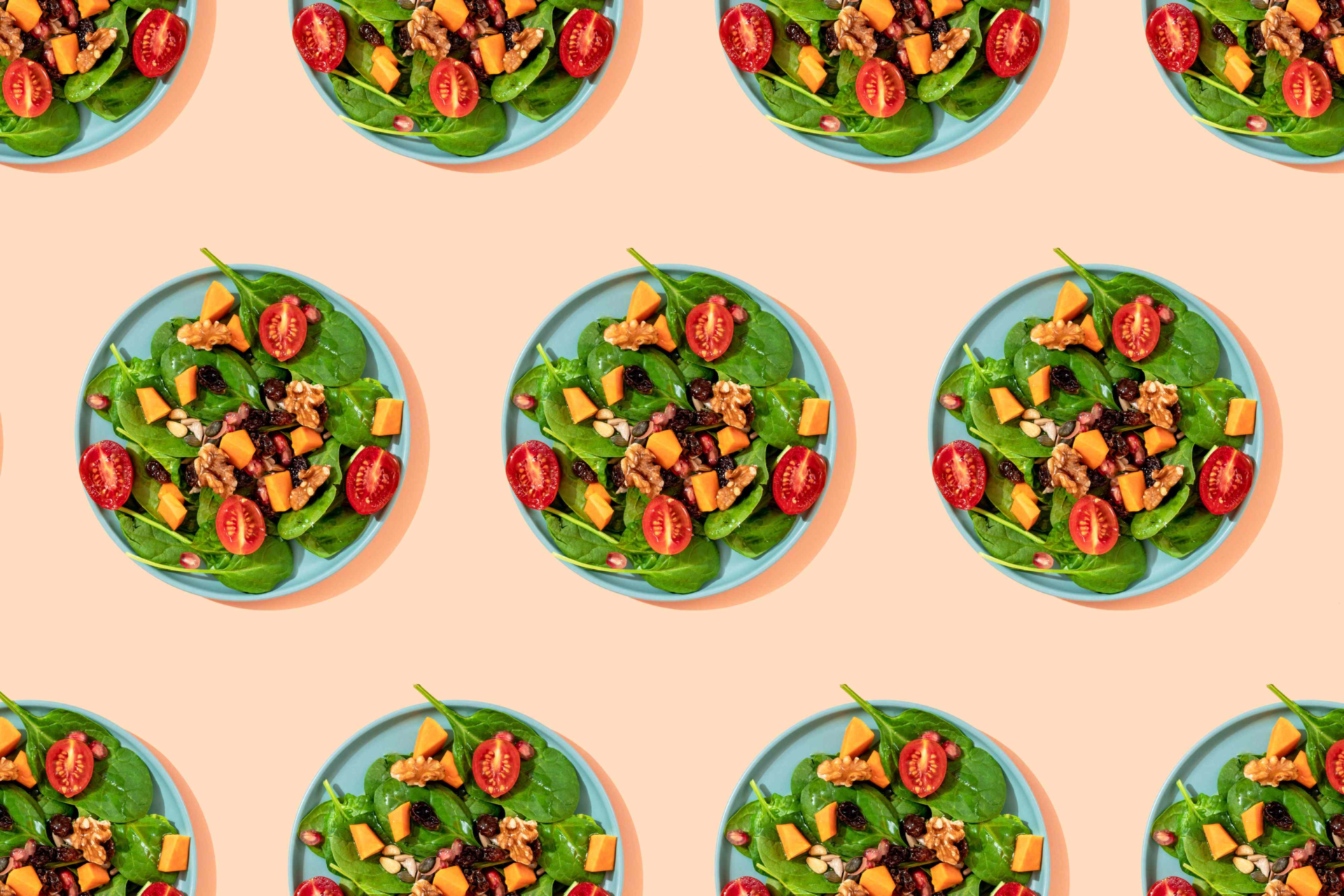
:max_bytes(150000):strip_icc():format(jpeg)/Health-GettyImages-1284733149-7271de4483bc48cdb959f9bfdfff5ed2.png "Plates of salad with leafy greens cherry tomatoes and various toppings arranged in a grid pattern.")
Credit: Westend61 / Getty Images
- Eating the same meal daily can make it easier to meet your weight and health goals when portions and nutrient balance are considered.
- However, a lack of variety may lead to nutrient gaps if your meal isn’t well-balanced across food groups.
- Repetition can reduce decision fatigue, but it may also lead to boredom and more cravings.
Eating the same meal every day can simplify your routine and help support your health goals. However, this consistency can have either positive or negative effects on your body, depending on what's included on your plate.
1. Greater Ease in Reaching Weight Goals
Repeating the same meals can make it easier to stick to calorie goals by reducing variability, supporting portion control, and limiting impulsive food choices. Research suggests that consistent eating patterns support greater weight loss.
If you're trying to gain weight, you may want to prioritize foods rich in protein and healthy fats. Eating the same foods may make it easier to maintain consistent intake.
2. Less Decision Fatigue Around Food
While some people enjoy cooking or deciding what to eat each day, others may feel overwhelmed by it. If this is the case, you may feel frustrated about the constant need to figure out what to eat each day, which may lead to impulsive, less healthy food choices.
Meal repetition may reduce stress around food and make it easier to build a healthy routine. For example, if you start every morning with the same bowl of yogurt, berries, and granola, you already know you’re getting a healthy meal without needing to overthink it.
3. A Risk of Missing Out On Key Nutrients
While eating the same meal every day is convenient, less variety could mean missing out on certain vitamins and minerals. In general, rotating the types of foods you eat throughout the week increases the likelihood that you’re getting all the important micronutrients your body needs—plus, more varied diets have been linked to healthier aging and other health benefits.
The risk of missing out on essential nutrients primarily depends on the makeup of your meal.
For example, a salad with mixed greens, grilled salmon or chicken, quinoa, chickpeas, olive oil, nuts, and various colorful vegetables hits all of the major food categories—fruits, vegetables, whole grains, legumes, nuts, seeds, and lean animal‑source foods. A meal like this provides a range of vitamins and minerals, making it a reasonable option to repeat.
In contrast, consistently eating a more nutritionally-limited meal—like plain pasta with butter or a packaged snack-based lunch—may cause you to miss out on important nutrients.
4. Potential for a Less-Diverse Gut Microbiome
Your gut microbiome—the bacteria and other microorganisms that live in your digestive tract—is essential for digestive and immune health.
Eating a range of plant-based and high-fiber foods supports a healthier and more diverse gut microbiome. Research also suggests that polyphenols, antioxidant compounds found in various fruits, vegetables, beans, and grains, can support the gut microbiome, too.
Different plant foods provide various types of fiber and their own unique concentrations of polyphenols. That means eating the same foods every day may limit the diversity and health of your gut microbiome.
5. More (or Less) Stable Blood Sugar
The meal you repeat could have positive or negative effects on overall blood sugar, depending on what's on your plate.
If your meal is balanced with protein, fiber, and healthy fats, eating it every day could be helpful—these nutrients slow digestion, leading to a more gradual rise in blood sugar instead of quick spikes and dips that can leave you feeling tired or hungry.
On the other hand, meals high in refined carbohydrates or low in fiber may cause more rapid spikes in blood sugar.
6. Boredom During Mealtimes
There's little research on the subject, but in online forums and social media, people often talk about feeling bored of the food they're eating if they're following strict diets or eating plans.
While the simplicity of eating the same meal on repeat can make your routine easier, it could also reduce your enjoyment of cooking and eating overall. Some people may find that adding more variety to their diets helps them stay engaged and interested in what they're eating. Beyond just making mealtimes more satisfying, this could make it easier to choose healthier foods.
7. Lower Intake of Protective Plant Compounds
Different foods offer different plant compounds, such as antioxidants and phytonutrients. These substances help protect your cells from damage and limit inflammation in the body. This may contribute to better health outcomes, such as a lower risk of heart disease and certain types of cancer.
The phytonutrients in plants are also responsible for the various bright colors of fruits, vegetables, and grains. Research has found unique health benefits associated with each of the different colors, which is why experts often encourage people to "eat the rainbow."
How To Repeat Meals Safely
If you like eating the same meal every day but also want to ensure you’re meeting nutrient needs, the following tips can help:
- Balance your plate: Make sure your go-to meal contains substantial amounts of protein, fiber-rich carbohydrates, healthy fats, and colorful fruits and/or vegetables.
- Find simple ways to add variety: You can maintain the same foundation of your favorite meal, but swap in different vegetables, grains, nuts, seeds, herbs, or spices each time.
- Listen to your body: Pay attention to your energy, digestion, and how satisfied you feel after meals to help guide your choices. Talk to your doctor if you experience fatigue, rashes, muscle pain, or other symptoms, as they could be signs of nutrient deficiencies.