7 Lower Ab Exercises to Strengthen Your Core and Improve Stability


Medically reviewed by Katrina Carter, DPT

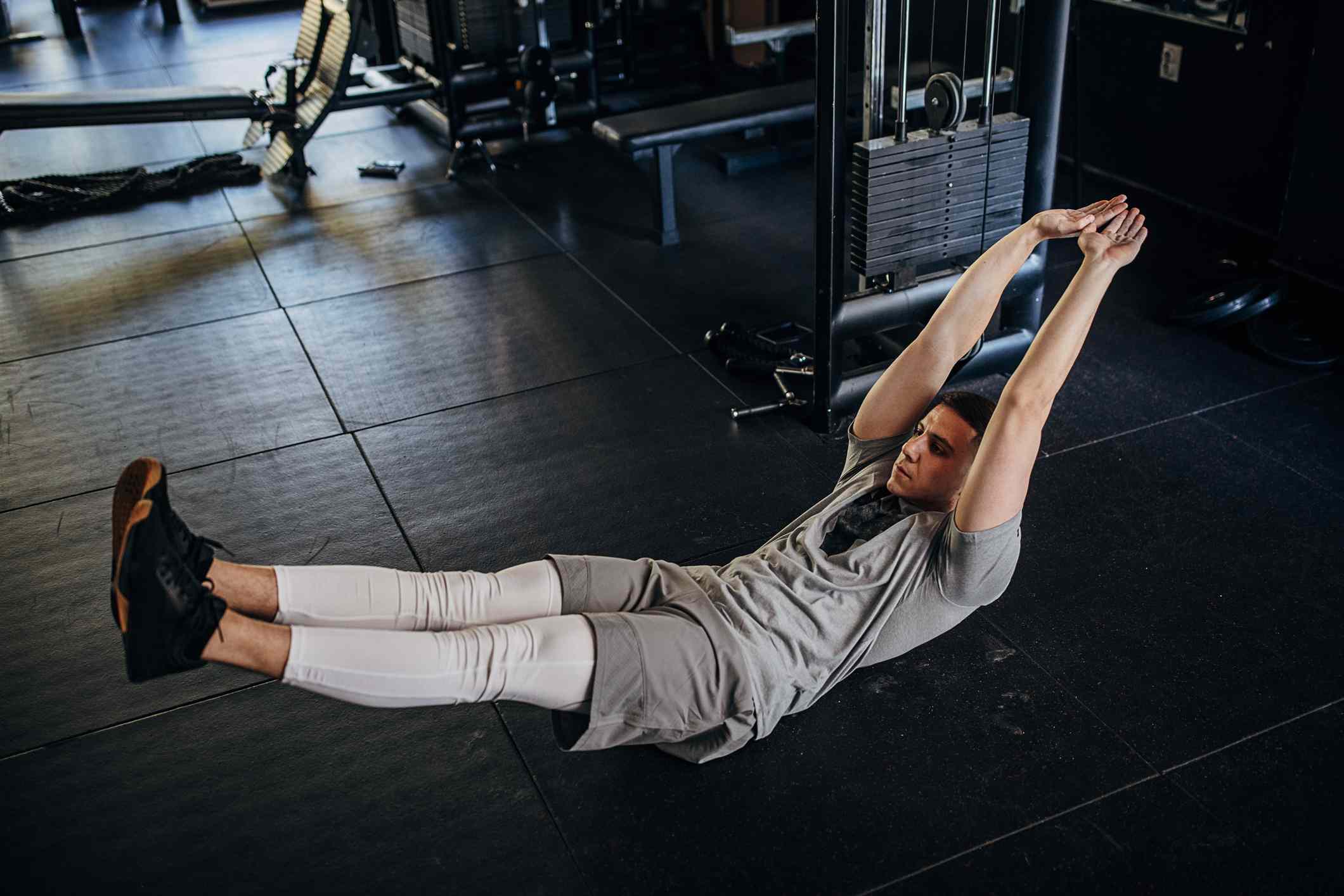
A hollow hold exercise targets the deep core muscles and the top abdominal layer.Credit: Hirurg / Getty Images
A hollow hold exercise targets the deep core muscles and the top abdominal layer.
Credit: Hirurg / Getty Images
  • Hollow holds engage your deep core muscles for improved strength and stability.
  • Lying leg raises target your lower abs and support pelvic stability.
  • Doing lower ab exercises has benefits for your stability and balance.

Lower abdominal exercises are essential for achieving a fully developed core. A strong core supports your posture, protects your spine, and enhances your overall movement. Lower ab workouts, in particular, help strengthen the deepest parts of your core, giving you better stability, strength, and control.

1. Hollow Hold

The hollow hold works your entire core from bottom to top with an emphasis on the lower region. This exercise activates the transverse abdominis (the deepest ab muscle, which wraps your abdomen horizontally) and rectus abdominis (the top layer of your abs, also called the "six-pack") through sustained tension.

This exercise also builds isometric (static) strength in the core muscles, which is critical for stability. Follow these steps to perform a hollow hold:

  1. Lie on the floor on your back with your arms extended overhead and legs straight.
  2. Engage your core and lift your arms, head, shoulders, and legs a few inches off the floor.
  3. Make sure to keep your lower back pressed firmly into the ground so you only feel your abs working.
  4. Hold the position for 30–60 seconds, rest, and repeat.

Modification: If the original exercise is too challenging, sit up into a V-shape, balancing on your butt while you keep your knees slightly bent, feet off the floor, and arms by your sides. Hold the position for as long as you can.

2. Lying Leg Raises

Lying leg raises target your lower abs by keeping your torso static while creating tension by lifting your legs off the floor straight into the air. This isolates the lower half of the rectus abdominis and works the hip flexors, which support pelvic stability.

Follow these steps to perform lying leg raises:

  1. Lie on your back with your legs extended and hands under your hips, right below your butt.
  2. Keeping your legs straight and engaged, flex your stomach and lift your legs toward the ceiling until about 90 degrees.
  3. Slowly lower your legs, stopping to hover them a couple of inches above the floor. Avoid letting your lower back arch off the floor.
  4. Repeat for 5–15 reps.

Modification: If you find the full range version too challenging, bend your knees more and don’t bring your legs down as far. This will help offload your core and make it a bit easier. 

3. Butterfly Kicks

Butterfly kicks target your lower abs similarly to leg raises and hollow holds. However, this exercise incorporates dynamic movement into your legs, making it even more challenging for your lower abs. 

Follow these steps to perform butterfly kicks:

  1. Lie flat on your back with your hands under your glutes.
  2. Brace your core and lift your legs a few inches off the floor while your head and neck stay on the ground.
  3. Kick your legs in small up-and-down fluttering motions while keeping your lower back flat and abs tight throughout.
  4. Perform for 30–45 seconds.

Modification: To make this exercise less challenging, bend your knees and lift your legs a little higher off the ground while you do the fluttering motion. 

4. Dead Bug

This movement is highly effective for targeting your entire core and exercising spinal stability while emphasizing your lower abs. It engages the deep core muscles by opposing arm and leg movement, all while maintaining a neutral spine.

Follow these steps to perform dead bug:

  1. Start on your back with your arms extended toward the ceiling and knees bent at 90 degrees.
  2. Slowly lower your right arm and left leg toward the floor while keeping your back flat, pressing into the floor beneath you.
  3. Return to the starting position, then alternate sides.
  4. Do 10–12 reps per side.

Modification: If your lower back comes off the floor as you do the exercise, you can modify by reducing how far you extend your legs and arms. This will make the movement easier and prevent your lower back from rising up.

5. Russian Twist

Although it’s often thought of as an oblique exercise, the Russian twist engages your entire core, including your lower abs. The twisting motion strengthens your rectus abdominis and internal and external obliques, while holding the declined position keeps your lower abs engaged.

Follow these steps to perform a Russian twist:

  1. Sit on the floor with your knees bent and feet slightly lifted.
  2. Lean back slightly to form a V-shape with your body.
  3. Twist your torso side to side while holding a light weight. Go slowly enough so that each twist feels intentional. Keep your abs engaged throughout the movement.
  4. Complete 10–30 total reps.

Modification: If the exercise is too challenging, don’t hold a weight and just focus on the rotation instead. If you want to increase the challenge, use a heavier dumbbell or medicine ball. 

6. Mountain Climbers

This exercise combines core activation with upper body strength, particularly for the shoulders and triceps. The rapid knee-driving motion keeps your lower abs under continuous tension while recruiting your other upper body muscles for support.

Follow these steps to perform mountain climbers:

  1. Start in a high plank position with your shoulders stacked over your wrists. Keep your back flat and core engaged.
  2. Drive one knee toward your chest, and then bring it back to a straight position as you bring the other knee up to your chest. Continue switching your legs back and forth, increasing your speed to create a continuous motion.
  3. Maintain a consistent pace while keeping your hips low and core engaged.
  4. Perform for somewhere between 30 and 60 seconds.

Modification: You can make this exercise easier by slowing down your pace, or increase the difficulty by going faster and holding for longer.

7. Alternating Leg Drops

Leg drops are similar to the dead bug exercise. They’re a slow, controlled movement that challenges your core through eccentric (lengthening) muscle contraction. The movement forces you to stabilize your spine and control the descent of your legs, which engages the lower part of your abdominal muscles.

Follow these steps to perform alternating leg drops:

  1. Start on your back with legs lifted straight up at 90 degrees.
  2. Slowly lower one leg toward the floor, aiming your heel toward the ground.
  3. Stop just before your heel touches the floor and raise your leg back to the starting position before switching legs, going back and forth.
  4. Repeat for 12–15 reps, keeping your back pressed into the floor beneath you for maximal core engagement.

Modification: If your lower back is lifting off the floor or feels like it's supporting part of the exercise, try placing your hands under your hips to take the pressure off your back. You can also make this exercise more challenging by keeping your legs straight as you go through the motion. 

How To Create a Lower Ab Workout

You can safely exercise your core multiple times per week. Try incorporating your lower ab workouts into the rest of your workout. This way, you can be efficient and not have to set aside separate time exclusively for your lower abs. Pick a handful of exercises and complete 3-5 sets of each. Over time, you’ll want to increase the difficulty of the exercise by adding more sets and reps or complexity. 

Benefits of Lower Ab Workouts

Training your lower abs and improving your core strength has several benefits, including:

  • Increased stability: Strengthening your lower ab muscles improves the stability of your torso and pelvis.
  • Reduced back pain: By enhancing spinal stability, core exercises can help decrease lower back pain.
  • Better balance: A strong core leads to more controlled and coordinated movement.

Safety Tips

When doing core exercises, it's important to avoid activating your lower back, which can cause unnecessary strain. This can happen if your pelvis and spine aren’t in a neutral position. Aim to keep a flat back during all core exercises and maintain intraabdominal pressure by flexing your stomach muscles.


Source link

Leave a Reply

Subscribe to Our Newsletter

Get our latest articles delivered straight to your inbox. No spam, we promise.

Recent Reviews


Iceland doesn’t ease you in.

We landed at Keflavik Airport just as the sun was going down — and the views from the plane on descent were already something else. Golden light spilling across a volcanic landscape that looked like nothing I’d ever seen from 30,000 feet. That was our welcome to Iceland.

Four days later I left having seen the Northern Lights twice, walked inside a glacier, stood on a black sand beach in 50mph winds, and found a place that looked so much like Mars I genuinely had to remind myself I was still on Earth.

This is the exact route we took — every stop, every restaurant, every moment worth knowing about. My dad and I did this trip in January with Secret Spots Iceland, a local tour operator who knows these locations better than anyone. If you want a guided experience, they’re worth every penny. That said, every stop in this Iceland winter itinerary is completely doable on your own — and I’ll give you everything you need to navigate it independently.

Before you pack — check out our Iceland Packing List for exactly what to wear and bring. Waterproof everything. Trust me.

Before You Go: The Winter Light Reality

One thing nobody fully prepares you for in Iceland in winter the sunlight window is tiny.

Sunrise wasn’t until around 10:30am and sunset hit at roughly 4pm. That’s less than six hours of daylight. It sounds limiting but it actually works in your favor, the golden hour light lasts all day, every photo looks incredible, and the darkness gives you the best possible conditions for Northern Lights hunting.

Plan your driving between stops accordingly. Don’t underestimate how quickly it gets dark.

Day 1: Reykjavik & The Northern Lights

Keflavik Airport → Reykjavik (45 minutes)

Reykjavik

Flying into KEF is a dream. Grab your 4×4 rental car immediately, this is non-negotiable in winter, don’t even consider a standard vehicle — and make the 45-minute drive into Reykjavik.

Spend your first afternoon and evening exploring the city. It’s compact, walkable, and packed with personality. The main landmark is Hallgrímskirkja, the iconic church that towers over the city and gives you sweeping views over the rooftops from the top. Walk Laugavegur Street for coffee, food, and a feel for the city.

Eat somewhere local. Reykjavik punches well above its weight for food.

Reykjavík → Hvolsvöllur (90 minutes)

Hvolsvöllur

Here’s the decision that changed our entire trip: instead of staying in Reykjavik, we drove 90 minutes east to Hvolsvöllur for the night.

The reason? Light pollution. Reykjavik’s glow kills your Northern Lights chances. Hvolsvöllur is deep in the South Iceland countryside, dark skies, privacy, and dramatically better odds of catching the aurora.

It paid off immediately.

Within minutes of checking into our Airbnb, I glanced outside and noticed the sky looking a little more colorful than usual. I walked out. The Northern Lights were directly above us, green ribbons moving across the entire sky, on night one within an hour of arriving.

We spent 45 minutes outside. Just standing there, staring, filming, not saying much. One of those moments where you understand immediately that you’ll remember it for the rest of your life.

If you’re chasing the Northern Lights, and want to get the most out of this Iceland winter itinerary, get out of Reykjavik at night.

Day 2: The South Coast – Waterfalls, Black Sand & Basalt

The South Coast is Iceland’s greatest hits. Give yourself a full day and don’t rush any of it.

Seljalandsfoss

Seljalandsfoss

Your first waterfall, and what a way to start.

Seljalandsfoss drops 60 meters off a cliff face and, uniquely, you can walk behind it through a narrow passage carved into the rock. Standing behind a waterfall while it crashes in front of you is a genuinely surreal experience. The mountains flanking it on both sides make the backdrop even more dramatic.

Wear your waterproof gear here. You will get wet. That’s not a warning, it’s a promise.

Reynisfjara Black Sand Beach – Near Vík (R.I.P.)

Reynisfjara Black Sand Beach

We were lucky enough to be some of the last visitors to experience Reynisfjara before a section of the cliff collapsed, permanently changing the beach.

Even before that, this place was unlike anything I’d ever seen. Black volcanic sand as far as you can see, enormous basalt columns stacked like organ pipes along the cliff face, and waves arriving with absolutely zero warning.

The wind here was brutal. My dad had forgotten his waterproof pants and within minutes he was completely soaked. I was fine. Wear your waterproof gear. All of it.

The rogue waves at Reynisfjara are genuinely dangerous, people have been swept away here. Stay well back from the waterline no matter how calm it looks.

Lunch at Ströndin Pub – Vík

After Reynisfjara, stop in Vík for lunch at Ströndin Pub. I had one of the best burgers I’ve eaten anywhere. Warm, unpretentious, and exactly what you need after getting sandblasted on a black sand beach.

Skógafoss

End the day at Skógafoss and save energy for it because this waterfall deserves your full attention.

Unlike Seljalandsfoss where you walk behind the water, at Skógafoss you walk directly underneath it. The scale is enormous, 60 meters of water crashing down so close you feel the full force of the mist on your face. Don’t be scared to get close. The photos are worth it.

Climb the stairs to the viewing platform at the top for a completely different perspective over the South Coast.

Day 3: Ice Caves, Glaciers & The Best Pizza in Vík

Yoda Cave

Yoda Cave

Start the morning at Yoda Cave, a lava tube formation whose jagged entrance looks almost exactly like the Star Wars character. I didn’t realize it until we got there and then couldn’t unsee it.

The best part? We were completely alone. No other visitors, no tour groups, just us walking into a cave on a black sand beach feeling like genuine explorers. Coming out alive was a bonus. (Just kidding. Mostly.)

The adjacent black sand beach gives the whole spot an otherworldly backdrop that made it one of the most photogenic stops of the entire trip.

Glacier & Ice Cave Tour with KatlaTrack – The Experience of a Lifetime

Katlatrack Glacier & Ice Cave

Clear your afternoon. This tour runs about 3 hours and it is without question, one of the most unforgettable experiences of my life.

The guide loads you into what can only be described as a war-ready 4×4 and takes you off-road across a glacier. It feels like driving on another planet. When we reached the ice caves, the scene was straight out of Interstellar, icy mountains on every side, electric blue walls of compressed glacial ice, complete silence except for the crunch of boots on ancient ice.

We spent the next hour or two trekking in and out of the caves. Every turn revealed something more extraordinary than the last.

Wear every layer you brought. It’s cold, it’s wet, and it’s worth every second of discomfort.

Book KatlaTrack in advance, this tour sells out. Don’t leave it to chance.

Dinner at Black Crust Pizzeria – Vík

Back in Vík for dinner. There’s really only one pizza place in town Black Crust Pizzeria, and honestly, that’s fine. It’s excellent. After a day on a glacier, it’s exactly what you need.

Day 4: The Golden Circle – Craters, Geysers & Iceland’s Bluest Waterfall

The Golden Circle is Iceland’s most famous tourist route for a good reason. But we did it with a few detours that most visitors never find, and those ended up being the best moments of the day.

One important note for winter: sunrise on this day was around 10:30am. We timed our first stop perfectly for the golden hour light. Plan your Golden Circle day around the sunrise.

Ingólfsfjall – Sunrise Overlook

Ingólfsfjall

On the way to Kerið, we spotted a beautiful overlook called Ingólfsfjall and pulled over on instinct. The timing was perfect, it was right at sunrise, the light was golden, and the views over the surrounding landscape were extraordinary.

This is the kind of stop that doesn’t make it into most itineraries. Pull over for it. The drone shots here were some of my favorites from the entire trip.

Kerið Crater

Kerið Crater

A volcanic crater lake that looks like it fell from another dimension. Deep red and black crater walls surround vivid teal water at the bottom, the color contrast is almost artificial looking, especially in winter light.

Walk the entire rim and go down to the water. The perspective changes completely from every angle you view it from. Don’t just look from the top and leave.

The Secret Spot (Near Kerið – You’ll Know It When You See It)

The Secret Spot

Just a short distance from Kerið, we found a place I’m deliberately not naming or mapping.

The entire landscape was varying shades of red, orange, and black. So alien-looking that the only reference point I had was Mars. We had the whole place completely to ourselves. No other visitors. Just us, the drone, and a landscape that genuinely didn’t look like Earth.

We flew the drone all around and spent time just sitting with it, reflecting on how one country can contain ice caves that feel like Interstellar AND a red volcanic landscape that feels like Mars. Keep your eyes open on the roads around Kerið. You’ll recognize it immediately when you see it.

Gullfoss

Gullfoss

One of Iceland’s most iconic waterfalls, and one of the rare ones that actually lives up to every photo you’ve ever seen of it.

Gullfoss is so wide and encompassing that it made me feel genuinely small, which nature has a funny way of doing when it wants to put you in your place. Visit every viewpoint, each one gives you a completely different experience of the same waterfall. My favorite was the lower platform where you can feel the full force of it, mist was blowing directly into my face the entire time and I couldn’t have cared less.

Geysir – Strokkur

My first geyser. It didn’t disappoint.

Strokkur erupts every 7-10 minutes, shooting boiling water 20-30 meters into the air. The challenge is being ready with your camera every single time. Your arms will get tired holding the shot but the moment it erupts is absolutely worth it. You’ll watch it four or five times before you’re ready to leave.

There’s a visitor center right next to the geysir with a food court and a gift shop if you need to grab something for whoever you left at home.

Brú Horse Farm

Brú Horse Farm

A quick stop that became one of the warmest moments of the trip. Iceland’s native horses are a breed unlike any other, small, thick-maned, and completely uninterested in you unless you have snacks.

Buy the snacks. It’s the only way to get a good photo and honestly the horses’ complete mercenary attitude toward humans is hilarious and endearing at the same time.

Brúarfoss Waterfall My Favorite of the Entire Trip

Iceland’s bluest waterfall and the most undervisited stop on this entire itinerary.

The water here is a vivid cobalt blue that doesn’t look real. It’s fed by glacial meltwater filtering through ancient lava rock, and the color it produces is unlike anything else in Iceland. With the mountains in the background it was the most purely picturesque waterfall of the whole trip, not the biggest, not the most powerful, but the most beautiful.

Most Golden Circle visitors skip this entirely. Don’t be one of them.

The waterfall is intimate and quiet in a way that Gullfoss and Skógafoss aren’t. I flew my drone up and over it for some of the best footage of the trip. And then I just sat there for a while. Some places make you want to stop moving and just exist in them for a minute. Brúarfoss is one of those places.

Þingvellir National Park – End on a High

The final stop, and the right one to end on.

Þingvellir is where the North American and Eurasian tectonic plates meet above ground, creating a dramatic rift valley you can walk directly through. It’s also where Iceland’s first parliament was established in 930 AD, making it the most historically significant place on the entire route.

If you’re a Game of Thrones fan, there’s a section that will immediately remind you of the entrance to the Eyrie. You’ll recognize it the moment you see it.

We arrived at sunset. Overlooking the massive lake in that light, with the rift valley stretching out in every direction, it was the perfect way to close out four days in Iceland.

One Last Gift – Northern Lights at the Airport

Northern Lights

We ended the night at Keflavik Airport waiting for our flight home. And Iceland gave us one final send-off, the Northern Lights appeared directly above the airport while we waited to board.

Twice in four days. Iceland doesn’t do things halfway.

FAQ

Should I rent a car for my trip to Iceland in winter?

4×4 is mandatory in winter. Non-negotiable.

How long is it day in Iceland?

Sunrise ~10:30am, sunset ~4pm in January (Roughly 5 hours of daylight). Plan accordingly.

Should I hire a guide or go on my own?

We used Secret Spots Iceland for Days 2 and 3, which gave us access to spots and knowledge we wouldn’t have found on our own. Every stop in this itinerary is doable independently — but if you want a local expert showing you the less-obvious spots, they’re excellent.

What are the road conditions in Iceland in winter?

Check roads on a daily basis. Iceland’s conditions change fast and F-roads close in winter without warning.

Where can I see the Northen Lights?

Get out of Reykjavik at night. The further from city lights the better. Download the Aurora app for real-time forecasts.

About the Author

Nick Reed

As a Manchester City fan, he made it his mission to catch matches at legendary stadiums from Camp Nou to the Etihad. But Nick’s travels go beyond football. He’s explored 20+ countries across Europe, Africa, and the Caribbean, always chasing authentic experiences over tourist traps. Nick lives by a simple rule: the best stories come from saying yes to the unexpected. And TravelFreak is his biggest yes yet.

More Articles »


Source link