Alaska Airlines launched its much-anticipated joint loyalty program with Hawaiian Airlines, Atmos Rewards, in 2025.
The refresh kept the best features Alaska loyalists love, such as excellent partner redemptions and a global network, while uniquely letting members choose how they earn points and status. Alongside the launch, Atmos Rewards unveiled an exciting premium credit card that is geared toward Alaska and Oneworld loyalists who value perks.
Here’s what you need to know about earning, redeeming and maximizing with the Atmos Rewards program.
Atmos™ Rewards Ascent Visa Signature® credit card: Limited-time online offer to earn 80,000 bonus points and a $99 Companion Fare (plus taxes and fees from $23) after spending $4,000 on purchases in the first 120 days from account opening. Plus, receive a 50% flight discount code for a qualifying future flight after opening your new account.
Atmos Rewards airline partners
Atmos Rewards offers a suite of airline partners, including Oneworld airlines:
- Alaska Airlines
- American Airlines
- British Airways
- Cathay Pacific
- Fiji Airways
- Finnair
- Iberia
- Japan Airlines
- Malaysia Airlines
- Oman Air
- Qantas
- Qatar Airways
- Royal Air Maroc
- Royal Jordanian Airlines
- SriLankan Airlines
Here’s the full list of other airline partners to earn and redeem Atmos Rewards points with:
- Aer Lingus
- Air Tahiti Nui
- Aleutian Airways (earn only)
- Bahamasair (earn only)
- Cape Air (earn only)
- Condor
- Contour Airlines (earn only)
- Hainan Airlines
- Hawaiian Airlines (joining the Oneworld alliance April 22)
- Icelandair
- Kenmore Air (earn only)
- Korean Air
- Mokulele Airlines (earn only)
- Philippine Airlines (earn only)
- Porter Airlines
- Singapore Airlines (earn only)
- Southern Airways Express
- Starlux Airlines
Related: Oneworld alliance guide: Learn about airlines, lounges and elite status

Reward your inbox with the TPG Daily newsletter
Join over 700,000 readers for breaking news, in-depth guides and exclusive deals from TPG’s experts
Atmos Rewards elite status: Tiers, thresholds and benefits

Atmos Rewards offers four elite status tiers with various perks:
| Atmos Rewards status tier | Previous Mileage Plan/HawaiianMiles tier | Status points required in 2026 (for 2027) | Corresponding Oneworld tier |
|---|---|---|---|
|
MVP/Pualani Gold |
20,000 status points |
Ruby |
|
|
MVP Gold/Pualani Platinum |
40,000 status points |
Sapphire |
|
|
MVP Gold 75K |
80,000 status points |
Emerald |
|
|
MVP Gold 100K |
135,000 status points |
Emerald |
To smooth the transition, Atmos Rewards Platinum and Titanium elite members will get a one-time head start on earning 2027 status:
- 5,000 status points for Platinum members
- 20,000 status points for Titanium members
Alaska says there’s no immediate change to core benefits right now, but several enhancements are coming, including space-available complimentary premium-cabin upgrades on Alaska and Hawaiian flights for Titanium elite members (expected in spring 2026).
Starting later in 2026, members can also opt in to Atmos Communities — a unique new membership layer within the Atmos Rewards program, with themed groups that offer bonus perks and curated partner offers. Announced communities include Culinary Journeys, Active Escapes, Families on the Go and Global Skies (for members outside the U.S.), plus two existing regional communities: Club 49 (Alaska residents) and Huakai by Hawaiian (Hawaii residents). Expect specific details of Atmos Communities to be announced closer to launch.
How to earn Atmos Rewards elite status
Later in 2026, Atmos Rewards members will be able to choose how to earn elite status. The three options are:
- Distance-based: Earn 1 status point for every 1 mile flown (including award redemptions).
- Spending-based: Earn 5 status points for every dollar spent on purchasing flights.
- Segment-based: Earn 500 status points for each segment flown (including award redemptions).
You can also earn Atmos Rewards elite status via select credit cards:
You can also earn status points with select partners. Be sure to check out Atmos Rewards’ full list of partners to find out which airline, hotel and everyday brands earn status points.
Related: Alaska Airlines to outfit entire fleet with fast, free Starlink Wi-Fi service
How to earn Atmos Rewards points

You can earn Atmos Rewards points on paid flights when flying with Alaska, Hawaiian and other airline partners. Atmos Rewards currently uses distance‑based points earning, but starting later in 2026, the program will shift to the same three ways members can earn status:
- Distance-based: Earn 1 point for every 1 mile flown (including award redemptions).
- Spending-based: Earn 5 points for every dollar spent on purchasing flights.
- Segment-based: Earn 500 points for each segment flown (including award redemptions).
Note that you can change your preference just one time per calendar year; if you don’t choose, you’ll default to spending‑based. Once live, both redeemable points and status points will accrue as selected.
When the choice model launches, those selecting segment-based earning will earn based on the segments flown on partner tickets booked directly with the partner. If you choose distance- or spending-based earning, you will continue earning on partner tickets according to the current charts.
Related: Alaska Airlines unveils big cabin retrofits, adding premium seats to Boeing 737s
Hotel, cruise and car partners
The Atmos Rewards program offers a wide range of non-airline earning partners. Some notable partners are:
- Avis and Budget: Earn up to 1,250 points per rental, plus discounts.
- Best Western Rewards: Earn 250 points per stay on qualifying rates.
- Choice Privileges: Earn 250 points per eligible stay.
- IHG One Rewards: Earn up to 2 points per dollar (or local currency) spent or 500 points per qualifying stay.
- Lyft: Earn 2 points for every dollar spent on everyday Lyft rides, and 3 points for every dollar spent on airport and elevated Lyft rides.
- Marriott Bonvoy: Earn 2 points per dollar or 1 point per dollar spent on the room rate (depending on the hotel).
- Rocketmiles: Earn 500 to 10,000 points per night.
Check out Alaska’s website for the full list of travel partners.
Everyday partners
You can also earn Atmos Rewards points with everyday partners. Partners include the following brands:
- Atmos Rewards Dining: Earn up to 5 points per dollar spent; earn 500 bonus points after spending $30 in 30 days.
- Atmos Rewards Shopping: Earn points with 1,100-plus retailers, including Nike, Apple and Sephora.
- E-Rewards: Earn 250 points for the first survey, more for others.
- Harry & David: Earn 25 points per dollar spent with promo code “AKA4.”
Check out Alaska’s website for the full list of everyday partners.
Related: Earn points, miles or cash back: How to maximize online shopping portals for your purchases
Earn points with Atmos Rewards credit cards
You can earn Atmos Rewards points with the following credit cards:
| Card name | Welcome offer | Earning rate |
|---|---|---|
|
Limited-time online offer: Earn 100,000 bonus points and a 25,000-point Global Companion Award after spending $6,500 on purchases within the first 90 days from account opening. Plus, receive a 50% flight discount code for a qualifying future flight after opening your new account. |
|
|
|
Limited-time online offer: Earn 80,000 bonus points and a $99 Companion Fare (plus taxes and fees from $23) after spending $4,000 on purchases within the first 120 days from account opening. Plus, receive a 50% flight discount code for a qualifying future flight after opening your new account. |
|
|
|
Limited-time online offer: Earn 80,000 bonus points and a $99 Companion Fare (plus taxes and fees from $23) after spending $5,000 on purchases within the first 90 days from account opening. |
|
Related: Alaska Trifecta: Why I signed up for the premium Atmos Rewards Summit credit card
Transfer Bilt points
Bilt members can transfer Bilt Points to Atmos Rewards at a 1:1 ratio.
The Atmos Rewards Ascent Visa Signature credit card and Atmos Rewards Summit Visa Infinite credit card earn 3 Atmos Rewards points for every dollar spent on eligible rent when paying through Bilt, on up to $50,000 per calendar year; terms apply.
How to redeem Atmos Rewards points
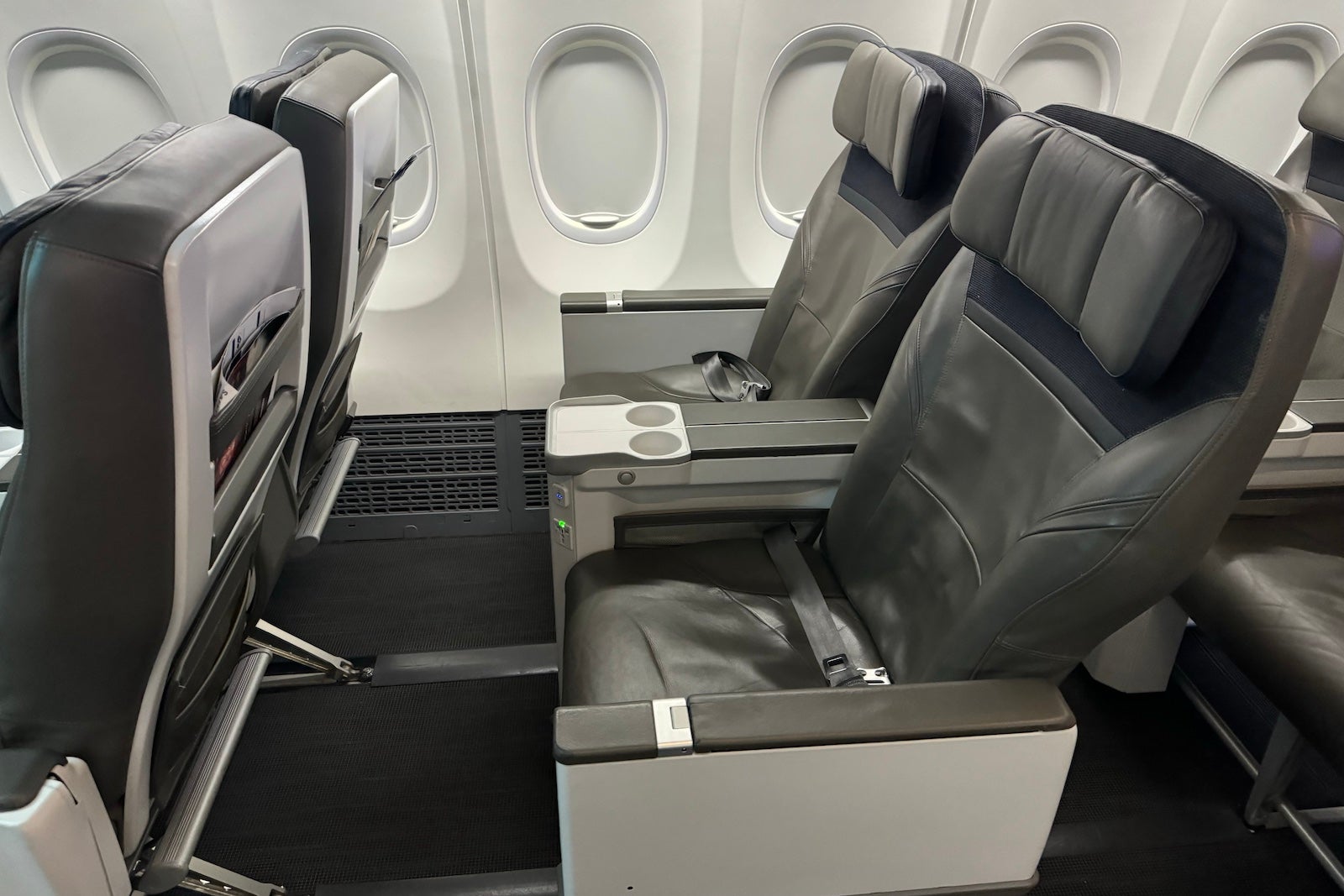
One-way awards operated by Alaska Airlines start at just 4,500 Atmos Rewards points plus taxes and fees for short distances and scale upward depending on demand, distance and cabin. This is a terrific value and one of the lowest award prices among airline loyalty programs.
Redeem Atmos Rewards points for partner flights
Great value can be found by redeeming your Atmos Rewards points for premium-cabin flights with partner airlines, especially when you can add a free stopover on a one-way itinerary, including the following sweet spots:
- American Airlines: Flights up to 700 miles start at only 4,500 Atmos Rewards points.
- Japan Airlines: Business-class flights from the West Coast to Japan start at 60,000 points, or 75,000 points from the East Coast; first-class flights to Japan range from 90,000 to 110,000 points, depending on the origin.
- Cathay Pacific: Business-class flights from the U.S. to Hong Kong start at 75,000 points.
- Fiji Airways: One-way business-class seats on Fiji Airways start at 75,000 points. You could fly to New Zealand and Australia, with a stopover in Fiji, for just 10,000 more points.
- Aer Lingus: Business-class flights to Ireland start at 45,000 points, a fantastic price for a transatlantic lie-flat seat.
- Hawaiian Airlines: Fly from the West Coast to Hawaii in economy class from only 10,000 points.
- Qantas: Business-class flights from the U.S. mainland to Australia start at 85,000 points; book flights within Australia of 1,500 miles or less for 7,500 points in economy.
Related: Cathay Pacific just launched its stunning Aria Suites in North America — and we got an inside look
Redeem Atmos Rewards points for experiences
Beyond flights, Atmos Rewards Unlocked curates access to events and travel experiences across 15-plus markets for members redeeming points.
Atmos Rewards Unlocked is a brand-new loyalty offering introduced under the Atmos Rewards umbrella in partnership with Way, a provider offering auctions and fixed-price curated and exclusive experiences that members can access using their Atmos Rewards points.
You can book (though some experiences require bids) excursions, food tours, Broadway shows and much more.
Transfer Atmos Rewards points to hotels and other members
With the Atmos Rewards Summit Visa Infinite credit card, you can transfer Atmos Rewards points to select hotel programs. Launch partners and ratios include Marriott Bonvoy (1:1 transfer rate), Wyndham Rewards (1:1), IHG One Rewards (1:1), Preferred Hotels & Resorts I Prefer Hotel Rewards (1:2) and Shangri‑La Circle (8:1), with more partners to come.
Summit Visa Infinite cardholders can also share their Atmos Rewards points with up to 10 other Atmos Rewards members with no transfer fee.
Related: Guide to transferring points and miles to airlines and hotels
Bottom line
The Atmos Rewards program kept the most valuable Mileage Plan features, like generous partner sweet spots, free stopovers on one-way awards and Oneworld access, while layering in modern updates like additional milestone rewards; personalized points- and status-earning structures (starting later in 2026); and a new premium credit card that will benefit Alaska Airlines, Hawaiian Airlines and general Oneworld travelers.
Overall, this unique and rewarding program will likely appeal to many travelers, even if they don’t set foot in Alaska.

Stacie Harris is a local resident and reporter of the Maple Grove area. Stacie reports on medicine and science for the Maple Grove Report.