What a United-American merger would mean for consumers


When the Trump administration took office last year, plenty of airline industry insiders thought the next wave of mergers could be coming.

Few, however, had a marriage of American Airlines and United Airlines — two of the nation’s largest carriers — on their bingo card.

But then came Monday evening, when Bloomberg reported United CEO Scott Kirby had at least floated the idea to top lawmakers in Washington, D.C.

Could it actually happen?

It would certainly be a long shot, since any such tie-up would — at least under normal circumstances — draw regulatory scrutiny of the highest order.

“I wouldn’t put all that much credence into this actually happening, because it is so outlandish,” Florian Ederer, an antitrust expert studying the airline industry, told TPG.

Still, the headlines this week have rightly left frequent flyers wondering what a merger between two of America’s biggest airlines could look like, and what it would mean for consumers.
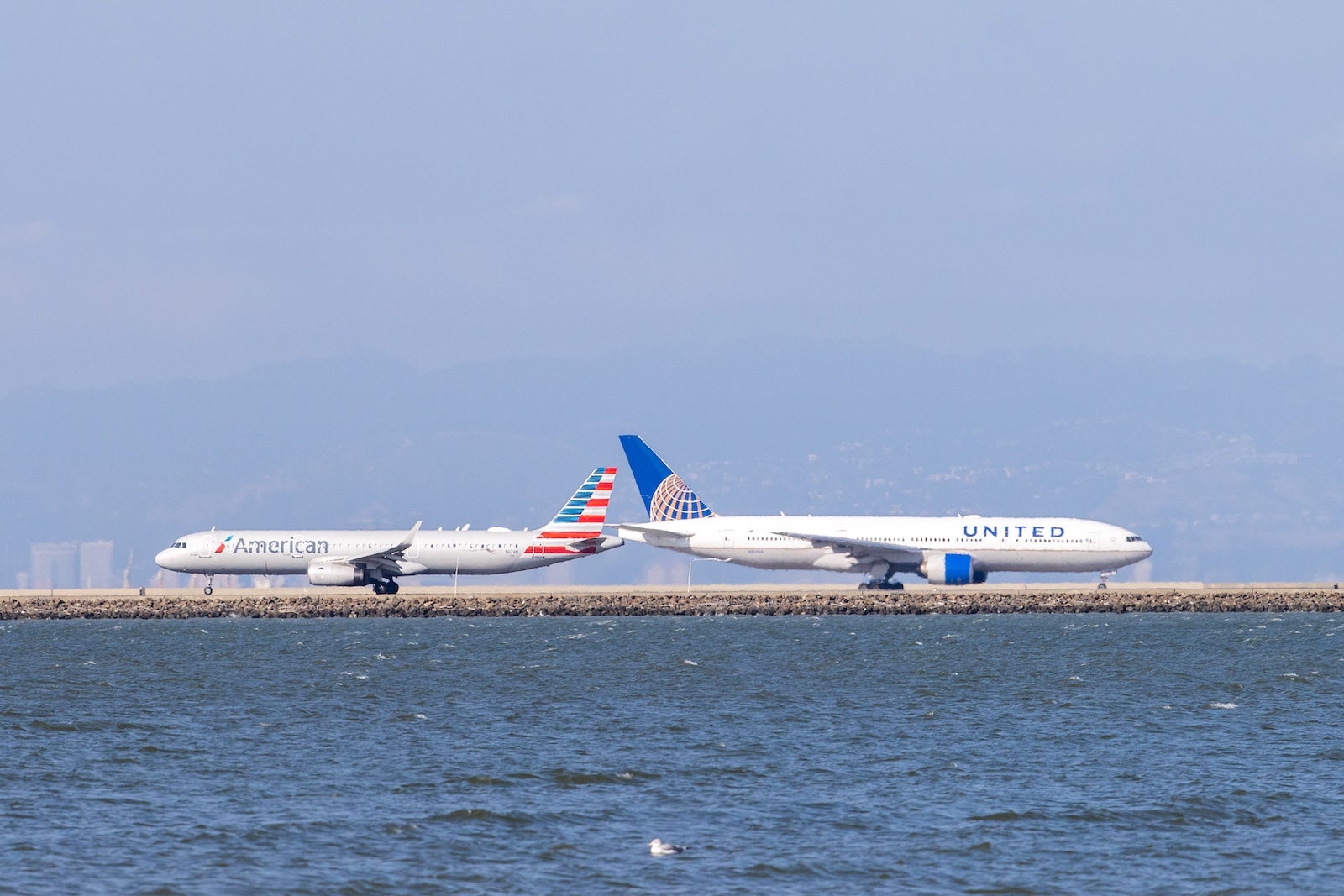
TAYFUN COSKUN/ANDALOU AGENCY/GETTY IMAGES

American and United merger? It’s a long shot

To be clear, we may already be getting ahead of ourselves.

At present, no merger deal between United and American has been formally announced, and neither airline is commenting on the rumors.

Reward your inbox with the TPG Daily newsletter

Join over 700,000 readers for breaking news, in-depth guides and exclusive deals from TPG’s experts

There could be financial incentive, to be sure: American certainly has trailed United in financial performance, of late. United and Delta Air Lines have accounted for the bulk of the industry’s profits in recent years.

But even if the two carriers reached a deal to combine forces, there would be huge obstacles to overcome.

Read more: Is airline merger mania back? That’s the question as United-American rumors swirl

Steep regulatory hurdles

Any major airline merger requires regulatory approval, and a merger of two of the nation’s largest airlines would raise significant antitrust concerns.

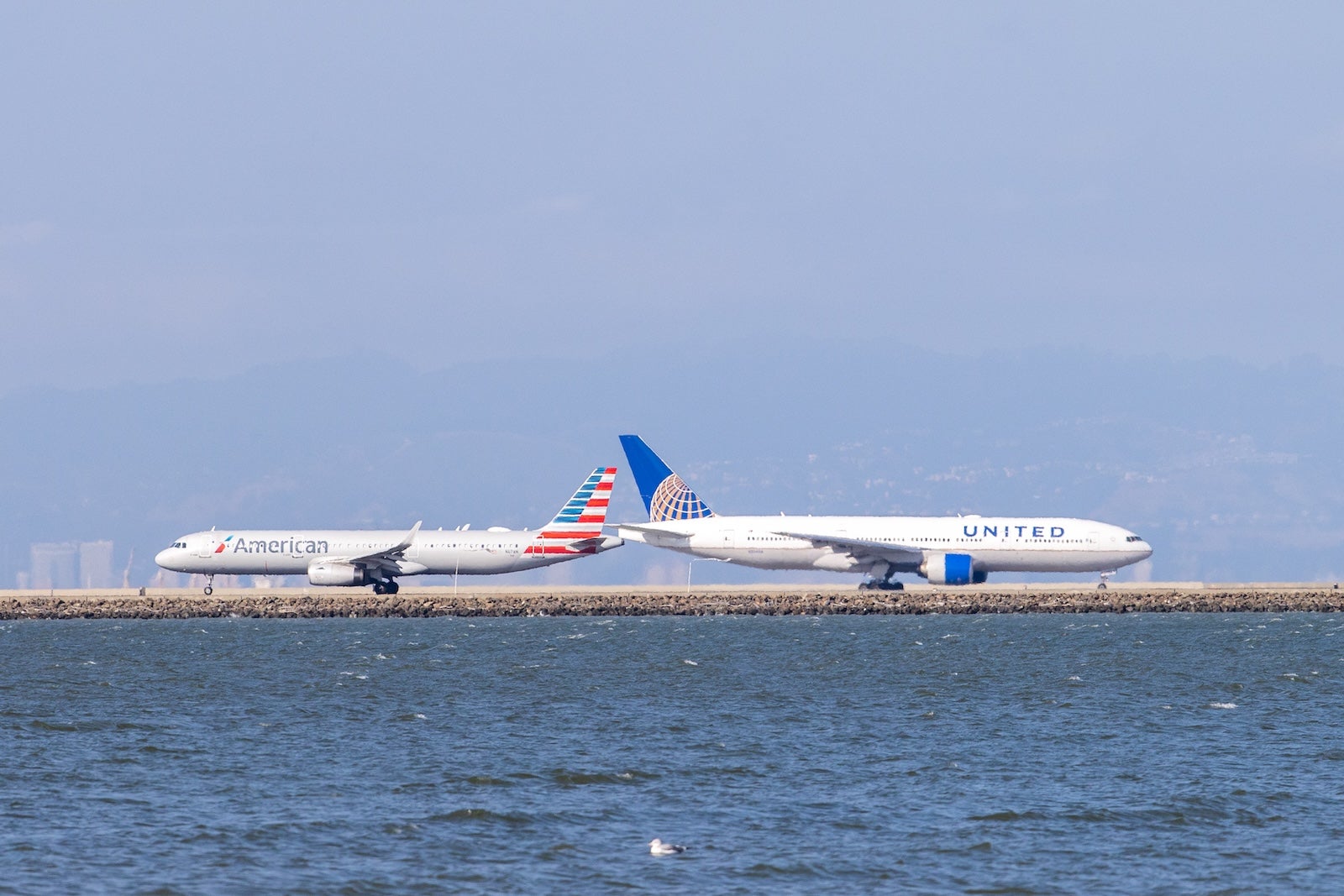
After all, the U.S. airline industry has already gone through waves of consolidation that have left our airports dominated by four major carriers: American, Delta, United and Southwest Airlines.

Four in 10 flights that took off in America last year were operated by American or United (and their regional subsidiaries), according to data from aviation analytics firm Cirium.

The dominance of a combined United and American could be a tough sell even in the more relaxed regulatory landscape ushered in by President Donald Trump’s return to office, some experts believe.

“I think this is a non-starter,” Ederer, who serves on the faculty at Boston University’s Questrom School of Business, said. “Even in the Trump administration, this would be looked upon as being absurd.”

Lawmakers react

Already, too, we’ve seen bipartisan backlash on Capitol Hill.

“That’s gonna be a no,” Sen. Ruben Gallego, D-Ariz., posted on social media, reacting to this week’s reports.

“This is one of the most tone-deaf acts of corporate aggression I’ve ever seen,” Sen. Mike Lee, R-Utah, added.

Ok … but what if it did happen?

But — suspend your disbelief if you must — let’s say this blockbuster merger did happen.

The tie-up of two of the nation’s legacy carriers would raise a myriad of concerns for frequent flyers.

In a video posted Tuesday, TPG founder Brian Kelly warned any such deal would be “catastrophic” to consumers.

Consumer concerns

Historically, less competition among airlines has led to higher airfares.

We should also note, in a world where airline loyalty programs are front and center for consumers, it’s a likely bet you’d eventually see mileage devaluations, too.

Beyond that, the competitive nature of today’s airline industry has fueled a proverbial arms race among major carriers: They have raced, in recent years, to upgrade seats, technology and airport amenities like lounges — all in a push to woo and keep loyal customers.

Among those going tit for tat? American and United.

“They compete aggressively for consumers … they have overlap of the various routes, they tend to be similar in terms of pricing, and it would eliminate two very obvious head-to-head competitors,” Ederer said. “So I think this would be really a loss for consumers.”

Major impacts likely at big hub airports

On a more practical level, any approved tie-up between the carriers would likely lead to asset divestitures, with some of the most visible likely to involve gate space or takeoff and landing rights at some of the most congested U.S. airports.

American and United both operate hubs (and compete relentlessly) at Chicago’s O’Hare International Airport. They also both call Los Angeles International Airport (LAX) a hub.

Plus, both carriers have cross-town hubs in the New York City and Washington, D.C., areas.
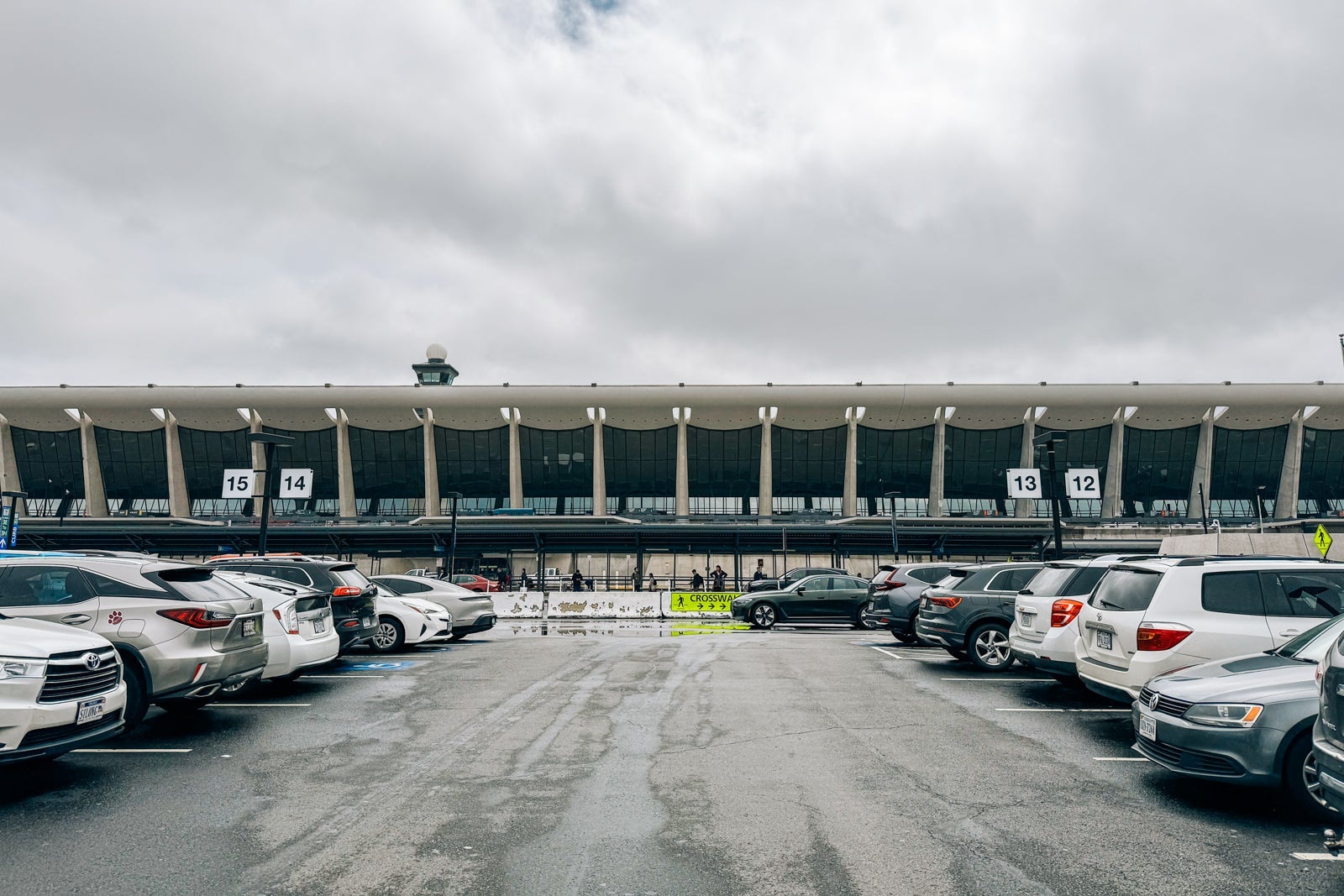
Would some hubs have to be shut down in a merger deal?

Speaking last week on CNBC, Transportation Secretary Sean Duffy acknowledged that any major airline merger may require carriers to “peel off” some larger assets, while also acknowledging the administration would have to “look at” any deal.

A merger like this could also conceivably draw legal action at the state level, and draw scrutiny in some international markets the airlines serve, too.

Could the next big wave of airline mergers be here?

Of course, in that same CNBC interview, Duffy also said Trump “loves to see big deals happen.”

At the time, many industry pundits suspected that it could open the door to a United merger with JetBlue, which is reportedly exploring tie-ups with a variety of carriers.
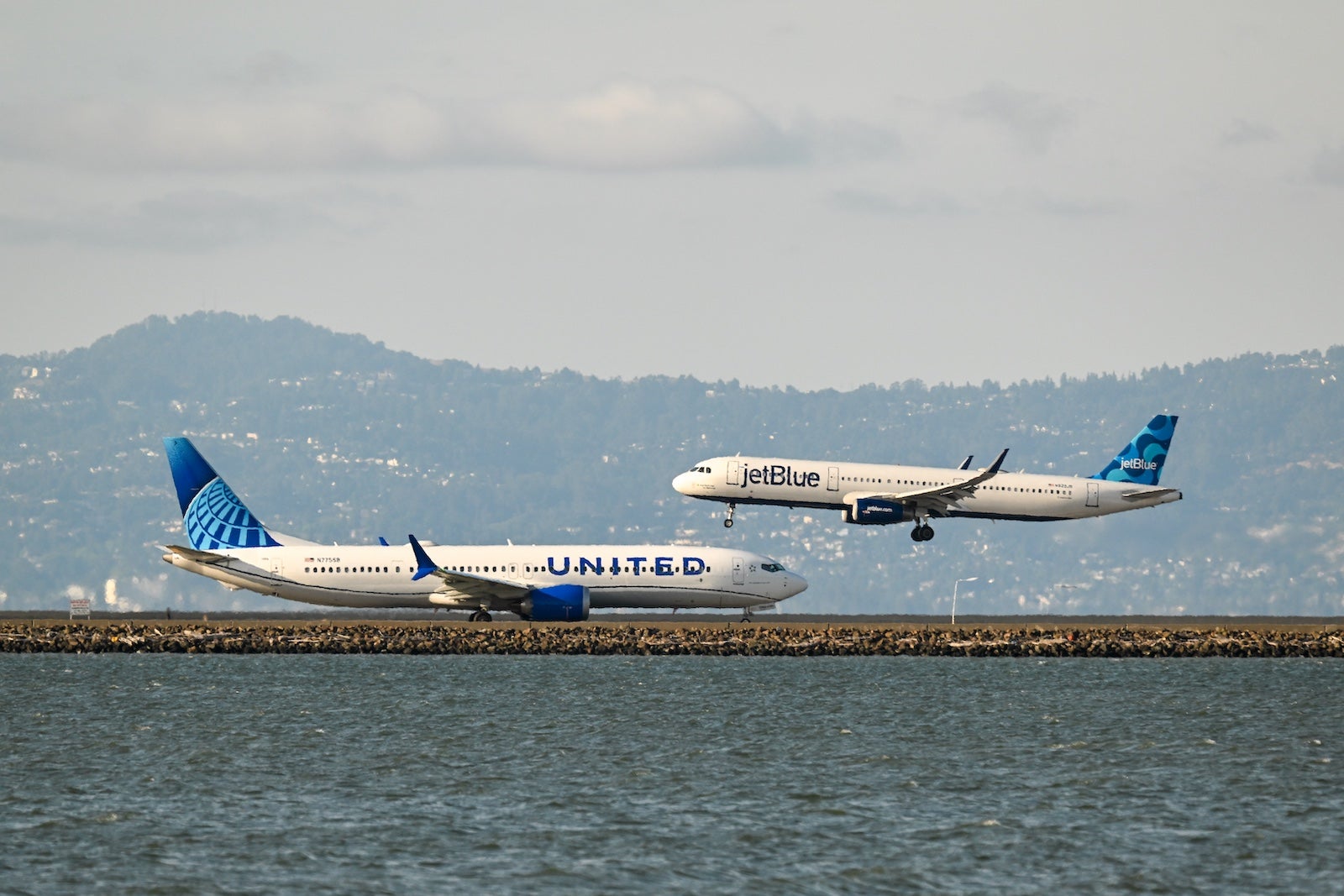
Takeoff and landing planes at San Francisco International Airport (SFO)
TAYFUN COSKUN/ANDALOU AGENCY/GETTY IMAGES

Or, perhaps, it could lead budget rivals Frontier Airlines and Spirit Airlines to ink a deal after years of merger discussions.

But even after decades of consolidation have left the U.S. airline industry with a small handful of dominant carriers, an American-United deal would be the merger of all mergers — and result in a mega-carrier roughly twice the size of Delta.

Do you think Atlanta would take that sitting down?

It’s not hard to envision such a move triggering additional corporate deals that would, in the end, leave consumers with a far shorter list of airlines to choose from when booking flights.
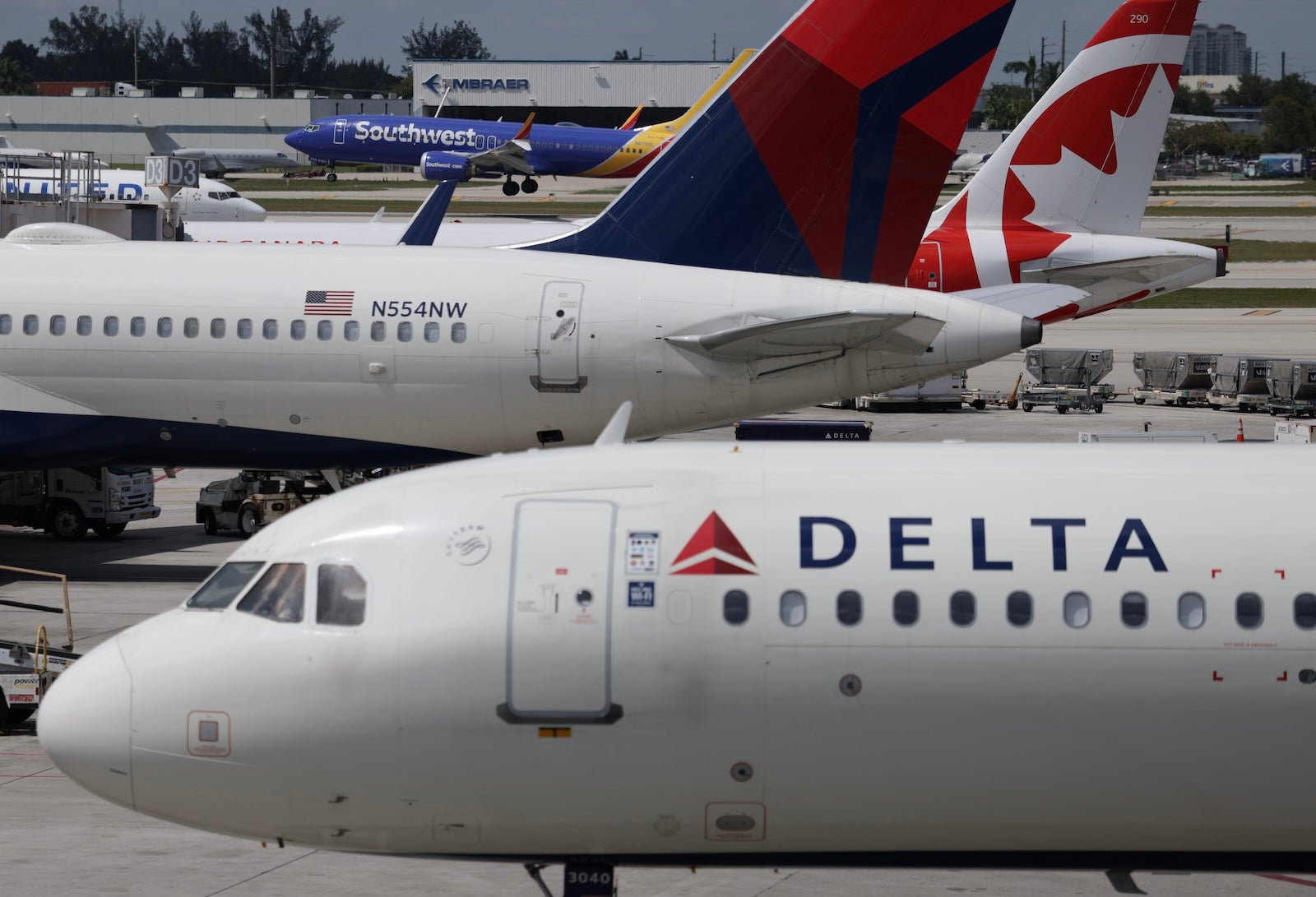
JOE RAEDLE/GETTY IMAGES

Bottom line

Again, though, we’re getting ahead of ourselves.

For now, it remains wholly unclear whether United will actually attempt to acquire American — or whether it’ll instead make a run at acquiring a smaller competitor.

Even more uncertain is whether a merger of this magnitude would have support in Washington, D.C.

Then again, this is 2026.

Related reading:


Source link

Leave a Reply

Subscribe to Our Newsletter

Get our latest articles delivered straight to your inbox. No spam, we promise.

Recent Reviews


The recent conflict in the Middle East and the unprecedented airspace closures have canceled thousands of flights and disrupted the travel plans of an estimated 1 million passengers, myself included.

I was booked on a Middle Eastern airline to the United Arab Emirates on the day the disruption began, and my essential travel home looked impossible.

Here’s how my beloved Capital One miles saved me during a time of crisis.

Related: What to do if your flight from — or through — the Middle East is affected this week

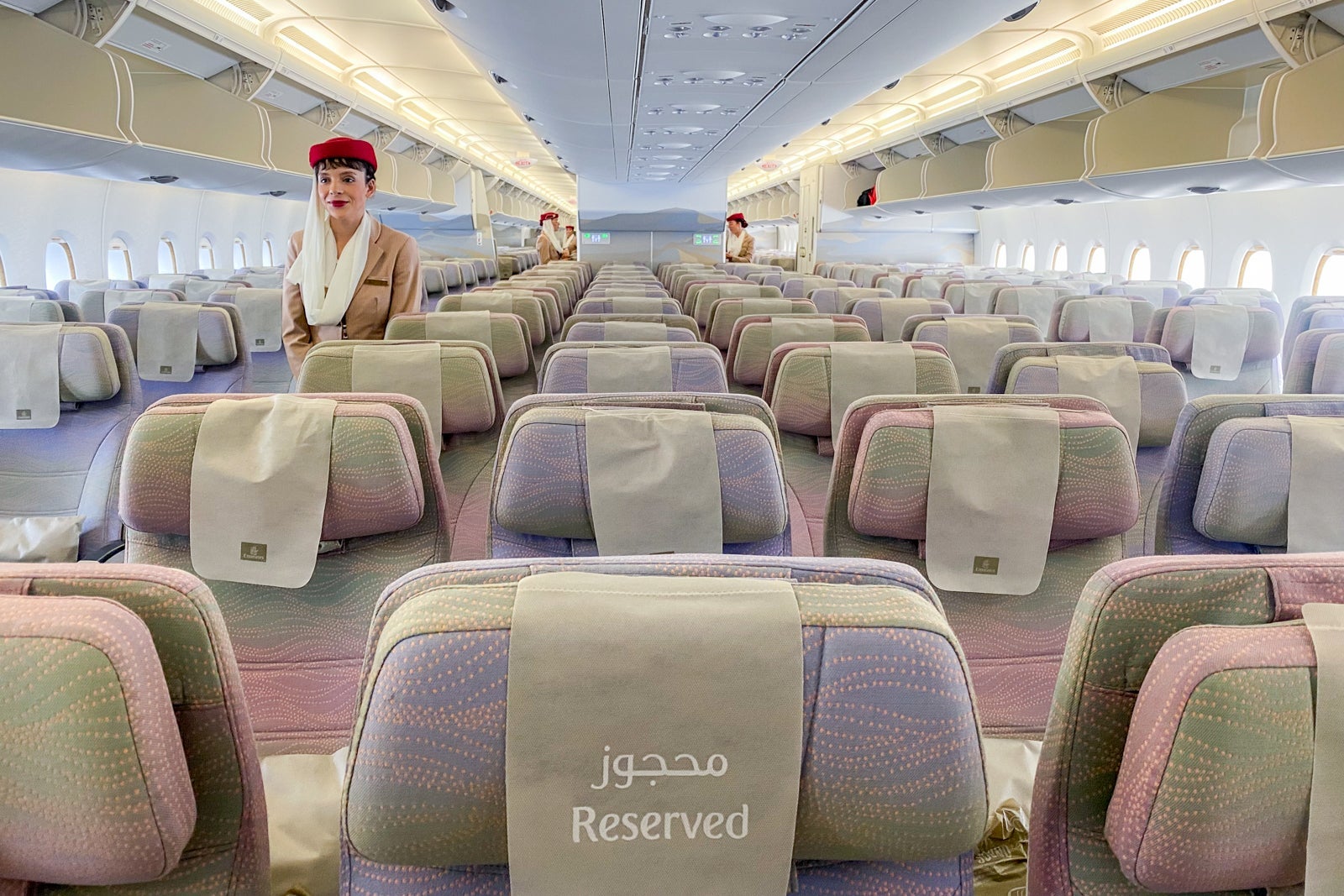
A canceled flight on Emirates

Upon hearing news last month that my father-in-law was reaching his final stages in a health battle, I looked at options to travel from my current residence in London to my home country of Australia to pay my final respects.

Keen to redeem my points and miles, I found an excellent deal: just 35,000 Emirates Skywards miles in economy class for the 22-hour journey Down Under. While I normally do this marathon journey in business class, this trip was not a holiday, and I booked just one week in advance. I needed to get from point A to point B as cheaply, quickly and easily as possible, so economy class made sense.

I chose my seats, checked in online and timed my routine journey to London Gatwick Airport (LGW) perfectly. I arrived 80 minutes before departure, with just enough time to check my bag, head through security and walk onto the plane.

While I normally like to read about world news on the way to the airport to pass the time, on this day, I didn’t, perhaps distracted by the somber reason for this journey.

As I rounded the corner to the Emirates check-in desk, expecting to see a dozen stragglers finalizing check-in, I was instead greeted with hundreds of people milling around, looking concerned; there were no check-in staff at any desks. I noticed everyone still had their large suitcases, which set off alarm bells in my head, and I asked one of the passengers if there was an issue with the flight, fearing an engineering problem or a weather delay.

Reward your inbox with the TPG Daily newsletter

Join over 700,000 readers for breaking news, in-depth guides and exclusive deals from TPG’s experts

It was much worse than that.

The passenger gloomily told me the flight was canceled because Dubai International Airport (DXB) was closed “due to war.” I checked the news on my phone to learn that the U.S. had just launched military strikes against Iran, and all Emirates flights that day were cancelled.

I asked an airport ground staff member what I should do, and they advised me to return to London and await further information from Emirates.

Dejected, I went back to my apartment, rang my husband to explain I wouldn’t be arriving in Australia the following day and tried to figure out what to do.

Eventually exhausted and with no solutions, I decided to sleep on it, hoping to wake up the next morning and find that the order had miraculously been restored to global aviation.

Related: A step up from your average economy: Flying Emirates’ A380 from Dubai to Johannesburg

CAROLINE LASCOM/THE POINTS GUY

Capital One miles to the rescue via Asia

Of course, the next morning, when I woke up and got up to speed on developments, nothing had improved. Middle Eastern airspace was still closed, I had no way to get to Australia and was wasting valuable time to say goodbye to a loved one.

At 8:30 a.m., still in my pajamas, I started looking for any flight options using any points and miles from the U.K. to Australia, leaving as soon as possible. This is where tools like Seats.aero are enormously valuable for being able to search across multiple routes, programs, dates and classes at once.

It took a while to weed out all of the options that went via the Middle East, as I was fairly certain none would operate that day. There were some undesirable options to travel the long way via the U.S., but these required plenty of miles and would be an epic 30 hours in the air, not enjoyable in economy class.

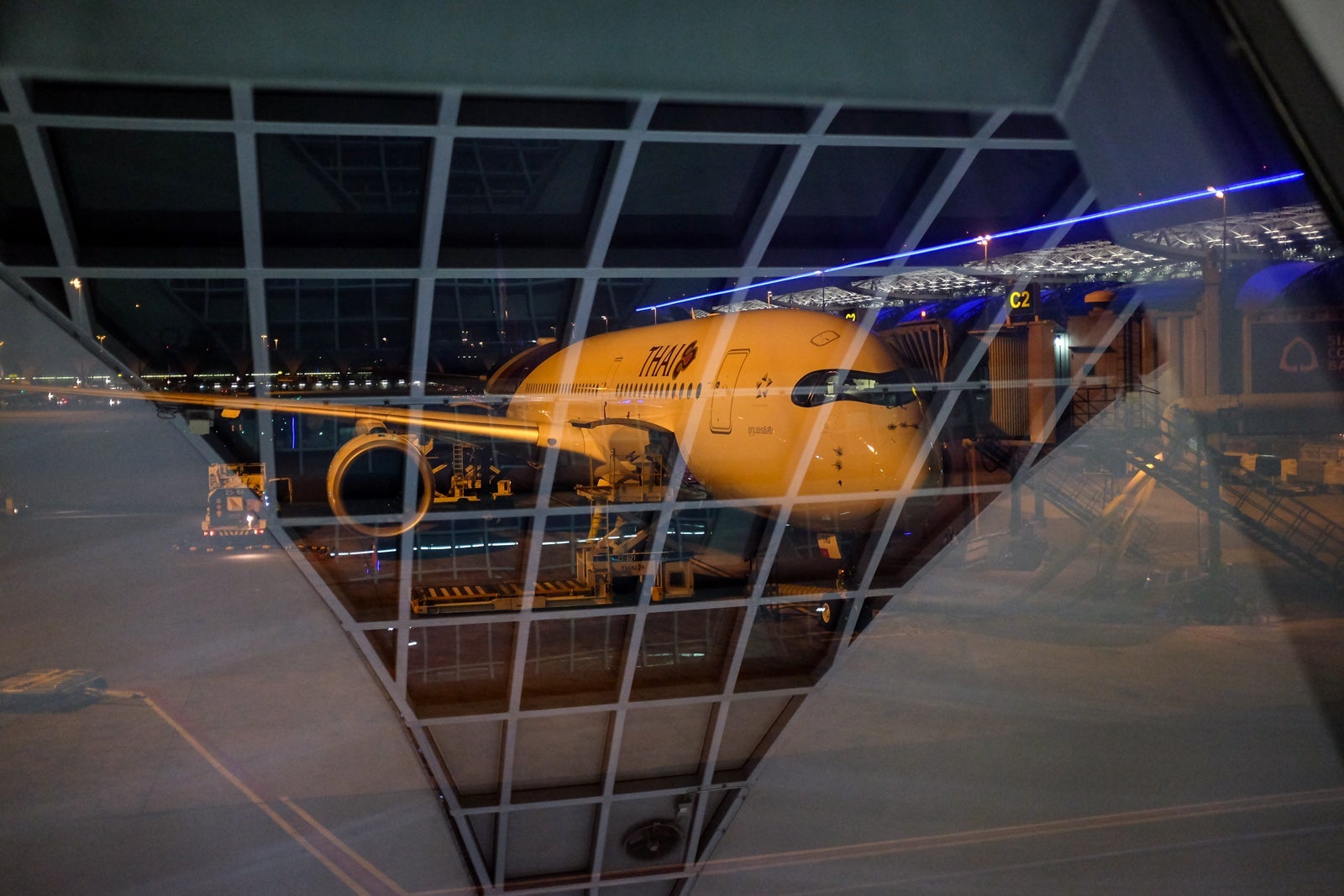
Seats.aero miraculously found me one seat remaining on Thai Airways leaving from Heathrow Airport (LHR) in London at 11:50 a.m. that morning to Sydney Airport (SYD) with a short connection in Bangkok’s Suvarnabhumi Airport (BKK) for 65,000 Air Canada Aeroplan points.

Imagining other disrupted travelers in London trying desperately to secure the same seat, I quickly checked my Aeroplan balance, which had only 20,000 points — not nearly enough to book this flight.

Thankfully, I have a healthy balance of Capital One miles that transfer at a 1:1 rate to Aeroplan, and I quickly initiated a transfer of 45,000 miles, which would become the 65,000 Aeroplan points needed to complete this booking. With the time nearing 9 a.m. and bag drop closing 60 minutes before departure (I had to check a bag), I had less than one hour to book this flight, shower and head out the door. Fortunately, I had not unpacked from the day before.

My Capital One miles transferred instantly to Aeroplan, and I hurriedly proceeded to book the Thai Airways redemption. There were several stressful moments when the payment wouldn’t go through. (I feared someone else had reserved the seat while I was transferring the miles, and I would be back to square one.) But eventually it loaded, and I received that all-important ticket number.

I was out the door less than 20 minutes later in an Uber to Heathrow. Explaining at check-in why I had only booked the flight 80 minutes earlier and that it hadn’t been possible to select a seat online this close to departure, she took pity on me, gave me an exit row seat and blocked the seat next to me so I had some extra space.

I was quickly on my way to Australia via Thailand. I arrived just 24 hours after my original Emirates flight, feeling extremely grateful for my Capital One miles.

Why Capital One miles can be good in a crisis

Earning transferable rewards like Capital One miles lets you keep them in your Capital One account and transfer them only when you know you will need them, such as for an emergency. I’ve found this flexibility hugely valuable.

However, in an emergency, time is precious. You may not have the mental bandwidth to check availability, research transfer times and rates, or consider flying to nearby airports to find a reasonable award rate.

Or there just might not be any award availability through any transfer partners. Instead, the only option might be a high cash fare that you may not really be able to afford.

Luckily, you still have a few options with your Capital One miles. You can redeem your miles for flights, hotels or rental cars booked through the Capital One Travel portal at a rate of 1 cent per mile. Additionally, if you made an eligible travel purchase within the last 90 days, you can redeem your miles for a statement credit at 1 cent per mile to offset the cost.

Related: How long do Capital One miles transfers take?

JAVIER RODRIGUEZ/THE POINTS GUY

How to earn Capital One miles

If you’re looking to earn more transferable miles, the following Capital One cards offer great welcome offers:

For more details, read our guides to Capital One transfer partners and how to transfer Capital One miles.

Bottom line

My disrupted travel plans due to the closure of Middle Eastern airspace are exactly why I collect transferable rewards. Had I only earned, say, Emirates Skywards miles, I might still be in London trying to work out how to get home.

Instead, I struck gold by finding the only decently priced and timed economy award seat from the U.K. to Australia the day after the disruptions began, which I could book with Capital One miles that transferred instantly to Aeroplan.

If you want to earn rewards that you can have ready for emergencies like this, Capital One miles are a great choice to collect.

Related: Points and miles aren’t just for the good times. They can be a godsend in an emergency, too


Source link