Fact checked by Nick Blackmer
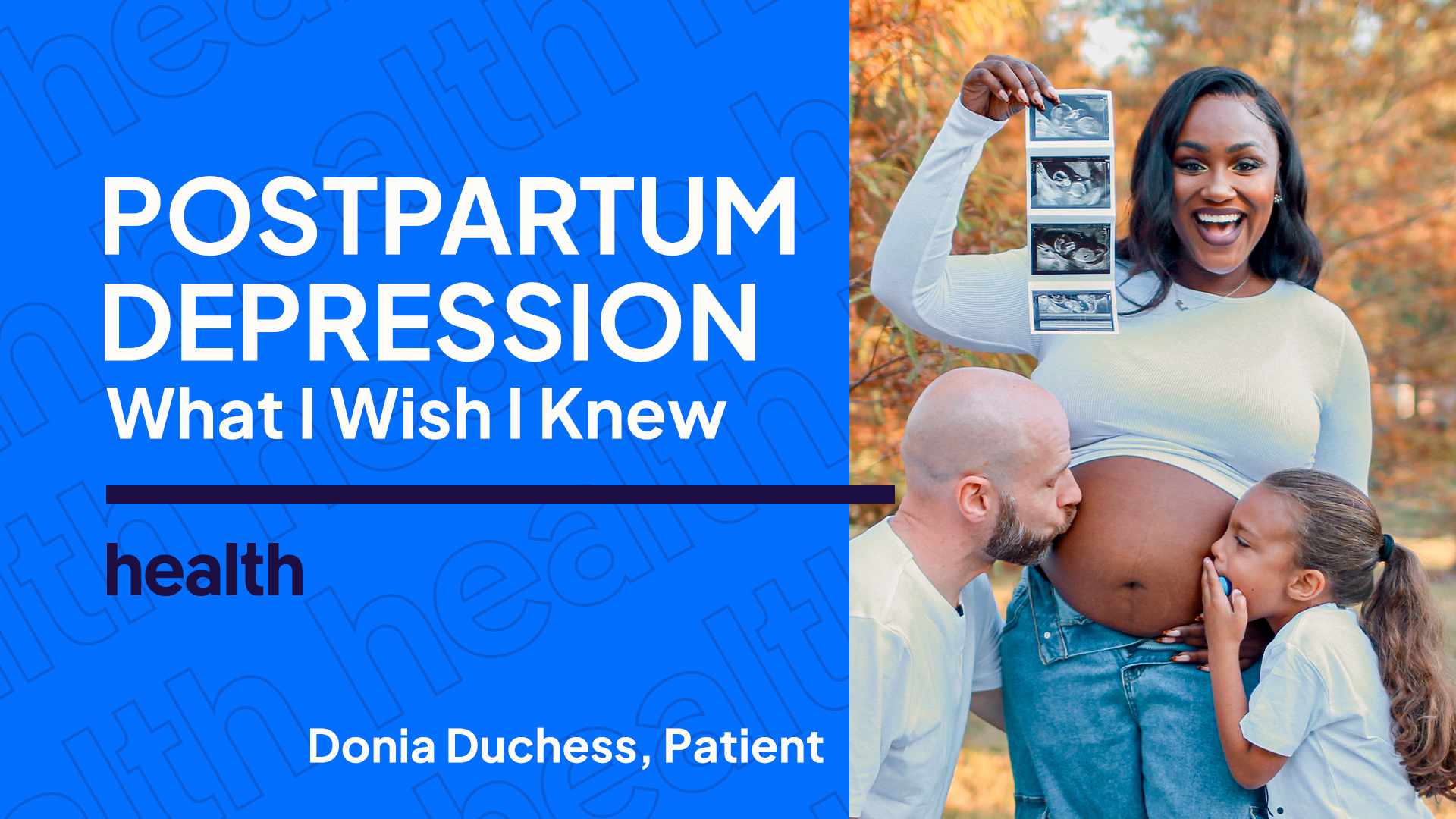
:max_bytes(150000):strip_icc():format(jpeg)/health-WIWIK-postpartum-donia-c193350ab57e4d07b06c879d9d1cdb61.jpg "A smiling pregnant woman shows ultrasound images with a man kissing her belly and a child nearby Promoting postpartum discussion")
Credit: Photo courtesy of Donia Duchess
I love my kids. I love being a mom. Starting the article off with this phrase feels very on par for being a mother. We feel the need to establish those facts before discussing anything that may come across as though we are complaining about motherhood or like we aren’t grateful for our little chicken nuggets. So again, I love my kids, and I love being a mom.
Now let’s get into it… I’ve always been a very positive, upbeat, and smiley person. So much so that my friends always say their first impression of me was, “No one can be THAT happy.” My life has had its challenges like many others, but I’ve always been one to look at any situation as the glass half full. When I got pregnant with our son Noah in November 2019, my husband and I were excited for this next chapter but also terrified of what was happening in the world.
My Pregnancy Experience
That time period—while it seems so long ago—shaped who a lot of us have become. The world essentially felt like it was ending, jobs weren’t secure, people were dying, and here my husband and I (like many others) were bringing a new life into the world. The fear alone of what the future would look like sometimes would stop me in my tracks.
I used to think my pregnancy experience would be big. Big baby shower, big photoshoot, big welcome into becoming a mama. Motherhood would be rainbows, butterflies, and sunshine because, remember, I’m always smiley and happy.
Early on, I realized that wouldn’t be the case. I was diagnosed with high blood pressure and gestational diabetes. For the life of me, I couldn’t figure out how to regulate my blood sugar. I was taking five insulin shots a day and pricking my body about four more times a day to check my numbers. My doctors thought our son might be born with Down syndrome, so that lingered in the back of my mind. Plus, my husband wasn’t allowed to come to appointments with me because we were in the middle of the pandemic. But we made do, we found our joy in little ways like dancing on TikTok and pretending everything wasn’t on fire.
My labor was 43 hours. From the minute I walked into the hospital—already 2 centimeters dilated—for a scheduled induction to the minute I pushed him out, that’s how many hours it took. Noah was born 8 pounds, 13 ounces. Healthy, happy, and here. So with my glass half full, I thought, Ok, we did this. My diabetes is gone, my blood pressure will stabilize, and I’m a mom. I did it! We did it. We have a baby. All is good in the world now. Bring on the rainbows!
The Start of My Postpartum Depression
The first night at the hospital, when they took Noah away for his bath, I remember feeling a tightness in my chest and thinking, He’s not in my belly anymore. I can’t protect him like before. What if he’s crying right now? What if he needs me? Immediately, I had to calm my mind from spiraling and remind myself that this is just motherhood.
When we got home, I fell right into the routine of caring for the baby, my husband caring for me, and both of us falling deeply in love with this little human. The few times I would pass a mirror, I’d avoid looking. I loved my body most when I was pregnant. I was the most confident I had ever been, because who’s going to say anything to a woman growing a human, 50 pounds heavier or not.
About a month after having Noah, I remember going to a doctor’s appointment where the nurse handed me a form to fill out. There were questions about how I was feeling, if I had dark thoughts, and if I was crying more than normal. I thought, OMG, this is it. I can answer honestly about how I hated how I felt heavy and still looked pregnant even though there was no baby in my belly anymore. I can tell her how everything felt like a gray cloud over me all the time. I can finally let someone know that I was crying in the shower and any minute I had alone because I was just… sad. I loved my baby, but everything just felt dark.
I remember looking in the mirror at the office and actually thinking to myself, Who the f*** is that?! And then crying some more. So I answered the questions, handed her the paper, and felt like, Ok, she’s going to see this, come back in here, and rescue me. Give me advice or medication, or tell me that everything I was feeling was normal. But nothing… nothing happened. We finished that appointment, went home, and I didn’t get a phone call, follow-up, or anything. So I crawled deeper into my depression. I went on autopilot and was just in survival mode.
Getting an Answer
A few weeks later, I walked into the living room where my husband was playing with our happy and healthy son. I was sobbing. He stopped what he was doing, hugged me, and said, “I think we need to get you some help. I think you have postpartum depression.” A diagnosis by my attentive spouse that my own doctor missed.
Hearing him say the words to me that I already felt, knew, and that my endless late nights of doomscrolling online to figure out what was wrong with me seemed to suggest I had felt like validation and a start to my healing—to feeling seen and to navigating what this next chapter of me was going to look like. I always thought healing meant going back to who I was before. I kept looking in the mirror for the happy, cheery, positive, and energetic Donia before motherhood, but I had to learn that version of me didn’t exist anymore. She was gone, so who was I going to be now?
How I Started To Feel Better
Step one was accepting that a new version of me was blooming, so I made it a point to start doing things for myself. I had to figure out what this new version of myself was into. Whether it be walking alone to listen to music, meditating while the baby napped, or just lying on the couch watching a show that made me smile and laugh for 30 minutes. Those little things added up for me, so by the end of the night, I was just grateful.
It took months before I started truly feeling joy again, but it was those tiny moments each day that propelled me to the next. Watching my son smile, going on random date nights to connect with my husband, realizing that my body created a human being in 10 months, so it will take time for my body to adjust. No one tells you that after postpartum depression, you don’t just “bounce back.” You have to rebuild. I wish I had known that loving myself again wouldn’t happen overnight—despite what social media tries to tell you.
Reflecting on My Experience
There’s so much that I wish I had known about learning to love the new version of myself after postpartum depression. I wish I knew that my brain chemistry would change completely. I wish I knew that my mind could lie to me and that every negative thought wasn’t the truth. I wish I knew that grieving who I used to be was part of becoming who I am now. That my joy would come back. That it was ok that some days would look like progress and other days like survival.
If you’re in this place right now, feeling like a stranger in your own life and body, you’re not lost. You’re becoming, and there is so much beauty in who you’re becoming, even if you don’t see it yet.