Fact checked by Nick Blackmer
:max_bytes(150000):strip_icc():format(jpeg)/Health-GettyImages-942148378-ebbbabab101245599ac94d9fa74f16b6.jpg "A woman holding a pouch of food")
Credit: Yagi-Studio / Getty Images
- Pouches, powders, and bars that promise key nutrients in a convenient package are having a moment.
- While sipping fruits and vegetables is better than nothing, it’s not as nutritious as whole foods and balanced meals.
- To use these products wisely, check the labels and use them only occasionally.
There’s a lot you can do with salad, from chopping it to dressing it to tossing it. But drinking it? That’s a newer option (at least for adults).
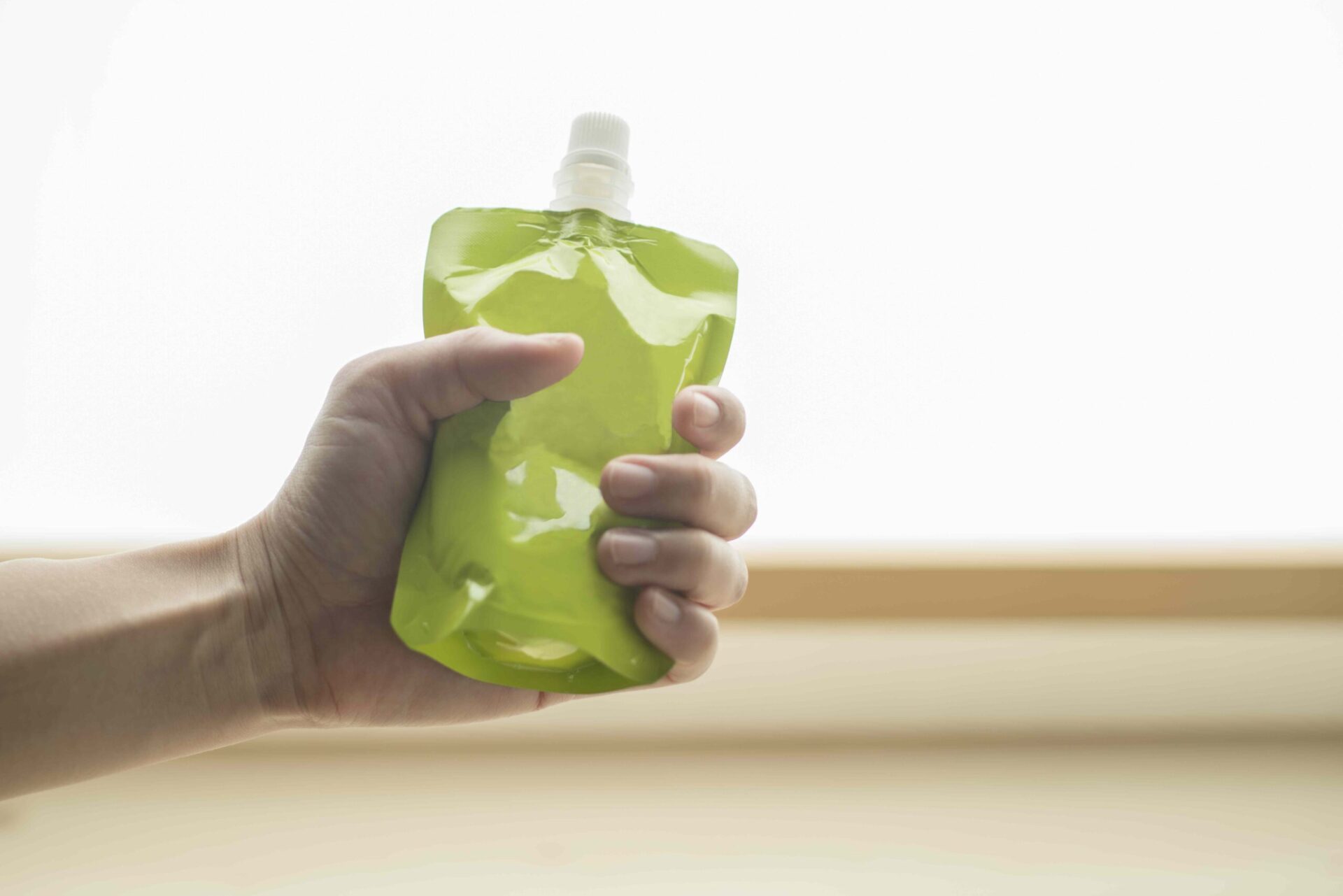
So-called “liquid salad” products—pouches or juices containing liquified fruits and vegetables—are having a moment, with a wave of options now aimed at busy people looking for a healthier option on the go. These blends join a growing lineup of powders, shakes, and bars that promise to provide key nutrients in a convenient package.
But is making a habit of consuming your nutrients in packaged or condensed form really a good idea? Experts say that while products like sippable “salads” can be better than nothing, they’re not quite the same as sitting down to a balanced, nutritious meal.
Here’s a closer look at the pros and cons of these packaged options.
What's on the Market?
Unlike many meal replacements of the past, which promised weight loss or appetite suppression, today’s options are often geared toward goals like better gut health, higher energy levels, or simply a more well-rounded diet.
The nutrition of these foods varies significantly depending on ingredients and portion sizes. Still, vitamins, minerals, and fiber are often the star nutrients.
Liquid+, for example, offers “Liquid Salad” pouches that list apple purée as its first ingredient, followed by a “liquid + fiber matrix” that includes acacia fiber, mushroom powder, chlorella powder, and stevia. A vitamin and mineral “boost” adds vitamin C, niacin, vitamin E, folate, and other micronutrients. The company recommends starting with a pouch a day and then gradually increasing "until you reach your personal fiber goals and comfort level," according to the website.
Meanwhile, the green powder Huel advertises packets containing 91 vitamins, minerals, and nutrients, claiming 146 health benefits. The packets include dozens of concentrated fruits and vegetables, adaptogens, botanicals, and probiotics.
What Experts Think of These Meal Alternatives
Dietitians say “liquid salads” and similar products can help fill a gap, but shouldn’t be considered a full-time replacement for whole fruits and vegetables. “Ideally, most of your intake should come from whole produce,” registered dietitian Brannon Blount, MS, RDN, told Health.
That’s because drinking your produce usually means getting less fiber, Blount said. Pouches, smoothies, and bars often exclude parts of fruits and vegetables—like skins and seeds—that contain the highest concentrations of fiber.
While some pouches, such as Liquid+, contain a sizable 8 grams of fiber, experts said many others fall short. Some provide only 1 to 2 grams per serving, noted Haley Bishoff, RDN, LD, a Las Vegas-based registered dietitian. (JAMBAR’s Jammin’ Jazzleberry bar, for example, contains 2 grams, while Huel’s greens powder supplies just 1 gram.)
This lack of fiber means you may miss out on the full digestive benefits of fruits and vegetables. It can also leave you feeling hungrier, since fiber helps promote feelings of fullness. The fact that salad pouches are liquids, not solids, is another drawback for satiety—research suggests that drinking calories doesn’t satisfy hunger as well as eating them.
Altering foods from their original form also disrupts the so-called “whole food matrix,” the complex physical and chemical structure that makes whole foods more than the sum of their parts. Although research is ongoing, some studies suggest that processing can affect how foods are digested and how their nutrients are absorbed. “Some vitamins and phytonutrients may also be reduced during processing,” Blount said. Vitamin C and B vitamins are especially susceptible to loss.
Packaging is another important consideration. Pouches, for example, are often made of plastic, which may increase exposure to microplastics, Bishoff said. Some research suggests that food pouches—particularly those made with polyethylene—are a significant source of microplastics. Higher levels of microplastics in the blood have been linked to increased risks of health issues like cancer, immune system damage, reproductive problems, and developmental delays. “Fruit and vegetable pouches represent only one source of microplastics among many, but limiting exposure is recommended,” Bishoff said.
The Upside of Pouches and Powders
That said, these meal replacement products are still better than not eating at all, Blount noted. “If the choice is between none at all or using these products, then yes—they can be a helpful bridge option in a pinch,” she said.
For certain groups, such as picky eaters, those who have trouble chewing or swallowing normal-textured food, or people with busy schedules that prevent them from eating, produce-based convenience products might be particularly useful, Bishoff added.
What To Look For
Pouches, packets, and bars aren’t as nutritious as a plate of leafy greens or a fruit salad. But Blount and Bishoff said it’s possible to use these products wisely.
For starters, check the ingredient list and nutrition facts label. “When buying these products, prioritize those with whole-food ingredients such as apples, kale, carrots, and bananas,” Bishoff said. “Products containing fruit concentrates, added sugars, or fillers are less desirable.”
Blount recommended focusing on options with plenty of fiber. Products that contain 3 to 5 grams of fiber are considered a good source, she said, while those with 6 grams and higher are an excellent source. In addition to choosing a higher-fiber option, pairing a meal replacement with a balanced meal or a source of protein can help boost feelings of fullness.
Just remember, Blount added, that these foods are best used as an occasional helper, not a permanent stand-in for whole produce. “Use them strategically,” she said, “not as your primary source of fruits and vegetables.”