

When Brianna Lawrence and her husband Devon found out they were expecting their first child, they were overjoyed, but they also knew it would force them to make a significant change: One of them will likely have to quit teaching and find a job with better benefits, so they can afford health care coverage for the family.
Brianna, 30, and Devon, 31, work at schools in Waseca – a city of about 9,000 in southern Minnesota. Brianna is a school counselor and Devon is the high school’s band director. When their family grows from two to three in June, they’ll be forced to move on to the substantially more expensive family health insurance plan.
“It's the kind of jump [in cost] that takes your breath away because you don't know how you're going to afford it,” Brianna Lawrence said.

Their premium for the new family coverage plan could nearly quadruple to $2,200 a month. Even the cheapest option, the high deductible plan, would more than double their premium costs, and it comes with high out-of-pocket expenses. With many pre-natal care visits, the Lawrences have already met their deductible just a few months into 2026, and now they’ll have to start over from scratch on the new plan in June. And this all comes just two years after a pregnancy loss that cost the couple nearly $11,000 in out of pocket expenses.
It’s forcing an unwelcome reckoning for the young family.
“Devon is so good at his job as a band director, and I love what I do as a school counselor,” Lawrence said. “I don't want to change. I don't want to leave this district. They've embraced us. They love us, and we love them. It would be heart wrenching to make that decision to leave, but it no longer is just us wanting to stay that's not enough. We have to see some changes happen for us to be able to stay.”
Health insurance costs have long been a problem for smaller, rural school districts because their smaller staff sizes give them less bargaining power in the marketplace. But, in recent years, school districts of all sizes are getting hit by huge health insurance price increases. MPR News reported last year that even Anoka-Hennepin Schools, the largest district in Minnesota, saw premiums go up 22 percent in 2025. Other districts saw even bigger spikes.
There’s a mix of reasons for the higher insurance costs, including inflation, an aging population with greater medical needs, and expensive new pharmaceuticals like GLP-1s. So educators are rallying around new legislation that could offer some relief. The proposed Educator Group Insurance Program, known as the EGIP bill, would create a statewide health coverage plan – one huge health insurance pool for all public school employees.
Eric Teders, The Lawrences’ coworker in Waseca Schools, said this is a long time coming. The junior high school math teacher and union president for the district said the majority of states in the U.S. already have statewide health plans for teachers.
“As good as Minnesota is in education, we are behind the eight ball on this,” Teders said.
He explained that because his district is so small, just a few serious accidents or illnesses in a year can significantly drive up premiums. He said it can also make some colleagues feel ostracized. Not only are they dealing with, often serious, health issues, they tell him that they feel guilty that their health care is increasing costs for their colleagues.
But, the new model proposed would fix that.
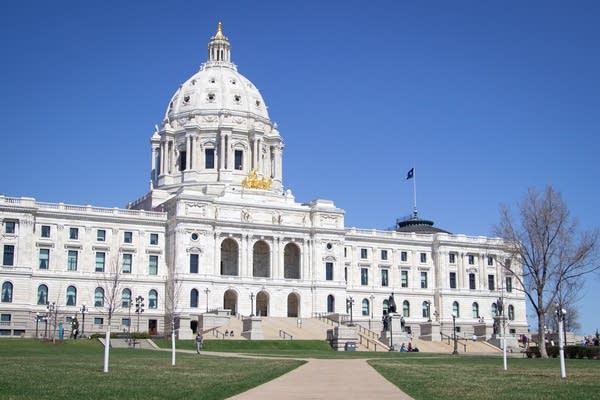
The plan is modeled off SEGIP – the state employee group insurance program that has covered legislators and state government workers for decades. Minnesota DFL Rep. Liz Reyer, lead author of the bill, explained that larger group health insurance plans tend to have significantly lower cost increases over time, because they have more negotiating power on behalf of thousands of employees across the state, and there’s more stability.
“When you have so many smaller to mid size groups, they're much more volatile,” Reyer explained. “Think about it: if you have a group of 20 people, and someone gets really sick or has an accident, that drives [insurance] upgrades for everybody. And it's very unpredictable. [But] when you combine everyone into a group of, say, 150,000 like EGIP would have, then you get stability, because now that just becomes a ripple, rather than something that changes the nature of the group.”
The bill, which has bipartisan support and 40 co-sponsors, is written to be “hold harmless,” meaning the new plan wouldn’t cost school districts any more than what they’re already paying. Instead, the state would be expected to supplement any gaps in coverage.
But Reyer said that some of her colleagues at the state capitol are apprehensive because of the uncertain cost to the state and where the money will come from. So this year, Reyer is also pushing for passage of a companion bill, which allows the state to gather data from all school districts, to get a more accurate read on the cost.
The hope is that the data bill will pass this year and then supporters can push for the new health plan next year, which is a budget year in the Minnesota legislature.
Rising health insurance costs aren’t isolated to the education field, but Reyer says they deserve extra attention.
“These are public employees,” Reyer said. “They're doing a lot for our community. They're supporting our society, and that we should be investing back in them.”
So far, most educators seem to support the bill. The statewide teachers union is running a massive campaign in support, which includes running large ads on its main website. Waseca’s Brianna Lawrence was among several school workers that testified in front of the legislature.
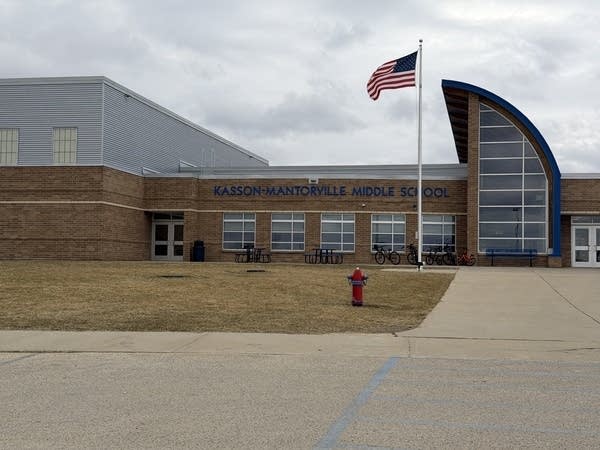
Another educator that testified is Aaron Wilke. He teaches middle school about 40 minutes west of Waseca in Kasson. Wilke said he’s hearing about colleagues – like Lawrence – that are considering leaving the profession, due to health insurance costs. Even his own son decided to halt his pursuit of a career in education and enter law enforcement because of the poor benefits offered.
Wilke, 51, says he’s passionate about the fact that the legislation will offer better coverage for all school workers – not just teachers. Many of whom have even worse coverage right now.
“If you're a secretary or a paraprofessional at Kasson-Manorville, right now, your premiums are likely going to be more than $2,000 a month instead of the $1,200 a month that our teachers see,” Wilke said. “This would have everybody with the same premiums and the same benefit – whether you're a superintendent, a custodian, a teacher, or a bus driver.”
Wilke said he testified before lawmakers because he wants to protect the future of his profession. He worries that Minnesota could lose out on a pool of very talented educators simply because they can't afford health insurance.
“I'm trying to look five, 10, 20, even 40 years down the road and advocate for EGIP so that we might be able to supply our demand for teachers in the many years to come,” Wilke said.