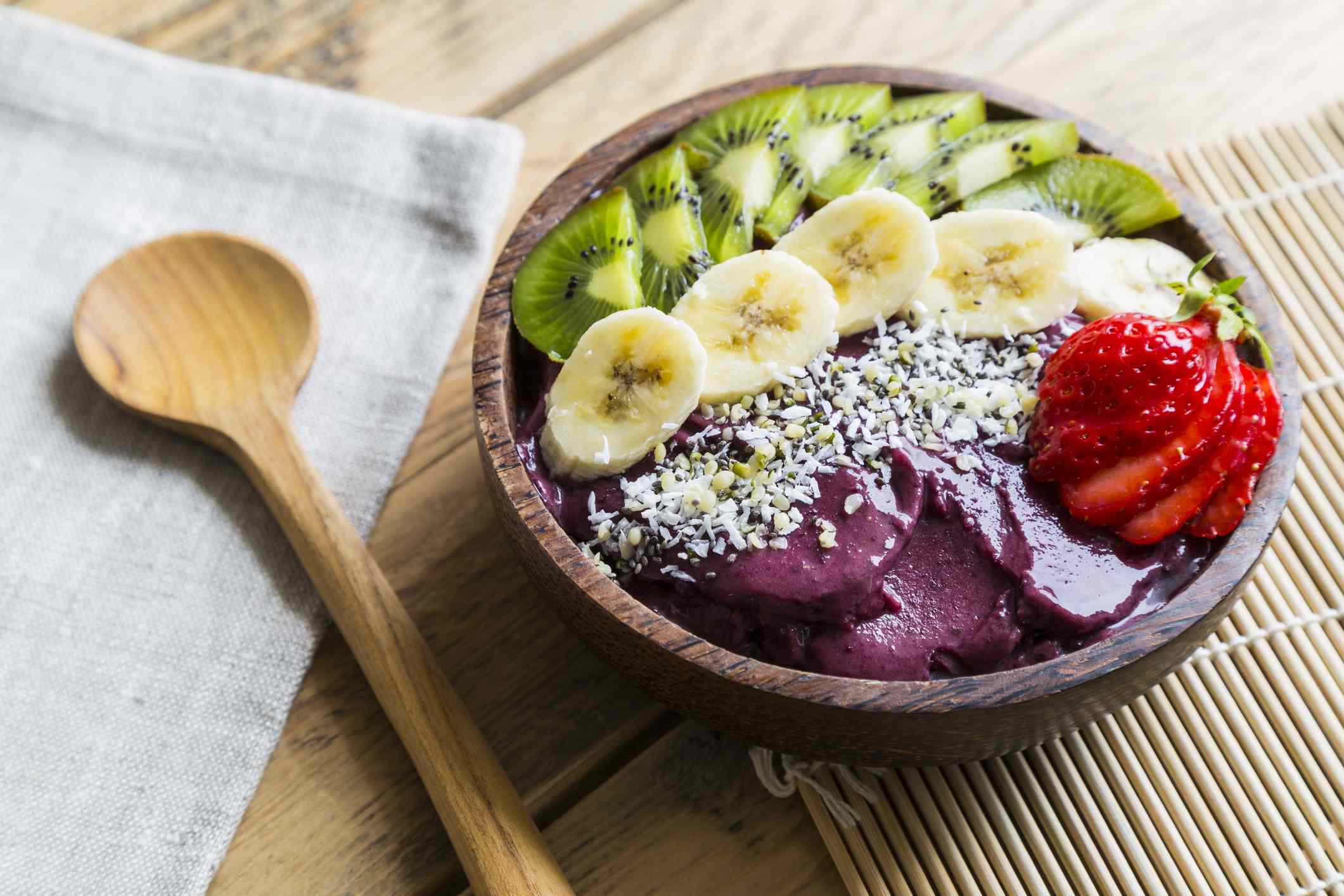
:max_bytes(150000):strip_icc():format(jpeg)/Health-GettyImages-678182500-3ed615ebd4024f60bd855473dd2283c8.jpg "A smoothie bowl topped with sliced banana kiwi a strawberry and seeds on a wooden table with a wooden spoon and cloth napkin nearby")
Credit: locknloadlabrador / Getty Images
- An açaí bowl is a thick smoothie made with açaí berry pulp and topped with ingredients such as granola, fruits, nuts, and seeds.
- Commercial varieties often come in larger serving sizes and can contain a lot of added sugar.
- You can make a more balanced açaí bowl by using lower-sugar fruits, less granola, more protein, and fiber sources.
Most people love açaí bowls as a fresh and sweet breakfast or a healthier dessert. However, açaí bowls can be calorie-dense and high in added sugar depending on the ingredients and serving size.
1. Building a Sugar-Loaded Smoothie Base
Açaí is a fruit native to Central and South America. It is naturally very low in sugar, with less than 1 gram per 100 grams of fruit, and it has a slightly bitter taste.
Traditionally, açaí berry is sweetened with a syrup called guarana. However, many people and cafes now use fruit juices, sweetened plant milks, sweetened yogurts, or high-sugar fruits like bananas in the mix.
2. Using Pre-Blended Mixes
Commercial açaí mixes may contain additives to increase scoopability and prevent icing. Read the ingredient list and look for a mix that contains only pure, unsweetened acai.
3. Adding Too Many Fruit Toppings
Fruits contain natural sugar in varying amounts. Some options, like berries, apples, peaches, and kiwi, have low to moderate sugar content. Others, such as mango, pineapple, banana, and dragon fruit, are much higher in sugar.
Many people cover their bowls with a large variety of fruits because it looks colorful and appealing. However, even small amounts add up quickly.
For example, 50 grams of pineapple provides 8 grams of sugar, and half a banana adds 9 grams more. So, combining just two higher-sugar fruits like these—even in half-servings—adds 17 grams of sugar to your bowl.
While fruits are not "added sugars," they can still cause a significant spike in blood sugar levels when eaten in large amounts.
4. Not Using a Protein Source
Protein slows down digestion and helps your blood sugar levels rise more gradually.
Most açaí bowls are made only of fruit, granola, and sweeteners. These ingredients can cause rapid rises in blood sugar.
Some açaí bowls include nuts and seeds as toppings, but these small amounts are often not enough to significantly increase the total protein content. Adding other ingredients with protein, fiber, or healthy fats can help stabilize blood sugar.
5. Adding Too Much Granola
Granola can be high in fiber and protein, but its nutrition can vary widely depending on its ingredients. Typically, granola is made mostly from oats, but it often contains added sugars and oils to make it crunchy.
Adding granola in small amounts is fine, but adding a lot can add up in calories and sugar.
6. Large Serving Sizes
Some commercial açaí bowls have very large serving sizes. One bowl may contain two to three servings’ worth of food. Make sure to check the label and portion out individual servings if needed.
How to Build a More Balanced Açaí Bowl
You can create a nutritionally balanced açaí bowl by following these simple tips:
- Use lower-sugar fruits: Açaí is naturally very low in sugar. If you can’t find fresh açaí berries, you can use frozen açaí purée with no added ingredients. Alternatively, you can blend other low-sugar fruits like raspberries, strawberries, and blackberries.
- Use no- or low-sugar liquids: You can use water, unsweetened plant milk, or coconut water instead of juice for a lower-sugar option.
- Add “hidden” vegetables: You can blend in frozen cauliflower to increase creaminess, or beets for sweetness and color. Zucchini and spinach are great options as well, since they don’t change the taste much. They increase fiber, which supports fullness and helps steady blood sugar levels.
- Add a protein source: You can add chia seeds, flaxseeds, cottage cheese, Greek yogurt, or protein powder to increase the protein content. Adding just ½ cup of low-fat yogurt will increase the protein content by about 10 grams, while adding 2 tablespoons of flaxseed provides about 5 grams of protein and 7 grams of fiber.
- Use nuts and seeds as toppings: Add nuts and seeds as toppings instead of fruit-heavy options. They provide more protein and fiber, both of which help with blood sugar.
- Switch to whole oats: You can use plain oats with no added sugar instead of granolas. If you want to use granola, read the nutrition facts label to choose options with less added sugars and oils.
- Read labels: Always read the nutrition facts label if you buy commercial açaí bowls. Opt for those with lower sugar, more protein and fiber, and fewer additives.





:max_bytes(150000):strip_icc():format(jpeg)/coffeevsenergydrink-738dcdca64dd44cf913c6acb21f2dc44.jpg "A cup of coffee and a metal can side by side with a VS icon in the middle")