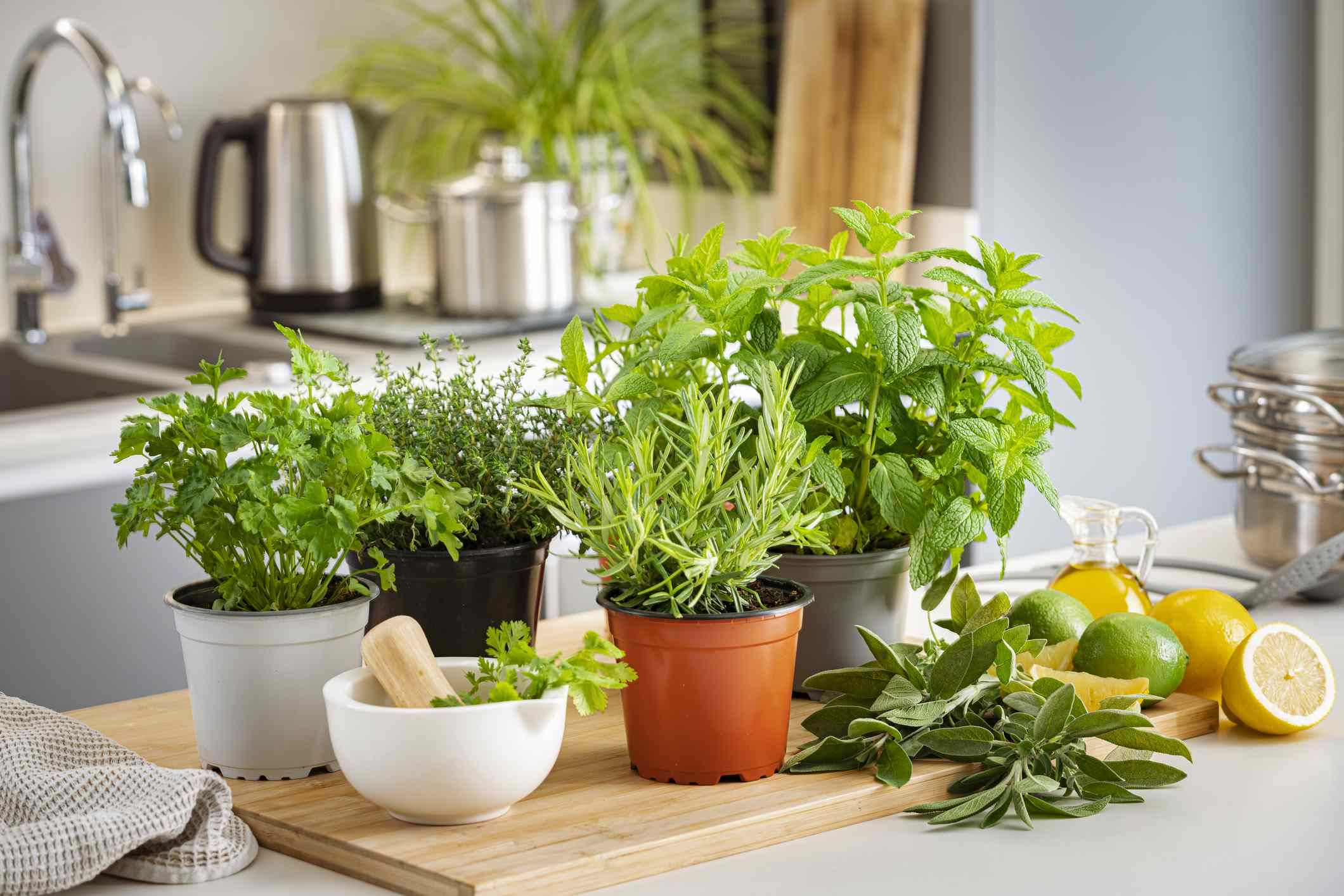
:max_bytes(150000):strip_icc():format(jpeg)/Health-GettyImages-1480755381-7781572f87e94e8aa3c428552c29d82f.jpg "Potted herbs and other kitchen items displayed on a countertop")
Credit: fcafotodigital / Getty Images
- Many herbs and spices are packed with vitamin C. Add them to your meals to increase your daily intake.
- Vitamin C supports collagen production, wound healing, bone health, the immune system, and help protect cells from damage.
- Use herbs and spices just before serving food because vitamin C is broken down by light and heat.
Most adults need about 75-90 milligrams of vitamin C per day. People who are breastfeeding, pregnant, or who smoke may need more. Adding vitamin C-rich herbs and spices to your food can help you meet your daily needs.
1. Dried Chives

Vitamin C content: 660 milligrams (mg) per 100 grams (g)
Chives are used both fresh and dried as a spice. They have a flavor that blends onion and garlic.
In addition to having a high vitamin C content, chives are packed with vitamin A, iron, magnesium, and potassium.
They pair well with potatoes, meat dishes, soups, and dairy-based dips and salad sauces.
2. Dried Coriander Leaf

Vitamin C content: 567 mg per 100 g
Coriander leaf, also called cilantro, has a citrusy flavor. It is high in vitamin C, potassium, and vitamin K.
Dried cilantro works well in soups and stews. The fresh leaves are best in salads, as a garnish before serving, or in salsa and guacamole.
3. Fresh Thyme

Vitamin C content: 160 mg per 100 g
Thyme has a strong aroma with a peppery and slightly minty taste. It can be used fresh or dried in cooking because it holds up well to heat.
Like many herbs, thyme contains antioxidant compounds and has antimicrobial properties. For this reason, thyme has traditionally been used to preserve foods, such as in pickling and meat curing, together with vinegar, salt, or oil.
4. Fresh Parsley

Vitamin C content: 133 mg per 100 g
Fresh parsley has a mild flavor that pairs well with most foods. You can use it in sandwiches, wraps, salads, stews, pasta, and vegetables, or make it into tabbouleh.
Parsley is also rich in vitamin K and vitamin A.
5. Fresh Dill Weed

Vitamin C content: 85 mg per 100 g
Fresh dill weed is a very aromatic herb with a savory-sweet taste. It is commonly used in pickles and preserved foods.
Sprinkle dill over your food after cooking, as heat destroys its flavor. You can use it in salads, soups, fish and seafood, and dairy-based sauces.
6. Saffron

Vitamin C content: 80.8 mg per 100 g
Saffron is one of the most valuable spices. It has a strong aroma and a slightly sweet, warm taste. It is used in rice dishes, sauces, and desserts in small amounts.
Studies suggest that saffron may benefit brain health by affecting serotonin levels in the brain. Some studies have shown that saffron can reduce depression scores and symptoms, but more research is needed.
Why Vitamin C Matters
Vitamin C plays several vital roles in the body, including:
- Prevents cell damage: The body fights against hazards like toxins, ultraviolet (UV) light, chemicals, and environmental pollution. As an antioxidant, vitamin C helps neutralize these hazards and protects cells from damage.
- Supports the immune system: Vitamin C helps produce and protect white blood cells that fight against infection.
- Supports collagen production: Collagen is crucial for skin and skeletal health. Vitamin C activates the enzymes that build strong collagen fibers.
- Helps iron absorption: Vitamin C increases iron absorption from plant-based food sources.
- Supports brain health: Vitamin C helps your body create neurotransmitters like dopamine. These act as messengers between brain cells, helping manage your mood and focus.
How to Use Herbs and Spices for Maximum Vitamin C
Vitamin C is fragile, so some of it breaks down during food prep and cooking. Here are ways to get more vitamin C from your herbs and spices:
- Don’t boil them: Vitamin C is water-soluble, so it leaks into boiling water. Opt for steaming if you prefer to cook vitamin C-rich foods. Steaming or microwaving results in higher vitamin C content than boiling or blanching.
- Keep them in the dark: Light breaks down vitamin C. Keep your spices and herbs in cabinets away from light, or use non-transparent containers.
- Keep away from heat: Heat breaks down vitamin C. Don’t place your herbs and spices near the stove, oven, or other heat sources.
- Don’t wash with baking soda: Acidity helps preserve vitamin C, while alkalies break it down. Baking soda is alkaline, so washing herbs in baking soda destroys vitamin C. You can soak them in vinegar instead.
- Buy and use it fresh: Vitamin C decays with storage. It is best to buy herbs and spices in small amounts so they are fresher and have more vitamin C.