

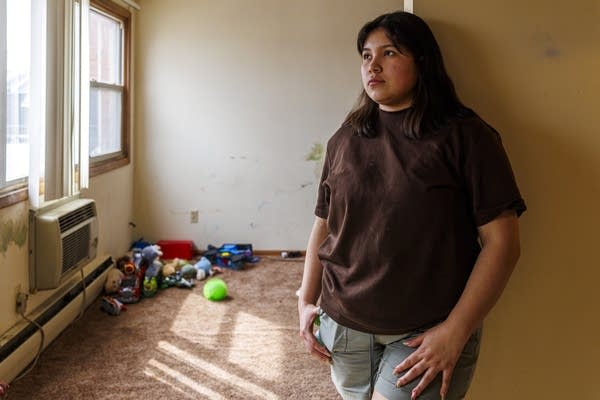
Alejandra is stirring a panful of lentils for her two young sons’ lunch. Her toddlers are napping in the bedroom of their small St. Paul apartment. There are crayon drawings on the wall and toys in the corner.
Alejandra, who was born in Colombia and asked to be identified by just her first name to avoid imperiling her immigration case, said through an interpreter that she and her two young sons spent much of this difficult winter alone in just these few rooms.
“There’s a lot of loneliness, you just have a routine, and you just have to follow it through,” she said. “You do it, and then you go to bed, and then you wake up and you do the same thing again. It really makes you anxious, gives you a lot of anguish and it makes you sad.”
Alejandra, 24, has been the boys’ sole caretaker since her husband Cristian was detained and later self-deported this winter. She doesn’t know how other single mothers make it work.
The most recent data shows that at least 3,700 immigrants were detained by federal agents in Minnesota during this winter’s “Operation Metro Surge.” Half have been deported, and most of the others are still in detention.
‘We were going to get through this’
Back in December, at the start of the surge, Alejandra said she and her husband were busy working at their cleaning business. They were wary of ICE, but had been in the United States for four years. They mostly tried not to worry.
”To be honest, we never thought it would happen to us. We thought we were going to get through this,” Alejandra said. “It’s like when someone dies, you don’t believe it’s happening, you know, but then you see that it’s happened.”
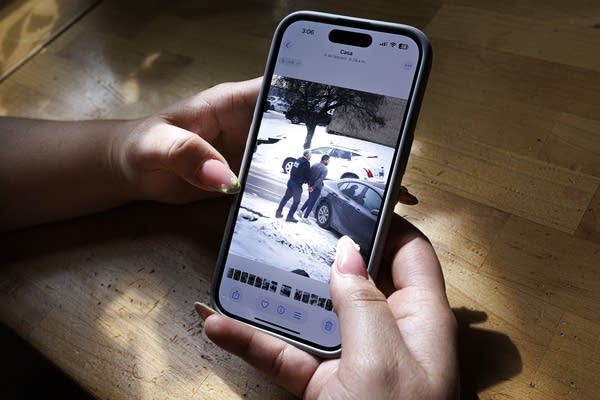
It happened to her family on the morning of Feb. 4. Her husband was going to a new job. Her kids were going to daycare. As the family left her apartment’s parking lot, ICE agents came upon them with flashing lights.
Alejandra and her youngest son scrambled to the front door and were let into the apartment building by a neighbor while Cristian was still in the car. She watched from her apartment window as her husband parked and ran up to the building. Her husband handed their eldest son off to a neighbor out front just as ICE agents grabbed him.
Through the window, Alejandra cursed out one of the agents, who was Latino. She said he laughed at her. She wanted to run outside and grab her husband, but knew it was futile. Alejandra and her sons could only watch as the agents handcuffed Cristian and led him away.
Cristian was taken to the Whipple Federal Building near the Minneapolis-St. Paul airport for two days. He was transferred to immigration detention centers in Texas, and then Louisiana.
Making ends meet has been stressful. Alejandra was left as the sole provider to her two kids. They spent a freezing Minnesota winter in her apartment. She couldn’t work because she was taking care of her sons, and she no longer had access to a car.
Alejandra is now afraid of certain types of trucks and big crowds, or even entering her apartment building through the back door. The threats seem ever present.
“It changes your life completely, and you just got to accept it and take it on,” she said. “There’s nothing else you can do, you’ve just got to go and your family's got to figure out what to do next.”
Alejandra and her family’s story is a common one for Minnesotans affected by this winter’s surge, which was announced in December and hit its peak in January.
Miguel Aviles co-leads La Vina Comunidad Cristiana church in Burnsville with his wife. They’ve long operated a food shelf. But this winter they realized big things were happening to immigrants, like Alejandra, in the Twin Cities. Church volunteers started delivering food to people who were running short on money or didn’t feel safe leaving their homes.

By January, Aviles said volunteers were doing about 900 home food deliveries per day. An average of about 160,000 pounds of food a week. Donations and volunteers were pouring in. He estimates they also helped immigrants with about $430,000 in rental assistance.
“There were there were moments when we felt like it was not enough, what we were doing, but I felt from God that he said, ”Help everyone you can, and I’m going to give you the support, I’m going to send you the money, and I’m going to send you the people to help you.’”
Numerous other mutual aid programs were doing similar work across the state.
But Aviles’ own congregation, which attends services in Spanish, was directly affected by the immigration surge. A Colombian mother was left to care for her three kids after her husband was arrested and is still being detained. A Mexican volunteer with a green card was detained for weeks after he was arrested delivering food to families with his teenaged boys.
“We receive calls, emails, text messages, messengers, WhatsApp messages all over the place,” Aviles said. “We’ve seen people crying out for help.”
Now, after the official end of the surge, and a drop in the number of statewide immigration arrests, Aviles said people ask him if things are better: “I say, ‘Yes, in a way. But the damage was already done.’”
‘Like a bomb going off’
The dire situation for some immigrant families in Minnesota isn’t unique. Since the surge, ICE arrests across the country have averaged about 1,000 a day.
The federal immigration detention system is notoriously opaque. People facing civil immigration violations must hire their own attorneys, further pinching the families’ pocketbooks as many also lost work.
It can be difficult for family members to track detainees as they’re moved through the system. Alejandra’s husband could only call infrequently in the beginning, sometimes not even being able to tell them before he was moved to another facility.
Scotty Ducharme is a friend of Alejandra’s family and an attorney who represents the couple in a lawsuit they are part of that alleges that a doctor committed fraud by falsifying medical evidence. He remembers going to Whipple Federal Building after Cristian’s arrest, only to be told that Cristian was no longer at the detention center, even though they later discovered that he was.
Ducharme said the courts haven’t shown much ability to actually protect people’s rights in the face of what he sees as blatant violations by federal officials.
“It feels like we’re living in a post-law era,” Ducharme said. “As a lawyer, it feels pretty futile.”
Ducharme is worried about Alejandra’s young boys, who are now sometimes afraid to go out on the street. Every time he sees her kids now, he brings them a tres leches cake. Sometimes the older boy tells his mother that “bad guys” took his dad.
“He’s going to live his entire life, probably in fear of police officers and in fear of America, and he will have this story told to him,” Ducharme said. “Then he will repeat the story, probably to his own children and grandchildren, and so it spreads like a contagion throughout the community.”
A lot of families across the country have lost either their main breadwinner or a caregiver for their children to immigration detentions, said Jennifer Ibanez Whitlock, a senior policy counsel at the National Immigration Law Center.
“The way I always describe it is that it’s like a bomb going off in that there’s the immediate impact, but then there's always sort of the lingering side effects on the folks that remain,” Whitlock said.

The federal government has been arguing in court that detainees should not have the right to post bonds and be released while their immigration cases play out. Whitlock said this sets up a situation where people, even if they have a credible immigration case, often have to choose between remaining in crowded and sometimes unsafe detention centers and voluntarily agreeing to be deported to their home country.
Alejandra and her husband entered the country with asylum claims. But he had a prior deportation order and decided it was better to voluntarily return to Colombia, rather than to try to fight his case in immigration court while stuck in detention. Federal authorities now deport about 30,000 people a month, including those who choose to self-deport, according to numbers obtained by the Deportation Data Project.
Alejandra wants to reunite her family in Colombia as soon as possible. But she was already struggling to cover living expenses, and airfare can be costly. She also worried about being picked up by immigration agents in the meantime and being separated from her children.
She’s applied for a federal program that will cover the cost of her return, but has been waiting on her youngest son’s passport, and for final approval. If that program doesn’t work out, she may have to send her kids home first and then return later herself due to cost.
Whitlock said this program, called CBP Home, can be challenging to navigate and doesn’t include any promises that families who apply won’t be detained or separated.
“It’s a program that has had a lot of administrative issues, but also at the heart of it was never about trying to help people leave,” Whitlock said. “It was more about threatening people with things like what we’ve discussed, the tension, separation from your loved ones.”
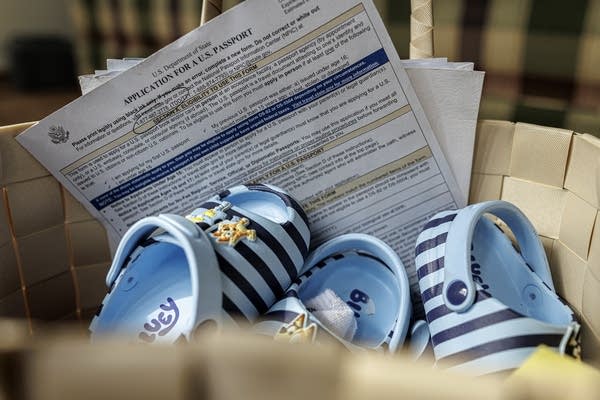
Alejandra is hoping she’ll get the OK to rejoin her husband any day now. He was really mad for a while, she said, “about life and God,” and that his kids had to see his arrest. But now the couple believes that everything happens for a reason: “We weren't born here, and our lives aren’t meant to be here, so we’ll just be heading home.”
Alejandra said it feels like people in the United States are more concerned about material items, and not as much about family or loved ones. She’s angry to have been treated as “less than human.”
“Families are getting separated, and they’re grabbing kids and families are needing to leave, and before that they’re hungry,” Alejandra said. “They’re persecuting people; they’re persecuting people who just came here to work.”






:max_bytes(150000):strip_icc():format(jpeg)/Health-Anchovies-vs-Sardines-abf78393ed254f7fb6103ad3b603bfd0.png "Comparison between canned anchovies and sardines, side by side.")