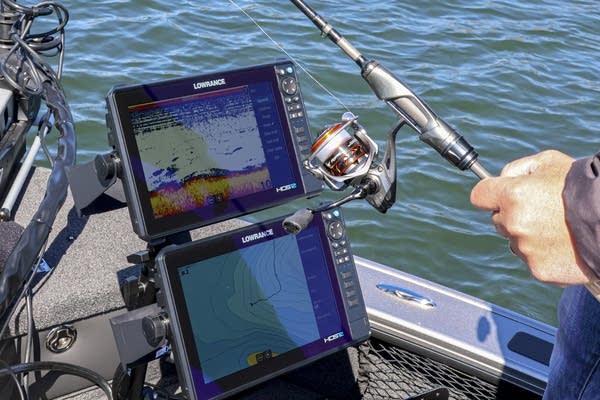
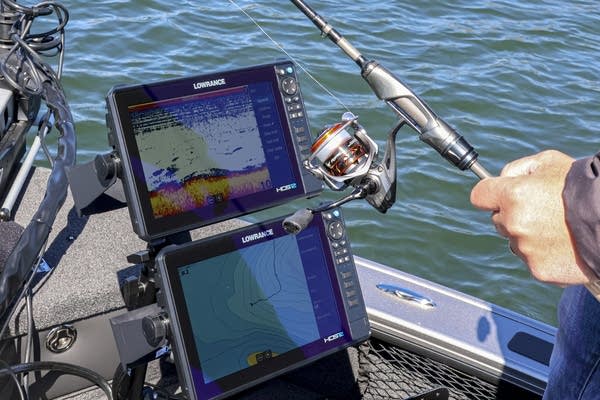
When anglers hit the lakes for Saturday’s fishing opener — a spring ritual in Minnesota — many will bring a high-tech tool that can reveal what’s happening beneath the water in real time.
Forward-facing or live imaging sonar allows anglers to spot fish, track their movement and even watch how they react to a lure. The technology’s rapid rise is transforming fishing and dividing anglers.
Critics say it crosses an ethical line, giving users a significant edge that violates the idea of fair chase. Some worry it makes anglers too efficient and could increase pressure on fish populations.
Others say it’s turning a relaxing outdoor pastime into something more like a competitive video game.
“It's a really polarizing subject,” said Jeff Sundin, a fishing guide from Grand Rapids. “There's people that are really for it, and there's a lot of people that are really against it.”
Supporters view forward-facing sonar as the latest evolution in an outdoor activity that has long embraced electronics, such as depth finders and GPS. They say it can broaden the appeal of fishing to younger generations.
"It's making fishing more fun,” said Tony Roach, a fishing guide in the Brainerd area. “It's bringing people into the fishing world that probably wouldn't do it without the electronics, especially with kids.”
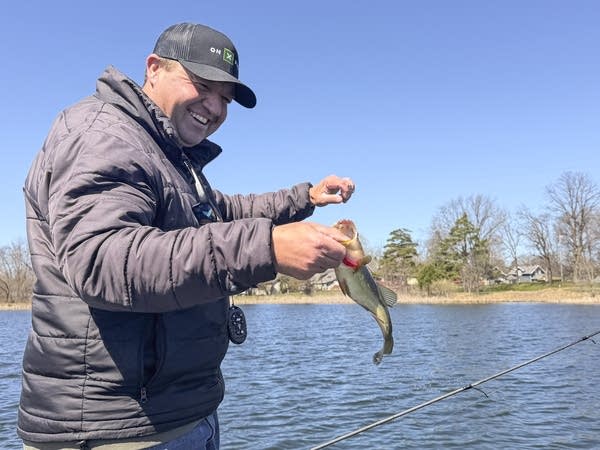
Eyes in the water
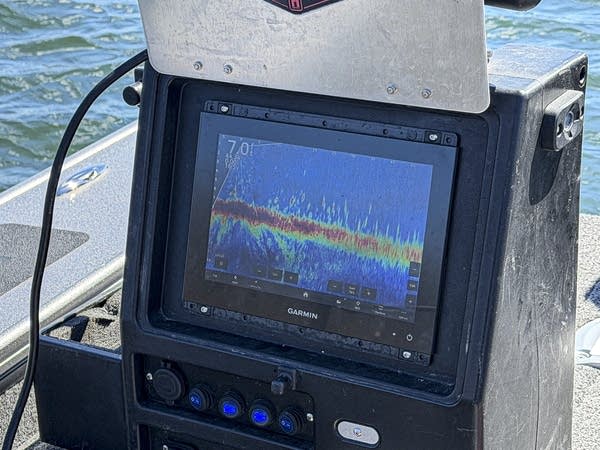
On a chilly spring day on Serpent Lake in Crosby, Roach stood at the bow of his boat, watching fish appear as bright shapes on his sonar screen.
The system uses high-frequency sound waves — like an underwater flashlight — to create live images.
Spotting a school of crappies near some weeds, Roach shut off the motor, and he and his partners began casting their lines. Within minutes, they were reeling in crappies and bluegills.
In the past, Roach said anglers would cast blindly and wait for a bite. Now, they can know with absolute certainty where the fish are, then target them directly.
“You can watch a fish come up and hit your bait,” he said. “It's really cool.”
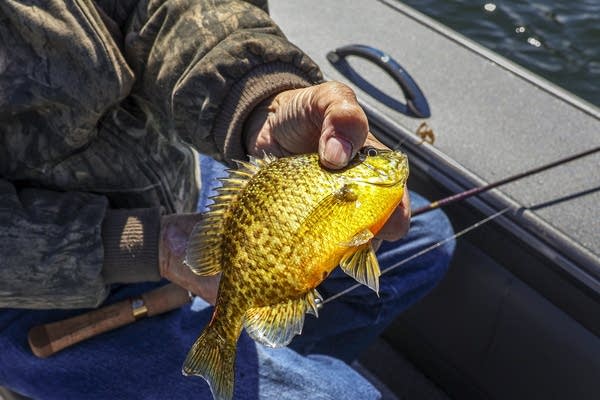
But not everyone is thrilled about how forward-facing sonar is changing the experience of fishing.
Sundin doesn’t use the technology. He said it takes away from other aspects of angling, such as enjoying the scenery and conversation, and puts the focus solely on catching fish.
“It’s not about relaxation anymore,” Sundin said. “It's just, ‘Go, go, go. Let's get this fish.’ Kind of turning fishing into some sort of a sporting event, like a hockey game or a football game.”
Still, Sundin said he’s not sure how long he can hold out, as more customers expect it.
“It’s becoming such a day-to-day staple item for so many of the other guides that there will be a time where it will negatively impact my business if I don't have it,” he said.
Too much success?
Some anglers worry that forward-facing sonar could increase catch rates enough to harm certain species.
Aaron Meyer of the Minnesota Muskie and Pike Alliance is concerned about muskies, which are relatively rare and slow to reproduce.
"I think a lot of people have seen the power of the technology, and a lot of people are very concerned,” Meyer said.
Part of muskies’ allure is they are challenging to hunt and catch. But Meyer said forward-facing sonar makes it much easier. Some anglers swivel their sonar or use multiple units to scan a wide swath around their boat for fish.
"You are using a piece of electronic equipment to see where you otherwise could not see,” Meyer said. “And when you find the creature you're looking for, now you can very accurately target that exact creature.”

More anglers are releasing the fish they catch. Still, there’s concern that repeated captures of any species could increase the likelihood that the fish won’t survive, especially if it’s pulled from deep water. The rapid shift in pressure can cause a condition called barotrauma, which can be fatal.
Surveys suggest the technology is already widespread. Last fall on Gull Lake near Brainerd, three-fourths of anglers targeting walleye reported using forward-facing sonar. Those using it caught more fish.
The Brainerd-based nonprofit Walleye Alliance helped fund the survey, along with others on South Long and Edward lakes.
Adam Mord, the group’s president, said they wanted to know whether sonar was improving catch rates, and whether anglers’ success improved as they gained more experience with it. The survey data confirmed it, he said.
“You're seeing people with this technology for four and five years are way more advanced than the users that just got it a year or two ago,” Mord said.
The Walleye Alliance hasn’t taken a formal position on forward-facing sonar, Mord said. But he thinks more data and discussion are needed.
“We need to respect different viewpoints, but also be willing to talk about this as a state, because it affects all of us,” he said.
A growing trend
That conversation has been happening among members of a technology working group the Minnesota Department of Natural Resources created two years ago.
Forward-facing sonar is the latest advancement in angling tools that have been improving for years, from better trolling motors to comfortable ice houses on wheels, said Marc Bacigalupi, DNR fisheries manager for northwest Minnesota.
The DNR recently sent a mail survey asking anglers what technologies they use and their opinions on forward-facing sonar. The agency also is conducting angler surveys across the state to gather more data, Bacigalupi said.
At Ben's Marine Motorsports in Merrifield, north of Brainerd, owner Ben Nestrud said installing sonar systems makes up the majority of his business. He said it helps both serious and weekend anglers become more efficient, though skill still matters.
"It gets people on the spot faster,” he said. “But if you don't know how to angle or catch a fish, you're not going to catch that fish."
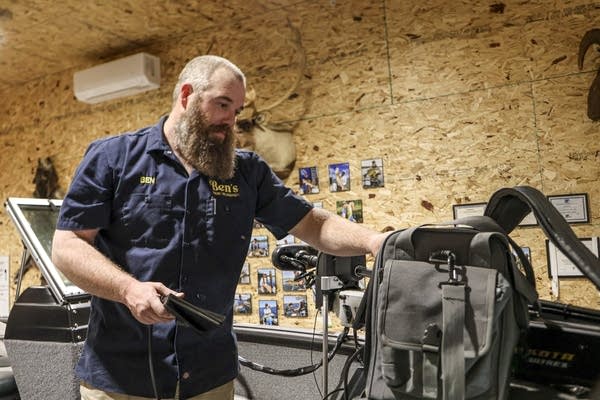
Cost can be a barrier, Nestrud said. A system can run from a few thousand to tens of thousands of dollars.
"It's now becoming more of a country club sport, where it used to be fishing was for everybody,” he said. “That dichotomy is kind of driving the polarization that we're seeing."
Some worry that the cost of live imaging technology will worsen inequality between anglers who can afford it and those who can’t.
Bacigalupi said the disparity has always existed, but forward-facing sonar has “made it more vivid for people.”
“There's always been people with the nicer, expensive boat and more time to use it,” he said.
Are limits needed?
Some conservation groups are pushing for restrictions on the technology for certain lakes or species. Others think that the DNR should limit how many sonar units anglers can use at one time.
Meyer said most anglers know unethical behavior when they see it, but it’s difficult to define and enforce.
His organization supports a bill at the Legislature that would prohibit anglers from using forward-facing sonar on lakes with native muskie populations.
“We understand that a bunch of people already own it, and we're not trying to take it away or make them not be able to have it or use it,” Meyer said. “But we want to protect the resource.”
The DNR is not currently considering adopting regulations on forward-facing sonar, Bacigalupi said, but could do so in the future if they’re warranted.
Since the technology seems to be helping avid anglers catch more fish, the DNR hopes to create an informational campaign about how to ensure that the fish they catch and release will survive, Bacigalupi said.
The Walleye Alliance’s Mord agrees that starting with education and anglers’ commitment to fair play is a good approach.
“I think if we don't do a good job as an angling community of understanding how much damage we can do as humans with this technology, then there may potentially have to be some regulations to protect us from damaging the resource,” he said.






:max_bytes(150000):strip_icc():format(jpeg)/Health-Anchovies-vs-Sardines-abf78393ed254f7fb6103ad3b603bfd0.png "Comparison between canned anchovies and sardines, side by side.")