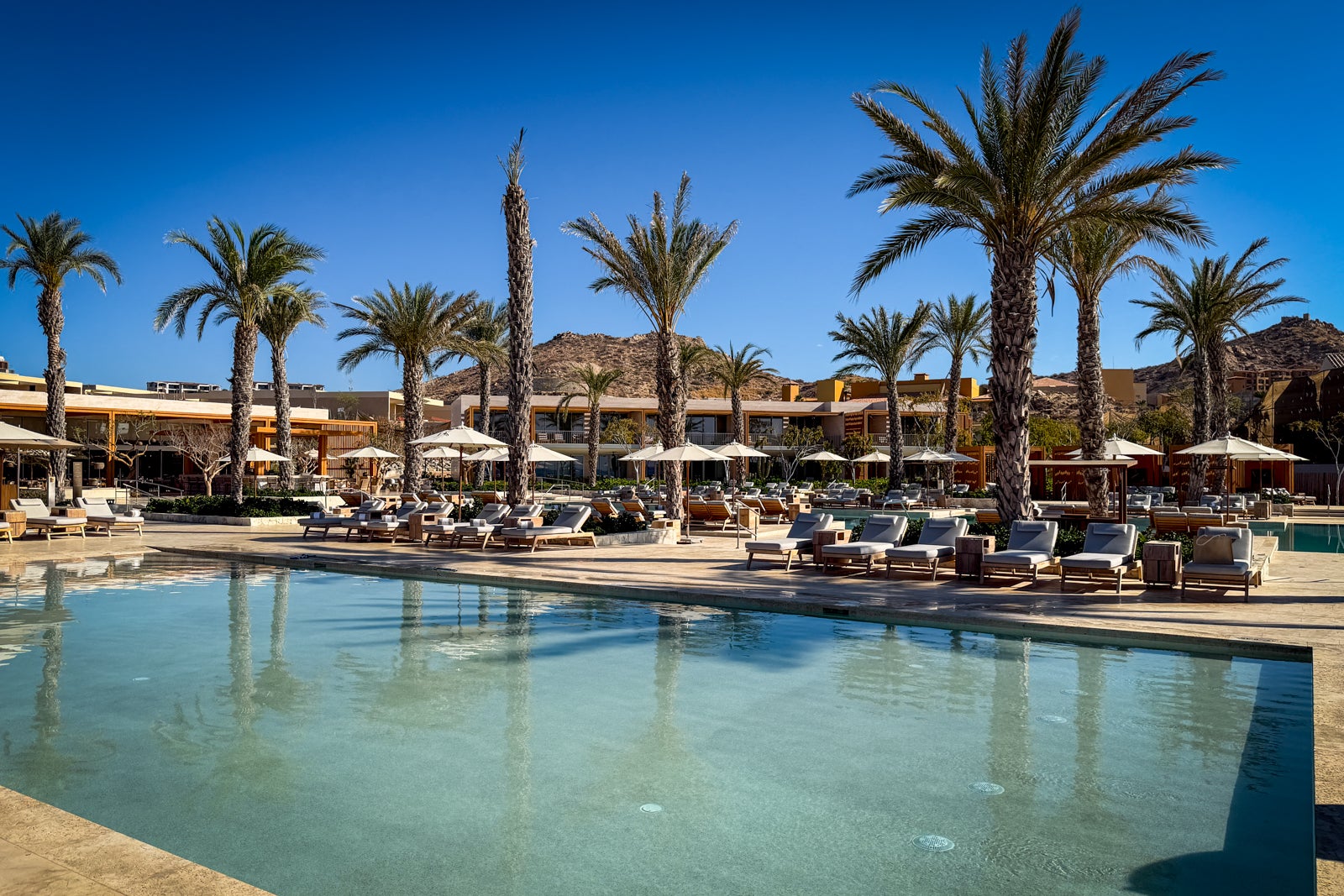

Park Hyatt has a devoted fanbase around the world, including many staffers here at TPG. But the beloved brand has been noticeably absent in Mexico — until now.
The Park Hyatt Cabo Del Sol officially opened its doors in December, joining an upscale Cabo Del Sol development that already includes resorts like the Four Seasons Resort Cabo Del Sol. Since then, it’s been wrapping up construction on a few last buildings and soft-launching some of its key amenities and dining concepts.
It’s an enticing new option in Cabo for award travelers eager to use their points on a luxury vacation, especially since, in terms of vibes and aesthetic, it shares little in common with Hyatt’s previous top luxury offering, the rowdier and edgier The Cape, A Thompson Hotel.
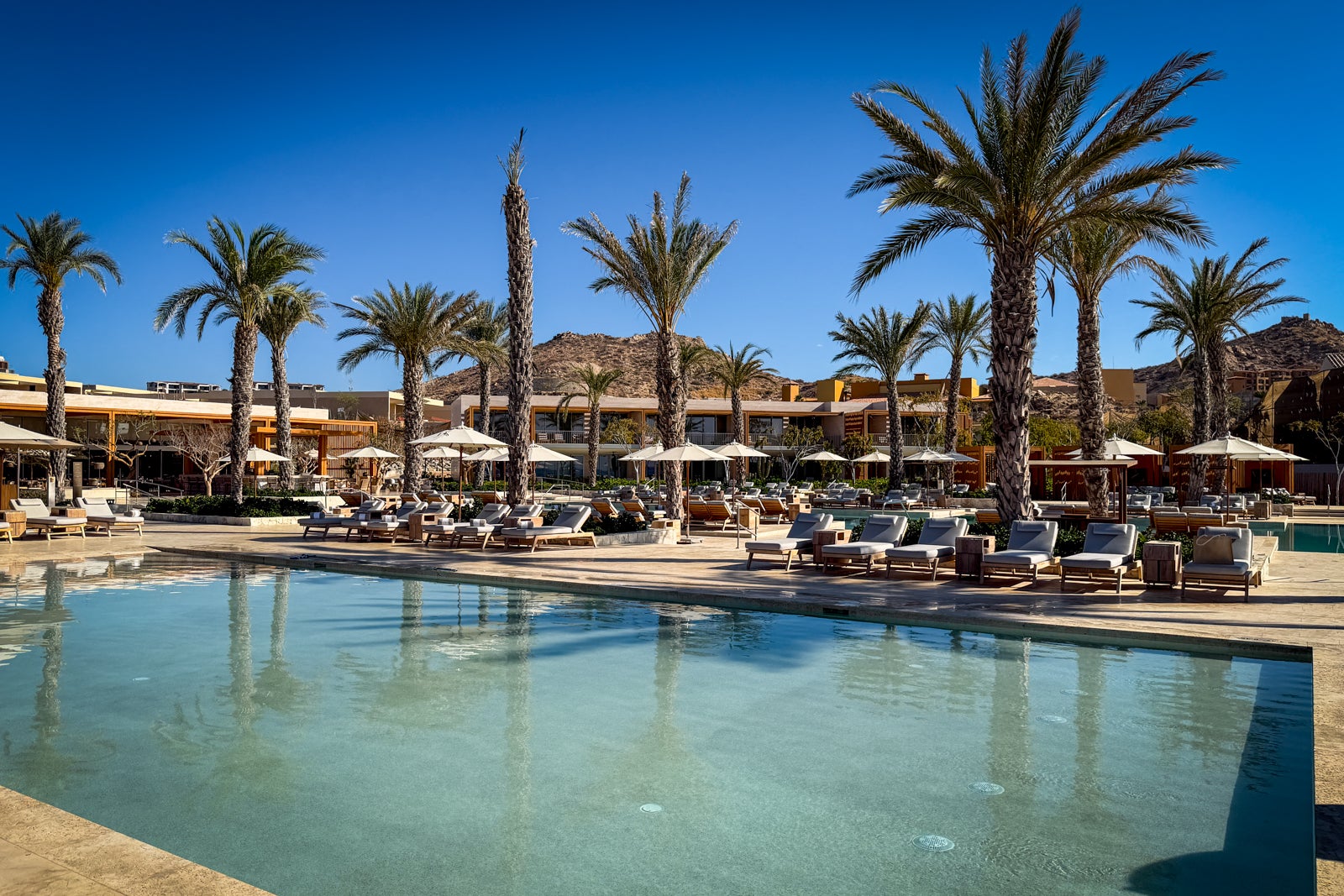
Given its place on our list of the most exciting hotel openings of 2025, I’d been waiting patiently to see it for myself, and with most of the property’s ducks now in a row, this felt like the perfect time to pay it a visit. Here’s what my experience was like.
First impressions
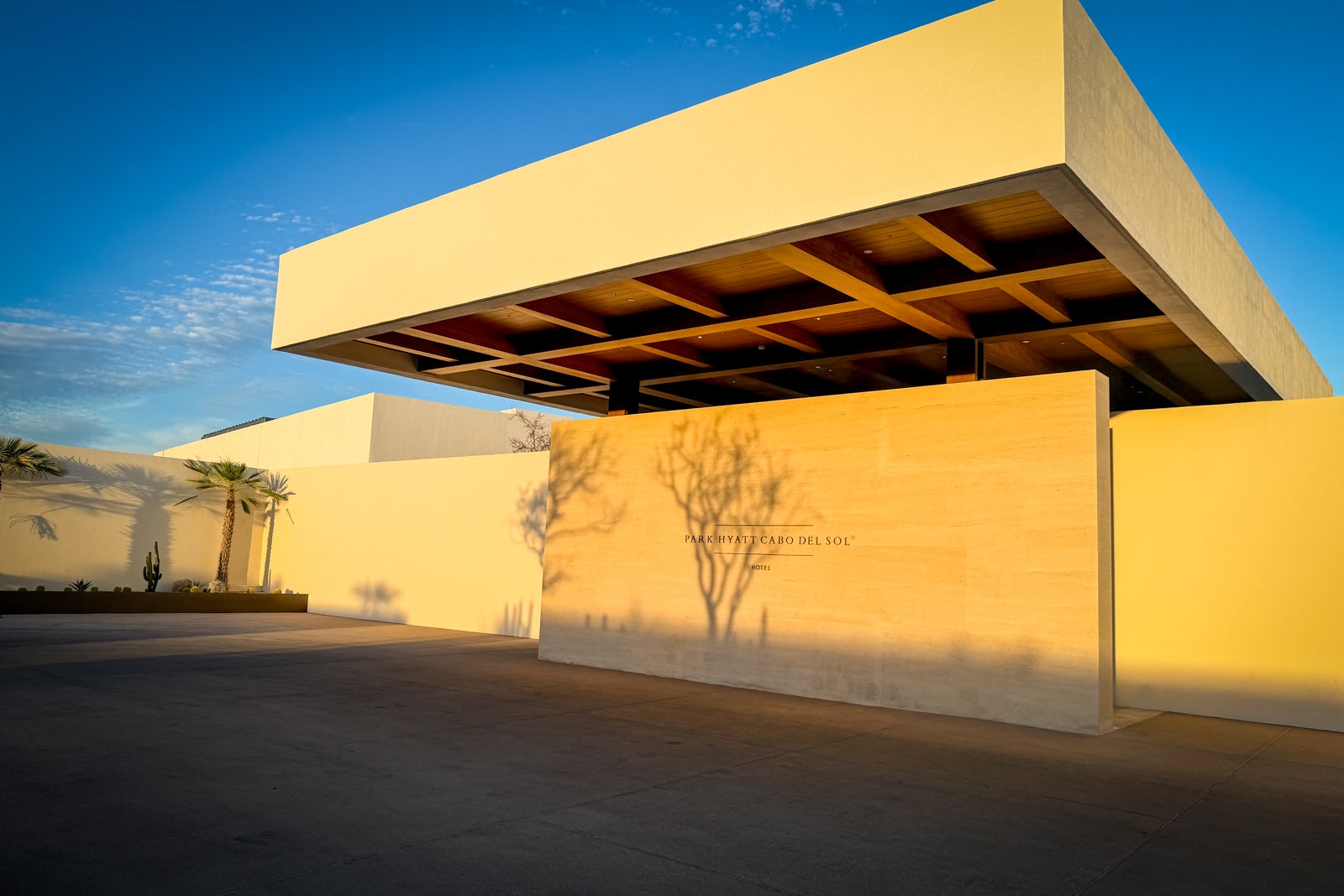
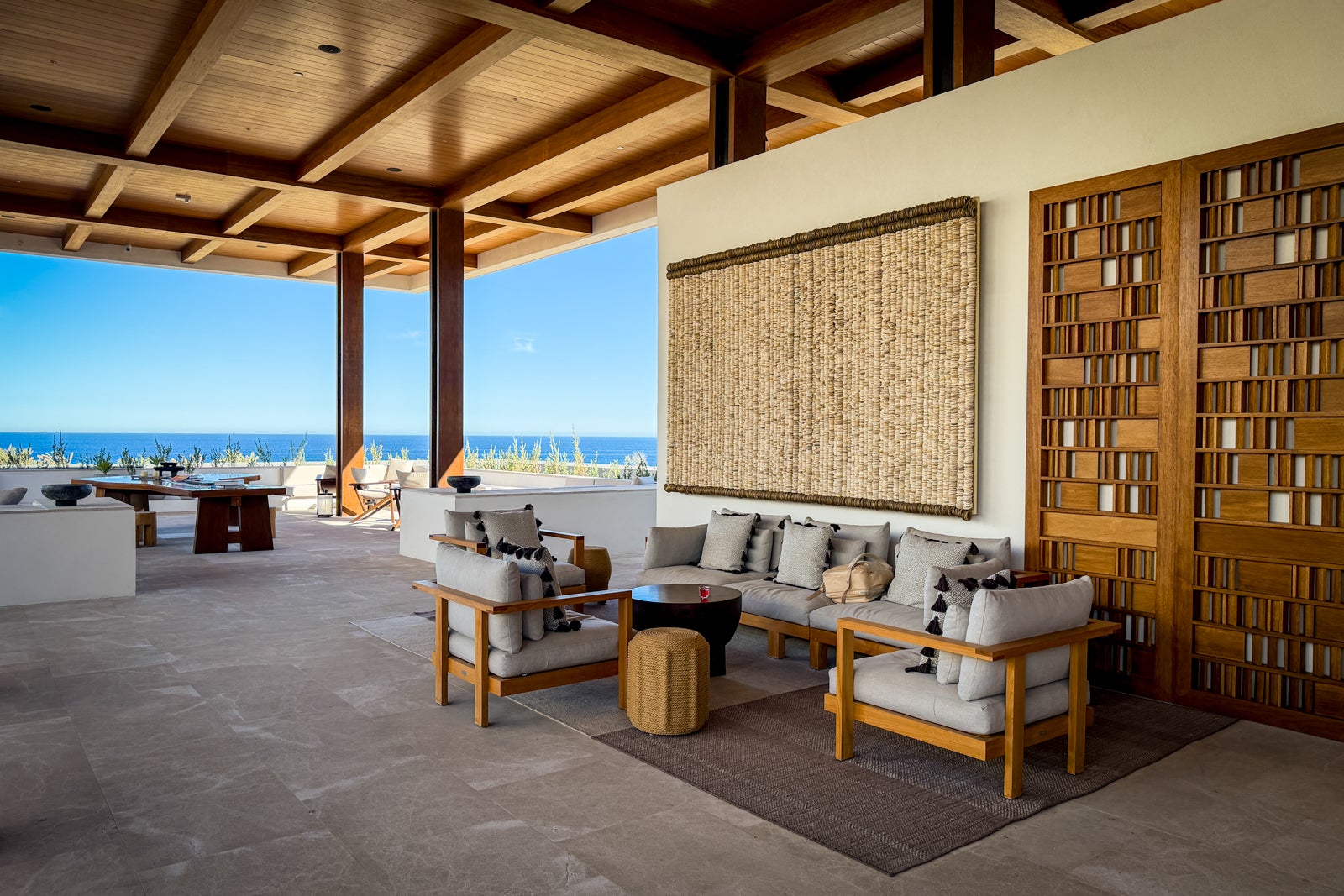
From the moment you pull up to the resort’s modern, whitewashed exterior, you know you’re going to get something special from a design perspective. Boxy architecture and straight lines contrasted beautifully with a laid-back interior design style rooted in organic materials, woven textures and fibrous art pieces, like the lobby’s striking raw yarn chandelier from Mexican design studio Caralarga.
1 of 2
CARLY HELFAND/THE POINTS GUY
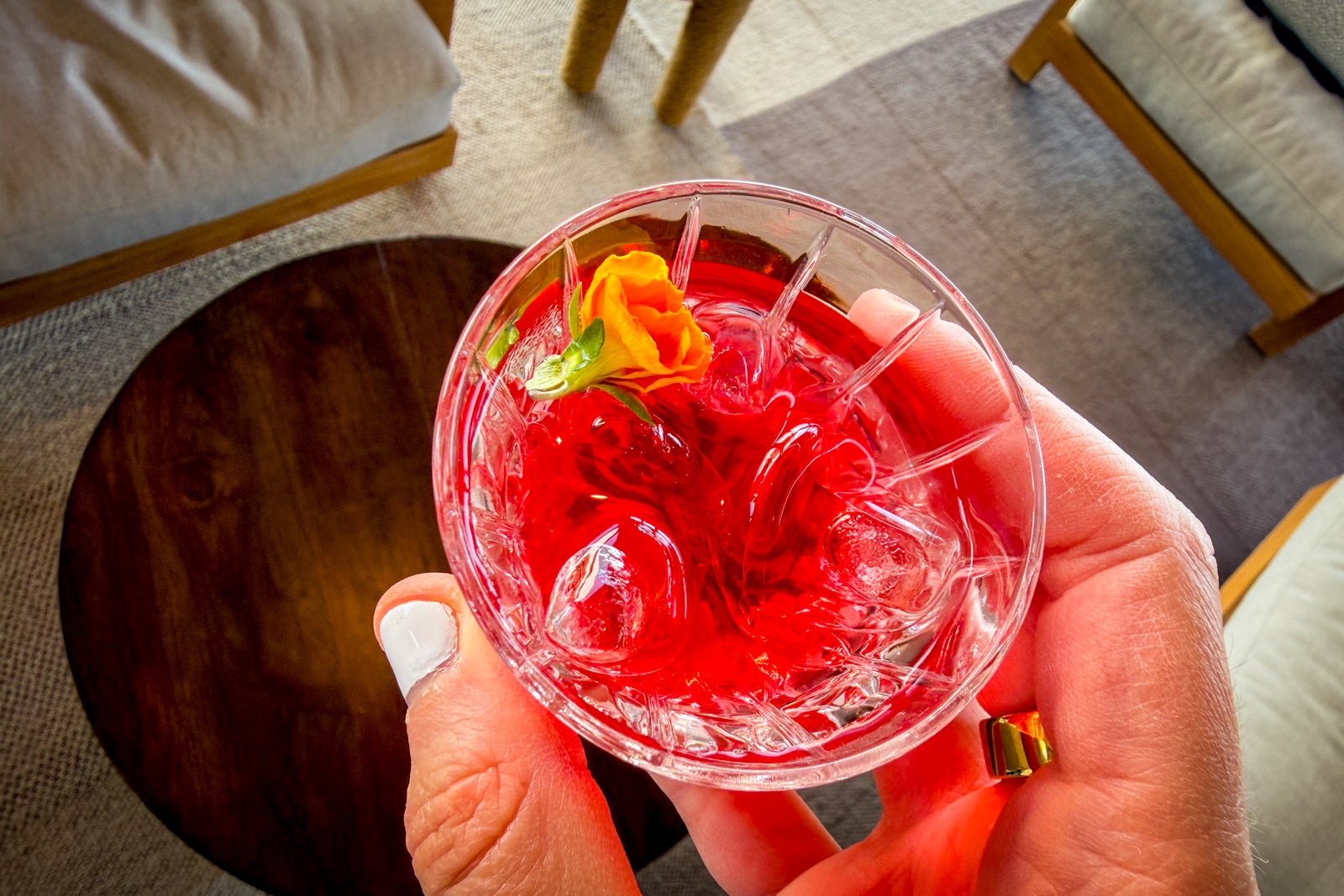
The staff at the Park Hyatt likes to say that on the property, the ocean finds you. Upon walking into the open-air lobby, you’re greeted with views of the sparkling Pacific that pop against the resort’s neutral palette. This is where the check-in process happens, which I completed while sipping a welcome drink of hibiscus, raspberry and a touch of citron.
This is also where I met my personal concierge, Tiffany, who took me on a quick property tour before showing me my room. Although we went by golf cart, we could easily have walked; the resort feels compact and particularly easy to navigate, which I appreciated as a solo traveler prone to accidental wandering.
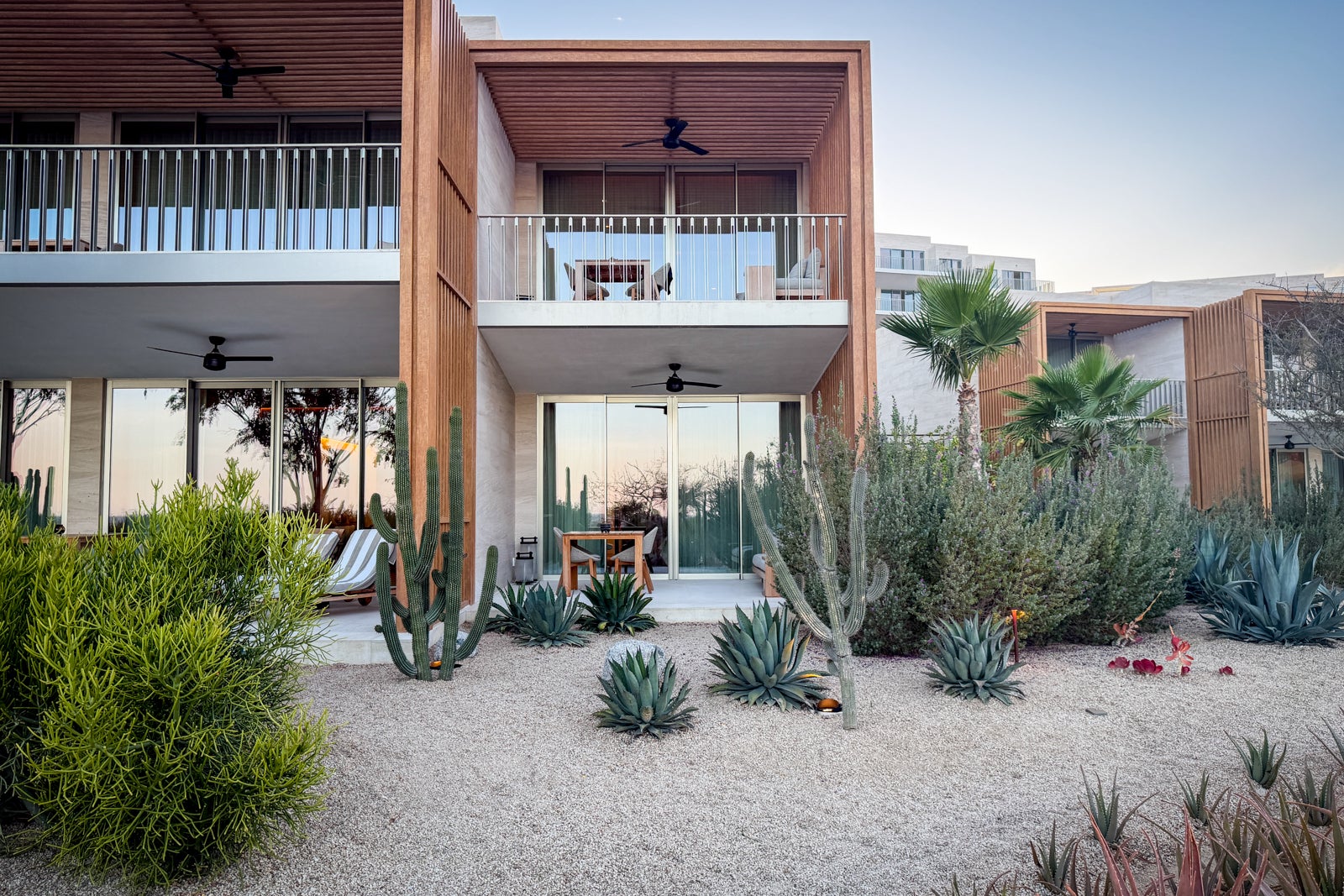
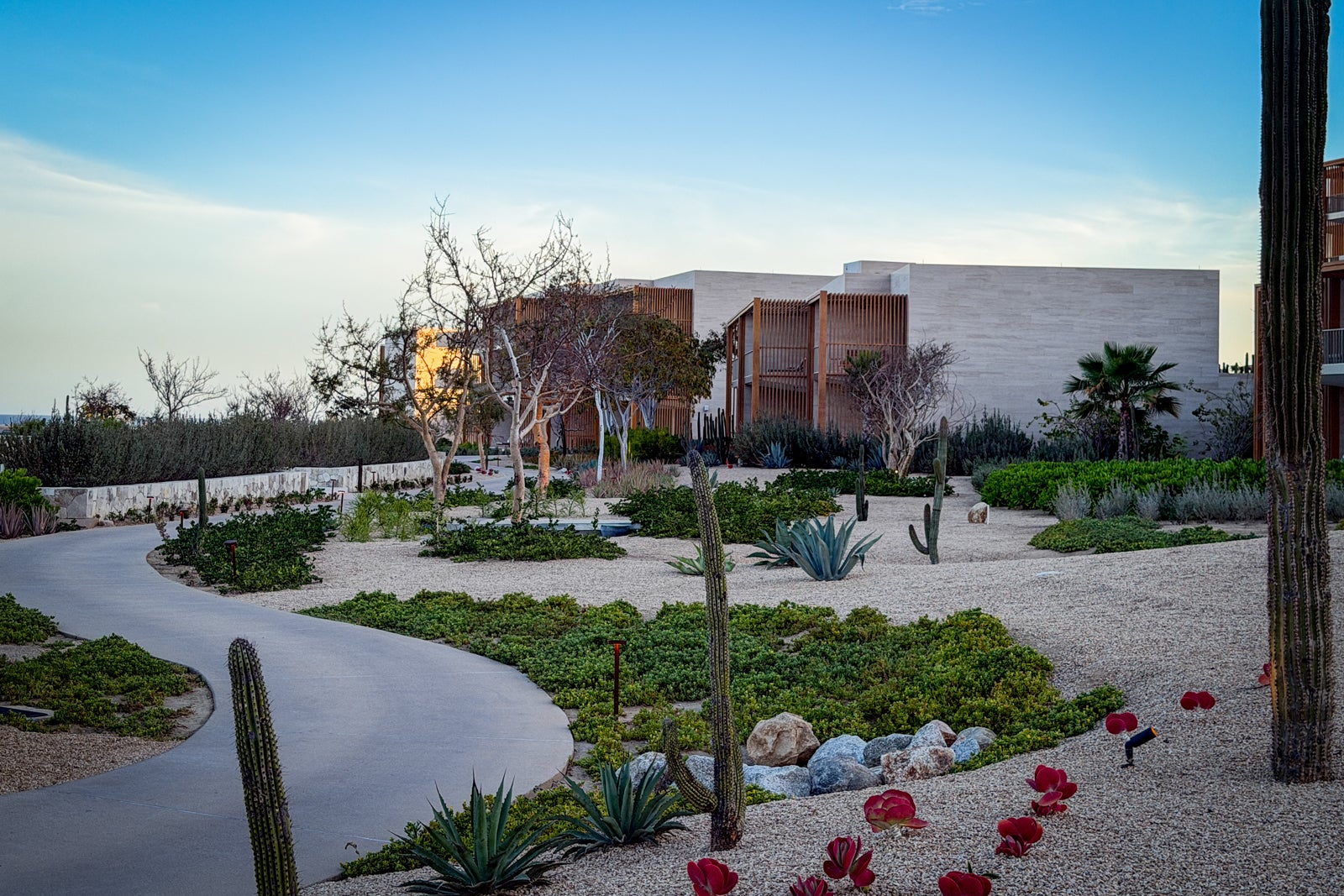
The ocean views followed us no matter where we went on the property, and the resort’s white walls became a canvas for cactus-shaped shadows as the sun sank lower in the sky.
1 of 2
CARLY HELFAND/THE POINTS GUY
The rooms
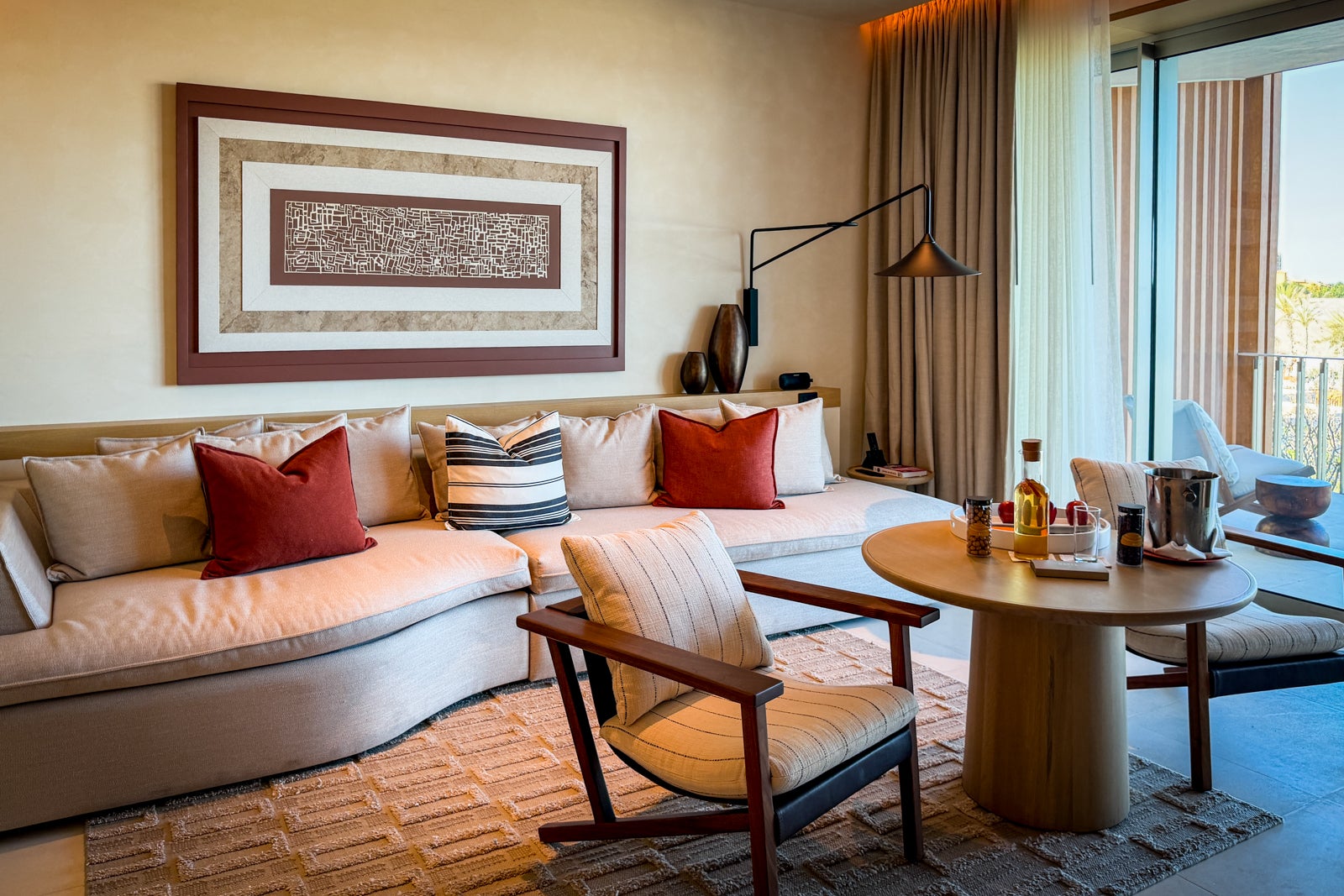
The Park Hyatt, once construction is complete, will house 163 design-forward, luxury guest rooms, more than half of which are suites. Even the non-suite rooms are large, with base-level rooms starting at 649 square feet.

Reward your inbox with the TPG Daily newsletter
Join over 700,000 readers for breaking news, in-depth guides and exclusive deals from TPG’s experts
Design-wise, rooms are contemporary and understated, meant to blend in seamlessly with the surrounding landscape rather than compete with it. I loved the light and airy aesthetic, which made the room feel more serene.
I stayed in an expansive Deluxe Suite Ocean View, and my first thought upon entering (well, second thought — my first was excitement to see house-made chocolate truffles in the welcome display) was how great the setup would be for families with young kids. The suite opened into a massive living room with its own powder room that could close off from the bedroom — the perfect place to put a crib for parents who want to enjoy leisure time after their child goes to sleep.
The living room featured a minibar with complimentary drinks and snacks that my personal concierge offered to customize on request. Options included artisanal potato chips, energy bars and mini churros. You could also order premium alcoholic beverages for a charge, such as bottles of wine ($122 to $209) or craft beer ($14).
Both the living room and bedroom had access to what was arguably the room’s best feature: A huge patio overlooking the resort and ocean with loungers, a small table and chairs I used for dining and work and a separate chair and side table for relaxing. A fan above kept things cool and could be controlled by a panel in the bedroom. Many of the resort’s room types feature terraces or patios, some of which are outfitted with plunge pools.
1 of 3
CARLY HELFAND/THE POINTS GUY
The bedroom was bright and minimal, and it connected to a gigantic bathroom with a large soaking tub, a glass-enclosed rainfall shower, a separate water closet and a wood-paneled walk-in closet.
1 of 4
CARLY HELFAND/THE POINTS GUY
The bathroom was equipped with everything you could need, from bug repellent to bath salts.
Dining at Park Hyatt Cabo Del Sol
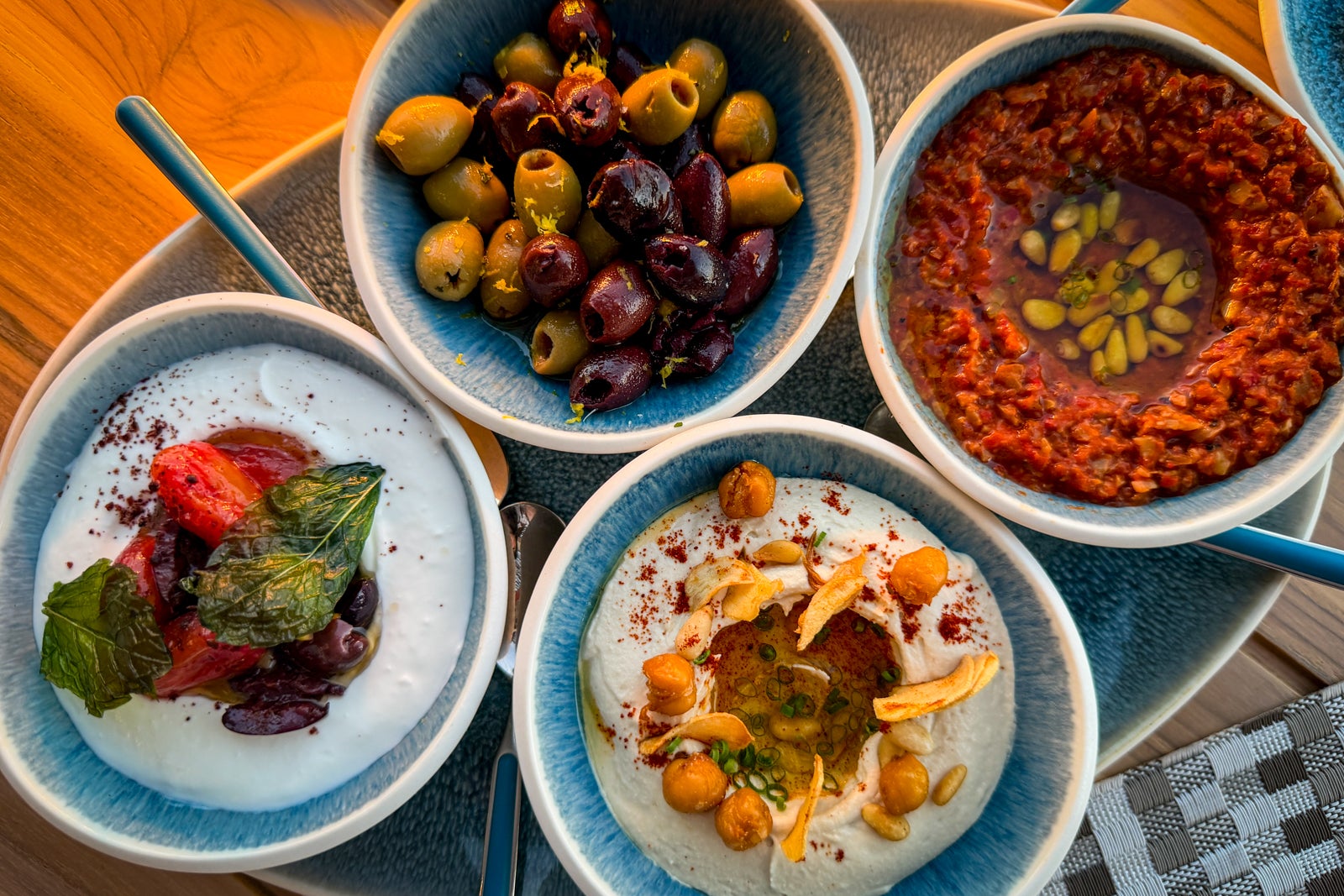
Dining is an area where the Park Hyatt really shines — so much so that even after a three-night stay, I could have happily continued eating exclusively on property, which is not something I often say about resort food. Servers were also exceptionally attentive to dietary restrictions; they knew I was vegetarian before I arrived and even brought me off-menu desserts to accommodate my aversion to eggs.
As you’ll find at most luxury resorts, food is on the expensive side. But swallowing resort prices is much easier when the quality is there, and at the Park Hyatt, it is.
Mesa Madre
Translating to “mother’s table,” this all-day Mexican restaurant is meant to be a welcoming space for guests to gather and sample a diverse array of local dishes, many of which are prepared on a traditional comal — a smooth, round griddle found throughout Latin American kitchens. I absolutely loved the heirloom tomato aguachile ($33) and poblano pepper stuffed with squash blossoms and corn ($36), as well as the Yaqui cocktail ($22), a play on a negroni with coffee-infused bacanora, vermouth, strawberry-infused Campari and chocolate bitters.
1 of 4
CARLY HELFAND/THE POINTS GUY
Silán
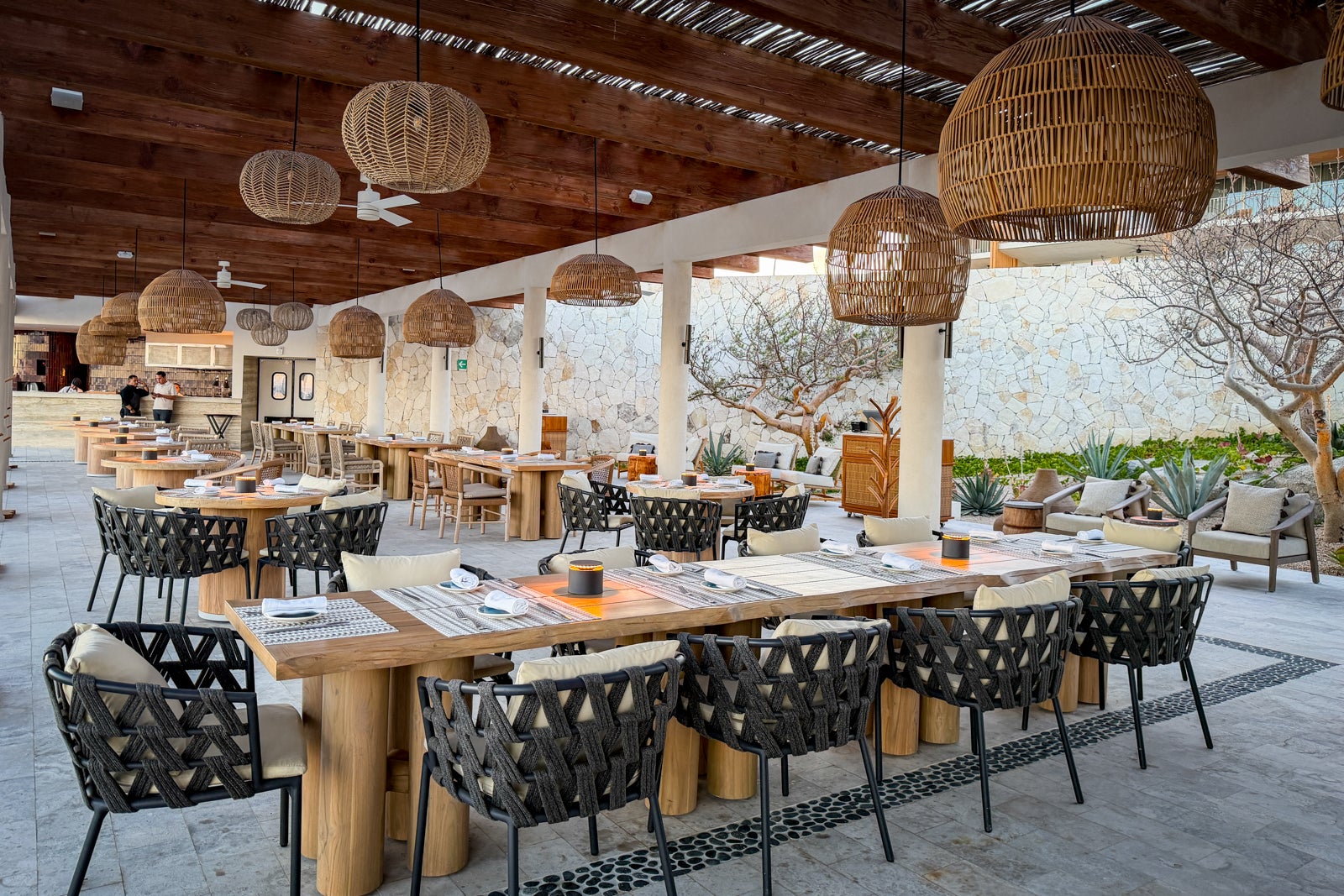
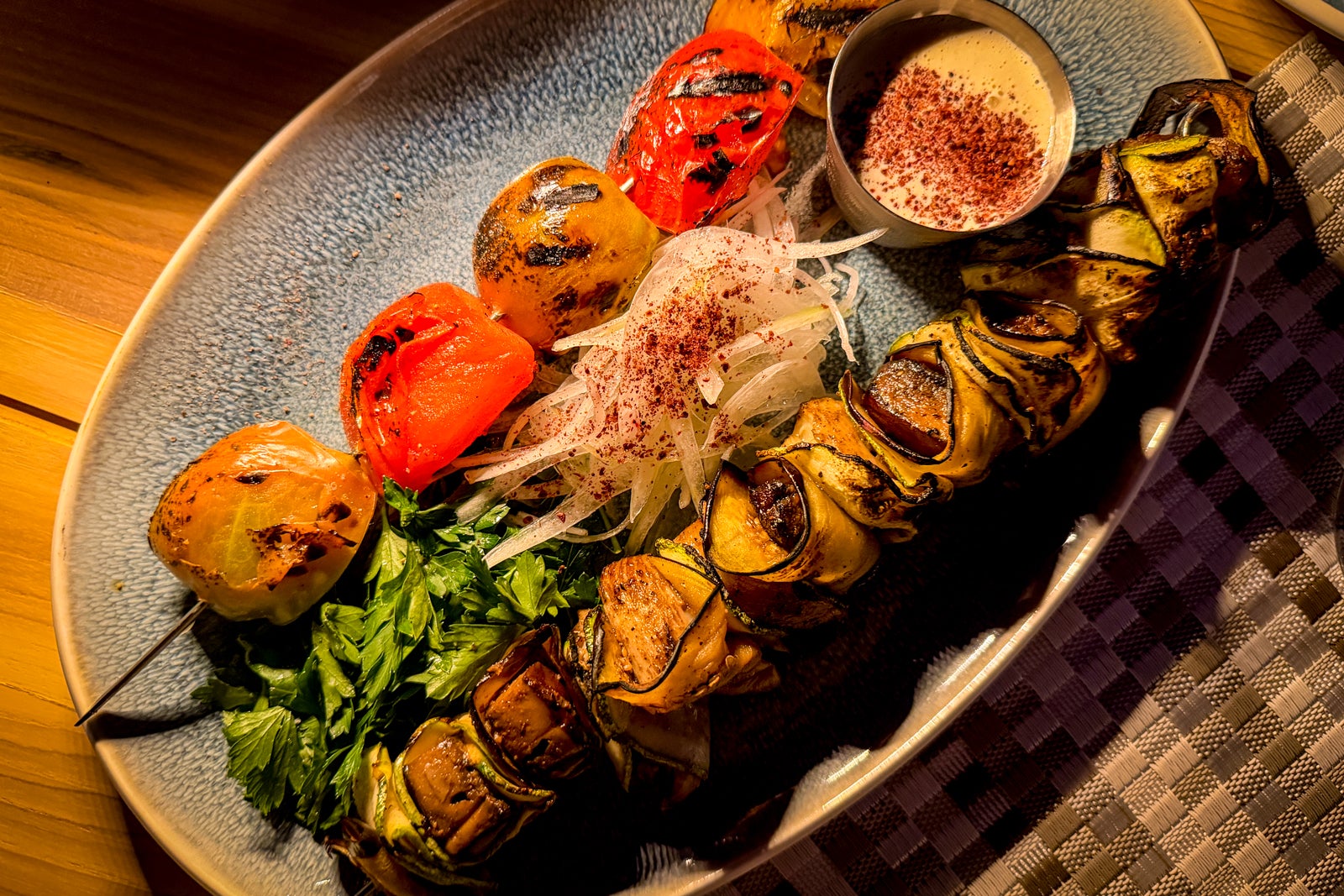
While the resort’s signature restaurant, Silán, won’t open until later this year, right now guests can preview its Levantine cuisine at Costamar Beach Club in the evenings. The menu combines North African and Middle Eastern influences with seasonal ingredients from Baja, with offerings including homemade hummus ($26) and labneh ($24), grilled rock cornish ($64) and smoked beef kebab ($87). The kitchen brought me perfectly cooked eggplant and zucchini kebabs to accommodate me as a vegetarian, and while I don’t typically like baklava, Silán’s version ($21), filled with walnuts, citrus honey and vanilla ice cream, was memorable.
Costamar Beach Club
Costamar is a perfect stop for a casual lunch with ocean views. On the menu, you’ll find a mix of Mexican and American staples like guacamole, fajitas, pizzas, burgers and salads, along with a strong emphasis on seafood (think pokes and ceviches). The resort is part of a program that supports local fishermen, so expect everything to be fresh.
1 of 2
CARLY HELFAND/THE POINTS GUY
Pool Bar
If vacation to you, as it does to me, means having lunch in a pool chair, you’ll want to order from the Pool Bar menu. Servers in the pool area are available to take food and drink orders, and I enjoyed the quinoa salad ($36) and guacamole ($26) from my poolside cabana. The menu also features a selection of tacos, tostadas, sandwiches and more.
Dátil Coffee Shop
This artisanal coffee bar was a must-visit for me every day (and if I’m being honest, multiple times a day). It serves a menu of espresso drinks made with beans sourced from Mexico’s top coffee regions, as well as smoothies, parfaits, ice creams and house-made pastries and chocolate truffles. My visits mostly centered on procuring the Dammann Frères vanilla rooibos tea and a grab-and-go avocado and cacao bowl ($22).
In-room dining
In-room dining is available 24/7, and as great as the food was elsewhere on the property, the absolute best thing I had was off the room-service menu. The Healthy Bowl ($28) featured a base of yogurt blended with serrano peppers, topped with chia seeds, berries, avocado, sliced almonds and chocolate chips, and while it might sound a little basic, I’m still thinking about it. Plus, in-room dining comes with a fun little push-button remote you can press to cue housekeeping to pick up your dishes.
Amenities and service
1 of 4
CARLY HELFAND/THE POINTS GUY
- Service: Service was friendly and prompt throughout my stay, and staff members went above and beyond to help. In one instance, multiple people joined forces to track down a water bottle I’d left at the pool earlier in the day and brought it to me at the gym.
- Personal concierge: Each guest is connected with a personal concierge who you can text for help arranging anything from tourist activities to dinner reservations to nanny services. My concierge was extremely helpful throughout my stay and even and coordinated a delivery service to drop off the exact brand of spray sunscreen I had forgotten to pack.
- Pools: The resort has multiple pools to choose from, including a family pool. I loved that the pools didn’t feel chaotic; the music wasn’t overly loud or distracting, and the cabana I enjoyed for the day felt spacious and secluded. The one feature I would have liked to see is a hot tub somewhere on the property, but it was so hot during my stay that I didn’t miss it.
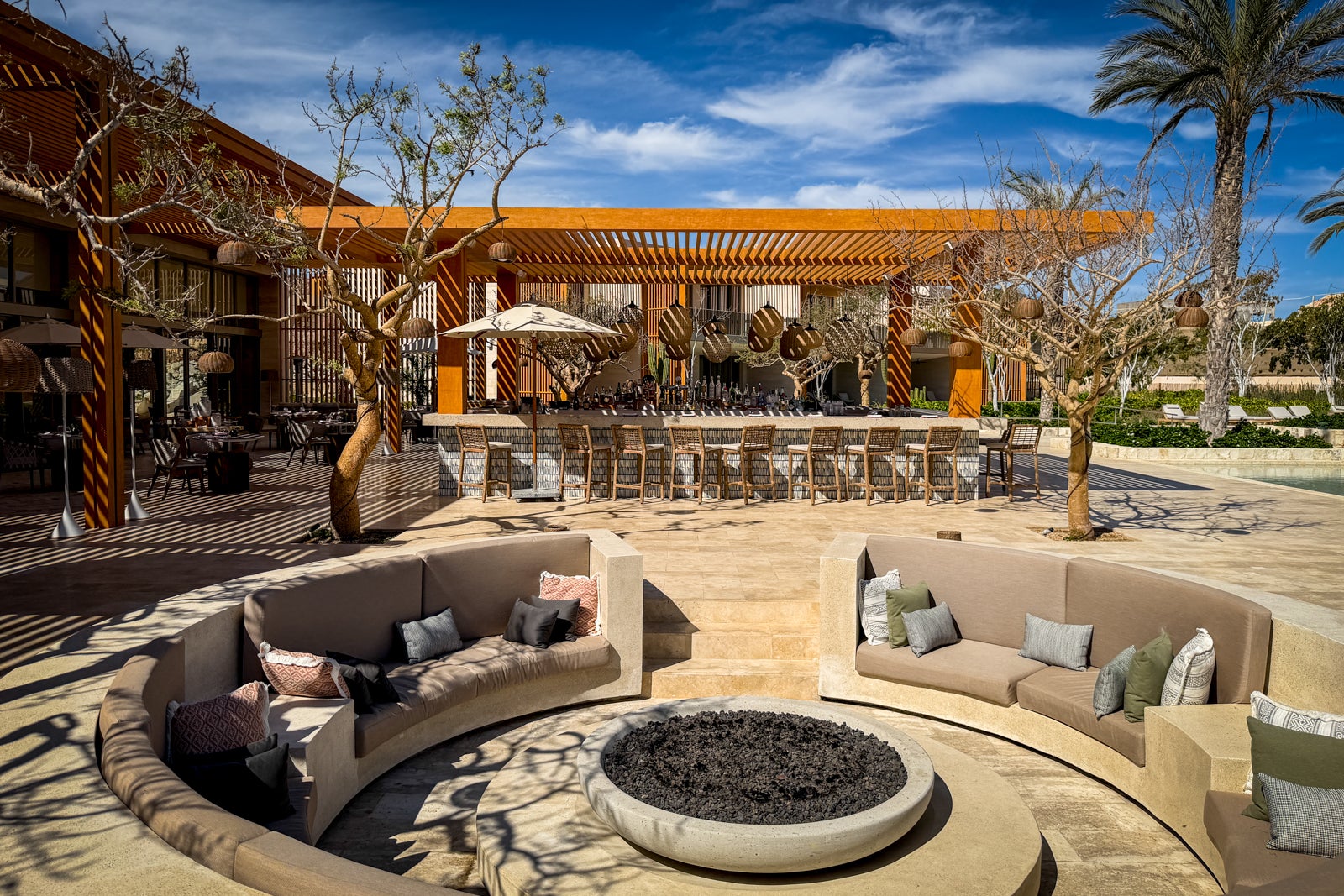
- Beach: Like at many hotels, the beach here isn’t swimmable. That said, you can still enjoy the views from the adults-only beach club, which has chairs both on the sand and an infinity pool overlooking the ocean.
1 of 2
CARLY HELFAND/THE POINTS GUY
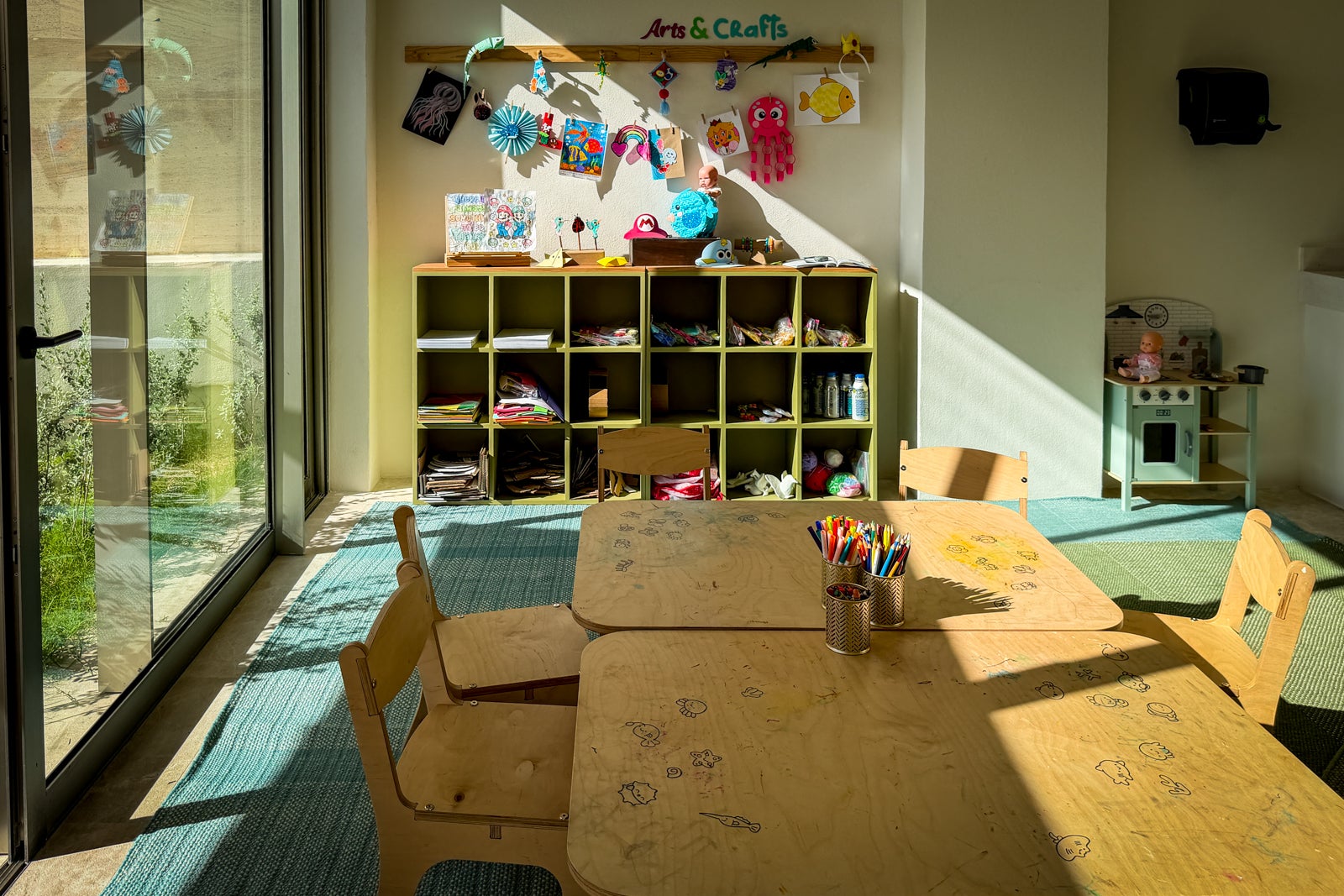
- Kids club: The complimentary Roadrunners kids club for guests ages 5 to 11 is open from 9 a.m. to 5 p.m. and keeps kids busy with activities like maraca making, board games and piñata decoration.
- Pets: Dogs are welcome on the property with a $130 pet fee that includes a plush bed, water bowl and treats, and staff told me several had already visited and loved the resort’s open spaces.
- Activities: For an extra cost, guests can choose from an extensive list of activities, including yoga, whale watching and two different cooking experiences. I did a class focused on masa, working with the chefs to make quesadillas, sopes and tetelas — along with accompanying salsa and guacamole — that I enjoyed for lunch at the end.
1 of 3
CARLY HELFAND/THE POINTS GUY
The spa
1 of 3
CARLY HELFAND/THE POINTS GUY
At 59,000 square feet, the resort’s Saria Spa is worth a visit, even if just to catch a glimpse of its stunning outdoor area. The design is meant to ground guests in the Baja California region, where the ocean meets the desert, combining architectural pools with mountain views and local flora.
Treatments here, like the Inner Calm massage, are named for the feelings they’re meant to cultivate and kick off with a relaxing welcome drink of citrus, tea and caramel. Before and after, guests are invited to try out the spa’s hydrotherapy pools, sauna and steam room.
The spa area also includes a yoga studio and state-of-the-art fitness center complete with Technogym equipment. I loved that the machines look out onto the beautiful spa pool so guests can still feel that sense of place even while working out indoors.
1 of 3
CARLY HELFAND/THE POINTS GUY
Location and logistics
The Park Hyatt is about 45 minutes by car from Los Cabos International Airport (SJD), and you have a few transfer options. Private transportation, which the hotel can arrange, costs $190 each way, taxis are similarly priced and Uber does operate in the area. The Park Hyatt offers free parking for guests who choose to rent a car.
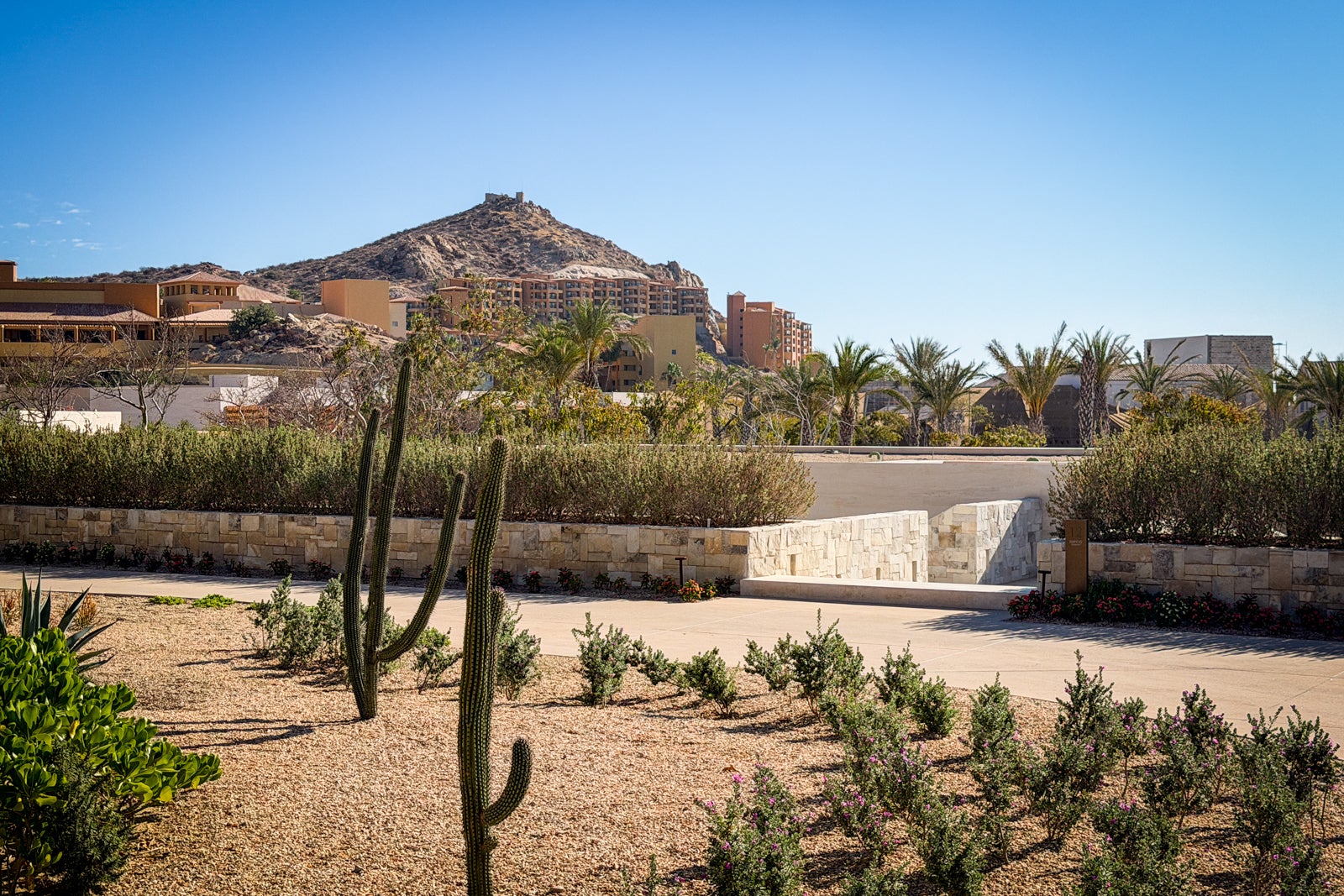
The resort sits within the luxury Cabo del Sol development, which also includes two golf courses and the upscale Anima Village mall. The Park Hyatt has a complimentary shuttle service that helps guests explore the Cabo del Sol area; rides can be arranged with as little notice as 10 minutes, and guests can text when they’re ready to be picked up.
What it costs to stay at Park Hyatt Cabo Del Sol and how to book
Park Hyatt Cabo Del Sol is part of World of Hyatt, meaning you can earn and redeem points on your stay. Right now, award rates hover between 35,000 and 45,000 points per night through the end of 2026, representing solid value for a room that prices out between $800 and $1,200-plus per night.
However, that’s all about to change with Hyatt’s forthcoming award chart changes. As a Category 8 property, nights at the Park Hyatt Cabo could jump to as many as 75,000 World of Hyatt points per night beginning May 20.
When booking the Park Hyatt Cabo Del Sol, you’ll want to use one of the credit cards that earn the most points for Hyatt stays, as well as one that possibly offers automatic World of Hyatt elite status for value-added benefits. These include:
You can also transfer Bilt Rewards Points and Chase Ultimate Rewards to World of Hyatt and use them to book the resort, and right now, new cardholders of the popular Chase Sapphire Reserve® (see rates and fees) can earn 150,000 bonus points after spending $6,000 on purchases in the first three months from account opening. That’s the highest public offer we’ve seen on this popular travel card.
Accessibility
The Park Hyatt Cabo del Sol features two ADA-accessible accommodations, one standard room and one suite. Both are designed to support guests with limited mobility and include roll-in showers.
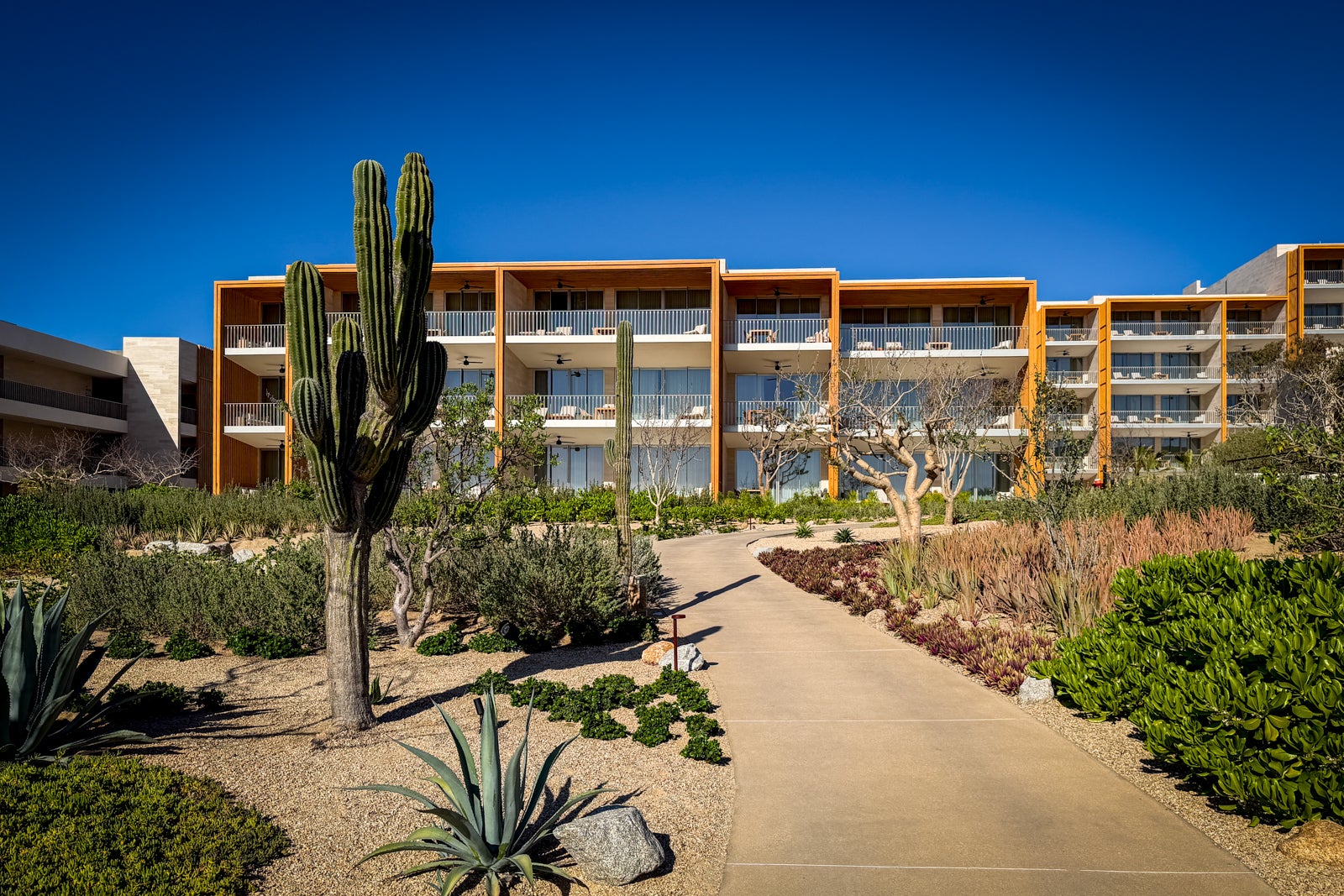
The wider property also features elevators and ramp access across buildings and amenity spaces to ease navigation, and golf cart transportation is always available on request.
Service dogs are welcome on the property.
As always, we recommend calling the resort ahead of time to ensure they can accommodate your needs.
Bottom line
Park Hyatt Cabo Del Sol is a beautiful addition to the Cabo hotel scene, and an especially exciting one for Hyatt enthusiasts and those with Chase Ultimate Rewards or Bilt Points to burn. The impeccable design, serene environment and top-notch food earned it a spot among my favorite hotels in Cabo, and I look forward to returning with my family in tow.
While the full launches of the spa and signature restaurant are still to come, and a few last buildings are under construction, the service is already in peak form, and I personally don’t think you need to wait to visit.
Another thing you shouldn’t wait on? Booking. If this hotel is on your must-visit list, lock in your stay before award rates balloon on May 20.
Related reading:

Stacie Harris is a local resident and reporter of the Maple Grove area. Stacie reports on medicine and science for the Maple Grove Report.





:max_bytes(150000):strip_icc():format(jpeg)/GettyImages-2253385503-49d609f27e75489cbb35796a15282f5b.jpg "Hong Kong - November 26, 2025 : Lululemon store at Hong Kong International Airport.")