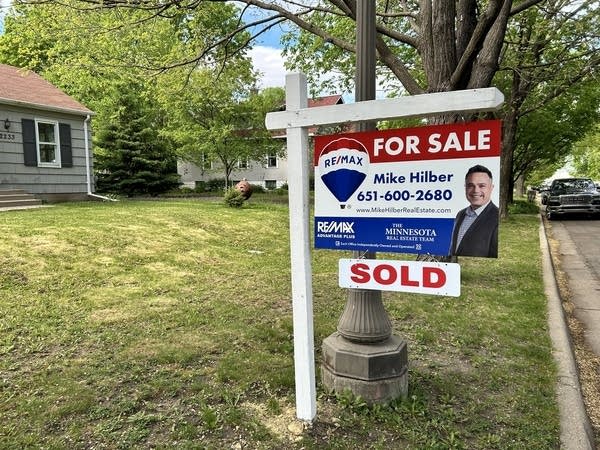
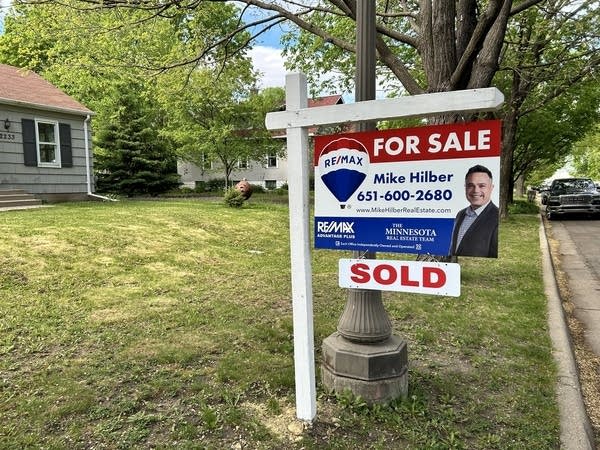
As the spring home sales season kicks into gear, state and Twin Cities realtor groups will report today on home sales and prices for April.
A recent report from the National Association of Realtors recently showed improvement in housing affordability nationwide.
But experts generally cite the low availability of housing as a factor that’s pushing prices up.
The president of the Federal Reserve Bank of Minneapolis, Neel Kashkari, said if Minnesotans want housing to be more affordable, we need more homes on the market.
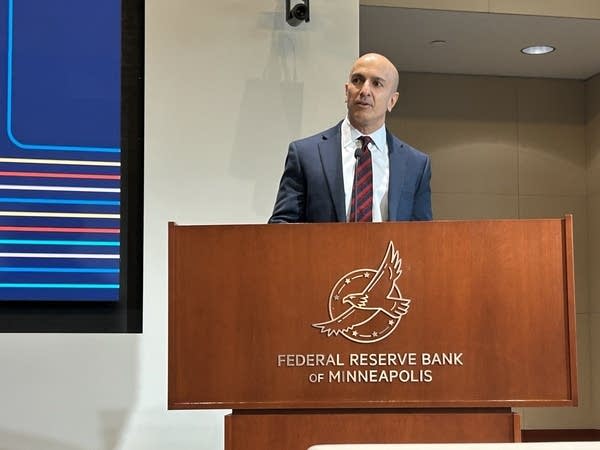
“There's no question that the single most important driver is going to be supply,” he said.
At a recent St. Paul Area Chamber of Commerce event, he said four main factors are constraining supply.
1.) Inflation
The cost of construction materials is going up, Kashkari said, making it more expensive to build housing.
“It’s our job to get inflation back down,” he said.
Prices in the building materials and supplies industry are at historical highs, according to data from the Federal Reserve Bank of St. Louis. And overall, annual inflation has consistently been above the Federal Reserve’s target of 2 percent since March 2021.
“What’s been challenging the past five years is — economists call these shocks — different things keep hitting the economy,” he said. “COVID, the supply chains coming out of COVID, Russia invading Ukraine, (and) now, the war in Iran. These things are all inflationary: one after the other after the other.”
That’s part of the reason that Kashkari, who is serving a rotating term on the rate-setting Federal Open Market Committee, dissented from that committee’s recent policy statement that signaled future rate cuts.
While rate cuts could stimulate the economy, Kashkari is concerned they’d also aggravate inflation.
2.) Interest rates
Interest rates are another important piece of housing affordability. Lower interest rates would make it cheaper to borrow money to build and buy houses.
While the federal funds rate set by the Federal Reserve influences mortgage rates, Kashkari said broader swings in the economy are pushing up interest rates, too.
For example, the ongoing data center boom has increased demand for investment capital and may be pulling capital away from projects like apartment buildings.
“Hundreds of billions of dollars a year of new investment demand, all else equal, is going to push up interest rates,” he said.
3.) Immigration and labor
Kashkari also cited labor availability as a constraint on construction.
“Obviously, if there are fewer immigrant workers to build homes, on the margin that’s going to make labor somewhat less available, potentially causing some inflationary pressure there,” he said.
The second Trump Administration’s surge of immigration enforcement has likely hit the construction sector particularly hard because a relatively large percentage of undocumented workers were employed by that industry, according to a recent working paper from the National Bureau of Economic Research.
According to the paper, that hasn’t translated to higher wages for other workers, but employers are instead “reducing labor demand overall, including for jobs more often taken by U.S.-born workers.”

4.) Zoning
Kashkari said local zoning regulations are a major hurdle to building more housing. Homeowners have an incentive to advocate for policies that keep prices high in their neighborhoods so their assets keep growing in value.
“When we all do that, you can’t build anywhere,” he added. “Then all of a sudden the home prices skyrocket because we just limit new supply from coming online.”
Kashkari said of the four constraints on construction, policymakers can most directly control zoning regulations if they want to keep prices down.
“You look around the country, there are some regions where it's a lot easier to build,” he said.
He noted that those areas still had to reckon with inflation, labor availability and challenging interest rates.
“But the zoning piece,” he said, “actually can make a big difference on how much new supply you can bring online.”