Weigh yourself at the same time: To get a consistent reading when using any scale, it’s important to weigh yourself first thing in the morning before you’ve drunk or eaten anything. “You should weigh yourself without clothes, or minimal clothing, and if you do so, try to wear the same clothing each time you weigh yourself,” said Stella Lucia Volpe, professor and head of the Department of Human Nutrition, Foods and Exercise at Virginia Tech.

Volpe recommends weighing yourself no more than once a week. “If you weigh yourself more than that, you will see fluctuations in your body weight, and it may be frustrating if you are trying to lose weight,” she said.

Choose an even surface: You want to make sure your scale is on an even surface otherwise that imbalance will throw off the reading. Make sure to weigh yourself in the same place each time.

Keep in mind that the smart scale can be flawed: Remember that just because a smart scale can offer more data than an analog scale doesn’t always mean it’s better. “Smart scales have not been shown to have high accuracy and cannot be compared to the ‘gold standard’ measures of assessing bone mineral density and body composition as it relates to body fat and lean body mass, which is via using dual-energy X-ray absorptiometry,” said Volpe.

Most people don’t have access to a Dexa scan, so the next best thing is a smart scale. “The smart scale can provide an estimation of body fat and total body water; but note that the ‘gold standard’ ways to measure these would provide the more accurate data,” Volpe explains.

Make sure it’s set to zero: As with any scale, you want to make sure that it’s set to zero so you get an accurate reading.

Remember your weight fluctuates: It’s easy to get caught up in a number, but remember your weight is a range instead of an exact number and will fluctuate throughout the day. Fluctuations can be affected if you work out, eat more than normal, go to the bathroom or even if your muscles are sore and retaining fluid.

Know that the data are estimations: Smart scales include data on your heart rate, bone mineral density, total body water, body fat and more. Keep in mind these are estimations based on your age, sex and body weight. Therefore, these scales are not completely accurate. “Knowing that these scales are providing an estimation — but without the highest of accuracy — is important, but can help provide some guidance to the user of these products, especially when many individuals may not have the ability to have their bone mineral density and body composition evaluated by DXA,” said Volpe.


Source link

Leave a Reply

Subscribe to Our Newsletter

Get our latest articles delivered straight to your inbox. No spam, we promise.

Recent Reviews


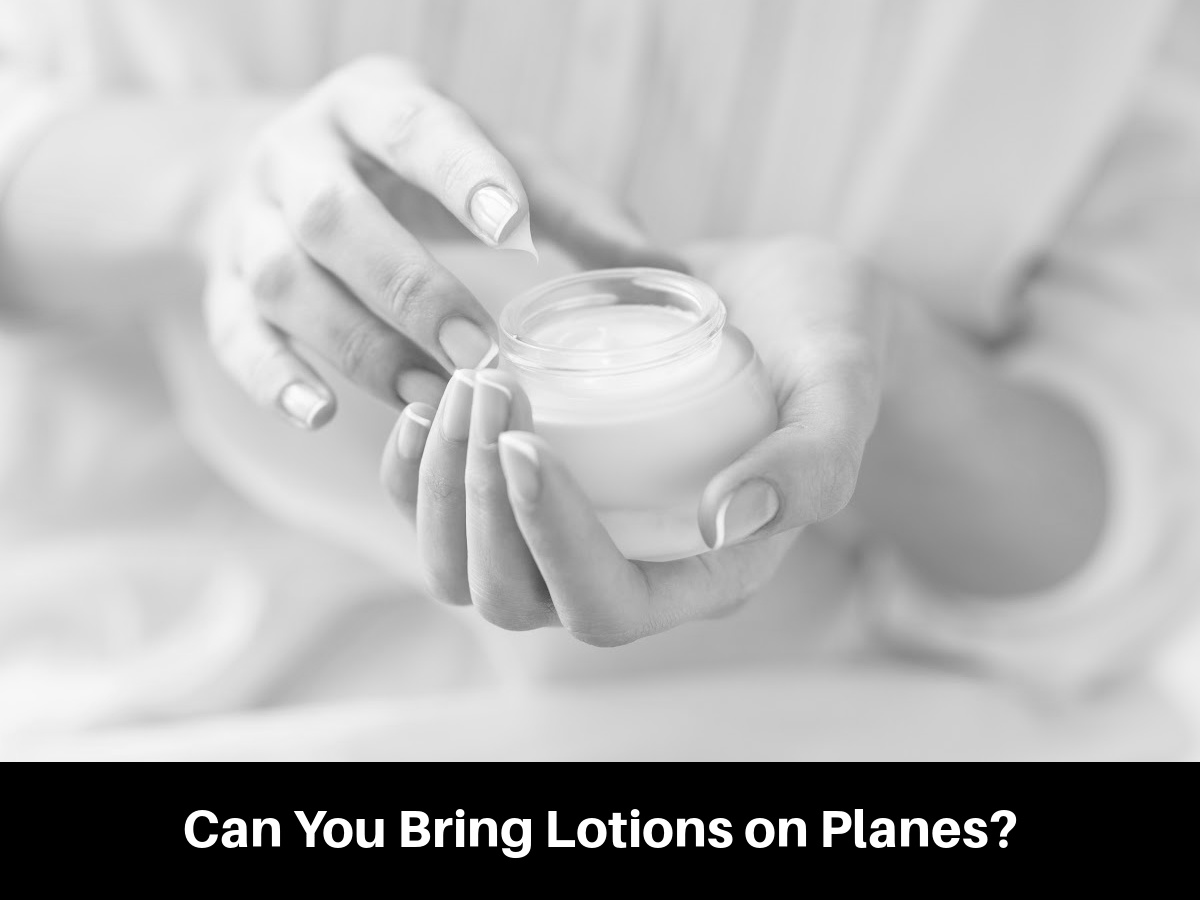
Body and face lotions are counted as liquids by the TSA. This also includes most other variants of lotions, like body creams, gels, pastes, butter, and similar alternatives. Even thicker body ointments are considered liquid. If you can smear it, it’s considered liquid.

When packed in hand luggage (carry-on or personal item), they’re limited to 3.4 oz (100 ml) bottles or smaller. You also have to put them in your quart-size bag together with your other toiletries.

Only medically-prescribed lotions are allowed in larger quantities in hand baggage. But you’ll have to show the TSA agent your prescription. Otherwise, they’ll be treated like any other liquid.

It’s also worth noting that half-empty lotion bottles that are over 3.4 oz (100 ml) aren’t allowed. That’s because the TSA agent has no way of telling how much lotion is left inside. 

In checked bags, TSA allows lotions in larger quantities. You could even fill your suitcase to the brim with lotions and it would still be allowed. There also aren’t any restrictions on how you should be packing them.

Traveling With Lotions Internationally

Generally, the rules for traveling with lotions are identical across the world. In hand baggage, they’re limited to small 100 ml containers and they aren’t restricted in checked bags.

Only Australia and New Zealand have different rules. Both of these countries have incorporated new 3D CT scanners in their airports, which can safely screen liquids in larger quantities. When you’re flying domestically in Australia or New Zealand, your lotion bottles aren’t restricted to 3.4 oz containers in hand baggage.

How to Pack Lotions in Luggage

To avoid spills in your luggage, here’s how you should be packing lotions in your luggage:

  • Avoid placing the lotion bottle near the edges of your suitcase to avoid punctures and direct hits
  • Always wrap your lotion in soft clothing
  • Tape the lid to the bottle to keep it from accidentally opening
  • Put the lotion bottle in a separate Ziploc bag if packed in checked baggage
  • If in hand luggage, always put it inside your bag of toiletries. Remember to keep it somewhere accessible because you’ll need to take it out when going through security

There are Some Travel-Friendly Alternatives to Lotions

It goes a bit against common sense but there indeed are some “solid” lotion alternatives, which don’t have any packing restrictions. You can find solid stick moisturizers and solid lotion bars if you look around online, sold by Blush and other large brands. These usually need to be applied to wet skin in order for them to work.

Another option is to use moisturizing wipes. Even though they contain a bit of liquid inside, they are considered solid items by the TSA. You won’t have to put them in your toiletry bag when going through security. They’re also super easy to use when you’re on the plane.

Summing Up – Traveling With Lotions

You can fit roughly 6-8x 3.4 oz (100 ml) containers in your 1-quart bag of toiletries. For traveling, it’s usually enough to bring just one small bottle of lotion. But it’s hard to find a small lotion bottle. So the best thing that you can do is to transfer it from a larger bottle to a smaller one.

If you need to bring larger quantities of lotion, your only option is to pack it in your checked baggage or buy it at your destination.


Source link