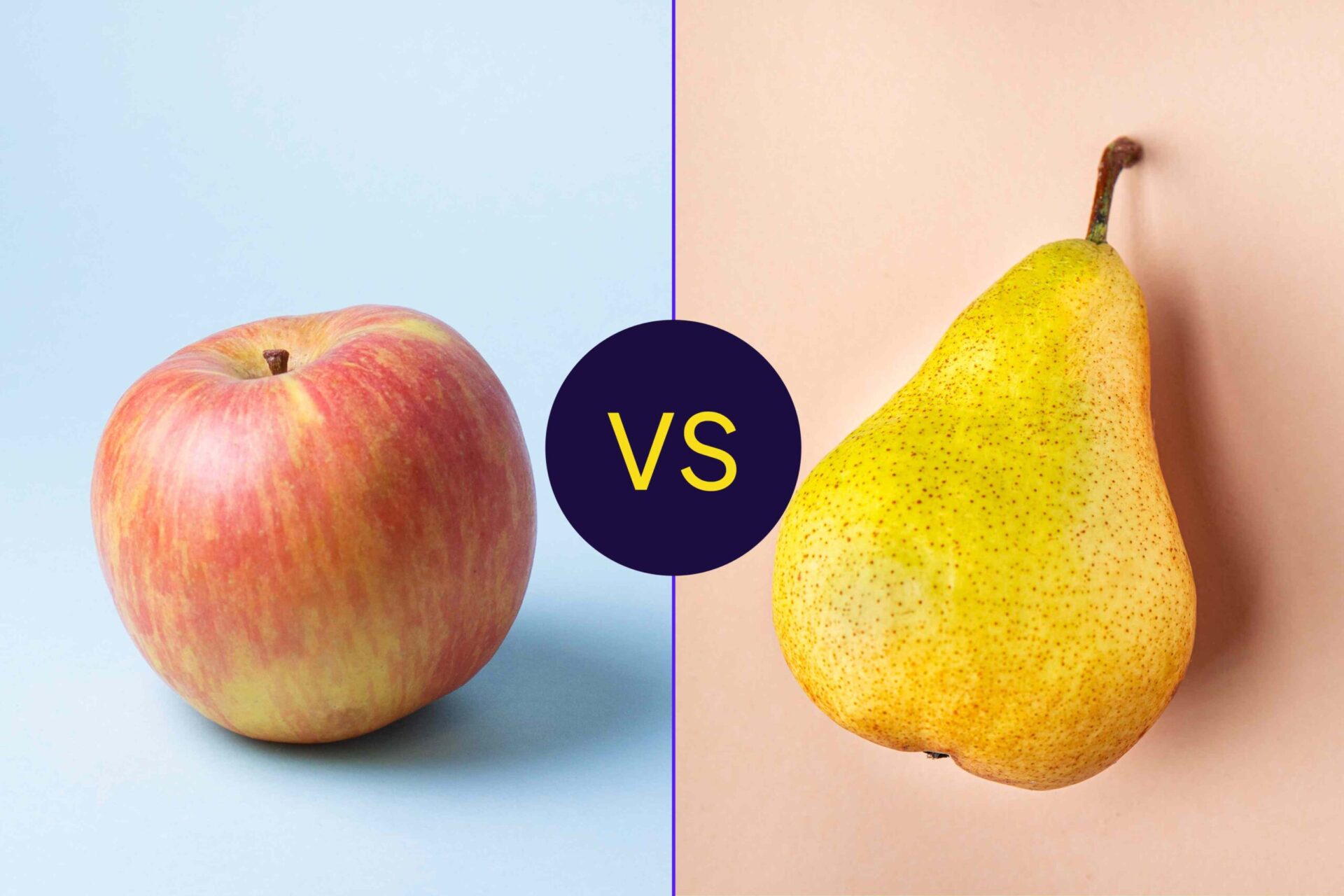
:max_bytes(150000):strip_icc():format(jpeg)/Health-Apples-VS-Pears-template-cebcf9cd997c436da2df85386c88ee94.jpg "Apples vs pears")
Credit: Design By Health / Getty Images
- Pears contain more fiber than apples, making them the better choice if you’re aiming to boost your intake.
- Both fruits still provide a mix of soluble and insoluble fiber that supports gut and heart health.
- Apples and pears each offer unique nutrients and antioxidants, so including both can support a balanced diet.
Apples and pears are packed with essential nutrients, including fiber. Fiber supports gut health by promoting regular, comfortable bowel movements and providing beneficial bacteria. It also helps protect heart health by keeping cholesterol levels and body weight in check. Apples and pears are both fiber-rich fruits, but one delivers more fiber than the other.
Pears Win for Fiber Content
Pears have more fiber than apples. A medium-sized pear (140 grams) contains 4.45 grams of fiber, while the same-sized apple has only 2.38 grams.
However, including both of these fruits in your diet can help increase your intake of soluble and insoluble fiber. Both types of fiber are critical for health, but they have different roles in the body.
Soluble fiber dissolves in your gut, forming a gel-like substance that slows digestion. Soluble fiber is effective for lowering cholesterol, supporting the growth of beneficial bacteria in the digestive system, and keeping stools soft and easy to pass. Insoluble fiber speeds up the passage of foods through the stomach and intestines and adds bulk to stool.
Research suggests that pears pack about 23% more total dietary fiber and 46% more insoluble fiber than apples, making them the clear winner for fiber content.
Other Health Benefits of Apples
Even though apples are slightly lower in fiber, they still pack a nutritional punch. Apples are a good source of vitamin C, which is necessary for collagen production, immune function, and iron absorption.
Apples provide smaller amounts of other essential nutrients, like potassium, which is needed for healthy blood pressure regulation. Apples also contain a variety of antioxidants, such as polyphenols like gallic, chlorogenic, and ferulic acid, that protect cells against oxidative damage.
Studies show that eating apples could reduce markers of inflammation, like C-reactive protein (CRP), lower heart disease risk factors like LDL cholesterol and triglycerides, and reduce the risk of certain cancers, like breast cancer.
This is because apples are high in protective compounds, like polyphenol antioxidants and fiber, which support health by lowering inflammation and reducing disease risk factors like high cholesterol.
Other Health Benefits of Pears
Pears are a good source of fiber and also provide several vitamins and minerals, like copper, vitamin K, and vitamin C. A 140-gram pear provides 10.8% of your daily needs for copper, a mineral that’s needed for energy production, red blood cell production, and neurotransmitter synthesis.
Pears are an excellent source of flavonoid antioxidants, which support heart health by reducing inflammation. Their high fiber content also helps lower heart disease risk factors, like high LDL cholesterol. Studies show that people who eat more pears have a significantly lower risk of heart disease-related death than those who eat less.
Due to their high fiber content, pears are also an excellent choice for supporting overall gut health and preventing constipation.
Which Fruit Should You Choose?
Both of these fruits are nutritious options that can fit into a healthy and balanced diet. The smartest approach to support health and meet your daily vitamin needs is to enjoy a variety of fruits, including apples and pears.
However, your personal preferences matter, too. Apples tend to be crisp with a tangy-sweet flavor, while pears are softer, with a grainier texture and a more mellow sweetness.
That said, if maximizing fiber intake is your goal, pears take the lead, providing significantly more fiber than apples.