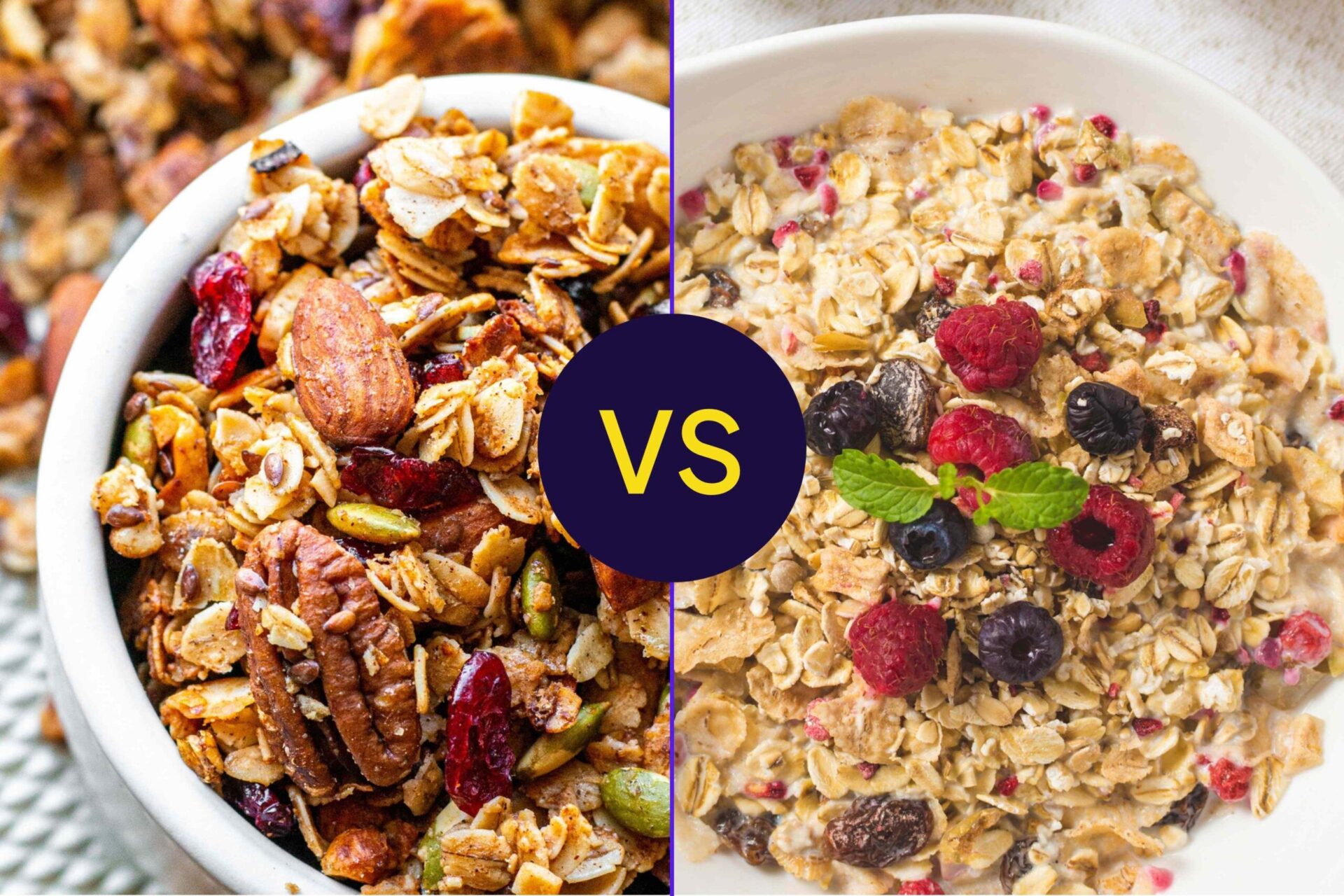
:max_bytes(150000):strip_icc():format(jpeg)/granolavsmuesli-5120b6c106d4482d8461adb8e0c64282.jpg "Two bowls side by side one with granola and the other with muesli with a VS label in the center")
Credit: Health / Getty Images
- Granola and muesli are both made from oats, nuts, seeds, and dried fruit, which makes them generally high in fiber.
- A high-fiber diet supports heart health by helping lower cholesterol, improving blood sugar control, and supporting weight management.
- Granola is usually baked with added sugar and oil. However, both granola and muesli can be high in sugar and saturated fat depending on the ingredients.
A high-fiber diet supports heart health by lowering cholesterol, improving blood sugar levels, and supporting weight management. Granola and muesli are both high in fiber, but they can also be high in added sugars, fat, and sodium.
How Does the Nutrition Compare?
The nutritional comparison of granola and muesli varies depending on the ingredients. Here is a nutritional comparison of a 100-gram serving of granola and muesli:
| | Granola | Muesli |
| Energy | 418 kcal | 388 kcal |
| Carbohydrates | 74.7 grams (g) | 73.8 g |
| Protein | 9.2 g | 9.5 g |
| Total fat | 11.1 g | 6.3 g |
| Dietary fiber | 9.9 g | 8.5 g |
| Total sugars | 27.4 g | 23.2 g |
| Sodium | 47 milligrams (mg) | 8 mg |
Granola often contains more sugar, fat, and sodium because oils and sweeteners are added to make it crunchy and more flavorful. However, you can also find low-fat and low-sugar versions. Checking the nutrition label and ingredients helps you choose a healthier option.
Both Granola and Muesli Are Heart-Healthy Options
Granola and muesli are typically made with oats, nuts, seeds, and dried fruit. These ingredients are all good sources of fiber, making both granola and muesli high-fiber foods.
Eating fiber can slow digestion, which helps your blood sugar levels rise more gradually after eating. It can also keep you feeling full for longer, which may help you stick to nutrition goals and manage your weight more easily. High-fiber diets have also been shown to help lower cholesterol. Together, these effects can support your heart and overall health.
However, the nutritional value can vary across granola and muesli products, depending on the added ingredients. Make sure to check the nutrition labels to avoid products with high amounts of added sugar, sodium, or saturated fats, which can negatively affect heart health.
How Your Food Choices Affect Heart Health
The foods you eat daily have an impact on your heart health. To make your diet more heart-friendly, the American Heart Association recommends you:
- Minimize added sugars
- Reduce sodium intake
- Choose whole grains
- Eat lean protein sources
- Choose unsaturated fats instead of saturated fats
- Eat minimally processed foods
- Include a variety of fruits and vegetables
What To Look for When Choosing Granola or Muesli
Here is a simple checklist to follow when choosing granola or muesli:
- Simple ingredient list: Read the ingredients and choose products made with whole foods like oats, nuts, seeds, and dried fruit. Avoid products with long lists of additives or artificial ingredients.
- Higher fiber: Choose options with higher fiber per serving. Look for at least 5 grams of fiber or more per serving. A fiber-rich diet is linked to a lower risk of heart disease. It also supports steady blood sugar and weight management, which are important for heart health.
- No or low added sugar: Both granola and muesli can contain added sugars such as cane sugar, honey, glucose syrup, or chocolate pieces. Always check the Nutrition Facts label and choose options with 5% or less added sugar per serving when possible.
- Lower saturated fat: Read labels and choose options with lower saturated fat. Some granolas contain added oils such as palm oil or coconut oil, which increase saturated fat content.
- Higher protein: Nuts and seeds are natural sources of protein and healthy fats. Higher-protein versions can help support blood sugar and weight management, which also benefits heart health.
- Lower sodium: Granola and muesli are not typically high in sodium. However, some brands may contain added salt, so it is still important to check the label, especially if you are following a low-sodium diet for heart health.
How To Make Easy At-Home Muesli and Granola
Making granola or muesli at home can give you more control over the ingredients and nutrition. You can make them in batches for convenience with a few simple base ingredients. You'll need:
- 2 cups rolled oats
- 1/2 cup nuts such as almonds, walnuts, or hazelnuts
- 1/4 cup seeds such as chia, sunflower, or pumpkin seeds
- 1/2 cup dried fruit such as raisins, dates, apricots, or prunes
Muesli: Mix all the base ingredients together and you have homemade muesli. You can eat it with milk or yogurt.
Granola: Add 2 tablespoons olive oil and 2 tablespoons honey to turn the same mix into granola. Mix well, spread on a baking tray, and bake at 170°C for 15–20 minutes.
You can also mix both granola and muesli together to get extra crunchiness and sweetness. For example, use muesli as the base in a bowl mixed with yogurt or milk, then sprinkle granola on top to add texture.