Fact checked by Nick Blackmer
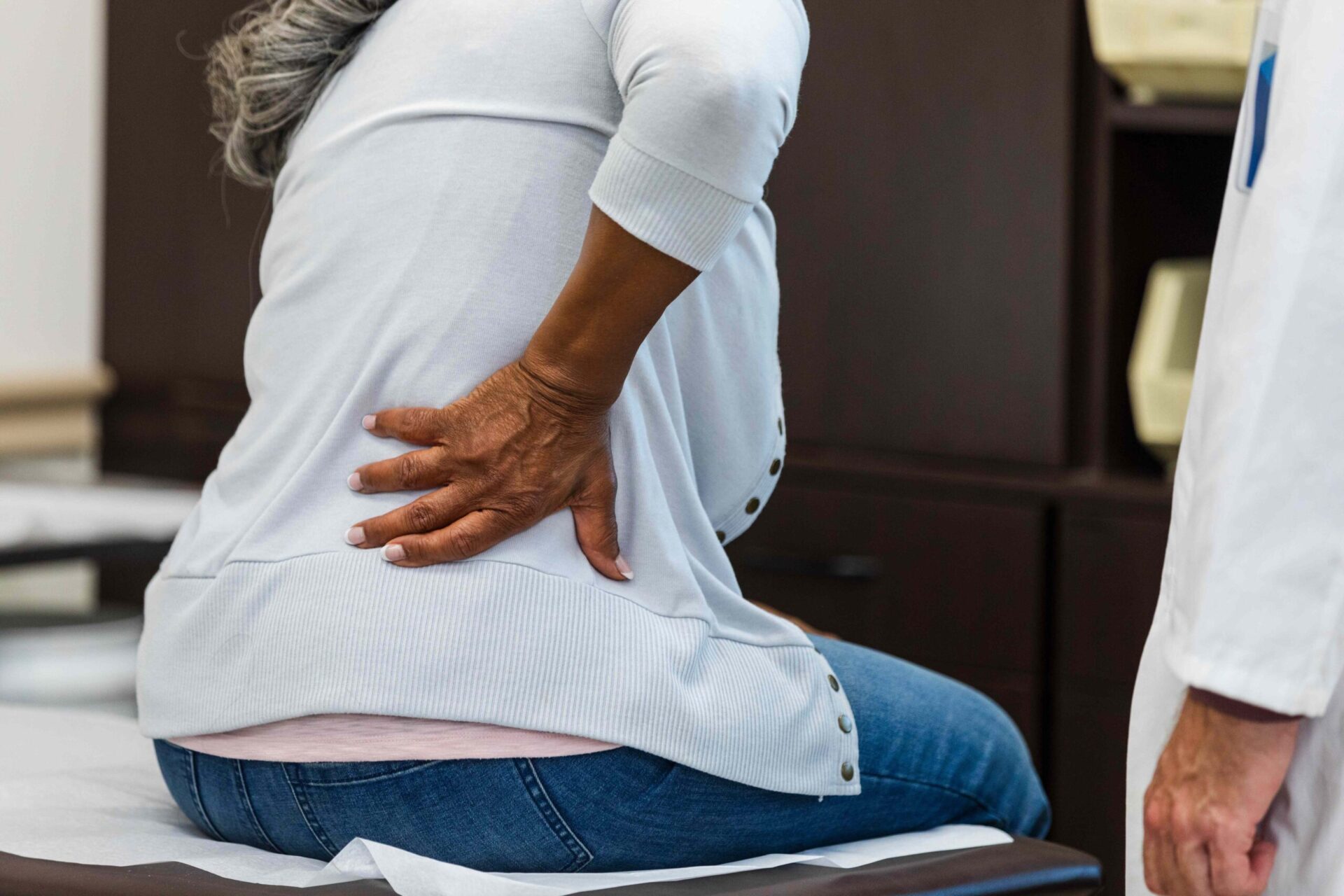
:max_bytes(150000):strip_icc():format(jpeg)/GettyImages-2216328381-abaea8f430fb4413b04310c843acdc16.jpg "African-American woman sitting, hand on lower back, experiencing pain. Doctor present.")
Credit: SDI Productions / Getty Images
- A new study links osteoporosis in postmenopausal women to a 47% higher risk of death.
- Experts say the condition may indirectly contribute to health problems by increasing the risk of fractures.
- To help prevent osteoporosis, experts recommend focusing on diet and exercise.
Osteoporosis, a disease that develops when bones lose mass and mineral density, may do more than increase the already risk of fractures and falls. A new study published in the journal Menopause suggests that it may raise the risk of death in postmenopausal women—a group particularly susceptible to osteoporosis—by as much as 47%.
Why Researchers Looked at Mortality Risk—and What They Did
Osteoporosis is incredibly common, affecting about 200 million people worldwide. Women are most vulnerable, however, because menopause coincides with a loss in estrogen, which helps regulate bone metabolism. “At the same time, many women also experience loss of muscle mass, reduced mobility, and nutritional deficiencies that can impair recovery and overall resilience,” explained LaKeischa Webb McMillan, MD, an integrative OB-GYN and hormone specialist based in Silver Spring, Maryland.
While research has largely focused on the risk of low bone mineral density on fractures and falls, its direct relationship with mortality among older women remained unclear, according to the researchers behind the new study.
To fill that gap, the research team analyzed questionnaire data, lab results, and Centers for Disease Control and Prevention mortality records from nearly 3,000 postmenopausal women found in the National Health and Nutrition Examination Survey (NHANES) database. Using dual-energy x-ray absorptiometry (DEXA or DXA) scans—the method typically used during a bone loss screening—they measured bone mineral density in four parts of the femur, or thigh bone: the full femur, trochanter, femoral neck, and intertrochanter. They then followed participants for an average of 7.26 years.
Osteoporosis Linked to an Increased Risk of Death
People with osteoporosis-level bone density or osteoporosis-related fractures—a group that was more likely to be older, non-Hispanic white, less educated, and have a lower BMI—had a higher risk of death. The association was especially strong among participants with particularly low bone density, including total femur bone mineral density levels between 0.46 and 0.71 grams per square centimeter and trochanter bone mineral density levels between 0.33 and 0.54 grams per square centimeter. After adjusting for variables such as age and race, researchers found that osteoporosis was associated with a 47% increased risk of mortality.
The study is “an important addition to the growing body of literature emphasizing the need for early screening, fracture prevention, osteoporosis prevention, and comprehensive risk assessment,” said Chhaya Makhija, MD, a triple board-certified internal medicine, endocrinology, and lifestyle medicine physician and associate clinical professor at California Health Sciences University. “It reinforces the importance of being proactive about bone health.”
Why Osteoporosis May Be So Deadly For This Group
Still, the study has some limitations. While it suggests a link between osteoporosis-related low bone mineral density, fractures, and increased mortality risk, it doesn't prove that osteoporosis directly causes the higher risk of death.
For one, it didn’t delineate specific causes of death, Makhija noted, so it’s possible bone health wasn’t the main driver. The DEXA scans were also limited to the femur and didn’t examine other commonly assessed areas, like the hip or lumbar spine, and were only captured at a single point in time, Makhija said, further limiting the ability to form a complete picture of the relationship between osteoporosis and death.
According to Majhija and McMillan, that connection is indirect. In other words, breaking a bone is unlikely to be the direct cause of death, but it can lead to a cascade of serious health problems—especially when the hip is involved.
“When an older adult—particularly a postmenopausal woman—sustains a hip fracture, the healing process and complications associated with immobility can significantly increase mortality risk,” Makhija said. “Hip fractures often result in prolonged bed rest, which increases susceptibility to urinary tract infections, muscle loss, future fractures, and complications related to immobility.”
How to Prevent Osteoporosis
The best way to avoid the risks associated with osteoporosis is to prevent it in the first place. To do that, experts urged focusing on lifestyle, particularly what you eat and how you move.
Foods rich in calcium, vitamin D, magnesium, phosphorus, and protein are especially helpful for supporting bone and muscle health. Exercise is also crucial, especially any weight-bearing activities in which bones and muscles work together against gravity.
“We should be actively nourishing and using our bones and muscles throughout life, especially during young adulthood and the perimenopausal years, when we still have the opportunity to optimize peak bone and muscle health,” Makhija said.
Beyond lifestyle factors, hormone replacement therapy during the menopause transition “remains one of the most evidence-backed strategies for helping prevent osteoporosis,” McMillan said.
Screening is also important—osteoporosis is often referred to as a "silent" bone disease because it typically doesn’t have noticeable symptoms prior to a bone break or fracture. Doctors in the U.S. usually begin routine screening at age 65, but may recommend that people with a family history of osteoporosis or other risk factors start earlier. As the study reinforces, “bone density should not be viewed as an isolated marker affecting only one organ system,” McMillan said.