




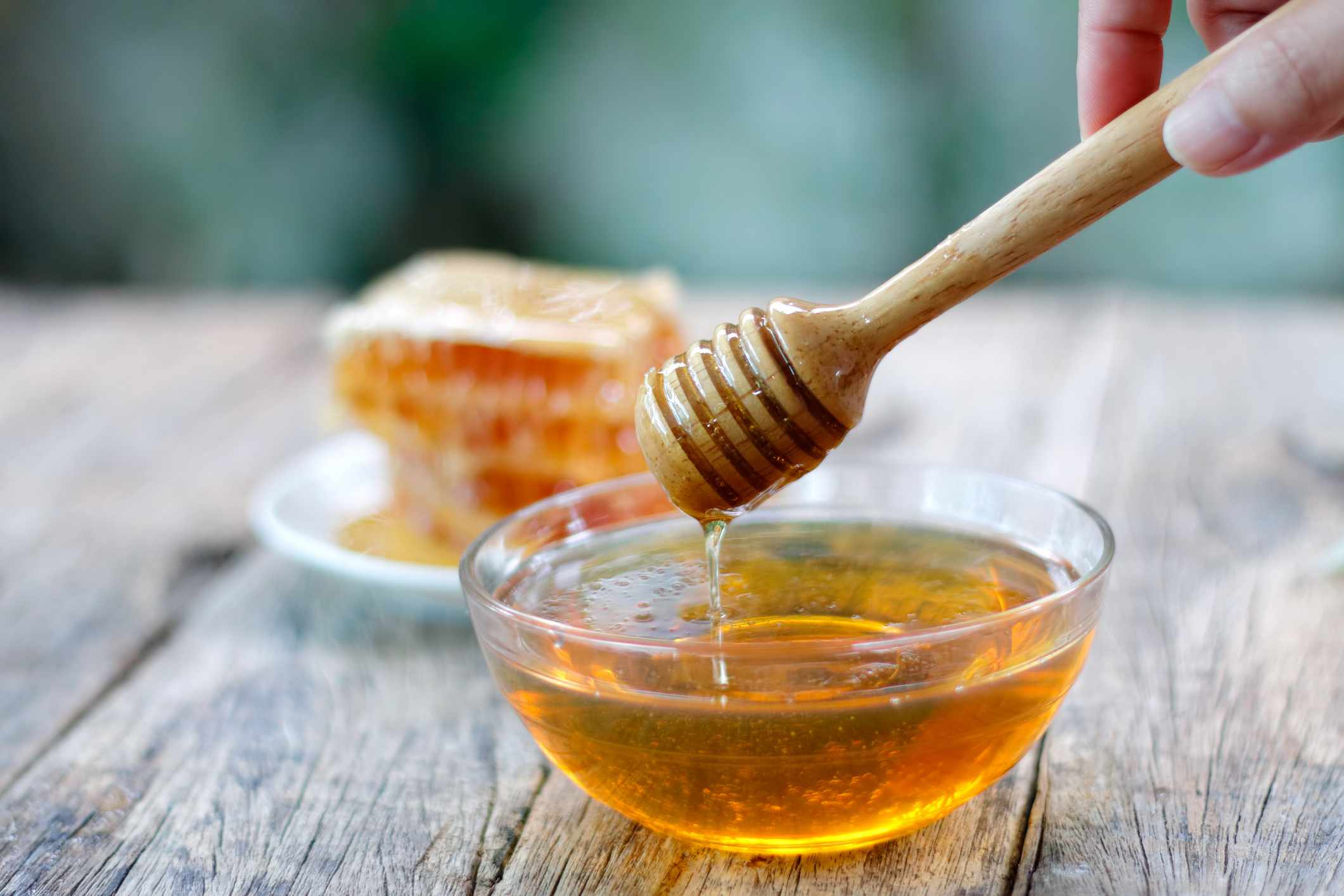
:max_bytes(150000):strip_icc():format(jpeg)/Health-GettyImages-RawHoneyVsManukaHoney-d16051d4707d4e5581312697c1a1b78f.jpg "Honey dipper and honeycomb on table")
- Manuka honey contains methylglyoxal (MGO), a compound that may give it stronger antibacterial properties than some other honey varieties.
- Raw honey is minimally processed and retains more natural antioxidants and enzymes than pasteurized honey.
- While honey may offer some health benefits, the small amount typically added to tea is unlikely to have a significant impact on overall health.
Honey, especially raw honey and manuka honey, is often viewed as a more natural and healthier alternative to refined sugar, which is why it’s commonly added to tea as a way to sweeten it. But what’s the difference between raw and manuka honey, and does one actually offer more health benefits when added to tea?
What is Manuka Honey?
Manuka honey is a specific type of honey produced by bees that feed on the nectar of flowers from the manuka bush (Leptospermum scoparium), which is native to New Zealand.
Manuka honey contains a unique compound called methylglyoxal (MGO), which sets it apart from other types of honey and contributes to its potential health benefits.
Because it’s harder to find than conventional honey and may have unique health benefits, manuka honey is typically much more expensive. In fact, it can cost anywhere from 6 to 25 times as much as other types of honey.
What is Raw Honey?
Raw honey is minimally processed, meaning it is not pasteurized and undergoes little to no filtration.
In contrast, regular honey is typically pasteurized, meaning it is exposed to heat during processing. Heating honey reduces its thickness, making it easier to bottle, and helps prevent fermentation, slow crystallization, create a more uniform color, and extend shelf life. However, it destroys some beneficial compounds in honey, like enzymes and antioxidants.
Because raw honey isn’t exposed to high heat during processing, it retains higher levels of protective compounds, including flavonoids, than regular honey.
Any honey, including manuka honey, can be raw. Raw honey simply means that the honey has not been exposed to high heat or heavily processed.
Does Manuka Honey Offer Specific Benefits?
Although research directly comparing manuka honey to other types of honey is limited, some studies suggest that manuka honey may offer unique benefits.
Some studies have found that manuka honey may have a higher antioxidant capacity than certain varieties, such as linden and multifloral honey, and stronger antibacterial properties. This may be due to its high levels of MGO, an antibacterial compound. Research suggests that manuka honey may be particularly effective against certain types of bacteria, like Staphylococcus aureus.
However, findings are mixed. Other studies have found that certain honey varieties, such as buckwheat honey, may have greater antioxidant potential than manuka honey.
Is Putting Honey in Tea Healthy?
Research suggests that eating honey, particularly raw honey, may offer some health benefits, including boosting blood antioxidant levels and improving certain heart risk factors. However, honey is still considered an added sugar.
Consuming too much of any added sugar, including raw manuka honey, can negatively impact health and increase the risk of multiple diseases, including obesity, heart disease, and type 2 diabetes.
If you enjoy honey in your tea, a small amount is healthy for most people. However, while honey contains higher levels of nutrients and other beneficial compounds than more refined sweeteners like table sugar, the quantities used in tea are typically too small to have a meaningful impact on overall health.
It’s best to limit sweetened beverages and, when possible, pair them with a meal or snack that’s rich in protein and fiber to help reduce blood sugar spikes and support better overall blood sugar control.
Which Should You Choose?
If you enjoy adding honey to your tea, it’s best to use it in small amounts. While raw honey, including raw manuka honey, may offer some benefits over pasteurized honey, the amounts typically used in tea are unlikely to provide significant health benefits.
Because manuka honey is pricey and some studies suggest that other, less expensive varieties may be just as high in, or even higher in, antioxidants, it may make sense to choose other raw honeys, such as buckwheat honey, over manuka, especially if you’re on a budget.