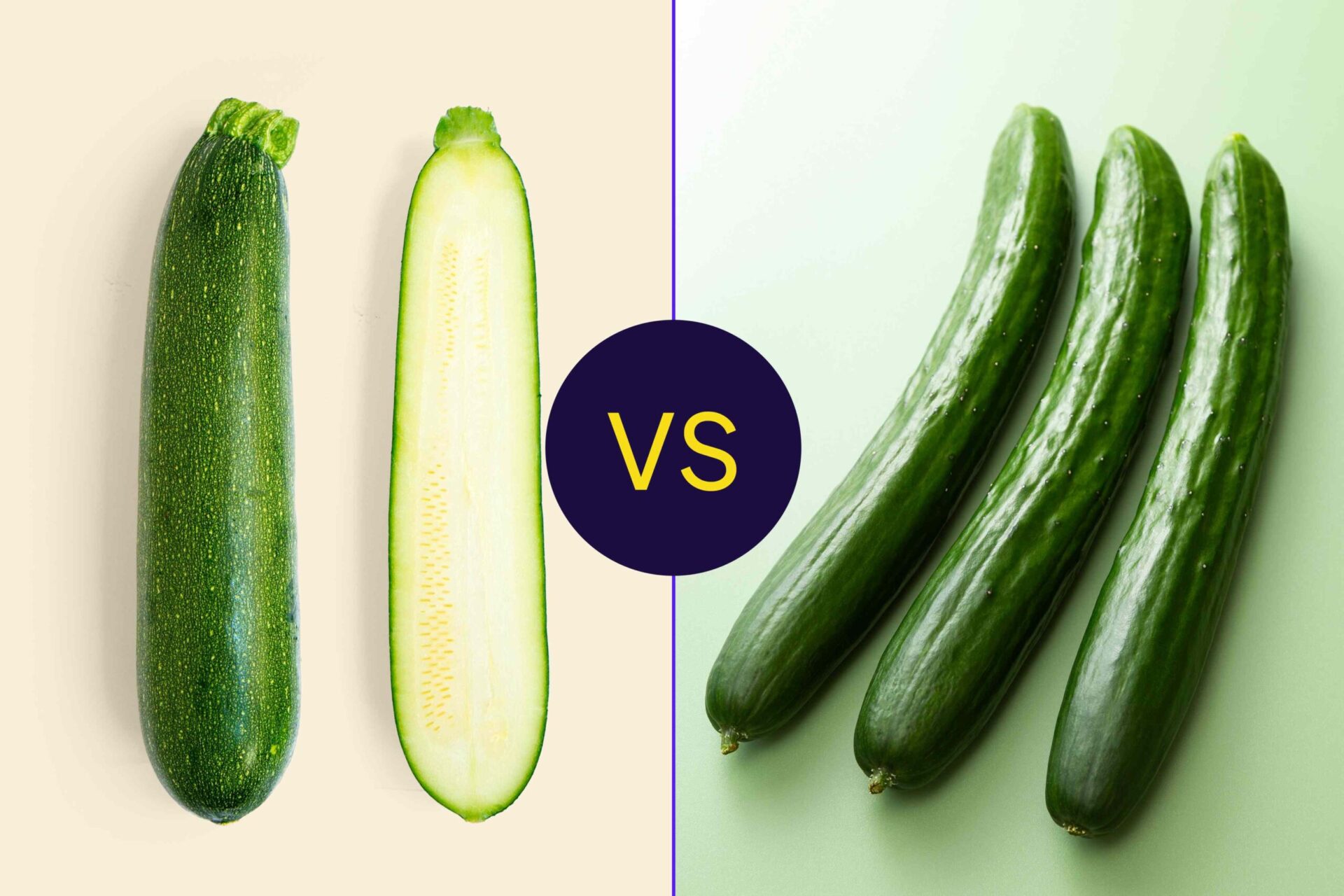
:max_bytes(150000):strip_icc():format(jpeg)/Health-Zucchini-VS-Cucumber-template-1-6aa2f513c2e44c45aa2136ebf02c3cc0.jpg "Zucchini vs. cucumbers")
- Cucumbers are slightly more hydrating than zucchinis, while zucchinis are slightly more nutritious.
- Both vegetables are low in calories, making them ideal for weight management.
- Experts recommend consuming both for a variety of health benefits.
Cucumbers and zucchini are both hydrating, low in calories, and provide essential nutrients. Cucumbers are more hydrating, while zucchinis are more nutritious.
Water Content: Which Is More Hydrating?
Both zucchini and cucumber are made of over 90% water, making them excellent choices for staying hydrated.
Cucumbers contain 95.9% water by weight, while zucchinis contain 94.7%, making cucumbers slightly more hydrating.
Though drinking plenty of water is the best way to stay hydrated, water-rich foods, like zucchini and cucumber, can also help you meet your hydration goals.
Calories, Carbs, and Macronutrients
Here’s how a 100-gram serving of raw cucumber and raw zucchini compares:
| | Cucumber | Zucchinni |
| Calories | 15 | 17 |
| Carbs | 3.63 grams | 3.11 grams |
| Fiber | 0.5 grams | 1 gram |
| Protein | 0.65 grams | 1.21 grams |
| Fat | 0.11 grams | 0.32 grams |
Zucchini and cucumbers are both very low in calories, which makes them a good choice for weight-management diets.
Zucchini offers roughly twice the protein and fiber of a cucumber. Still, neither vegetable contains a lot of these nutrients, so for the most benefits, pair them with protein-rich foods, like eggs, cheese, meat, or beans, as well as fiber-rich foods like whole grains, vegetables, and nuts.
Additionally, cucumbers and zucchinis are very low in carbs, containing less than 4 grams of carbs per 100-gram serving. This makes them a good fit for low-carb eating patterns, such as the keto diet.
Vitamins and Minerals
When it comes to vitamins and minerals, zucchini delivers a more concentrated dose than cucumbers.
Here’s how a 100-gram serving of each compares.
| | Cucumber | Zucchini |
| Vitamin C | 2.8 milligrams or 3.11% of the Daily Value (DV) | 17.9 milligrams or 19.8% of the DV |
| Vitamin K | 16.4 micrograms or 13.67% of the DV | 4.3 micrograms or 3.58% of the DV |
| Potassium | 147 milligrams or 3.13% of the DV | 261 milligrams or 5.5% of the DV |
| Folate | 7 micrograms or 1.75% of the DV | 24 micrograms or 6% of the DV |
| Manganese | 0.079 milligrams or 3.43% of the DV | 0.177 milligrams or 7.6% of the DV |
Zucchini is a better source of vitamin C, potassium, folate, and manganese than cucumber, while cucumber delivers more vitamin K.
Cucumbers are a better source of vitamin K, which is needed for blood clotting, bone health, and many other important body processes.
Is One Healthier Than The Other?
When trying to decide between cucumbers and zucchini, you don’t have to choose one over the other. For the most health benefits, it’s recommended to enjoy a variety of produce to ensure you’re covering all of your nutritional bases.
When it comes to nutrients, zucchini is a better source of most vitamins and minerals, though cucumbers provide a hearty dose of hydration and offer a good source of vitamin K.